
Travelers planning Cappadocia are making the same choice before they pick a room: where to stay, and why that town matters more than hotel décor. For first-time visitors arriving in spring or fall, Göreme remains the most practical base because it puts balloon pickups, day tours, restaurants, and the region’s best-known valleys within easy reach. Those who want quieter streets, more polished cave suites, or a slower evening pace are increasingly looking to Uçhisar, while Ürgüp, Avanos, and Ortahisar attract longer-stay travelers who want a different rhythm.
Why location now drives the booking
Cappadocia is not a single town but a spread-out landscape of valleys, rock formations, and villages in central Turkey. That geography makes hotel choice a logistics decision as much as a style preference. A 20- to 30-minute transfer each way may sound minor, but it adds friction on a two-night trip, especially when balloon flights and tours start at dawn.
The region’s appeal also depends on timing. The most comfortable touring months are generally April to June and September to October, when daytime temperatures are manageable and sunrise departures are less punishing. That seasonal window concentrates demand, which is why room type, town choice, and transport access often affect the trip as much as the nightly rate.
UNESCO lists Göreme National Park and the Rock Sites of Cappadocia as a World Heritage Site, underscoring the area’s mix of natural and cultural value. That heritage status is one reason travelers expect a historic stay, but it also means lodging is built around uneven ground, carved slopes, and preserved stone structures rather than conventional urban hotel blocks.
Göreme remains the default for first-time visitors
Göreme is still the strongest all-around base for most short visits. It sits closest to the scenery travelers associate with Cappadocia: volcanic tuff formations, valleys, open viewpoints, and the balloon-filled sky at dawn. For visitors arriving from Istanbul with only two or three days, that concentration of access matters more than a quieter street.
The town has the broadest mix of restaurants, cafés, tour desks, small shops, and ATMs. Many hotels can arrange airport transfers, and the standard Red Tour and Green Tour pickup networks usually cover the Göreme area, which reduces the need to coordinate separate transport. The Göreme Open-Air Museum is also nearby, allowing travelers to reach one of the region’s major rock-cut monastery sites early, before the busiest hours.
Göreme is also the easiest choice for travelers without a car. Walking to dinner after a long touring day is simpler than waiting for a taxi from a more isolated property. The trade-off is noise and density during peak season, along with some lower-priced rooms that offer limited privacy, small footprints, or little natural light.
Travelers who want a lively base, a short transfer chain, and the highest chance of building a simple itinerary around a balloon flight and two day tours should still start here. The market is effectively telling the same story: for a fast Cappadocia trip, convenience sells.
Uçhisar is winning the quieter, higher-end stay
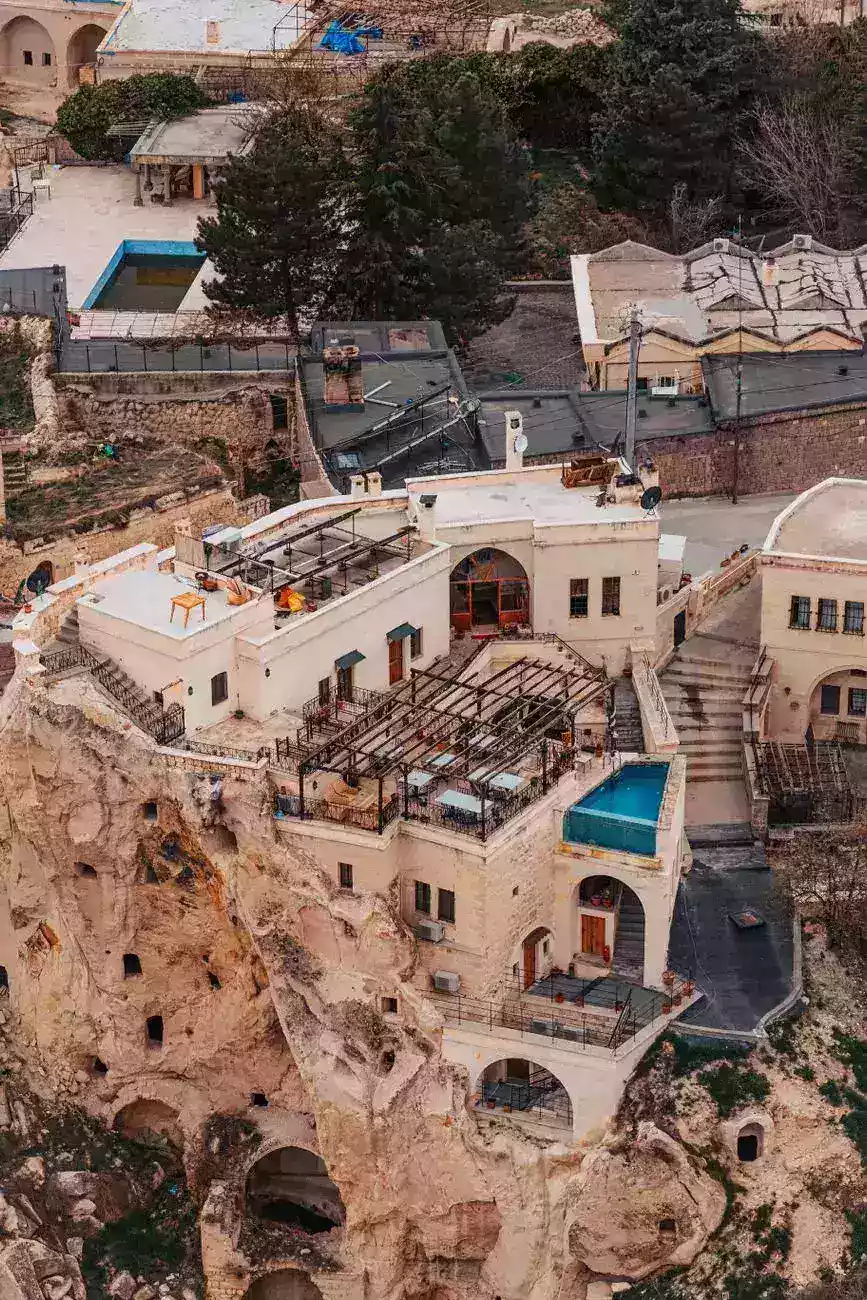
Uçhisar has become the main alternative for travelers who care more about atmosphere than centrality. Perched on one of the highest points in the region, it offers wide views over Pigeon Valley and the surrounding ridges. Hotels here tend to lean into that advantage with terraces, sunrise breakfasts, and room designs built around the landscape rather than the main street.
This is where couples, anniversary travelers, and visitors seeking a slower pace often move. Restored stone houses, cave suites, and polished boutique properties are common, and the overall feel is calmer than in central Göreme. In practical terms, that means fewer crowds around the hotel entrance, less foot traffic, and more space to linger between sightseeing stops.
But the convenience gap is real. Restaurant choice is narrower, steep roads can be tiring after dinner, and some properties sit farther from the road than photographs suggest. Before booking, travelers should confirm the number of stairs, the distance from the entrance to the room, and whether the hotel can help arrange evening transport. A view is valuable, but only if it remains usable after dark.
Ürgüp, Avanos, and Ortahisar serve different travel styles
Ürgüp works well for longer stays because it functions more like a real town than a sightseeing village. It has larger hotels, a wider range of stores, stronger dining options, and access to wine-country surroundings. Travelers who stay three nights or more often find the trade-off acceptable: a slightly longer ride to the classic viewpoints in exchange for a more settled base.
That said, Ürgüp is farther from the iconic Göreme launch areas and valley viewpoints. Balloon operators still pick up guests there, but the morning can start earlier, which matters when the trip is short and the first sunrise is the most important one. For travelers focused on classic Cappadocia photography, Göreme still wins on efficiency.
Avanos pulls in a different kind of visitor. Set on the Kızılırmak River, it offers a more local town feel, wider streets, and a long pottery tradition shaped by river clay. It is a practical fit for families, car renters, and repeat visitors who want to see a less tourist-heavy side of the region. For a first trip centered on balloon views, however, it is not the strongest base.
Ortahisar is quieter still, with a working-village atmosphere and a small set of intimate cave and stone hotels. It appeals to travelers who want calm over choice. The trade-off is limited dining and less convenience without arranged transfers, so it is best for people who already know the region or who are comfortable planning transport in advance.
The cave hotel label can be misleading
Not every so-called cave hotel is a true cave dwelling. Some properties are carved into the region’s soft tuff rock, while others are stone-built hotels styled to match the local architecture. Both can be comfortable and attractive, but the difference matters if sleeping in a genuine cave room is part of the trip expectation.
Room conditions vary more than the marketing suggests. Tuff rock can help moderate indoor temperature, but ventilation, humidity, daylight, and room layout differ sharply from property to property. A deep cave room may feel atmospheric to one traveler and enclosed to another, especially if it has little natural light or limited airflow.
This is where the booking process should become more precise. Travelers should ask whether the room is a real cave room, a stone room, or a hybrid; whether it has a window; and how many stairs are involved. That advice matters because Cappadocia hotels are often built into slopes, and the most photogenic property may not be the easiest one to reach with luggage.
Comfort is also seasonal. Reliable heating matters in winter, while air conditioning and ventilation matter in summer. Breakfast terraces can be a major selling point, but outdoor service is weather-dependent. Travelers with respiratory sensitivities should think carefully before booking a windowless cave room, since the dramatic look of a listing photo does not guarantee healthy airflow.
Pricing follows season, room type, and balloon demand
Hotel rates in Cappadocia rise and fall with demand, not just with the number of stars on the sign. Spring and fall are usually the most expensive periods because weather conditions are better for sightseeing and balloon operations. Winter can offer lower rates, but cold mornings, snow, and occasional flight disruptions change the value equation.
Planning ranges, based on typical listings and tour packages, show how wide the market has become. Budget guesthouses and simple stone rooms often land around $70 to $140 a night for two people, mid-range cave or boutique hotels around $140 to $300, and premium cave suites or luxury properties from roughly $300 to $700 or more. Breakfast is often included, but airport transfers, balloon flights, and private transport usually cost extra.
The biggest price jump is often not between towns but between a standard room and a private cave suite with a terrace or valley view. That means travelers are often paying for outlook and room character, not just location. In other words, the hotel market in Cappadocia is pricing experience as much as lodging.
How long to stay is shaping the hotel decision
Two nights is the minimum practical stay, and three nights is the safer standard for travelers who want the region to feel unhurried. The logic is simple. One night leaves too little room for weather delays, balloon cancellations, or a full day of sightseeing, while a third night allows for a better balance of sunrise, touring, and downtime.
Balloon flights are especially sensitive to weather and aviation conditions, which is why operators routinely adjust or cancel early departures. That makes timing your first balloon booking for the first morning a smart hedge; if weather stops the flight, there is still another sunrise left in the itinerary. It is a small scheduling move, but in Cappadocia it can determine whether the highlight happens at all.
For travelers combining Cappadocia with Istanbul, Ephesus, Pamukkale, or the Mediterranean coast, changing hotels within Cappadocia usually adds more complexity than value. Moving from Göreme to Uçhisar may look efficient on a map, but it often costs a day in packing, transfers, and check-in time. The region rewards stability more than hotel-hopping.
What travelers should watch next
The next shift in Cappadocia’s lodging market will likely come from transparency. As more travelers book on mobile and compare room types quickly, properties that clearly distinguish real cave rooms from stone-built rooms will have an advantage. Hotels that disclose stairs, ventilation, and terrace orientation upfront are likely to earn better trust than those relying on broad
Frequently Asked Questions
Is the extra 20- to 30-minute transfer really a big deal in Cappadocia?
Yes, especially on a short trip. Balloon flights often leave before sunrise and day tours can start early, so a 20- to 30-minute transfer adds real friction to a two-night stay. When you are packing in one balloon ride and one or two tours, staying closer to the main pickup and restaurant areas can make the itinerary much smoother.
If I only have two or three days, should I avoid quieter towns like Uçhisar or Ürgüp?
Not necessarily, but they are usually better if you prioritize atmosphere over efficiency. For a very short visit, Göreme is easier because it simplifies tour pickups, dining, and walking after a long day. Uçhisar and Ürgüp make more sense if you are comfortable trading convenience for a calmer setting and a more refined stay.
Are the better cave hotels in Uçhisar worth the higher price compared with Göreme?
They can be, if your trip is about the stay as much as the sightseeing. Uçhisar hotels often offer better views, quieter surroundings, and more polished cave-suite design. The trade-off is fewer restaurants and a less central location. If you want a memorable hotel experience and slower evenings, the premium may be justified.
Do you really need a car to stay outside Göreme?
A car can help, but it is not essential if your hotel arranges transfers and you book tours that include pickup. The bigger issue is convenience after the tours end, when getting to dinner or connecting between towns becomes less effortless. Without a car, Göreme is simply easier because many basics are within walking distance.
When is it most important to book the right town in Cappadocia?
Spring and fall matter most because demand rises during the most comfortable touring months, especially April to June and September to October. In those periods, the best-located rooms and popular cave suites fill quickly. If you are traveling then, town choice affects availability, price, and the ease of organizing balloon and tour logistics.