
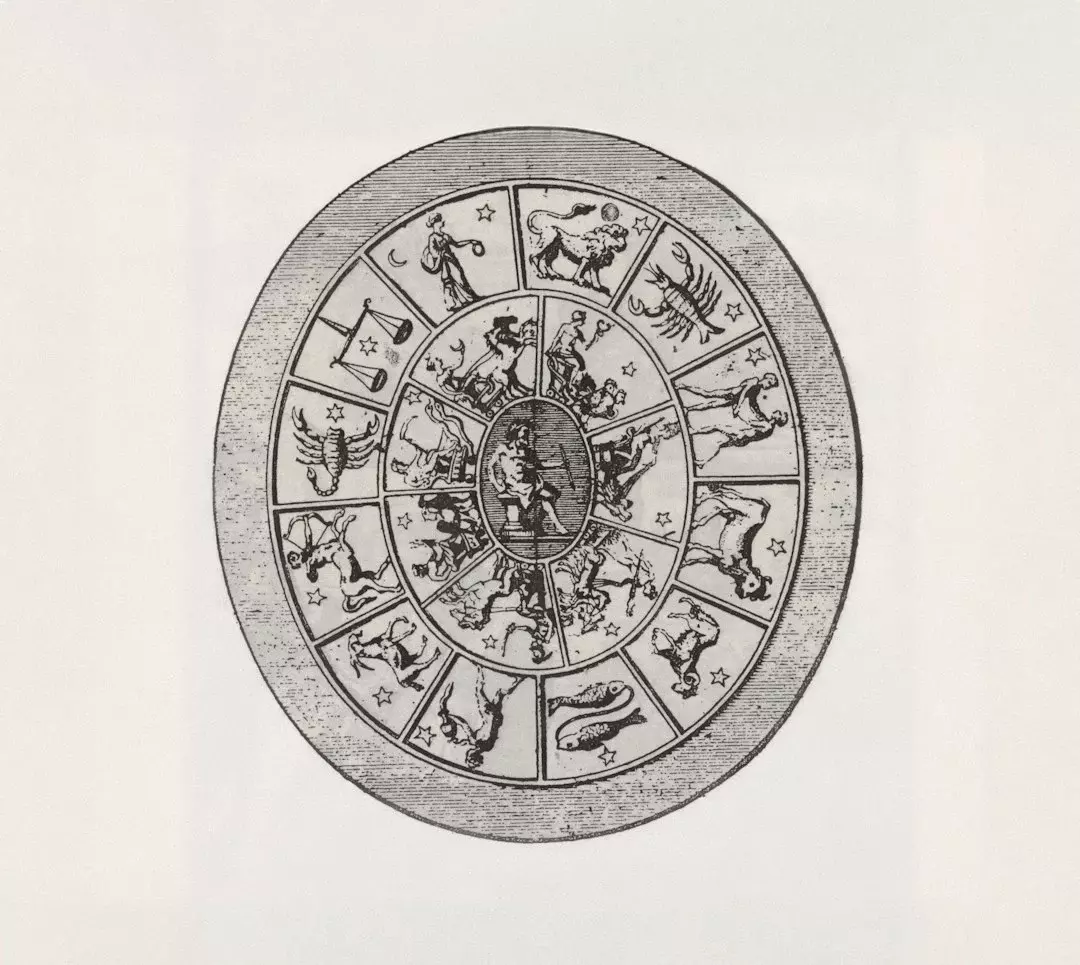
A daily horoscope guide works because it offers immediate relevance with almost no effort. The Mystic Meg brand, now associated with Maggie Hyde, is useful precisely because it turns astrology into a repeatable media product: brief, emotionally legible, and easy to consume before breakfast. That is why a horoscope page can still draw attention even when readers know it is not a scientific forecast.
The real issue is not whether the planets mechanically control events. It is how a daily star sign column converts uncertainty into a daily story. That distinction matters. Readers do not only want prediction; they want framing. A careful reading of horoscope today content shows why these columns endure even when their claims remain unproven.
What a daily horoscope is actually doing
In classical terms, a horoscope is a chart of the sky cast for a particular moment and place. In modern newspaper use, the word has narrowed into a short forecast for each of the zodiac categories or zodiac signs. That shorthand is a major reason the format works. It turns the much broader traditions of Hellenistic astrology and divination into a fast, low-friction reading experience.
It also strips out most of what a full natal chart requires. Birth time, location, rising sign, houses, and planetary degrees do not fit neatly into a one-paragraph column. So the daily horoscope replaces precision with accessibility. That is not a flaw in editorial terms; it is the business model of the newspaper column.
| Feature | What the reader gets | What the format leaves out |
|---|---|---|
| Sun-sign focus | A quick identity frame for the day | Individual birth data and exact chart interpretation |
| Short time horizon | A near-term prompt for love, money, or career | Long-term forecasting and verification |
| Broad language | Room for personal recognition | Hard accountability for accuracy |
| Emotional tone | Encouragement, caution, or momentum | Neutral statistical prediction |
The format compresses complexity on purpose. A daily star sign guide is built to be skimmed, shared, and remembered. It is not built to be audited like a model.
Why Mystic Meg-style columns endure
The longevity of the Mystic Meg brand, and the version of it carried forward by Maggie Hyde, shows that the appeal of horoscope writing is partly about authority and partly about ritual. In a tabloid setting such as The Sun (United Kingdom), the horoscope is not just a feature. It is a recurring appointment with uncertainty. Readers return because they want a structured way to check the mood of the day, not because they expect laboratory-grade proof.
That habit is easy to underestimate. A horoscope column creates a small but reliable routine: read the sign, scan for personal relevance, notice the parts that fit, and move on. The routine matters more than the literal claim. The writing succeeds when it feels specific enough to be intimate and general enough to survive broad readership.
A horoscope becomes persuasive when it sounds specific enough to feel intimate and broad enough to fit almost anyone.
Psychology offers a straightforward explanation. The Barnum effect helps people accept vague personality statements as highly accurate. Confirmation bias then makes the matching details stand out while contradictions fade. In some cases, a forecast can even become a self-fulfilling prophecy if a reader changes behaviour because the column implied a result.
That does not mean every reader is gullible. It means the format is engineered for recognition. It offers a mirror, not a measurement.
The mechanics behind a readable horoscope
Elemental grouping and sign logic
Most daily horoscope writing still relies on the symbolic structure of the signs, even when it is not stated explicitly. The classic four-element model gives writers a simple way to vary tone without abandoning the same editorial template. Fire signs are written as active. Earth signs are written as steady. Air signs are written as verbal or social. Water signs are written as sensitive or intuitive.
| Element | Signs | Common editorial tone |
|---|---|---|
| Fire | Aries, Leo, Sagittarius | Urgency, confidence, action, risk |
| Earth | Taurus, Virgo, Capricorn | Security, patience, money, practicality |
| Air | Gemini, Libra, Aquarius | Conversation, ideas, decisions, relationships |
| Water | Cancer, Scorpio, Pisces | Emotion, memory, intuition, closeness |
This structure is useful because it creates variation without requiring a different editorial process for every sign. It also explains why the prose feels personal even when the underlying architecture is repetitive. Each sign gets a different emotional register, but the same set of life domains: love, money, work, and mood.
Why the language feels specific
Horoscope writers typically use short time markers, conditional language, and action verbs. Those choices matter. A sentence that says something may happen today, or that a person should be ready to act, is more usable than a blunt prediction. The wording gives the reader room to participate in the meaning.
That is the subtle strength of the daily horoscope format. It does not force a hard claim. It encourages interpretation. The reader completes the forecast by deciding what it means in practice.
What the format gets right and what it gets wrong
Horoscope columns are often dismissed too easily. They are not random noise. They can do three things well:
- They provide a low-cost ritual that many people can absorb quickly.
- They offer a lightweight prompt for reflection on work, relationships, and stress.
- They create a shared cultural language around the day.
But they also overreach in predictable ways. The weaknesses are not marginal; they are structural:
- They cannot account for individual birth data the way a full chart can.
- They rarely produce testable predictions with clear success criteria.
- They can encourage passivity if readers hand over decision-making to a vague forecast.
- They can blur entertainment, self-help, and belief without warning the reader where one ends and the next begins.
That last point matters. The reader who treats a horoscope as reflective entertainment is in a very different position from the reader who uses it to decide on finance, medical choices, or relationship commitments. The text is light. The consequences may not be.
How to use horoscope guidance without overreading it
The most sensible way to approach a daily horoscope guide is as a prompt, not a directive. That means reading it for themes rather than instructions. If a forecast mentions tension, review your day with more care. If it mentions opportunity, look for openings. Do not mistake either for evidence that the stars have overridden ordinary causality.
A practical reader should apply four rules:
- Use it for reflection, not replacement. Horoscope language can sharpen attention, but it should not replace evidence-based judgment.
- Watch for emotional framing. Notice whether the text makes you calmer, more anxious, or more decisive.
- Separate symbolism from fact. A sign-based reading may feel meaningful without being predictive.
- Compare it with reality over time. If you track patterns, you will see how often the fit is broader than it first appears.
In that sense, the best use of a horoscope is close to journaling. It gives form to uncertainty. It does not resolve it.
FAQ
How accurate are daily horoscopes?
They are usually broad enough to feel relevant to many people. Their perceived accuracy is shaped more by interpretation, memory, and the Barnum effect than by demonstrated prediction.
What is the difference between a daily horoscope and a natal chart?
A daily horoscope uses your sun sign and the current day as a general guide. A natal chart uses your exact birth time, date, and place to build a much more specific astrological framework.
Why do people keep reading horoscopes if they are vague?
Because vagueness is part of the design. The format is quick, familiar, and emotionally useful. It offers a small narrative about the day, which many readers find easier to process than raw uncertainty.
What to watch next in horoscope media
The next shift in horoscope publishing is likely to be more personalization, not less. Digital platforms can already segment audiences by behaviour, location, and interest. That makes a horoscope column easier to adapt for engagement, but harder to treat as a fixed editorial artefact. Expect more wellness language, more app-based delivery, and more algorithmic targeting.
The unresolved question is whether personalization makes horoscopes truer or simply more persuasive. A future column may feel even more exact because it is tuned to the reader’s habits, language, and preferences. But that is not the same as prediction. It is better technology for delivering ambiguity.
The most important insight is also the least glamorous: daily horoscope writing survives because it is not trying to be astronomy. It is a cultural interface for uncertainty. The reader who understands that distinction can still enjoy the ritual without confusing symbolic guidance with evidence. What remains to be seen is whether the next generation wants a horoscope that feels wiser, or one that feels more precisely tailored while saying almost the same thing.
Frequently Asked Questions
If readers know horoscopes are not scientific, why do they still feel useful?
Because their usefulness is less about literal prediction and more about interpretation. A daily horoscope gives people a quick frame for the day, helping them organize vague feelings, expectations, and decisions. Even skeptics may enjoy the ritual because it offers a brief, familiar way to make uncertainty feel manageable.
What makes a daily horoscope different from a full natal chart reading?
A daily horoscope is a simplified, sun-sign-based forecast meant for fast reading and broad relevance. A full natal chart uses birth time, place, rising sign, houses, and planetary degrees to give a much more personal interpretation. The column format intentionally sacrifices precision so it can work for a mass audience.
Why do horoscope columns often sound specific even when they apply to many people?
They use a mix of emotionally vivid language and broad statements that many readers can map onto their own lives. This creates the feeling of specificity without requiring exact detail. Readers also tend to notice the parts that fit and overlook the parts that do not, which reinforces the impression of accuracy.
How can a horoscope influence someone if it is only a short daily column?
Even a brief forecast can shape attention and behavior. If a reader is told to be cautious, open, or decisive, they may act differently in situations that follow. That can create a self-fulfilling effect, where the horoscope indirectly helps produce the outcome it seemed to describe.
Why are zodiac signs grouped into fire, earth, air, and water in daily horoscope writing?
Elemental grouping gives writers a simple way to vary tone while keeping a consistent format. Fire signs can be described as energetic, earth signs as practical, air signs as social or verbal, and water signs as intuitive or emotional. It is a symbolic shortcut that keeps the column readable and recognizably astrological.