
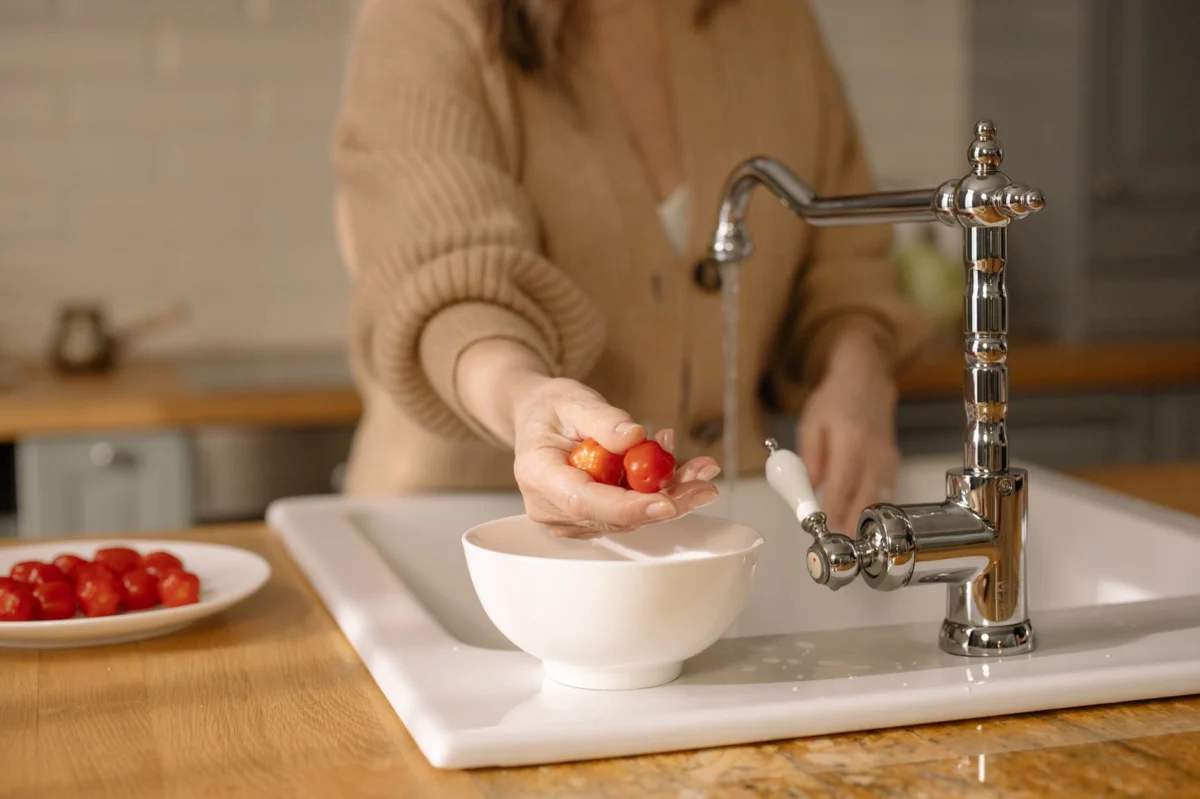
The old kitchen rule says never wash mushrooms because they will soak up water and turn rubbery. That warning is too absolute. For most culinary mushrooms, a brief rinse is not the mistake; leaving them wet, crowded, or undercooked is. The real issue in washing mushrooms is managing surface moisture, not some magical sponge effect.
Why the mushroom-washing myth persists
People often treat mushrooms like a fragile exception because they are not vegetables in the usual sense. They are fungi, and the common button mushroom, Agaricus bisporus, has a surface and texture that change quickly under heat. That part is true. But the old rule confuses short-term wetness with permanent damage. Mushroom cell walls contain chitin, and the cap structure is porous enough that water can cling to the outside without flooding the interior. Osmosis is not the villain here; time is.
Commercial mushrooms also arrive cleaner than many cooks assume. Modern mushroom cultivation happens on controlled substrate, not in soil, so supermarket mushrooms usually carry dust or peat, not mud. That is why a quick rinse or wipe is often enough. The myth survived because cooks noticed one real fact: wet mushrooms brown more slowly in a pan, and in sautéing, speed matters.
The practical rule is simple: water is not the problem; undrained water is.
What actually happens when water touches mushrooms
When mushrooms are rinsed briefly, the water mostly sits on the surface. If they are dried promptly, the effect on texture is small. If they are soaked, left in a bowl, or packed tightly in the fridge after washing, the outer surface stays wet and the first stage of cooking becomes steaming instead of browning. That is why washed mushrooms can seem soft or pale: the pan has to evaporate the water before searing can start. Surface moisture and water activity are not the same thing, and cooks who blur the two usually overstate the problem.
| Method | Best use | Risk |
|---|---|---|
| Dry brushing | Very clean mushrooms, delicate caps | Misses grit in crevices |
| Quick rinse | Most store-bought mushrooms | Needs immediate drying |
| Soaking | Almost never | Excess surface moisture, weaker browning |
How to clean mushrooms properly
If you want the best texture, think in terms of clean, dry, then cook. Wipe visible debris first. If dirt remains in the gills or around the stem, rinse quickly under running water. Drain them in a colander, pat them dry, and cook them soon after. That sequence works for most edible mushrooms, including white buttons, cremini, and portobello mushrooms, which are the same species at different stages.
- Use a soft brush or damp towel for light surface dust.
- Rinse only when dirt is visible or the mushrooms are gritty.
- Dry immediately with paper towels or a clean cloth.
- Cook in a hot pan so moisture evaporates fast.
- Salt after browning if you want stronger searing.
Species matter, but less than most cooks think
Delicate wild mushrooms deserve more caution, but not superstition. Oyster mushrooms can trap dirt in layered caps. Morels may hide grit in their pits. Chanterelles are prized enough that chefs often brush them first, then rinse only if necessary. The principle is the same: the more folds, ridges, or cavities a mushroom has, the more you inspect before cooking. That is especially true after mushroom hunting, where debris is less predictable than in retail packaging.
Food safety and texture are not the same problem
Some cooks worry that washing undermines food safety. In practice, the safety issue is usually the opposite: removing visible debris and handling mushrooms cleanly is part of good food hygiene. For mushrooms eaten raw, clean them carefully and keep them cold. For cooked dishes, heat matters more than any rinse. This is why professional kitchens separate prep from finishing: the mushrooms are cleaned, dried, then cooked fast and hard. That is basic cooking, not folklore. It is also standard food preparation, not an exception reserved for expert chefs.
There is one real trade-off. Mushrooms with a high surface-area-to-volume ratio lose their clean, meaty edge if they carry too much water into the pan. That affects flavor concentration and browning, not just texture. In other words, the question is not whether water entered the mushroom; it is whether the water was given a chance to leave.
Frequently asked questions
Should you wash mushrooms before cooking?
Yes, if they are visibly dirty or gritty. A quick rinse is usually enough. Dry them right away and cook them promptly.
Do mushrooms absorb water like a sponge?
Not in the dramatic way kitchen myths suggest. They can hold surface water, but a brief rinse does not usually saturate them in a way that ruins texture.
Is wiping better than rinsing?
Wiping is fine for lightly soiled mushrooms. Rinsing is better when dirt is trapped in folds or gills. The best method depends on the mushroom, not on rigid dogma.
What the old rule leaves out
The broader lesson is that kitchen rules often flatten nuance into slogans. Mushrooms are not all the same, and neither are cooking methods. A mushroom destined for a slow stew can tolerate more surface moisture than one meant for a crisp pan sear. A mushroom that has been rinsed and dried properly may cook better than a dusty one that was merely brushed half-heartedly. The difference is technique, not ideology.
What to watch next is how food media and manufacturers respond. As pre-cleaned packs, better packaging, and more precise kitchen testing become common, the old no-wash command will keep losing ground. The remaining question is more interesting: not whether mushrooms can be washed, but when a cook should choose rinsing, wiping, or a combination of both to protect flavor. That is the real standard, and it is more useful than a blanket ban.
Frequently Asked Questions
Are supermarket mushrooms dirty enough to need washing, or is wiping enough?
Most store-bought mushrooms are much cleaner than many people assume because they’re grown on controlled substrate, not in soil. A soft brush or damp towel is often enough for light dust. If you see grit or debris in the creases, a quick rinse is fine as long as you dry them promptly before cooking.
Do mushrooms really absorb water and turn rubbery if you rinse them?
A brief rinse usually does not flood the interior of the mushroom. The real problem is surface moisture: if mushrooms stay wet, they steam instead of browning. That can make them seem soft or pale. So the issue is not the rinse itself, but leaving them undrained, crowded, or undercooked afterward.
Why do washed mushrooms brown more slowly in the pan?
Because the pan’s first job is to evaporate the water sitting on the surface. Until that moisture is gone, the mushrooms can’t sear properly. Browning starts only after the surface dries enough for heat to trigger it. That’s why washed mushrooms often need a hotter pan and a little more patience.
What is the best way to clean mushrooms with folds, gills, or pits?
Start by brushing off loose debris, then inspect the crevices. Mushrooms with layered caps or pits can trap grit, so a brief rinse may be more effective than wiping alone. Dry them immediately afterward. Delicate wild mushrooms like oyster mushrooms, chanterelles, or morels often need more careful inspection than standard button mushrooms.
Is it a problem to wash mushrooms ahead of time and store them in the fridge?
It can be. If washed mushrooms are put away while still damp, the surface moisture lingers and can make them soften or brown poorly later. If you need to prep ahead, dry them thoroughly and store them loosely, not packed tightly. For best texture, cleaning them just before cooking is usually better.
Should I salt mushrooms before or after browning them?
If you want the strongest sear, it’s usually better to salt after the mushrooms have browned. Salt can pull moisture toward the surface, which slows browning at the start. That doesn’t make pre-salting wrong, but it does make it harder to get the deep, fast caramelization many cooks want.