
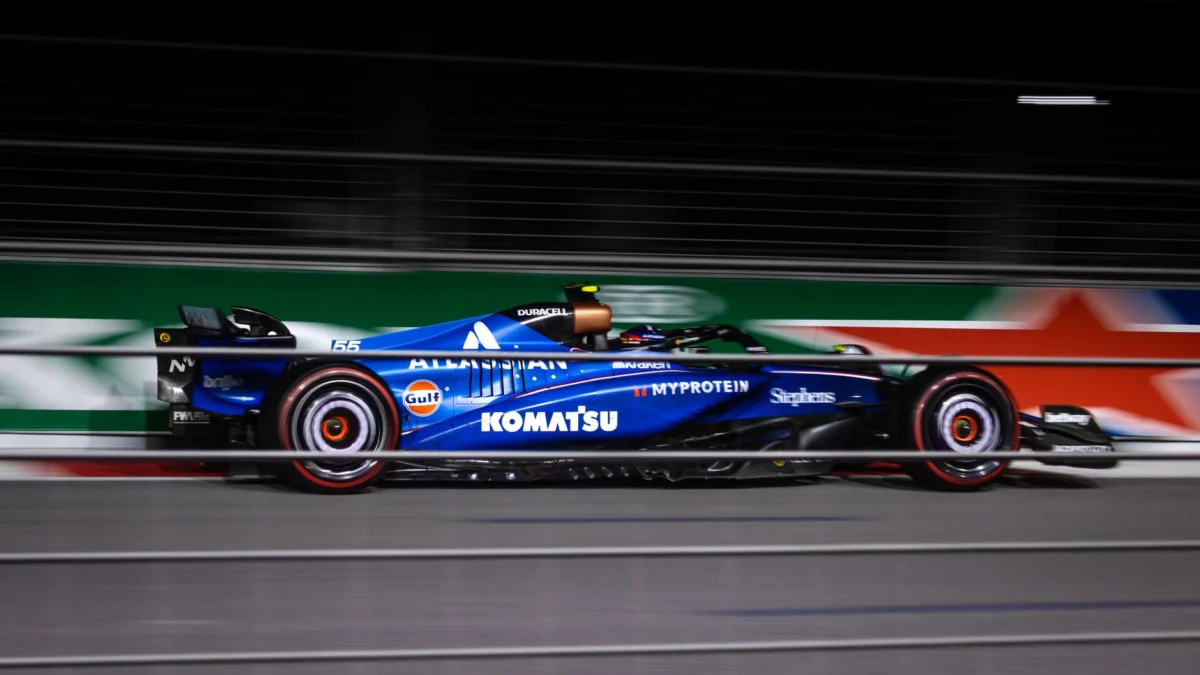
When Lewis Hamilton and Max Verstappen joke about a Formula One glitch feeling like a ‘Lego race’, they are doing more than making light of a frustrating moment. They are pointing to a deeper truth about Formula One: modern motor racing is now as dependent on code, calibration, and data flows as it is on aerodynamics and raw engine performance. A software bug that affects multiple cars ahead of the Bahrain Grand Prix may sound like a temporary nuisance, but in a sport where tiny margins decide grid positions and race outcomes, it can become a genuine strategic problem.
That is because a current-generation F1 car is not just a fast machine; it is a highly instrumented embedded system. Its electronic control unit manages critical functions, while telemetry streams live information back to the garage and into the hands of engineers. The car also stores data through a data logger, giving teams a detailed record of what happened and when. In that environment, a software fault is not just an IT problem; it is a racing problem.
Why a glitch matters more in Formula One than in ordinary road cars
In everyday driving, software issues are often annoying but survivable. A warning light may appear, a feature may stop working, or the infotainment system may freeze. In F1, the consequences are sharper because the car is operating at the edge of its design envelope. The teams at Red Bull Racing and the Mercedes-AMG Petronas F1 Team spend enormous effort ensuring that every steering-wheel command, every torque request, and every strategy update is predictable under pressure.
That matters because the driver needs trust. If a glitch changes how a display behaves, alters a shift sequence, confuses a sensor reading, or delays a response from the control stack, the driver is no longer racing with full confidence. At the level of a driver in motorsport, hesitation is costly. Braking points move. Tyre management changes. Overtaking opportunities disappear. A bug does not have to stop the car to hurt performance; it only has to make the car feel unreliable.
What the ‘Lego race’ label suggests about the failure
The phrase ‘Lego race’ is useful because it conveys a machine behaving in a way that looks artificial, blocky, or visually wrong. In practical terms, that kind of description often points to a shared fault path: the same update, interface, or calibration error affecting more than one car, or a common trackside system producing inconsistent results. The key clue in the report is that multiple cars were affected. When the same symptom appears across the field, engineers usually suspect shared software or shared infrastructure rather than isolated mechanical wear.
That is also where governance matters. Formula One operates under the oversight of the FIA, and the sport has long tried to balance innovation with parity and safety. A shared software failure can quickly become a sporting issue if it distorts data, timing, or driver feedback unevenly. Even if the bug is harmless in a safety sense, it can still undermine fairness or disrupt the integrity of a session.
In elite racing, a bug does not need to be dramatic to matter. It only needs to be timely.
Shared systems, shared risk
The modern F1 weekend depends on a chain of connected systems: simulation, setup work in the garage, live telemetry during running, and post-session analysis. If one of those links is flawed, the issue can cascade. A bad calibration file can affect several cars. A failed update can make a pit wall tool misreport a value. A timing inconsistency can lead the team to make the wrong call at the wrong moment.
This is why the same weekend can look simple to spectators and fragile to engineers. A split-second delay in a response or a corrupted data point may be invisible on television, yet it can send a race plan in the wrong direction. In a pit stop environment, that kind of uncertainty is especially painful because a team only gets a few seconds to react and almost no margin for error.
The technical chain behind the problem
To understand why a software bug can spread quickly, it helps to think in layers. The car uses sensors, control logic, and a communication layer to translate what the driver wants into what the machine does. That same information is then transmitted back to engineers through telemetry. If any part of that chain becomes inconsistent, the result may be a strange driving feel, a mismatched display, or a strategy decision based on bad data.
| Layer | What can go wrong | Why it matters |
|---|---|---|
| Car software | Incorrect logic, corrupted calibration, or conflicting inputs | Can alter drivability, displays, or control responses |
| Trackside systems | Data sync problems, update errors, or communication delays | Can affect several cars at once or confuse the garage |
| Race control interfaces | Timing issues, inconsistent status data, or bad messaging | Can distort strategy, penalties, and live decisions |
The fact that F1 systems are built as embedded systems is a strength and a vulnerability at the same time. Embedded platforms are designed to be specific and dependable, but they are still software-driven. That means they require version control, testing, and a disciplined rollback plan. A race team cannot afford to treat code like a casual app update; it has to treat it like a critical part of the car.
Telemetry is power, but it can also expose weaknesses
Telemetry is one of the sport’s greatest assets because it lets engineers see the car in real time. But telemetry can also create a false sense of certainty if the underlying software is flawed. A bad reading may make the team chase a setup problem that does not exist. A delayed signal may make a driver appear to be struggling when the issue is really in the system around the car. That is why engineers often cross-check telemetry against other logs and against the driver’s own feedback.
The same discipline applies to the data logger. A recording device that is supposed to clarify reality can instead muddy it if the data stream is compromised. In that sense, the real job of race engineers is not merely to collect information; it is to decide which information can be trusted under pressure.
How teams reduce the chance of a repeat
Teams do not eliminate software bugs by luck. They reduce risk through testing, simulation, and controlled deployment. A modern F1 programme is built around layers of verification, from pre-season checks to session-by-session comparisons. If a change fails a test, it should not go live. If a new calibration produces unusual behaviour, the team needs a fast path to a known-good version.
That approach is classic reliability engineering: the aim is not perfection, but resilience. In practice, that means knowing how to spot a fault quickly, how to isolate it, and how to revert without losing the weekend. It also means that simulation matters as much as physical track time because simulated validation can reveal conflicts before they affect a live car.
- Regression testing: confirm that a fix does not break something else.
- Simulation and replay: compare live behaviour with known-good scenarios.
- Rollback planning: keep previous software versions ready in case a new release fails.
- Cross-checks between systems: compare car data, garage data, and race-control data for mismatches.
- Human verification: require sign-off before critical changes go live.
For teams, the practical goal is to protect decision quality. A bug that forces a conservative call on tyres, fuel, or strategy can cost track position long before the car itself suffers visible damage. Even a perfectly timed pit stop can be undermined if the upstream software stack is uncertain.
Why the cost cap makes software quality even more important
The modern cost environment in Formula One means that no team can afford to waste time on repeated software failures. Every hour spent diagnosing a glitch is an hour not spent on pace development, race preparation, or next-round upgrades. Under tighter budgets, the quality of code becomes a performance issue as much as a technical one.
That is why a small bug can have an outsized business effect. It can delay an upgrade package, consume engineering manpower, and make teams more cautious about future releases. In a sport where progress is incremental, confidence in software becomes part of competitive advantage.
Cybersecurity and the next layer of risk
As F1 becomes more connected, the line between a software fault and a security problem grows thinner. The paddock depends on data exchanges, version control, authentication, and highly controlled communication paths. Even when no one is attacking the system, a bad update, corrupted file, or network delay can behave like an intrusion because it changes the data that decision-makers rely on.
That is where systems engineering becomes essential. The strongest race organisations think in terms of the whole environment, not just the car itself. They ask how software, human procedures, and hardware interact under stress. In that model, a ‘Lego race’ moment is not simply a funny glitch; it is a reminder that resilience has to be designed into every layer of the weekend.
What fans should take from the incident
For fans, the most useful takeaway is that modern Formula One is a technical ecosystem, not just a competition between drivers and engines. The same sport that still relies on bravery and precision now depends heavily on clean data, dependable code, and fast diagnosis. A glitch that looks amusing from the outside may be deeply disruptive from the inside.
That changes how we should think about performance. The fastest car is not always the one with the best top speed or most dramatic upgrade. Sometimes it is the one that avoids distractions, keeps the data clean, and lets the driver trust every input. In that sense, the story behind the ‘Lego race’ is bigger than one odd weekend: it is a warning that the invisible side of racing is becoming more important every season.
FAQ: what people want to know about Formula One software bugs
How serious is a software bug in Formula One?
Serious enough to affect performance, confidence, and strategy. Even if the car remains safe, a bug can change what the driver sees and how the team interprets the car’s behaviour.
Can a bug affect more than one car?
Yes. If the issue sits in shared software, shared calibration files, or trackside systems, multiple cars can show similar symptoms at the same time.
Are F1 cars mostly mechanical or mostly digital now?
They are both. The mechanical parts still matter enormously, but the decision-making layer is now deeply digital. That is why teams invest so heavily in data handling, validation, and software discipline.
Why do drivers react so strongly to these issues?
Because a driver must trust the car completely at extreme speed. Once that trust is shaken, even a small uncertainty can alter braking, throttle application, and racecraft.
What to watch next as software becomes the silent front line
The biggest unanswered question is not whether Formula One will see another bug. It will. The real question is how quickly teams can isolate it, how well they can recover, and whether the governing framework keeps pace with the sport’s increasing dependence on software. As the cars get more sophisticated, the hidden battle will keep moving into the simulator, the garage, and the version history of each update.
That makes one prediction hard to avoid: the next era of Formula One will reward organisations that treat code with the same seriousness they already give to aerodynamics, tyre management, and race execution. The championship may still be won on track, but some of the decisive laps will be prepared long before the lights go out.
Frequently Asked Questions
Why can a software glitch affect race strategy even if the car is still drivable?
Because Formula 1 decisions are made in real time and depend on accurate data. A car may keep running, but if a glitch alters sensor readings, display information, or telemetry delays, engineers can misjudge tyres, fuel, or pace. That can lead to the wrong pit stop timing or setup choice, which is often enough to lose positions.
What does the term 'Lego race' imply in a Formula 1 context?
It suggests the car or the session is behaving in a visibly unnatural, artificial, or blocky way rather than smoothly and predictably. In practice, it usually points to a shared software or calibration problem affecting how data, displays, or control systems behave. The phrase is not technical, but it hints at a broader systems-level failure.
Why would multiple cars being affected point to software rather than mechanical damage?
Mechanical faults usually appear on one car, because they depend on individual wear or part failure. If several cars show the same symptom at once, engineers suspect a common update, shared calibration file, trackside system, or telemetry issue. That pattern makes software or infrastructure much more likely than a random hardware defect.
How does a software issue reduce a driver’s confidence on track?
Drivers rely on predictable responses from every input and display. If the steering wheel, shift sequence, or sensor feedback behaves inconsistently, they cannot trust the car fully. Even a small uncertainty can change braking points, throttle use, and overtaking decisions. In F1, that hesitation is costly because the margins are so small.
Why is a software bug a sporting issue, not just a technical one?
Because in Formula 1, data and control systems directly influence fairness and performance. If one team or car receives delayed, corrupted, or inconsistent information, it can affect the outcome of a session without any obvious mechanical failure. That is why the FIA cares: a bug can distort competition even when safety is not immediately at risk.