
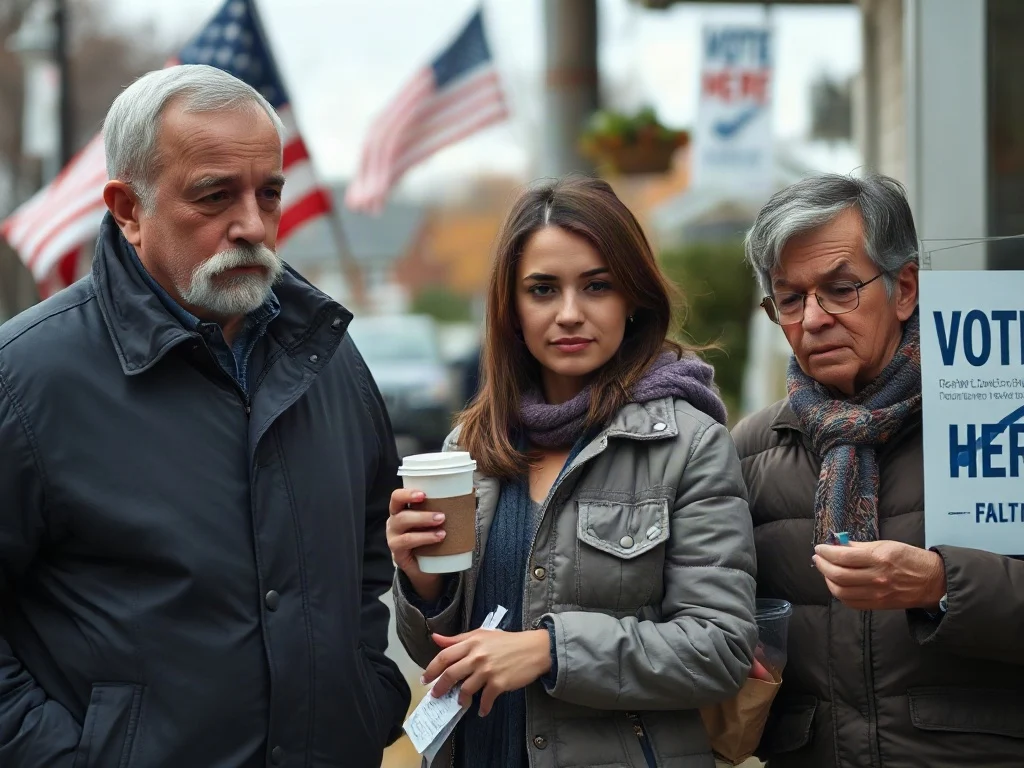
The top issues for US voters are no longer a simple matter of pocketbooks versus politics. A new survey from the Associated Press, released on a Tuesday, found that roughly 6 in 10 voters deeply disapprove of Donald Trump‘s presidency. About 4 in 10 named the economy as the most important issue, and 3 in 10 pointed to the state of American democracy. This analysis looks at what those numbers say, what they cannot say, and why the pairing of kitchen-table anxiety with institutional anxiety matters.
About 4 in 10 say the economy is the most important issue, while 3 in 10 say the state of US democracy is of primary concern, well above the number who rated crime or immigration as most important.
What the AP Voter Survey Actually Found
The headline figures are stark. Deep disapproval at the level of roughly 6 in 10 is not mild dissatisfaction. The wording points to intensity, which tends to matter more than raw approval when voters decide whether to show up. The survey also ranks priorities in a way that cuts against much of the political noise of recent years.
The Core Numbers at a Glance
| Finding | Share of voters |
|---|---|
| Deeply disapprove of Trump’s presidency | Roughly 6 in 10 |
| Economy is the most important issue | About 4 in 10 |
| State of US democracy is the primary concern | About 3 in 10 |
Crime and immigration, two issues that have dominated campaign advertising and cable news, ranked well below democracy. That is a notable shift in emphasis, even though the summary available does not give their exact figures. Because the reporting does not say whether respondents could choose more than one issue, the percentages should be read as signals of priority, not as a tidy partition of the electorate.
Cost of Living: Why the Economy Still Leads
That the economy tops the list will surprise few observers. The cost of living is felt daily, at the grocery store, at the pump and in the monthly rent or mortgage payment. Voters rarely judge the economy by headline indicators. They judge it by the price of everyday goods.
Inflation Versus Lived Experience
Economists track inflation using measures such as the consumer price index, and a slowing rate of price increases does not mean prices fall. Households can feel worse off even when real wages recover on paper, because the price level stays higher. This gap between statistics and sentiment helps explain why consumer confidence can lag official data. It is an interpretation, not a finding of this survey, but it is a useful lens for the 4-in-10 figure.
Why US Democracy Ranks Second
The most striking result is that 3 in 10 voters put the state of democracy first. Historically, abstract governance questions rarely outrank concrete concerns like crime. When they do, voters usually feel that the rules of the game are in play.
What Voters May Mean by ‘Democracy’
The term can cover several distinct worries, and the survey summary does not specify which dominate:
- Institutional balance: concerns about separation of powers and the rule of law.
- Electoral integrity: debates over voting rights and gerrymandering.
- Long-term trajectory: fears of democratic backsliding.
- Polarization: alarm over political polarization and the breakdown of shared facts.
Voters on opposite sides of the aisle can both say democracy is their top concern while meaning opposite things. That ambiguity is a caution against reading the 3-in-10 figure as a single, unified mandate.
Understanding ‘Trump Fatigue’ and Its Political Weight
The phrase ‘Trump fatigue’ is a journalistic shorthand, not a technical term. It describes the exhaustion some voters feel after years of near-constant political conflict. Deep disapproval from roughly 6 in 10 voters suggests that fatigue, where present, sits alongside firm opposition.
For midterm elections and beyond, intensity affects voter turnout. Strong disapproval can motivate opponents, while fatigue can depress participation among the disengaged. Which effect dominates is an open question the survey cannot settle.
How to Read Any Poll Responsibly
Even a high-quality survey is a snapshot of public opinion, not a forecast. Readers should weigh several factors before drawing conclusions:
- Check the margin of error and the sample design behind the opinion poll.
- Note whether respondents were registered voters, likely voters or all adults.
- Look at question wording, especially for ‘most important issue’ items.
- Compare against other independent surveys before treating a result as a trend.
For full methodology and updates, consult the original reporting at AP News. On your own site, consider linking this analysis to related pieces on inflation, election integrity and polling methods.
Frequently Asked Questions
What are the most important issues for US voters?
In this AP survey, about 4 in 10 voters named the economy, and about 3 in 10 named the state of US democracy. Both outranked crime and immigration.
How many voters disapprove of Trump’s presidency?
Roughly 6 in 10 voters said they deeply disapprove, according to the survey released Tuesday.
Why does democracy rank above crime and immigration?
The survey summary does not explain why. A plausible reading is that many voters see institutional questions as a precondition for every other policy debate, but that remains interpretation.
The Signal Beneath the Numbers
The most important insight is not that voters are unhappy. It is that they are worried on two levels at once: whether they can afford their lives, and whether the system that governs them is sound. Those concerns rarely coexist at this scale, and they can reinforce each other, since economic stress often weakens trust in institutions.
Watch three things next. First, whether the share naming democracy grows or shrinks relative to the economy as prices evolve. Second, whether deep disapproval translates into higher turnout or into disengagement. Third, whether candidates learn to speak to both worries without reducing either to a slogan. The unanswered question is whether a country can address its pocketbook anxiety without first restoring confidence in its rules, and the next election cycle will begin to answer it.
Frequently Asked Questions
Does the survey show that crime and immigration no longer matter to US voters?
No. The survey only indicates that democracy ranked well above crime and immigration as the single most important issue. The available summary does not give exact figures for those two topics, so they may still matter to many voters, just less often as the top priority.
Why can voters feel worse off economically even when inflation is slowing?
A slower inflation rate means prices rise more gradually, not that they fall. The overall price level stays higher, so groceries, fuel and rent still feel expensive. This gap between official statistics and daily experience helps explain why economic sentiment often lags the data.
Can the percentages for economy and democracy be added together?
Not safely. The reporting does not say whether respondents could name more than one issue. Because of that, the 4-in-10 and 3-in-10 figures should be read as signals of priority, not as a clean split of the electorate into separate groups.
What might voters mean when they say democracy is their top concern?
The term can cover several worries, including the balance of institutions, electoral integrity, long-term democratic backsliding, or political polarization. The survey summary does not specify which dominate, so voters with opposite views can both choose democracy while meaning very different things.
Is 'Trump fatigue' a measured finding of the AP survey?
No. It is journalistic shorthand for exhaustion after years of political conflict. The survey measured deep disapproval among roughly 6 in 10 voters, which suggests that any fatigue exists alongside firm opposition rather than simple disengagement.
How could strong disapproval affect turnout in the midterm elections?
Intense disapproval can motivate opponents of a president to vote, while fatigue may keep disengaged voters at home. The survey cannot settle which effect will dominate, so the poll alone does not predict turnout or election results.