
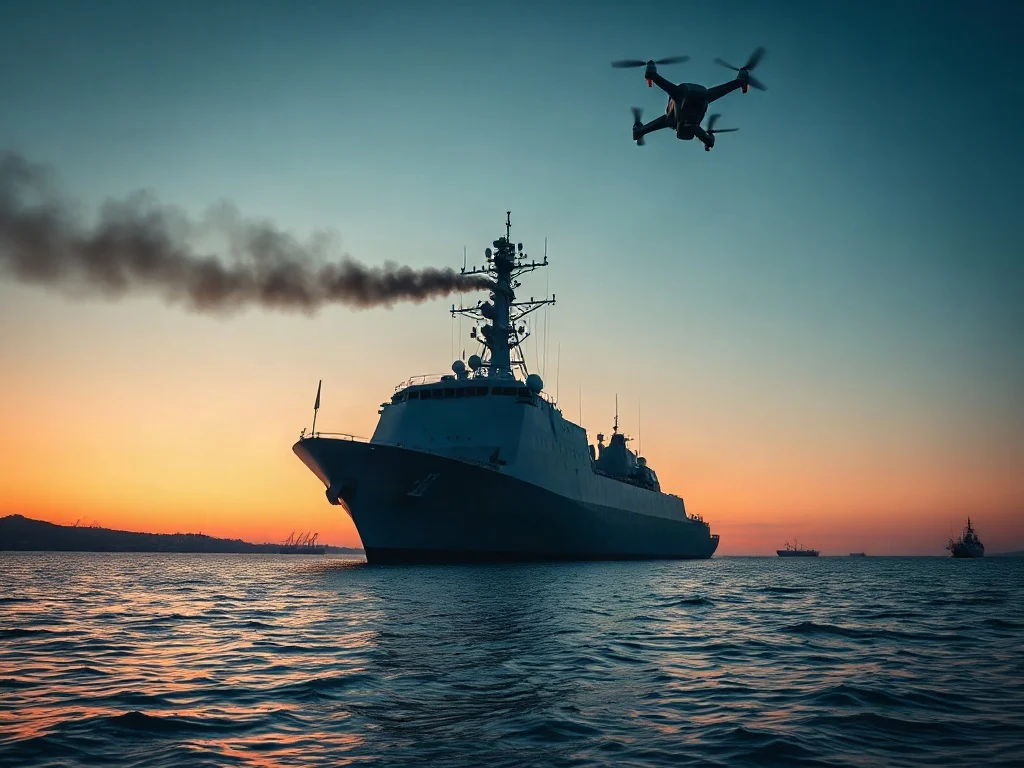
The claim that a Russian warship in Libya was struck by Ukrainian drones, if confirmed, would mark a striking geographic extension of the Russian invasion of Ukraine. Ukrainian President Volodymyr Zelensky says drones hit the vessel. The Kremlin has warned of an “escalation of tensions in the region” but declined to comment directly on the attacks in Libya. This article separates what is stated from what is verified, and explains why the episode matters.
What Is Actually Known About the Reported Attack
The public record is thin. Zelensky has made the claim, and the Kremlin has responded with a general warning rather than a direct statement on the Libya incidents. The reporting available so far does not establish the vessel’s name or class, the extent of the damage, or the launch method. Any analysis should treat those points as open.
This matters because wartime claims are often released before independent verification. Satellite imagery, port records, and open-source ship tracking usually take time to confirm or contradict a battlefield assertion. Until then, “Zelensky says” is the correct framing.
Why a Russian Navy Ship Would Be Near Libya
Russia has built influence in Libya since the Second Libyan Civil War, notably through ties to eastern commander Khalifa Haftar and the involvement of the Wagner Group. Libya’s long coastline on the Mediterranean Sea offers a possible logistics alternative for Moscow, particularly as the future of its facilities in Tartus, Syria, became uncertain after the change of power in Damascus.
A Russian naval vessel off Libya would therefore fit a broader strategy of securing Mediterranean access, supplying partners in Africa, and projecting power near NATO’s southern flank. That is an interpretation, not a confirmed account of this particular ship’s mission.
Ukraine’s Drone Warfare Beyond the Black Sea
Ukraine has already reshaped naval warfare with unmanned surface vehicles and aerial drones, pushing Russia’s Black Sea Fleet away from parts of the western Black Sea. The 2022 loss of the cruiser Moskva became the symbol of that shift.
Operational Challenges of Striking Far From Ukraine
Hitting a target near Libya would be far harder than operating in the Black Sea. Range, navigation, reconnaissance, and launch positioning all become more complex. Analysts would reasonably ask whether the drones were launched from a vessel, from a third territory, or by some other means. Those questions are unanswered in the reporting so far, and speculation should be labeled as such.
The Legal and Diplomatic Risks
An attack on a warship in or near Libyan waters raises questions under the laws of war and respect for Libyan sovereignty. A military vessel is generally a lawful target for a belligerent, but conducting operations in a third country’s territory or waters is politically sensitive and could carry legal consequences depending on where the strike occurred.
- For Libya: Rival authorities could be pulled into a dispute they did not choose, complicating UN mediation efforts such as those of UNSMIL.
- For Russia: Visible vulnerability far from home would undermine its naval prestige and force costly force-protection measures.
- For NATO and European states: The Mediterranean could become a more contested theater, raising shipping and security concerns.
Reading the Kremlin’s Response
The Kremlin’s warning of “an escalation of tensions in the region” is notable for what it avoids. It does not confirm damage, and it declines to address the Libya attacks directly. That pattern is consistent with a government that wants to deter further strikes without admitting losses. Observers should watch whether Moscow later offers a more specific account or changes naval deployments.
How to Evaluate Claims Like This
- Look for independent confirmation, such as commercial satellite imagery or port activity.
- Check whether Libyan authorities or other regional governments comment.
- Compare Ukrainian, Russian, and neutral sources, and note which claims are attributed.
- Track vessel movements through open-source maritime data, remembering that warships can disable transponders.
Frequently Asked Questions
Was the Russian warship in Libya confirmed to be damaged?
Based on the available reporting, the claim comes from Zelensky. The Kremlin has not directly addressed the Libya attacks, and independent confirmation has not been established in the reporting cited here.
Why does Russia have a naval presence near Libya?
Moscow has cultivated military and political ties in Libya and values Mediterranean access. Specific motives for this vessel are not confirmed.
Could this escalate the war?
The Kremlin has warned of rising regional tensions. Whether that becomes concrete escalation depends on verification, Russia’s response, and the reactions of Libyan and NATO-aligned governments.
The Question That Matters Next
The most important insight is that the story is as much about reach as about one ship. If Ukraine can credibly threaten Russian assets in the Mediterranean, Moscow must defend a far wider perimeter, and Libya’s fragile politics become part of the war’s strategic map. The key unanswered question is whether this was a one-off demonstration or the start of a sustained campaign. Watch for satellite evidence, any change in Russian naval patterns, and statements from Tripoli and Benghazi. A reasonable expectation, though not a certainty, is that Moscow will tighten security around its Mediterranean logistics while seeking to avoid acknowledging vulnerability.
Frequently Asked Questions
Why is it too early to treat the Libya strike as a confirmed fact?
So far the only substantive claim comes from Zelensky. The vessel's name, class, damage and launch method have not been established. Independent evidence such as satellite imagery, port records and ship-tracking data normally takes time, so the correct framing for now is 'Zelensky says'.
Why would Russia keep a warship near Libya at all?
Russia has built influence in Libya through ties to Khalifa Haftar and the earlier Wagner Group presence. Libya's Mediterranean coast could also serve as a logistics alternative if Russia's Tartus facilities in Syria become uncertain. This is an interpretation, not a confirmed explanation for this particular ship.
Why would a drone strike off Libya be harder than attacks in the Black Sea?
Distance complicates everything: range, navigation, reconnaissance and launch positioning. Analysts would ask whether the drones were launched from a vessel, from a third territory or by other means. The reporting so far does not answer these questions, so any explanation remains speculation.
Is attacking a warship in Libyan waters legal?
A military vessel is generally a lawful target for a belligerent. However, operating in a third country's territory or waters raises sovereignty concerns and could carry legal and political consequences, depending on exactly where the strike took place. The location of the incident is therefore a key unknown.
What does the Kremlin's response reveal?
The Kremlin warned of an 'escalation of tensions in the region' but did not confirm damage or address the Libya attacks directly. That is consistent with trying to deter further strikes without admitting losses. Observers should watch for a more specific account or changes in Russian naval deployments.
How could the conflict affect Libya and the wider Mediterranean?
Rival Libyan authorities could be dragged into a dispute they did not choose, complicating UN mediation efforts such as UNSMIL's. For NATO and European states, the Mediterranean could become a more contested theater, raising shipping and security concerns, while Russia would face costly force-protection measures.