
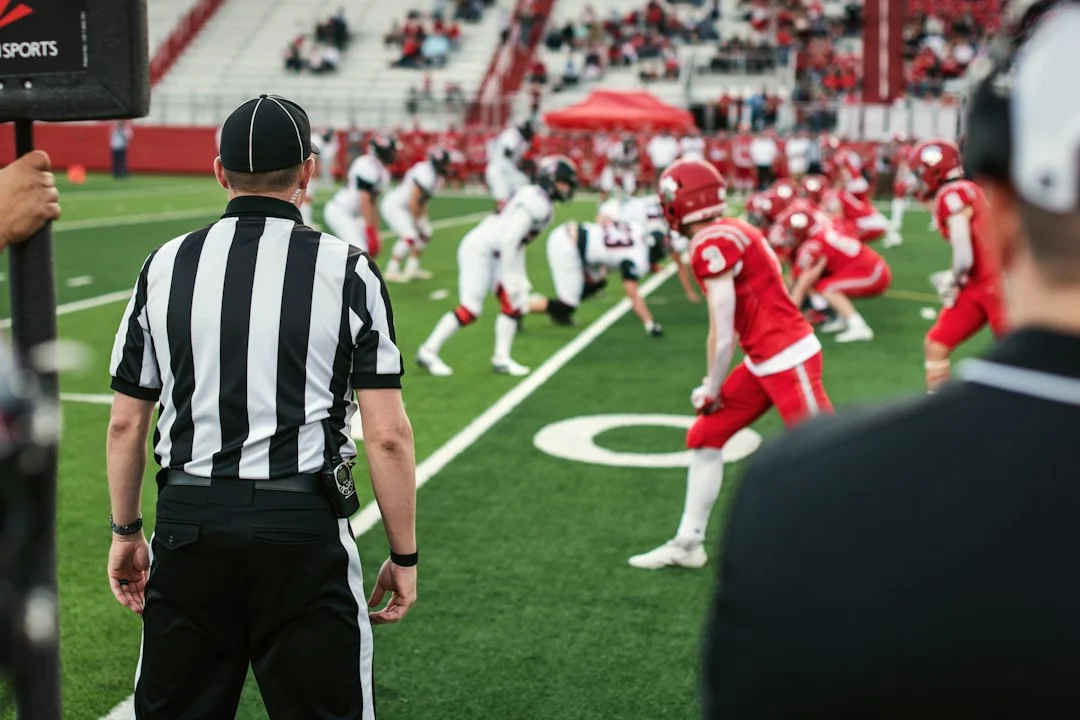
The argument over whether Enzo Fernández should have been sent off for barging the referee is not a trivial fan complaint. It is a sharp test of how modern football handles physical contact with officials in a high-pressure environment. In a UEFA Champions League match at the Etihad Stadium between Manchester City and Paris Saint-Germain, the optics were bad enough that many viewers immediately read the moment as a clear red card. The more important question is whether the law supports that reading, and whether officials apply that law consistently.
The instinctive reaction makes sense because referee protection is supposed to be non-negotiable in association football. Players can mistime a challenge, collide in a crowded box, or commit an ordinary foul. They cannot treat a football referee as just another obstacle. If the contact was forceful, deliberate, or reckless, the discussion moves away from gameplay and into discipline. That distinction matters because the referee is not an opponent; the referee is the authority that makes the match possible.
Why the incident looked like more than normal contact
In a fast-moving match, accidental brushes happen. A referee can be clipped by a change of direction, caught by momentum, or nudged while trying to keep a clear view. But the reaction to Fernández was driven by the suggestion of a deliberate barge rather than incidental contact. That is the difference between a poor body shape and a disciplinary act. Once a player uses the shoulder, arm, or torso to displace an official, the incident stops looking like a footballing error and starts looking like misconduct.
The public often judges these moments by outcome: if the referee falls, it feels red-card worthy. The law is subtler than that. The important issue is not simply that the official ended up on the ground; it is whether the player used unnecessary force against a protected participant in the match. If the action was as forceful as fans believed, then the emotional reaction was not exaggerated. It was a recognition that football draws a hard line around match officials for a reason.
The key question is not whether there was contact. It is whether the contact crossed the line from heat-of-the-moment chaos into conduct that football must punish immediately.
What the Laws of the Game actually say
The governing reference point is not social media consensus but the official IFAB Laws of the Game, written by the International Football Association Board. Under Law 12, violent conduct includes the use, or attempted use, of excessive force or brutality against a match official, regardless of whether contact is made. That is the central point many casual observers miss: the law protects referees more strongly than it protects ordinary opponents because the referee must remain neutral and safe.
That protection is not symbolic. It is practical. A player who barges a referee can be dismissed even if the contact seems brief or the official is not seriously hurt. The law does not require injury. It requires a threshold of force and intent that crosses from incidental movement into aggressive or excessive contact. In that sense, this sort of incident is not primarily about the referee’s balance; it is about the player’s behaviour.
| Type of contact | Likely disciplinary reading | Why it matters |
|---|---|---|
| Accidental brush in open play | No card, or at most a minor sanction if part of broader dissent | Momentum and crowded positioning are part of football |
| Reckless bump or shoulder into an official | Yellow card or red card depending on force and context | Officials are protected participants |
| Deliberate shove or barge at a referee | Red card for violent conduct | Excessive force against a match official is a serious offence |
Incidental contact is not the same as a barge
This distinction is where debate tends to become distorted. In a crowded penalty area, a player can collide with a referee without meaning to. That is ordinary match chaos. But a direct, forceful movement into an official is different. Even when players later insist that they were not trying to make contact, referees and disciplinary panels still assess body language, speed, angle, and force. In other words, football judges the action, not the post-match explanation.
That is why many viewers reacted so strongly. If the incident involved Fernández using his body to displace the referee, the case for dismissal is built less on emotion than on the structure of the law. A footballer who can identify a referee can also avoid them. Failing to do so, especially with force, is not an unavoidable accident. It is a choice or at least a reckless disregard for the consequences.
Where VAR fits, and where it does not
The arrival of the video assistant referee has changed expectations, but it has not removed judgment from the game. VAR is not a replay machine for every contentious moment. It exists to correct major errors in defined categories, including direct red-card incidents. That means the system can intervene if the on-field team misses a clear dismissal, but it will not automatically overturn every grey-area judgment involving player-referee contact.
This is why public frustration is so persistent. Supporters see the replay from multiple angles; officials see the incident once, in real time, with limited information. When a contact is borderline, the bar for intervention remains high. If the referee on the pitch did not judge the action to be violent conduct, VAR would need the error to be obvious before recommending a review. That is a sensible safeguard, but it also means obvious-looking cases to fans can still survive because the protocol is stricter than the crowd expects.
The consistency problem at elite level
Elite tournaments such as the UEFA competitions and events governed by FIFA often promise consistency, yet their discipline thresholds are not always read the same way across matches. One week, a push is treated as dissent; another week, the same physical act becomes a straight dismissal. That inconsistency is corrosive. It tells players they can test the boundary and tells fans that the boundary is not fixed.
That inconsistency is especially damaging when the action involves the referee. Ordinary fouls are contentious enough. Contact with the official should be easier to define and easier to punish. If the standard is not visibly firm, then every future collision becomes a referendum on whether the competition wants to protect referees or simply say it does.
Why the public reaction is stronger than the official explanation
There is a reason these incidents travel quickly across television clips and social platforms. The image of a player barging a referee is simple, visual, and instinctively wrong. It needs little context to provoke anger. By contrast, the official explanation is always slower and more technical: body position, force, intent, match angle, game state, and whether the action fits the definition of a sending-off offence. Those layers are accurate, but they rarely satisfy viewers who see one obvious frame and infer one obvious sanction.
That gap matters because football is not judged only by the final disciplinary outcome. It is also judged by whether its laws feel credible in real time. When fans immediately ask why Fernández was not sent off, they are not just arguing one decision. They are questioning the sport’s willingness to enforce its own hierarchy. A yellow card may look like a compromise; in a case of forceful contact with an official, compromise is precisely what the law is designed to avoid.
What coaches and players should take from this
The practical lesson is blunt. Players must treat the referee as untouchable unless contact is clearly unavoidable. That means controlling momentum, avoiding demonstrative gestures, and never using the body as a protest. Coaches should not frame this as a temperament issue alone. It is a risk-management issue. A needless collision with an official can change a match, invite retrospective scrutiny, and create a disciplinary story that overwhelms the football.
Teams also need to accept that these incidents are often judged more harshly than ordinary fouls because they threaten the authority structure of the sport. A hard tackle says, in effect, that a player timed an action badly. A barge into a referee says something more serious: that the player either lost control or ignored the protected status of the official. Those are not the same errors, and they should not attract the same response.
Three questions that decide the punishment
When an incident like this happens, the useful analysis is simple. First, did the player initiate unnecessary physical contact? Second, was the contact forceful enough to put the referee at risk or off balance? Third, did the action occur in a context where emotion made escalation more likely? If the answer to all three is yes, a straight red is not an overreaction. It is the correct safeguard.
That framework is more reliable than relying on crowd noise, post-match punditry, or the instinct that a referee should somehow be able to absorb contact because the game is fast. The pace of the sport is not an excuse. It is the reason the law is strict.
What this incident says about the next stage of refereeing
The deeper issue is not whether one replay looked bad on television. It is whether football wants to keep treating referee protection as a principle or merely a slogan. If the laws already classify forceful contact with a match official as red-card territory, then the real test is enforcement. If enforcement remains inconsistent, players will continue to probe the boundary, fans will continue to distrust the process, and every controversial barge will become evidence of a system that talks tougher than it acts.
That choice will matter even more as scrutiny grows. The combination of faster cameras, broader replay access, and louder online reaction makes it harder for governing bodies to hide behind ambiguity. The next few seasons will likely force a clearer line from competitions run by UEFA and from the global game overseen by FIFA. The unanswered question is simple: will football finally enforce referee protection with the seriousness it claims, or will it keep leaving the hard cases to interpretation until the next one becomes a controversy?
Frequently Asked Questions
Was Enzo Fernández automatically red-carded just because he made contact with the referee?
No. Contact alone does not automatically mean a red card. The key issue is whether the contact was accidental, reckless, or a deliberate barge with excessive force. In football law, a brief accidental brush can be tolerated, but forceful or intentional contact with a referee is treated far more seriously.
Why did so many fans think the incident was clearly a red card if the referee was not injured?
Because the visual impact mattered more than the outcome. When a player appears to shoulder or barge a referee, it looks like an obvious breach of respect and safety. The Laws of the Game do not require the referee to be injured; they focus on the force, intent, and nature of the contact.
What is the difference between incidental contact and a punishable barge in this situation?
Incidental contact happens when players and officials collide because of momentum, positioning, or a crowded area. A punishable barge involves a player using the body, shoulder, or arm to move the referee out of the way. That shifts the incident from normal match chaos into misconduct against a protected official.
Could this kind of incident be punished even if the referee is trying to move through the play?
Yes. The referee’s movement does not give players permission to make forceful contact. Players are still expected to avoid unnecessary or aggressive physical contact with officials. If a player chooses to displace the referee with excessive force, the disciplinary focus remains on the player’s action, not the referee’s positioning.
Why are referees treated more strictly than ordinary opponents under the laws?
Because referees are neutral authorities who must remain safe and protected to control the match. Football allows physical contact between opponents as part of the game, but not aggression toward officials. Law 12 treats excessive force against a match official as a serious offence, even if there is no visible injury.