
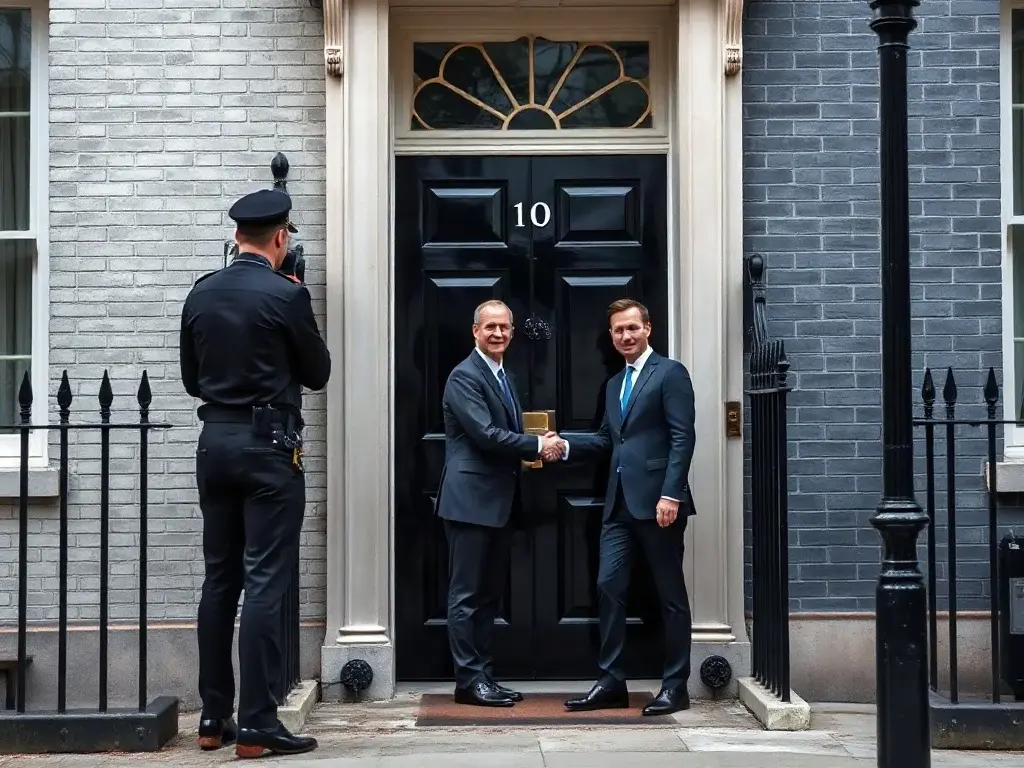
When Prince William meets Andy Burnham at Downing Street, the headline is about protocol, but the agenda is about policy. According to the initial report, the Prince of Wales is making his first Downing Street visit in this context, and homelessness is expected to be among the topics. The brief report gives no further detail on format, length or outcomes, so this analysis separates what is known from what is plausible.
“The Prince of Wales is meeting Andy Burnham with homelessness expected to be among the topics.”
Why the Prince William and Andy Burnham meeting matters
A meeting at 10 Downing Street signals that the subject is being treated as a national priority. The pairing is also notable because both men have built public profiles around housing insecurity, though in very different ways.
Andy Burnham is widely associated with his time as Mayor of Greater Manchester, where he made tackling rough sleeping a signature issue and backed the city-region’s “A Bed Every Night” scheme. William, by contrast, works through charitable convening rather than legislation.
Prince William and homelessness: a long-running commitment
From Diana to Centrepoint
William’s interest has a documented personal history. As a boy he was taken to a homeless shelter by Diana, Princess of Wales. He later became patron of the youth homelessness charity Centrepoint, a role Diana had held before him.
The Homewards programme
His most significant initiative is Homewards, a five-year programme launched in 2023 through The Royal Foundation. It backs local coalitions of councils, charities, businesses and people with lived experience in selected areas of the UK. The aim is to show that homelessness can be made rare, brief and unrepeated through local collaboration. Programme details are on the official Homewards website.
The policy backdrop: homelessness in the UK
Homelessness in the United Kingdom covers rough sleeping, temporary accommodation, sofa surfing and people at risk of losing their homes. Different nations measure and legislate for it differently. In England, councils’ duties to prevent and relieve homelessness stem from the Homelessness Reduction Act 2017. Official figures are published by the government in its homelessness statistics collection, and readers should check the latest release rather than rely on secondary summaries.
Structural drivers experts cite
- Housing supply: a shortage of affordable homes and a decline in social housing stock.
- Private rental costs: rents outpacing support from the Local Housing Allowance.
- Temporary accommodation: mounting costs for councils.
- Individual factors: relationship breakdown, mental ill health, addiction and leaving care or prison.
Analysts disagree on emphasis. Some stress supply and benefit levels, while others stress service coordination and early prevention. Approaches such as Housing First, which provides stable housing before addressing other needs, have strong evidence in some settings but depend on available homes and support staff.
Can the royal family influence government policy?
Under the UK’s constitutional monarchy, members of the royal family do not set policy, and they are expected to stay politically neutral on contested party issues. Their influence is soft power: drawing media attention, convening partners, lending credibility to charities and reducing stigma.
Homelessness fits this role well because it attracts cross-party concern, but the line is delicate. Advocacy that appears to endorse a specific funding decision or legislative route would test neutrality. Convening and evidence-sharing are far safer territory. William also has a direct stake as heir to the Duchy of Cornwall, which owns property, though that does not make the Duchy a major provider of social housing.
What practitioners should watch
- Specific commitments: any funding, data-sharing or pilot announcements that follow the meeting.
- Local-versus-national balance: whether Homewards lessons feed into national strategy or stay local.
- Measurement: whether shared targets and common definitions of success emerge.
- Prevention: whether attention shifts from emergency response to stopping homelessness before it starts.
A common mistake in covering such meetings is treating symbolism as outcome. A photo opportunity does not build homes, and no policy follows from the report alone.
The question this meeting leaves open
The most important insight is that this meeting links two different theories of change: a politician who has used governmental and regional levers, and a royal who uses convening power and long-term partnerships. Neither can end homelessness alone, since the main constraints, housing supply and affordability, are decided by planning, funding and welfare rules.
The test will be whether the discussion produces something measurable, such as a shared data framework, a commitment to scale proven local models, or a clearer prevention duty. It is reasonable to expect more public engagement from William on this issue, but whether that becomes policy is not yet known. Watch for any official readout and for the next set of homelessness statistics, because those will show whether attention is turning into results.
Frequently Asked Questions
Does the meeting mean the government will change its homelessness policy?
Not necessarily. The initial report gives no detail on format, length or outcomes, so no policy shift can be assumed. Royal involvement is mainly symbolic. What matters is whether concrete funding, data-sharing or pilot announcements follow the meeting.
Why is Andy Burnham a relevant figure for a discussion on homelessness?
As Mayor of Greater Manchester, Burnham made tackling rough sleeping a signature issue and backed the city-region's 'A Bed Every Night' scheme. That track record gives him practical experience of local approaches, which makes him a natural counterpart for William's local, partnership-based work.
What is the Homewards programme and what does it try to achieve?
Homewards is a five-year programme launched in 2023 through The Royal Foundation. It supports local coalitions of councils, charities, businesses and people with lived experience in selected UK areas. Its aim is to show that homelessness can be made rare, brief and unrepeated through local collaboration.
Can Prince William lobby the government on homelessness?
Not in the way a politician or campaign group can. Royals are expected to stay politically neutral on contested issues. They use soft power: raising attention, convening partners, lending credibility to charities and reducing stigma. Backing a specific funding decision or bill would test that neutrality.
Is the Duchy of Cornwall a major provider of social housing?
No. William is heir to the Duchy of Cornwall, which owns property, so he has a direct stake in land and housing. However, that does not make the Duchy a major provider of social housing, and it should not be confused with his charitable work on homelessness.
Where can I find reliable figures on homelessness in the UK?
Official figures appear in the government's homelessness statistics collection, and readers should check the latest release rather than secondary summaries. Nations measure and legislate differently. In England, council duties to prevent and relieve homelessness stem from the Homelessness Reduction Act 2017.