
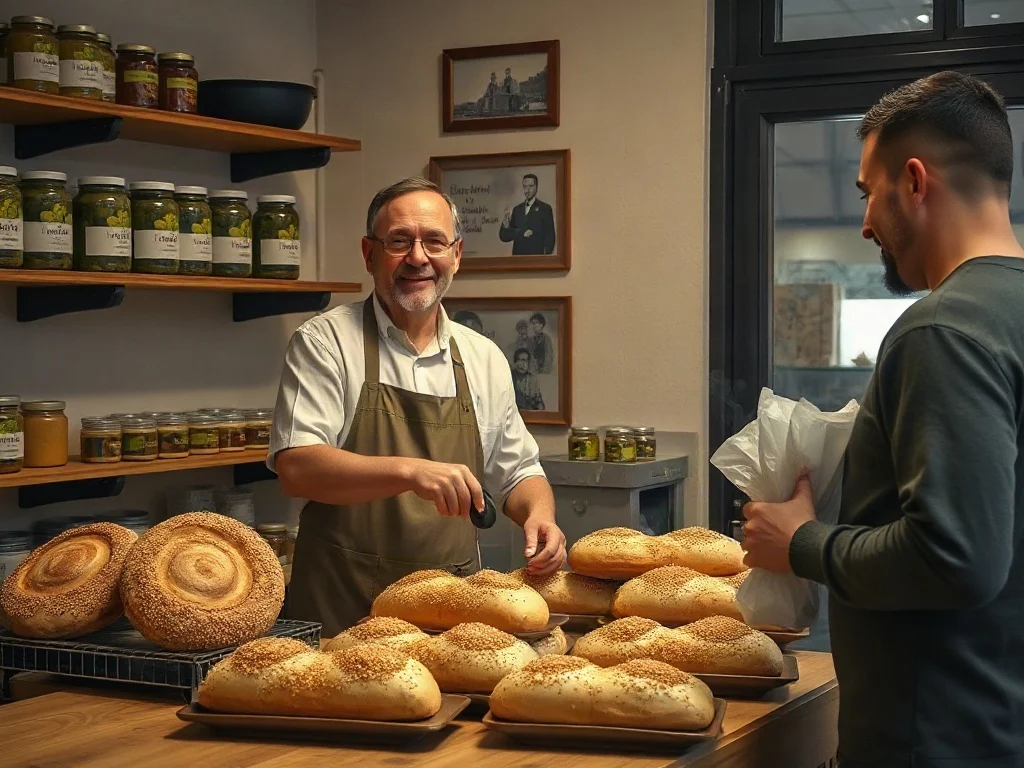
For Turkish food businesses in the UK, quality alone no longer wins loyalty. A diner scrolling through a map listing sees dozens of grills, bakeries and grocers that all claim to be “authentic”. The word has been diluted by overuse. What separates a trusted neighbourhood name from an anonymous listing is evidence: a named place of origin, a recipe with a documented lineage, a supplier you can identify. This article looks at how Turkish restaurants, bakeries and grocers can turn those facts into credible stories, and how to publish them on a blog and in directory profiles so that customers and search engines both understand them.
The analysis is practical rather than promotional. It separates what is established (food labelling law, how local search works) from what is interpretation (what customers find persuasive), so you can test the ideas against your own business.
Why Trust Is the Real Currency for Turkish Food Businesses in the UK
Turkish cuisine is already familiar to British customers, especially through the döner kebab. That familiarity is both an advantage and a problem. It gives you instant recognition, but it also means many customers associate the cuisine with late-night convenience rather than with its regional depth. The cuisine includes Aegean olive-oil dishes, Black Sea anchovy and cornmeal traditions, and the spice-led cooking of the south-east.
Storytelling closes that gap. It tells customers that your food comes from a specific tradition, made by specific people, with ingredients you can account for. This is how building customer trust works in food: reduce uncertainty by showing evidence. A customer cannot taste your food before visiting, so the story acts as a proxy for quality.
The Turkish and Turkish Cypriot communities, often grouped as British Turks, have shaped high streets such as Green Lanes in north London for decades. Many family businesses carry real migration stories and inherited recipes. These are strong raw material, but most owners never write them down.
What “Authentic Storytelling” Actually Means
Authentic storytelling is not nostalgia or a stock phrase like “recipes from grandma”. It is the disciplined disclosure of verifiable details. A useful test: could a sceptical customer check this claim, or at least ask a follow-up question and get a consistent answer?
Three Types of Story That Hold Up
- Origin stories: who founded the business, which town or region they came from, why they opened in your area, and what changed when they adapted to British ingredients.
- Regional recipe stories: why a dish belongs to a place, how it differs elsewhere, and how you make it.
- Sourcing stories: where key ingredients come from, who supplies them, and what you do when you substitute.
What Does Not Work
Vague claims such as “the best Turkish food in London” or “100% authentic” give readers nothing to verify. They are also the claims most easily copied by competitors, so they carry no differentiating weight.
Origin Stories: Make the Founder Specific
A strong origin story names a place, a date range and a motivation. Compare two openings. The first: “We bring you the taste of Turkey.” The second: “Our founder learned to make pide in a family bakery in Samsun before moving to Walthamstow in the late 1990s.” Use only details you can stand behind. The second is more credible because it can be questioned and confirmed.
Include the awkward parts as well. If you adapted a recipe because certain cheese or flour wasn’t available in Britain, say so. Customers tend to read candour about trade-offs as honesty, which is an interpretation rather than a measured fact, but it is consistent with how people judge credibility in other consumer fields.
Regional Recipes as a Differentiator
Regional specificity is the strongest tool Turkish food businesses have, because it is hard to fake and easy to explain. Rather than listing “Turkish dishes”, organise your menu or product range around places.
Examples of Regional Anchors
- Gaziantep and the south-east: known for pistachio-rich desserts. Baklava is the best-known example, and Gaziantep baklava has protected geographical indication status in the European Union. See the Wikipedia pages on Gaziantep and geographical indications for background.
- Hatay: a province with a layered cuisine shaped by many cultures. See Hatay Province.
- The Black Sea coast: cornmeal, greens and anchovy dishes, covered under the Black Sea Region.
- The Aegean: herbs, olive oil and vegetable dishes, linked to the Aegean Region.
Dishes such as lahmacun, pide, simit, meze and menemen each have regional variations. A short note on your version, and why it differs from others, shows expertise without sounding defensive.
Edge Case: Regional Disputes
Some dishes are claimed by several regions or neighbouring countries. Do not assert exclusive ownership. Phrase it as “made the way we learned it in…”. Overclaiming invites correction from knowledgeable customers, which damages the trust you are trying to build.
Transparent Sourcing: Proof Beyond the Menu
Sourcing transparency is where storytelling becomes accountable. For grocers and bakeries in particular, customers want to know what is imported, what is made locally and what is simply resold.
What to Disclose
- Imported versus local: state clearly which products are imported from Turkey and which are produced in the UK.
- Key suppliers: name producers where you have permission, or describe them specifically (for example, a cooperative or family mill).
- Halal practice: if you claim halal status, explain what that means in your supply chain and who certifies it. Do not imply certification you do not hold.
- Substitutions: say what you replace and why.
Compliance Comes First
Stories must never contradict legal obligations. UK businesses must handle allergen information correctly, and the rules for prepacked-for-direct-sale food, often called Natasha’s Law, apply to many bakeries and delis. The Food Standards Agency’s allergen guidance is the authoritative reference. The Food Standards Agency also publishes hygiene information, and a visible hygiene rating supports every narrative claim you make. Also avoid terms such as “protected” or “PGI” unless a product genuinely holds the status, and check current rules for the UK scheme before using such language.
Publishing the Story: Blog Strategy
A blog lets you give each story room. The aim is not volume; it is useful depth that answers the questions a curious customer, or a local journalist, might ask.
Post Formats That Work
- Dish deep-dives: one regional recipe, its history, how you make it, and what to order with it.
- Supplier profiles: a short, factual account of where a key ingredient comes from.
- Founder narratives: a single page that serves as your canonical origin story.
- Seasonal guides: for example, what to eat during particular holidays, with respectful cultural context.
On-Page Practice
Write for people first, then structure for search. Google’s guidance on creating helpful, people-first content emphasises first-hand experience and clear sourcing, both of which a family business is well placed to demonstrate. Use descriptive headings, add original photographs with accurate alt text, and connect posts with internal links. For example, link a dish article to your menu page, and a supplier profile to the relevant product category. Basic search engine optimization follows naturally from this clarity.
Directory Profiles: Turning Stories Into Local Visibility
A Turkish restaurant directory listing or grocery profile is often the first thing a potential customer sees. Most profiles allow only a short description, so concision matters.
A Practical Profile Template
- Line one: what you are and where you are from, for example a family bakery rooted in a named region.
- Line two: one proof point, such as a signature dish or a named supplier.
- Line three: practical facts such as halal information, dietary options and opening hours.
Keep your name, address and phone number identical across every platform. Inconsistent details undermine trust and can confuse local search systems. Where a directory supports it, add structured data. The Schema.org Restaurant type describes the properties search engines understand. Link from your directory profile to your longer origin story on your own site, so that the short claim has verifiable depth behind it.
How to Promote a Turkish Restaurant or Grocer Online in the UK
Readers searching for how to promote a Turkish restaurant online in the UK usually want a sequence, not a list of ideas. A realistic order of work:
- Audit your claims. Remove any you cannot support.
- Write one canonical origin page and one page per signature dish or product line.
- Photograph your kitchen, suppliers and process. Original images outperform stock imagery for credibility.
- Align every directory and map profile with the same facts and a link back to your site.
- Encourage reviews that mention specifics. You cannot script them, but you can ask customers what they enjoyed most.
- Review quarterly: check search visibility, profile views, direction requests and review themes.
Common Mistakes
- Using “authentic” without evidence.
- Copying generic Turkish history text rather than telling your own story.
- Mixing Turkish, Greek and Levantine dishes without distinguishing them.
- Letting the blog go silent after three posts.
- Telling a sourcing story that your menu or shelves contradict.
Risks, Limits and Honest Trade-Offs
Storytelling carries risk. Stories require upkeep: if a supplier changes, the page must change. Cultural claims may be challenged by customers who know the cuisine well. Small businesses also face a time cost, and not every owner wants a public narrative. A modest, accurate story is better than an ambitious one that cannot be maintained. There is no public dataset proving that storytelling raises sales for Turkish food businesses specifically, so treat the approach as a hypothesis and measure your own results.
Frequently Asked Questions
How can food businesses build customer trust?
Disclose verifiable facts: origin, sourcing, hygiene rating, allergen handling and certifications. Keep information consistent across your website, directories and in-store signage.
Is “authentic” a legally protected word?
Not as a general term. Protected names and geographical indications exist for specific products, but claims must not be misleading under UK consumer protection rules. Check current guidance for your products.
How long should a directory description be?
Follow each platform’s limit, but aim for two or three concise sentences containing one specific origin or sourcing detail and the practical information customers need.
Should a bakery blog about recipes it considers secret?
Yes, but share the story rather than the formula. You can explain a dish’s history, regional style and key ingredients without revealing exact proportions.
The Next Test for Turkish Food Businesses: Proof, Not Positioning
The central insight is that trust is built by claims that can be checked. Origin, region and sourcing are the three areas where Turkish food businesses hold real, specific knowledge that generic competitors cannot copy. The businesses that benefit most will probably be those that treat their story as a maintained record, updated as suppliers, recipes and menus change, rather than a one-off marketing page.
Watch three developments. First, how search engines and AI-driven answer tools summarise local businesses, which may reward structured, consistent and well-sourced profiles. Second, whether UK rules on origin labelling and geographical indications shift how imported Turkish products can be described. Third, whether a new generation of owners, often the children of founders, chooses to document family histories before they are lost. The open question is whether “authenticity” will remain a marketing word or become something customers expect to see demonstrated. The evidence suggests the second outcome is more likely, and the businesses that start documenting now will have the advantage.
Frequently Asked Questions
How can I tell whether a story about my Turkish food business is verifiable enough to publish?
Apply the sceptical customer test: could someone check the claim, or ask a follow-up question and receive a consistent answer from any staff member? Named towns, date ranges and identifiable suppliers pass this test. Phrases like "100% authentic" or "recipes from grandma" do not, so leave them out.