
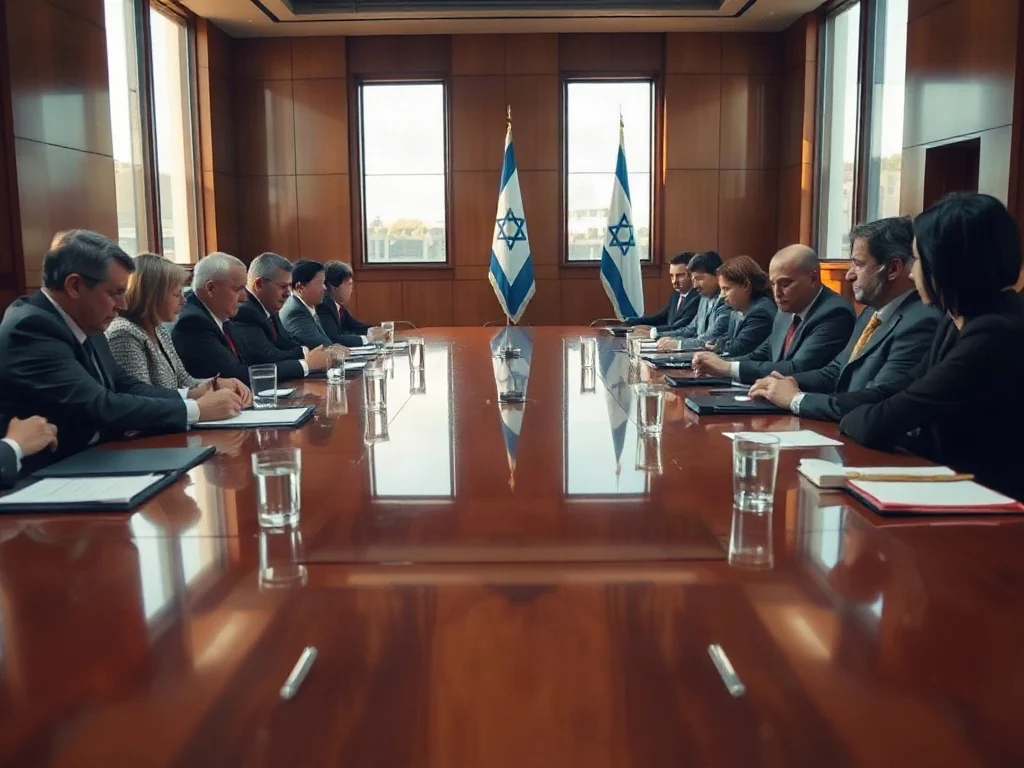
The Israeli coalition talks that open on Sunday begin with an unusual gesture. Opposition leader Gadi Eisenkot has invited caretaker prime minister Benjamin Netanyahu’s right-wing Likud party to what his centrist Yashar party calls a ‘marathon series of talks.’ Yashar says the move reflects a commitment to form ‘the broadest possible government’ after the October election produced no outright winner. This analysis explains what the invitation means, how Israeli coalition arithmetic works, and what to watch as the negotiations unfold.
Why Eisenkot’s Invitation Matters
Gadi Eisenkot is a former chief of the Israel Defense Forces general staff. He now leads the centrist Yashar party and holds the role of opposition leader. Extending a hand to Likud, the party of his longtime political rival, is a strategic choice. It signals that he sees a cross-bloc arrangement as more realistic than a narrow bloc-versus-bloc fight.
The source report gives no seat counts, and none are assumed here. Even so, the phrase ‘failed to deliver an outright winner’ points to a deadlock. In that situation, Eisenkot Netanyahu coalition talks are as much about positioning as about policy. Each side wants to be seen as the one that tried to build a broad government, because voters and the president may judge who bears blame if negotiations collapse.
How Are Coalitions Formed in Israel?
Understanding the stakes requires a short look at the mechanics. Israel uses proportional representation with a nationwide list system. Parties must pass an electoral threshold to enter the Knesset, which has 120 seats. No party has ever won a majority alone, so every government of Israel has been a coalition government that needs at least 61 seats.
The President’s Role
After an election, the president of Israel, currently Isaac Herzog, consults party leaders and tasks the Knesset member with the best chance of building a majority. Under the Basic Laws of Israel, that candidate generally has 28 days, extendable by up to 14. If the attempt fails, the mandate can pass to another candidate. If that also fails, the Knesset can nominate someone itself, and repeated failure triggers a new election. Informal talks before or alongside this process therefore carry real weight.
The Caretaker Constraint
Netanyahu leads a caretaker government. Such governments continue day-to-day administration but are expected to avoid major new policy commitments. That limits Netanyahu’s room to maneuver and raises the value of a quickly formed, stable successor government.
The ‘Broadest Possible Government’ Idea
Yashar’s language recalls the national unity government model. In that model, rival parties set aside differences to govern together during a crisis. Israel has used it before, including arrangements involving Benny Gantz, which gives the concept a mixed record. Supporters argue that broad coalitions reduce dependence on small parties with narrow demands. Critics counter that they blur accountability and can paralyze decision-making.
Obstacles to a Broad Deal
- Ideological distance: A centrist party and a right-wing party may disagree on judicial, security, and social policy.
- Personal rivalries: Disputes over who leads, and who holds key ministries, often derail talks more than policy does.
- Existing alliances: Parties tied to Haredi or other sectoral interests may resist a coalition that dilutes their leverage.
- Voter backlash: Supporters of either camp may punish leaders who appear to compromise on core promises.
Practical Signals to Monitor
Observers tracking this Israeli election deadlock should watch several indicators rather than headlines alone:
- Whether Likud formally accepts the invitation or sends a lower-level delegation.
- Whether either side publicly attaches preconditions, such as who would serve as prime minister.
- How the president sequences consultations relative to the talks.
- Whether smaller parties begin parallel negotiations, which would suggest the broad-government track is faltering.
Primary sources, including the official Knesset website, publish the formal results and legal timelines. Readers should check them before relying on commentary.
Frequently Asked Questions
What is the goal of the Eisenkot-Likud talks?
According to Yashar, the goal is the ‘broadest possible government’ after an election with no outright winner. The party has not said what terms it would accept.
Can a caretaker prime minister negotiate a coalition?
Yes. A caretaker prime minister remains in office and can hold political talks. Major policy decisions, however, are traditionally restrained until a new government is sworn in.
What happens if the talks fail?
The president can assign the mandate to another candidate. If no one reaches 61 seats within the legal deadlines, the country heads to another election.
The Real Test Is Whether Rivals Can Share Power
The invitation is easy to make and hard to honor. The key insight is that a ‘marathon’ of talks costs little, while a coalition agreement requires each side to give up something its voters value. The central question is whether Netanyahu’s Likud sees a broad government as a path to stability or as a threat to its leverage. The first answer will come from who attends the Sunday session and what each delegation publicly demands. Expect the early days to be dominated by positioning. If preconditions harden, the probability of prolonged deadlock rises. If both sides stay in the room past the first week, a surprise cross-bloc arrangement becomes plausible, though not yet predictable.
Frequently Asked Questions
¿Why would Eisenkot invite Likud instead of building a coalition with his own bloc?
The article suggests Eisenkot sees a cross-bloc arrangement as more realistic than a narrow bloc-versus-bloc fight after an election with no outright winner. The invitation also helps him look like the leader who tried to build the broadest possible government, which matters if talks collapse and voters assign blame.
Does the invitation mean Likud and Yashar will actually govern together?
No. The invitation only opens talks, and the article lists serious obstacles: ideological gaps on judicial, security and social policy, personal rivalries over who leads, Haredi and sectoral interests, and possible voter backlash. Likud may also decline or send only a lower-level delegation, so the outcome remains uncertain.
What happens if the first candidate fails to form a majority government?
President Isaac Herzog tasks the candidate with the best chance, who generally has 28 days, extendable by up to 14. If that attempt fails, the mandate can pass to another candidate. If that also fails, the Knesset can nominate someone itself, and repeated failure triggers a new election.
How does Netanyahu's caretaker status affect the negotiations?
A caretaker government handles day-to-day administration but is expected to avoid major new policy commitments. This limits Netanyahu's room to maneuver and raises the value of a quickly formed, stable successor government, which gives him an incentive to take the talks seriously rather than simply wait.
Are national unity governments a proven solution in Israel?
Their record is mixed. Israel has used them before, including arrangements involving Benny Gantz. Supporters say broad coalitions reduce dependence on small parties with narrow demands, while critics argue they blur accountability and can paralyze decision-making, so the model does not guarantee stability.
What signs would show that the broad-government track is failing?
Watch whether smaller parties begin parallel negotiations, which would suggest the broad track is faltering. Other signals include Likud declining or downgrading its delegation, either side attaching preconditions such as who becomes prime minister, and how the president sequences consultations relative to the talks.