
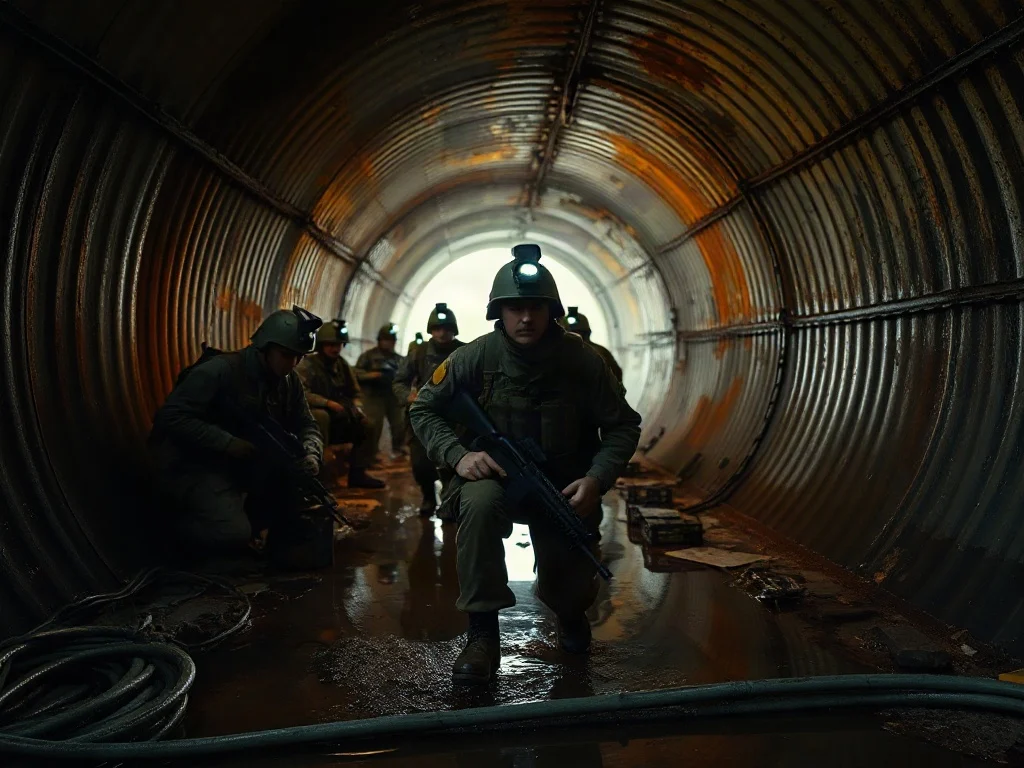
The Ukraine underground war has moved from military theory to a physical reality. A BBC report by defence correspondent Jonathan Beale takes viewers inside a disused gas pipeline where Ukrainian forces are fighting beneath the surface, out of sight of Russian drones. This article explains why a buried pipe can become a combat position, what the BBC’s reporting does and does not tell us, and what the wider shift means for modern warfare.
The BBC describes the footage in a short standfirst:
“The BBC’s Jonathan Beale joins Ukrainian forces taking the battle below ground and out of sight of Russian drones.”
That summary is the only confirmed detail this analysis relies on. Everything else below is background and informed interpretation, and it is labelled as such.
Why Ukraine Is Fighting Underground
The core logic is simple: drones have made the surface lethal. Since the 2022 Russian invasion of Ukraine, both sides have relied heavily on unmanned aerial vehicles for reconnaissance and strikes. Cheap first-person-view drones and loitering munitions can hunt individual soldiers, so any movement above ground risks detection.
Going underground answers that problem directly. Soil and steel block the optical and thermal sensors that most drones depend on, and a pipeline offers a ready-made, reinforced corridor that needs little new construction.
The Pipeline as a Military Structure
What makes it useful
The BBC does not, in the material available here, give technical specifications, so the following is general reasoning rather than reporting. A large-diameter pipeline built to carry natural gas is a long, continuous, buried tube. That can allow troops to move between positions, rotate personnel and carry supplies without crossing open ground.
Why it is also a risk
An enclosed steel tube is not automatically safe. Residual gas, poor ventilation, flooding, collapse and limited escape routes are serious hazards. A known entrance can also become a target if an adversary identifies it, so concealment of access points matters as much as the tunnel itself.
A Return to Tunnel Warfare
Tunnel warfare is ancient, but its modern history shows when it tends to appear: when one side cannot easily dominate the surface. In the First World War, military mining was used to break the deadlock of trench warfare. In Vietnam, the Cu Chi tunnels sheltered fighters from superior firepower. In Ukraine itself, the defenders of the Azovstal steelworks in Mariupol used the site’s underground spaces during the 2022 siege.
What is new is the trigger. Earlier underground fighting was a response to artillery and machine guns. Today the driving force is persistent aerial surveillance, which is a different kind of threat.
Drone Warfare in Ukraine and the Search for Concealment
Drone warfare in Ukraine has produced a continuous contest between detection and concealment. Electronic warfare systems jam signals, camouflage nets hide equipment, and dispersed positions limit losses. Burrowing into the ground is the most radical form of concealment, because it removes the target from view rather than disguising it.
This has practical consequences for both armies. Underground positions can reduce casualties and let troops rest closer to the front line. They also slow reaction times, complicate communications and make it harder to observe the enemy.
What Soldiers and Analysts Should Watch
- Ventilation and safety: enclosed spaces need air quality control, especially in former gas infrastructure.
- Signature management: heat, power sources and foot traffic around entrances can reveal a position.
- Communications: radio signals rarely travel well through earth and steel, so wired or relay links are often needed.
- Counter-measures: an adversary may respond with deep-penetrating munitions, ground sensors or by targeting entrances.
Frequently Asked Questions
Why is Ukraine fighting underground?
Surveillance and attack drones make surface movement dangerous. The BBC report presents underground positions as a way to take the fight out of sight of Russian drones.
Is tunnel warfare new?
No. It has been used for centuries, though modern conflicts show it returning whenever one side cannot safely operate on the surface.
Can drones see inside tunnels?
Drones generally cannot see through soil or steel. Small drones can sometimes enter open entrances, so access points remain vulnerable.
The Question the Pipeline Leaves Unanswered
The most important insight is that the front line is increasingly vertical. When sensors dominate the sky, the safest ground is beneath it. A decommissioned piece of energy infrastructure becoming a military corridor shows how quickly this war repurposes whatever is at hand.
The key thing to watch is whether underground fighting scales up or stays a niche tactic. If both sides invest in deep-penetrating weapons, ground-sensing technology and robotic scouts for confined spaces, the advantage of hiding below the surface could narrow. That is a reasoned prediction, not a confirmed trend. The open question is whether the next adaptation will come from engineers digging deeper or from machines designed to follow soldiers into the dark. For further reporting, see the BBC News coverage of the war.
Frequently Asked Questions
Does the BBC report give technical details about the pipeline, such as its location or size?
No. According to the article, the only confirmed detail comes from the BBC's short standfirst. Everything about diameter, construction and layout is general reasoning, not reporting. Operational specifics like location are typically withheld in wartime coverage to protect the troops involved.
Can a gas pipeline really be used as a safe shelter for soldiers?
Not automatically. A steel tube hides troops from drone sensors, but residual gas, poor ventilation, flooding, collapse and few escape routes are serious hazards. If the enemy finds an entrance, it can become a target, so concealing access points matters as much as the tunnel.
How is this different from earlier tunnel warfare like the Cu Chi tunnels or First World War mining?
The difference is the trigger. Earlier underground fighting responded to artillery, machine guns or trench deadlock. Today the driver is persistent aerial surveillance by cheap drones, which can spot and strike individual soldiers on the surface. The threat is detection rather than heavy firepower alone.
Why do soil and steel protect against drones?
Most drones rely on optical and thermal sensors, and earth and steel block both. Burrowing removes the target from view instead of disguising it, which makes it the most radical form of concealment. Heat, power sources or foot traffic near entrances can still give a position away.
What are the downsides of fighting underground for Ukrainian troops?
Underground positions can reduce casualties and let soldiers rest closer to the front, but they slow reaction times, complicate communications and make observing the enemy harder. Radio signals travel poorly through earth and steel, so wired or relay links are often needed.
How might Russian forces counter underground positions?
The article suggests several responses: deep-penetrating munitions, ground sensors, or targeting the entrances and exits. Because a known access point is the weak spot, hiding signs of activity around it, such as heat and traffic, becomes a central part of staying undetected.