
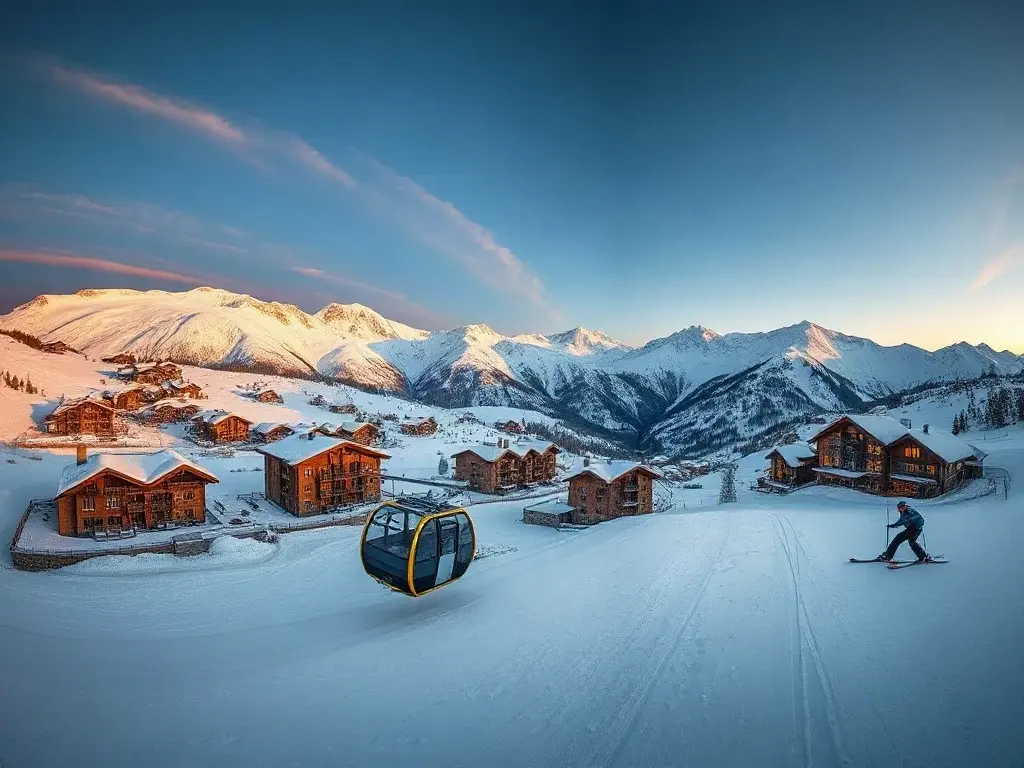
The World Ski Awards 2026 have crowned their champions, and the results say a lot about where ski tourism is heading. Now in its 14th year, the programme has named Val Thorens the World‘s Best Ski Resort, W Verbier the World’s Best Ski Hotel, Chalet Zermatt Peak the World’s Best Ski Chalet and Pashmina Le Refuge the World’s Best Ski Boutique Hotel. Together they show a sport that is moving beyond lifts and vertical drop towards design, service and connected, technology-enabled mountain experiences.
This analysis goes past the headlines. It looks at why each winner stands out, what the results suggest about ski tourism trends, and how travellers can use award lists without being misled by them.
What the World Ski Awards 2026 Results Actually Tell Us
Awards are a snapshot of reputation, not a laboratory measurement. Even so, a pattern across four categories reveals a good deal about what the market rewards. The winners are:
| Category | Winner | Defining strength |
|---|---|---|
| World’s Best Ski Resort | Val Thorens | Europe’s highest resort, with ongoing infrastructure and smart-resort investment |
| World’s Best Ski Hotel | W Verbier | W Hotels’ first alpine ski property |
| World’s Best Ski Chalet | Chalet Zermatt Peak | Luxury private chalet experience in Zermatt |
| World’s Best Ski Boutique Hotel | Pashmina Le Refuge | Luxury design with doorstep access to Les 3 Vallées |
The pattern is clear. Altitude and snow remain the foundation, but the winners differentiate themselves through experience design. Nobody wins by offering mountains alone, because the mountains are the shared baseline. Winners are those that wrap the mountain in comfort, convenience and identity. The official programme is documented at worldskiawards.com.
Val Thorens: Why Europe’s Highest Resort Is the Best Ski Resort in the World This Year
What is the highest ski resort in Europe?
Val Thorens holds that title. Located in the French Savoie department of the Alps, the resort village sits at roughly 2,300 metres, far above the altitude of many competing destinations. It forms part of Les 3 Vallées, a linked network often described as the largest connected ski area in the world.
That elevation is more than a marketing line. Higher terrain tends to hold natural snow longer and stay colder, which matters enormously for season length. For a traveller booking months ahead, reliability is a major component of value, and altitude is the most honest proxy for it.
Smart-resort innovation as a competitive edge
According to the announcement, Val Thorens has kept improving the guest experience through infrastructure upgrades and smart-resort innovations. This reflects a wider industry shift. Modern ski destinations increasingly invest in faster gondola lifts and ski lift systems, digital lift passes, real-time information on queues and conditions, and efficient snowmaking to protect key slopes.
The logic is straightforward. A skier’s day is a chain of small frictions: parking, ticketing, lift waits, finding lunch, returning home. Reducing each one, even modestly, compounds into a markedly better day. Resorts that treat the whole chain as a design problem tend to earn stronger loyalty and more repeat bookings.
W Verbier: A Global Lifestyle Brand Meets the Alpine Tradition
W Verbier is described as W Hotels‘ first alpine ski property, and its win as World’s Best Ski Hotel is symbolically significant. W belongs to Marriott International and is known for design-led, urban-energy hospitality. Bringing that identity to Verbier, a long-established Swiss resort in the canton of Valais, signals that international hotel brands see real growth in the mountains.
Why this matters for the ski hotel market
Traditional alpine hospitality has leaned on timber, heritage and understated comfort. A global lifestyle brand offers something different: social spaces, nightlife energy, recognisable service standards and the pull of a loyalty programme. Whether that approach suits every guest is debatable. Some skiers prize authenticity and quiet, while others want a polished base that feels connected to the wider world. The award suggests the second group is large and growing.
The competitive consequence is worth watching. If branded properties keep winning, independent hotels will need to sharpen their own identity rather than simply rely on location.
Chalet Zermatt Peak and the Rise of the Private Luxury Chalet
Chalet Zermatt Peak took the title of World’s Best Ski Chalet. Zermatt sits beneath the Matterhorn, one of the most recognisable mountains on Earth, so the setting provides a dramatic backdrop that few destinations can match.
The chalet category appeals to a particular traveller: families, friend groups and private parties who want exclusivity, flexible schedules and tailored service. Compared with a hotel, a chalet offers privacy and control, though usually at a premium and with less of the spontaneous social mix. For high-end guests, that trade-off is often the entire point.
Pashmina Le Refuge: Boutique Luxury With Doorstep Access
Pashmina Le Refuge was named World’s Best Ski Boutique Hotel for combining luxury design with doorstep access to Les 3 Vallées. A boutique hotel competes on character and intimacy rather than scale, and in a ski setting that character is inseparable from convenience.
Doorstep access is arguably the most underrated amenity in alpine travel. Every minute saved carrying equipment or waiting for transfers is a minute spent on snow. A property that places guests directly within reach of such a vast ski area gives them a clear practical advantage, whatever its interior design.
How to Read Ski Awards Critically
Awards are useful, but a thoughtful reader should keep a few limitations in mind.
- Reputation is not the same as measured performance. Voting-based programmes reflect perception, brand visibility and campaign effort as well as quality.
- Categories favour the premium end. Luxury chalets and boutique hotels serve a narrow slice of skiers, so budget travellers may find limited relevance.
- Conditions change. Snow, crowds and lift operations vary by season, so a title is a starting point rather than a guarantee.
None of this makes the results meaningless. It simply means they should be cross-checked against official resort information, recent guest reviews and live snow reports.
Practical Guidance for Choosing Your Next Ski Destination
Match the destination to your priorities
- Prioritise snow reliability: consider high-altitude resorts, especially for early or late season trips.
- Check the ski area, not just the village: a connected network such as Les 3 Vallées multiplies terrain options for mixed-ability groups.
- Decide between hotel and chalet: hotels offer services and social atmosphere, while chalets offer privacy and flexibility.
- Weigh access carefully: ski-in, ski-out convenience can justify a higher nightly rate.
- Book flexibly: weather and snow conditions are never fully predictable.
Common mistakes to avoid
Travellers often choose on a title alone and overlook transfer times, lift pass costs or the fit between a resort’s character and their group. Another frequent error is ignoring season timing. Even the best-rated destination disappoints in a poor snow window.
The Climate Question Behind Every Alpine Award
No serious discussion of ski tourism can ignore climate change. Warmer winters put pressure on low-altitude resorts, and altitude is increasingly a strategic asset. That helps explain why a resort like Val Thorens carries such weight in the conversation. It also raises genuine debates. Snowmaking extends seasons but consumes water and energy, and heavy infrastructure investment carries environmental costs. Resorts that win awards will increasingly be judged on how credibly they handle these trade-offs, not only on comfort and convenience.
Predicting precise outcomes is unwise, but the direction is reasonable to state: sustainability credentials will probably become a more visible part of how destinations compete, and travellers will likely ask harder questions about them.
Frequently Asked Questions
Who won World’s Best Ski Resort at the World Ski Awards 2026?
Val Thorens, the highest ski resort in Europe, was named World’s Best Ski Resort in the 14th annual programme.
Which hotel was named World’s Best Ski Hotel?
W Verbier, which is W Hotels’ first alpine ski property, took the World’s Best Ski Hotel title.
What is the best ski chalet in the world according to the awards?
Chalet Zermatt Peak won World’s Best Ski Chalet at the 2026 awards.
Which boutique ski hotel won, and why?
Pashmina Le Refuge was named World’s Best Ski Boutique Hotel, recognised for combining luxury design with doorstep access to Les 3 Vallées.
Do ski awards guarantee a better holiday?
No. They indicate strong reputation and service, but snow conditions, budget, group needs and timing all affect the real experience.
The Real Winner Is the Whole Experience
The most important insight from the World Ski Awards 2026 is that the mountain itself is no longer the sole product. Val Thorens wins on altitude and smart operations, W Verbier on brand-led design, Chalet Zermatt Peak on private exclusivity, and Pashmina Le Refuge on effortless access. Each succeeds by removing friction and adding identity to a landscape everyone else also has.
What should readers watch next? First, whether more global hotel brands follow W into the Alps, which would reshape the competitive balance between international chains and independent family-run properties. Second, whether smart-resort technology moves from a differentiator to an expectation. Third, and most uncertain, whether sustainability becomes a decisive criterion in future awards rather than a footnote. If the trend holds, the best ski resort of the next decade may be defined less by how much terrain it has than by how intelligently, and how responsibly, it looks after the people and the snow that visit it.
Frequently Asked Questions
¿Significa un premio de los World Ski Awards que un resort es el mejor para cualquier esquiador?
No necesariamente. Los premios reflejan reputación y percepción del mercado, no mediciones objetivas. Un resort con galardón puede ser excelente en servicios e innovación, pero no encajar con quien busca tranquilidad, precios bajos o autenticidad. Conviene contrastar las listas con reseñas, tipo de pistas y presupuesto personal.
¿Por qué la altitud de Val Thorens importa tanto a la hora de reservar con meses de antelación?
A mayor altitud, la nieve natural se conserva más tiempo y las temperaturas se mantienen más frías, lo que alarga la temporada. Val Thorens, a unos 2.300 metros, ofrece así más fiabilidad de nieve, un factor clave para quien reserva con mucha antelación y no puede cambiar fechas.
¿Qué significa que un resort sea un «smart resort» y cómo mejora mi día de esquí?
Se trata de destinos que invierten en telesillas y góndolas más rápidos, forfaits digitales, información en tiempo real sobre colas y condiciones, y nieve producida eficientemente. Al reducir pequeñas fricciones como esperas, compras de billetes o búsqueda de restaurante, la jornada resulta más fluida y agradable.
¿Por qué es relevante que W Verbier sea el primer hotel alpino de esquí de W Hotels?
Muestra que las grandes cadenas internacionales ven potencial de crecimiento en la montaña. W, del grupo Marriott, aporta diseño, vida social y programa de fidelidad frente al estilo tradicional de madera y calma. Es una propuesta moderna, aunque no gustará a todos los esquiadores.
¿Qué ventaja ofrece alojarse en Pashmina Le Refuge para esquiar en Les 3 Vallées?
Combina diseño de lujo con acceso directo a las pistas de Les 3 Vallées, uno de los mayores dominios esquiables conectados del mundo. Eso permite salir esquiando casi desde la puerta, ahorrando desplazamientos y tiempo, algo muy valorado en un hotel boutique de montaña.