
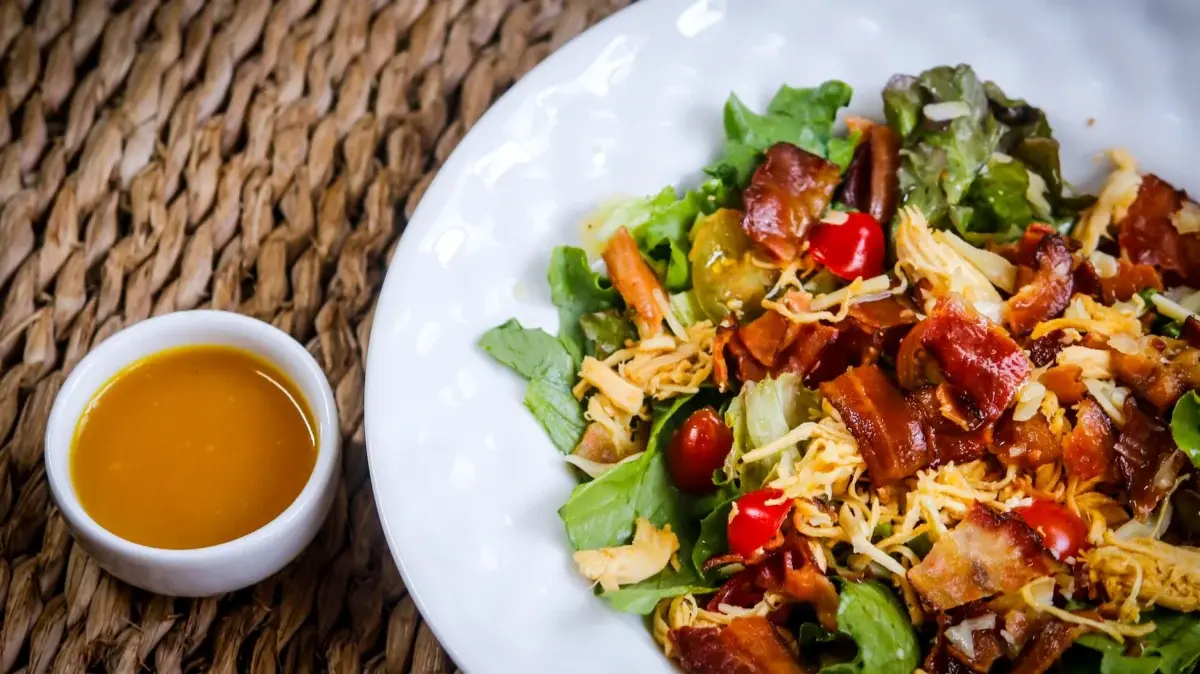
A 3-ingredient salad dressing works because it strips the problem down to chemistry, not trendiness. In five minutes, you can build an emulsion that balances fat, acidity, and seasoning more cleanly than many bottled products. That is why an easy homemade vinaigrette often tastes fresher, sharper, and more adjustable than a dressing with a long ingredient list.
Why this 3-ingredient salad dressing works
Classic vinaigrette is not mysterious. It is oil plus acid, usually coaxed together by an emulsifier such as Dijon mustard. When people ask how do you make vinaigrette that actually clings to leaves, the answer is not to add more ingredients; it is to respect the role of each one. A three-part dressing gives you enough structure to coat greens without muting them.
A good dressing is not a sauce that hides the salad. It is a balance that makes the greens taste more like themselves.
This is why a lemon Dijon dressing recipe works so reliably. Lemon gives immediate brightness; mustard gives body and mild heat; oil carries aroma and softens the acid. If you swap lemon for vinegar, the profile changes, but the logic stays the same. The dressing can lean sharp, round, or slightly sweet depending on your pantry and the rest of the meal.
What each ingredient is actually doing
| Ingredient role | What it contributes | Why it matters |
|---|---|---|
| Fat | olive oil or extra-virgin olive oil brings body and aroma | It carries flavor and prevents the dressing from tasting thin |
| Acid | lemon or vinegar adds lift | It sharpens vegetables and cuts richness |
| Binder or seasoning | Dijon mustard, sometimes with a little honey, adds grip and balance | It helps the mixture stay together and rounds the acidity |
That structure explains why a minimalist dressing tastes more intentional than a random splash of oil. It is really a form of seasoning, not decoration. Salt should still be treated as essential, even when it is not one of the three counted ingredients, because salt changes how the acid and fat register on the palate.
How to make it taste deliberate instead of flat
A quick quick salad dressing from scratch can fail for a few predictable reasons: the oil is bland, the acid is too aggressive, or the mix is not emulsified long enough. The fix is technique, not more ingredients.
- Whisk the acid and mustard first so the emulsifier can start working.
- Drizzle in the oil slowly if you want a smoother texture.
- Taste the dressing on the actual salad you are serving, not on a spoon.
- Use salt and pepper with restraint; they should clarify, not dominate.
- If the acid feels harsh, a tiny amount of honey or a sweeter vinegar can soften the edges.
The best versions are not the richest ones. They are the ones that feel tailored to the greens, whether that means peppery arugula, sturdy romaine, or a grain salad that needs extra punch. A dressing built on citrus tends to read brighter; one built on balsamic vinegar feels darker and sweeter. Neither is superior in the abstract. The question is what the rest of the plate needs.
Where the formula succeeds, and where it does not
This style of dressing is strong with simple vegetables, roasted carrots, cucumbers, beans, and bitter leaves that benefit from acidity. It is less convincing when a dish needs creaminess, such as a slaw or a salad built around avocado, where a richer dressing may perform better. In other words, the formula is excellent for clarity, but not for every texture.
That tradeoff is why homemade dressings remain relevant even as store-bought options improve. Commercial bottles often rely on stabilizers and added sugar to stay uniform. A fresh dressing accepts imperfection in exchange for control. You decide whether the final note should be bright, mellow, or slightly sweet, and you can adjust it in seconds.
FAQ
Can I make this without mustard?
Yes, but the dressing will be looser and more likely to separate. Mustard is the cleanest way to mimic the structure of a stronger vinaigrette without adding cream or extra oil.
How long does homemade dressing last?
It is best used fresh, but a refrigerated jar usually holds up for several days. Fresh garlic, herbs, or citrus can shorten that window, so treat the shortest-lived ingredient as the limit.
What is the best ratio?
There is no single perfect ratio, but many cooks start with more oil than acid and adjust from there. If the dressing tastes dull, add acid. If it tastes sharp, add oil or a touch of sweetness. That is the real method behind how do you make vinaigrette that people actually want to finish.
What this simple formula reveals about better home cooking
The most important insight is not that three ingredients are enough. It is that fewer ingredients force better decisions. A short ingredient list exposes weak oil, poor acid, and sloppy seasoning immediately, which makes the cook more attentive and the result more honest. That is why the most practical future of home cooking is not endless complication but better control: pantry staples used with intent, ratios tuned to the meal, and less dependence on bottled compromise. The next question is whether more people will start thinking of dressing as a system rather than a recipe. Once that shift happens, the salad stops being an afterthought and becomes the part of the meal that is most precisely cooked.
Frequently Asked Questions
Why does a 3-ingredient dressing taste better than many bottled dressings with more ingredients?
Because it focuses on balance rather than shelf stability. Oil, acid, and a binder like Dijon each have a clear job, so the flavor stays bright and controlled. Bottled dressings often rely on sugar, stabilizers, and extra seasoning to stay consistent, which can blur the taste and make the salad feel heavier.
Do I need Dijon mustard, or can I leave it out completely?
You can leave it out, but the dressing will be thinner and more likely to separate. Dijon does more than add flavor: it helps the oil and acid stay together and gives the vinaigrette a smoother, more cohesive texture. Without it, you may need to whisk longer or accept a looser dressing.
What is the best ratio for oil and acid in a simple vinaigrette?
A common starting point is three parts oil to one part acid, but the best ratio depends on the greens and the meal. Bitter leaves can handle more acidity, while mild vegetables may need a softer mix. Start there, taste on the salad itself, and adjust until it feels balanced rather than sharp.
Why does my homemade dressing separate so quickly?
Separation usually means the emulsion was too weak or the oil was added too fast. Whisking the mustard and acid first helps, because the binder is working before the oil enters. You can also shake it vigorously in a jar, but a stable emulsion still depends on gradual mixing and enough mustard.
Can this simple dressing work for more than leafy salads?
Yes, and it often works especially well on foods that need brightness. It is great with roasted carrots, beans, cucumbers, and grain salads because the acidity lifts the flavors. It is less ideal for dishes that need creaminess, such as slaws or avocado-heavy salads, where a richer dressing may fit better.
How long does homemade 3-ingredient dressing keep in the fridge?
Usually several days, though the texture may change and the oil can solidify when chilled. Give it a good shake or whisk before using it. If you used fresh citrus, the flavor is best within a few days, while vinegar-based versions often hold up a bit longer.