
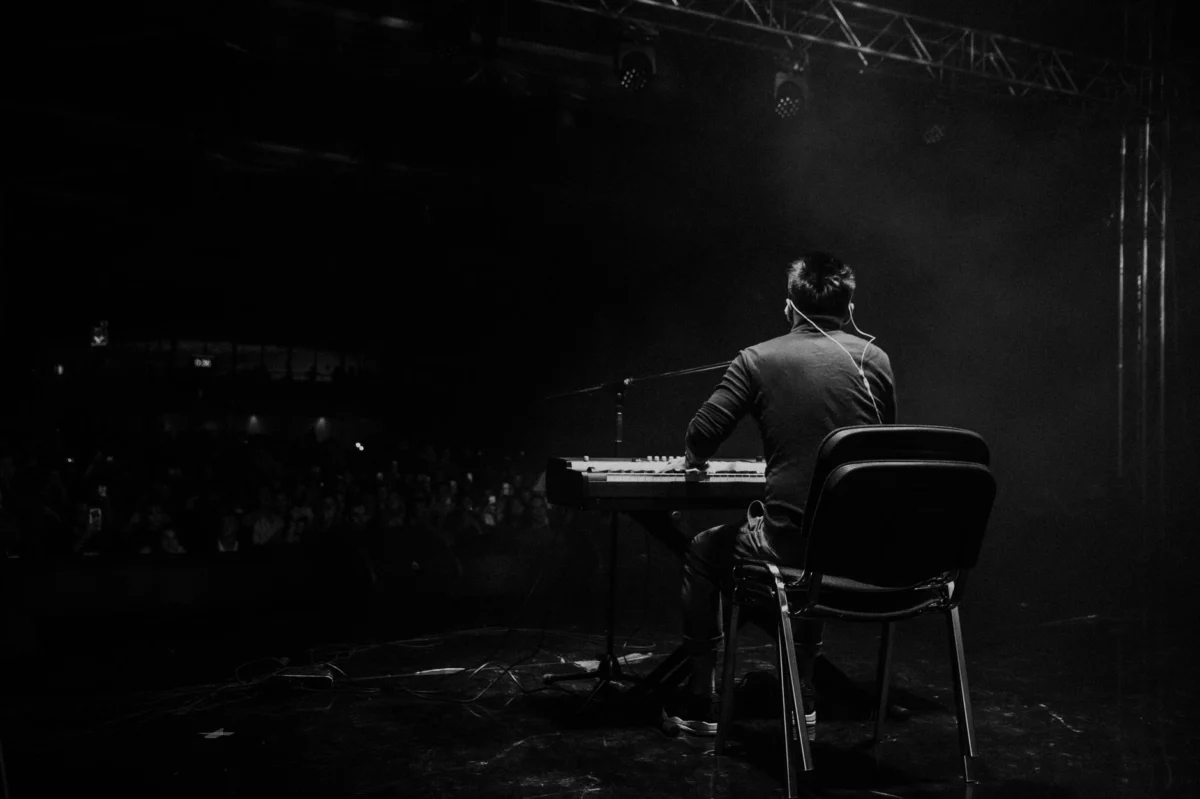
James Bay’s appearance at Wembley after breaking his ankle the night before was more than a dramatic backstage anecdote. It was a live demonstration of how modern touring works when an artist is suddenly forced to adapt. Support slots, especially on a high-pressure bill like Bon Jovi at Wembley Stadium, are built on timing, logistics, and nerve. When a Brit Award-winning singer-songwriter such as James Bay is wheeled onstage in a wheelchair, the incident stops being a simple feel-good story and becomes a useful case study in live performance, stagecraft, and risk management.
The basic facts are straightforward. Bay was supporting Bon Jovi on their concert tour, and the show went ahead despite a sudden injury. The more interesting question is why this mattered so much to audiences. The answer lies in how fans read authenticity, how touring crews react under pressure, and how much of a modern arena show is built not on spontaneity but on disciplined improvisation. In other words, the moment was not only about one performer’s determination; it was about the hidden machinery of live music.
Why the Wembley wheelchair moment carried real significance
At first glance, the image is simple: an injured artist, a stage, a crowd, and a wheelchair used as a practical solution. But the scene carries symbolic weight because it sits at the intersection of spectacle and vulnerability. Bay is known for stripped-back, emotionally direct songs, so a forced change in his physical presentation did not contradict his identity; it sharpened it. For a performer whose credibility depends on appearing honest rather than overproduced, the injury became part of the narrative instead of an interruption to it.
That is not true for every act. A highly choreographed arena production can absorb a setback differently from a performance built on intimacy and voice. The support slot itself also matters. A support act has less time, less stage real estate, and less flexibility than the headliner. If a solo artist can still deliver a set under those constraints, the audience often reads it as professionalism rather than compromise. The show remains live, not because nothing went wrong, but because the team found a workable way through it.
In live music, the difference between cancellation and continuity is often choreography, not heroism.
The background that makes this story easier to understand
To understand the reaction, it helps to place the moment inside the broader culture of touring rock. Bon Jovi sits squarely inside the long tradition of arena-sized rock music and arena rock, where scale, volume, and crowd expectation matter as much as the songs themselves. A venue like Wembley is not an intimate club; it is a vast machine for sound, movement, and crowd control. That makes every onstage decision more visible and every adjustment more consequential.
Bay’s presence also reflects the long history of the support act as a testing ground. Support performers must win over an audience that did not buy a ticket for them, while adapting to the headliner’s timetable and production constraints. A show at Wembley therefore becomes a stress test for stagecraft, pacing, and physical endurance. In that environment, even a simple change in mobility becomes a production issue, not just a personal one.
The terminology matters too. A broken ankle is not a vague inconvenience; it is a ankle fracture or similar injury that can affect balance, load-bearing, and the ability to stand for any length of time. Whether a performer can continue depends on pain levels, medical advice, and the staging demands of the set.
How a touring production absorbs an injury at short notice
The public sees the wheelchair. The crew handles everything else. Once an artist is injured, the practical questions arrive immediately: Can the dressing room be reached without stairs? Is the stage ramped? Does the setlist need to be shortened? Can the microphone position be adjusted? Can a guitar be played seated? These are not abstract concerns. They determine whether the appearance is workable or reckless.
That is where the usually invisible roles of the road crew, production manager, stage manager, and medical staff become central. Touring is often described as glamorous, but the real value lies in redundancy: backup plans, alternative transport, alternate entrances, and rapid communication. A well-run stagecraft operation is designed to absorb friction without making the audience feel the strain.
The same applies to the venue itself. Accessibility is not only a compliance issue; it is a live-event capability issue. A venue that can move a performer safely through backstage routes, platform lifts, and clear floor space can convert a potential cancellation into a controlled appearance. That does not mean every injury should be
Frequently Asked Questions
Why did James Bay’s wheelchair appearance feel more significant than a simple onstage injury story?
Because it changed the meaning of the performance. For an artist known for intimate, emotionally direct songs, the injury did not clash with his image; it intensified it. The audience saw vulnerability and professionalism at the same time, which made the moment feel like part of the story of the song rather than a disruption to it.
Why is a support slot at Wembley harder to adapt than a headline set?
A support act works with less time, less stage space, and less flexibility than the main artist. At a venue like Wembley, every minute is tightly scheduled and every movement is planned. That means an injury forces quick decisions about pacing, staging, and mobility, with fewer options to absorb the problem smoothly.
What does this kind of incident reveal about how touring crews operate behind the scenes?
It shows that live shows depend on fast coordination, not just performer willpower. Crews may need to adjust dressing room access, stage entry, microphone placement, set length, or even whether songs can be played seated. The audience sees a wheelchair; the production team handles the logistics that make continuing possible.
Does a broken ankle automatically mean a show should be cancelled?
Not necessarily. Whether the performance continues depends on medical advice, pain levels, the severity of the fracture, and how demanding the set is physically. If the staging can be adapted safely, an artist may still perform. In many cases, the deciding factor is not the injury alone but whether the production can be modified responsibly.
Why did fans read James Bay’s choice to go on as professionalism rather than compromise?
Because the situation preserved the core of a live performance: the artist still showed up and delivered the set under pressure. Fans often value that more than perfect movement or polished spectacle. In this case, the visible adaptation signaled commitment, and the fact that the show went ahead made the performance feel more authentic.