
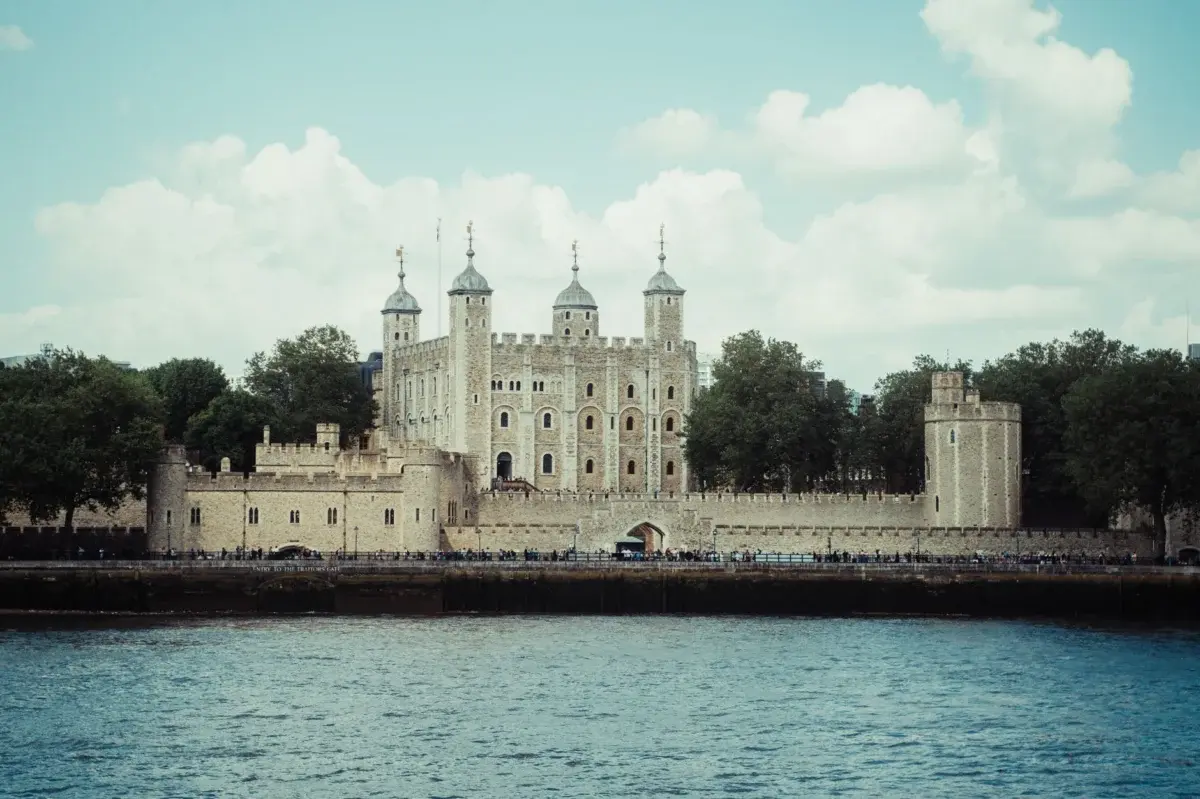
The news that the most photographed castle in the UK is the Tower of London says something bigger than a popularity contest. It reveals how modern attention works: we do not just photograph what is historic, we photograph what is instantly recognisable, emotionally loaded, and visually irresistible. According to new data from photo curation app Popsa, analysed from anonymised, aggregated metadata across millions of images taken in 2024 and 2025, the Tower has outpaced every other British castle in sheer photographic pull.
That makes perfect sense once you look closely. The Tower is not merely a castle; it is a fortress, a royal complex, a symbol of power, a World Heritage Site, and one of the most enduring visual anchors on the skyline of London. Set beside the River Thames, framed by bridges, glass towers, and crowds of visitors, it offers exactly the kind of scene that cameras love and social feeds reward.
What Popsa’s ranking really measures
Popsa’s Photo Index Score is not a conventional tourism statistic. It is a relative measure derived from anonymised metadata, which means it captures the volume of photos associated with each castle rather than counting ticket sales, footfall, or public surveys. That distinction matters. A site can be very busy without being highly photographed, and it can be heavily photographed without receiving the most visitors overall.
That is why this kind of ranking is so useful. It measures a modern form of cultural value: not just where people go, but where they feel compelled to document their visit. In the language of photography and photojournalism, the Tower wins because it compresses centuries of history into a single frame. In the language of social media, it delivers immediate recognition, a strong backdrop, and a story that needs no caption.
In other words, the ranking is less about stone walls and more about visual magnetism.
Why the Tower of London dominates the camera lens
A castle that behaves like a city landmark
The Tower’s brilliance lies in its ambiguity. It is a fortress, but also a museum-like destination. It is medieval, but still active in the national imagination. It is associated with the monarchy of the United Kingdom, the Crown Jewels of the United Kingdom, and some of the most dramatic episodes in British statecraft. Few sites offer that kind of layered symbolism in such a compact, photograph-friendly footprint.
The complex includes the famous White Tower, the original core around which the rest of the structure grew. That central mass gives the site its visual authority. It looks old, weighty, defensive, and unmistakable. Yet it also sits within a living city that is constantly in motion, which means every photograph contains a pleasing tension between permanence and change.
The geometry of a perfect photograph
Not every historic site photographs well. The Tower does because its geometry works from almost any angle. From the riverbank, it sits like a storybook fortress. From nearby streets, it offers texture and depth. From the air, it remains legible. At dusk, it gains atmosphere; in bright daylight, it becomes crisp and documentary. The surrounding urban fabric gives photographers contrast, scale, and context.
This is the kind of setting that makes even casual snapshots look deliberate. Visitors do not need to be professional shooters to create a compelling image. The backdrop does the heavy lifting. In practical terms, that means the site benefits from the same visual logic that drives tourist photography at cathedrals, bridges, and palaces: a strong silhouette, historical weight, and an instantly readable subject.
| Factor | Why it matters | Effect on photo volume |
|---|---|---|
| Recognisable silhouette | The Tower is identifiable in a split second | More spontaneous photos and fewer missed opportunities |
| River setting | The Thames creates natural framing and reflections | More scenic compositions from multiple viewpoints |
| Historic symbolism | It carries royal, military, and political meaning | More people feel compelled to document it |
| Tourist density | High visitor flow increases incidental photography | More pictures per square metre |
| Social visibility | Well-known landmarks circulate easily online | More sharing, more repetition, more discovery |
Halloween and The Traitors: why timing shapes attention
Popsa’s data arrives just as Halloween reasserts itself as a seasonal force in Britain, and that timing is more than a marketing coincidence. Halloween is the annual festival of theatrical history: darkness, myth, spectacle, and the pleasure of pretending that old places are haunted by memory. A site like the Tower of London fits that mood almost too well. Its reputation as a place of imprisonment, execution, and royal drama gives it an atmosphere that is difficult for newer attractions to imitate.
At the same time, the popularity of the BBC series The Traitors has helped revive the public appetite for castles as settings of intrigue, secrecy, and social performance. The series is not set at the Tower, of course, but it reinforces a broader cultural habit: seeing castles as active stages for tension and storytelling rather than as passive ruins. That matters because attention moves in cultural waves. A castle can remain historically constant while its image gains new relevance through television, seasonal events, and online sharing.
This is where the Halloween effect and the TV effect meet. Both favour places that already have narrative gravity. The Tower of London does not need to invent a mood; it already has one.
The Tower wins not because it is the biggest castle, but because it is the easiest to recognise, the easiest to reach, and the hardest to ignore.
Why photo metadata matters more than ever
The modern image economy is built on traces. Geotags, albums, upload timestamps, and curation tools all leave behind signals that can be analysed at scale. That is why Popsa’s approach is interesting: it reads the visual habits of real people rather than relying only on surveys or ticketing data. For heritage sites, this is a powerful lens because it reveals where memory and documentation overlap.
But metadata also has blind spots. A rural medieval architecture site may be beautiful and historically important while generating fewer photos simply because it is harder to reach, less familiar, or less visible on social media. Likewise, some visitors photograph discreetly and upload little or nothing. So a high Photo Index Score should be read as a sign of visibility, not a full measure of cultural worth.
That nuance is essential. The Tower of London is not necessarily the most historically important castle in Britain, and it is not necessarily the most visited in every statistical framework. What it clearly is, however, is one of the most visually powerful and photograph-ready heritage assets in the country.
How the Tower compares with other heritage destinations
Britain’s castle landscape is crowded with strong contenders. There are cliff-top strongholds, romantic ruins, and grand aristocratic residences, each with distinct visual appeal. Yet the Tower has an advantage that many rivals lack: it lives at the intersection of heritage, tourism, and national symbolism. Managed by Historic Royal Palaces and officially recognised in UNESCO’s listing of the site, it sits inside a rare category of places that are both operationally managed and culturally mythologised.
The result is a site that functions like a landmark, a museum, and a national emblem all at once. That is a difficult combination to beat. A remote ruin might be more dramatic, but it is less convenient. A perfectly preserved palace might be grander, but less symbolically charged. The Tower of London wins because it compresses meaning.
For readers who want the official historical context, the best starting points are the Historic Royal Palaces Tower of London page and UNESCO’s World Heritage listing for the Tower of London. Those sources are useful reminders that the Tower’s fame is not accidental; it has been curated, preserved, and interpreted for centuries.
What photographers can learn from this ranking
For photographers, the lesson is not simply that famous places attract more photos. It is that famous places reward deliberate observation. The Tower of London can be photographed in dozens of ways, but the strongest images usually share three traits: clean composition, atmospheric timing, and a clear sense of place. A picture that captures the Crown Jewels queue, a river-side angle, or the contrast between ancient masonry and contemporary London architecture will usually feel more memorable than a generic front-on shot.
Practical shooting ideas
- Arrive early or stay late to avoid the busiest crowd patterns.
- Use the river and nearby walkways to create layered foregrounds.
- Include people sparingly if you want scale; exclude them if you want monumentality.
- Try dusk and blue hour for richer stone texture and more dramatic skies.
- Look for details, not just the full façade: gates, towers, flags, and masonry add narrative depth.
These tactics are simple, but they work because they align with the site’s visual personality. The Tower is at its best when it looks both monumental and inhabited by history.
What heritage managers should take from the result
For heritage organisations, the ranking is more than a vanity metric. It suggests that the most photographed places are the ones where visitor experience, accessibility, and storytelling are working together. If a site is already visually strong, then better signage, clearer viewpoints, and better-managed crowd flow can increase both satisfaction and sharing. In that sense, photography is not just an outcome; it is a feedback loop.
This is a useful lesson for the wider tourism sector. Places that photograph well are often easier to promote, easier to remember, and easier to revisit digitally. They also gain algorithmic momentum because a familiar image performs well in search, on maps, and across social channels. That does not diminish the authenticity of the experience. Instead, it shows how heritage now competes inside a highly visual attention economy.
Sites that want to benefit from this trend should think carefully about how they frame their story. A castle with strong educational content, accessible routes, and high-quality visitor infrastructure can turn a casual photograph into a lasting connection.
Frequently asked questions about the UK’s most photographed castle
Why is the Tower of London so heavily photographed?
Because it combines rarity, recognisability, and location. It is a famous castle in central London, surrounded by strong viewpoints and supported by decades of cultural storytelling.
Does being the most photographed mean it is the most visited?
Not necessarily. Photo volume and visitor numbers are related, but they are not the same thing. A site can produce many more photos per visitor if it is especially scenic, iconic, or socially shareable.
What is a Photo Index Score?
In this context, it is a ranking method based on photo metadata that estimates the relative amount of photography associated with a place. It is best understood as a visibility measure, not an official attendance figure.
Can other castles challenge the Tower in future rankings?
Yes, especially those that gain stronger media exposure, better digital visibility, or seasonal programming. But any challenger will need more than beauty. It will need narrative force.
What to watch next as Britain’s castles compete for attention
The most important insight is that the Tower of London’s victory is not really about the Tower alone. It is about how heritage now lives inside a visual system driven by memory, media, and repeatable images. The places that win this game are not always the largest or the oldest. They are the ones that can be recognised in an instant and reinterpreted in every season.
That is why the real question is not whether the Tower will remain the most photographed castle in the UK next year. The more interesting question is whether other castles can create the same mixture of emotional charge, visitor flow, and digital visibility that makes a monument unavoidable on camera. If they can, Britain’s castle rankings may begin to shift. If they cannot, the Tower will keep its crown not just as a historic fortress, but as the country’s most irresistible image.
Frequently Asked Questions
Does being the most photographed castle mean the Tower of London is also the most visited castle in the UK?
Not necessarily. The article makes a clear distinction between photography volume and visitor numbers. A site can attract huge crowds without being photographed especially often, or be heavily photographed because it is visually iconic even if it is not the busiest in raw footfall. Popsa’s ranking measures photo activity, not admissions.
What exactly is Popsa’s Photo Index Score measuring?
Popsa’s Photo Index Score is a relative measure built from anonymised metadata across millions of images. It reflects how often a place appears in photo data, not ticket sales, surveys, or on-site counting. In other words, it captures photographic pull: how strongly a location compels people to take and keep images of it.
Why does the Tower of London photograph better than many more ornate castles?
The Tower’s strength is not decorative richness alone, but recognisability and narrative density. It combines a fortress silhouette, royal associations, and a central place in British history, all within a compact frame. That makes it easy to read visually and emotionally, which is exactly what encourages more people to photograph it.
How does the surrounding city environment help the Tower of London’s appeal in photos?
The urban setting adds contrast and context. The Tower sits beside the Thames and near modern architecture, bridges, and busy streets, so photos can show old and new Britain in one frame. That tension makes the image feel more dynamic and distinctive than a castle isolated in the countryside.
Can you get a strong photo of the Tower of London without going inside?
Yes, and that is part of its photographic success. The site is highly legible from multiple exterior vantage points, including the riverbank and nearby streets. Because the silhouette is so strong, even casual passersby can capture a striking image without needing access to the interior or special equipment.