
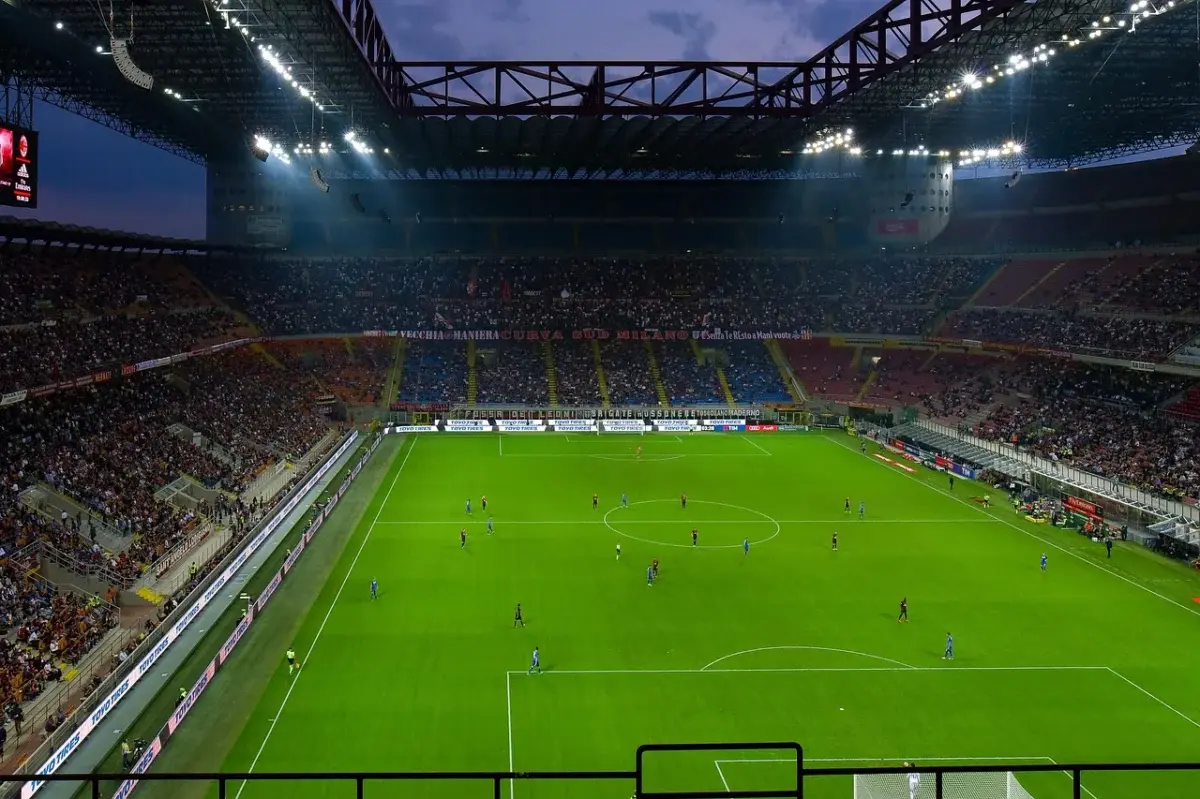
Manchester United‘s trip to Como should be read as a performance audit, not a holiday postcard. A summer match at Como 1907, framed by Lake Como and all the polished scenery that comes with it, was always going to look attractive on camera. What made it revealing was the gap between the setting and the standard. Joshua Zirkzee scored, one Manchester United fan made good on the joke about the lake, and the away end responded with gallows humour rather than anger. That is not a minor detail. It is a sign that Manchester United F.C. are no longer being judged only on results; they are being judged on whether the club still feels demanding, coherent, and self-respecting.
The danger for Manchester United is not that supporters are furious every week. It is that too many have already moved from fury to weary observation.
Why the setting in Como mattered more than an ordinary friendly
Pre-season matches are often dismissed as conditioning work, and in pure sporting terms that is fair. In association football, a friendly match is meant to sharpen timing, test combinations, and build fitness without the pressure of league points. But elite clubs do not exist in a vacuum. When a club as scrutinised as United travels abroad, every detail becomes symbolic. A summer fixture in Italy, on a stage shaped by the aesthetics of football in Italy and the visibility of the Serie A, invites a different kind of reading: not just how the team played, but how it carried itself.
That matters because the club has spent years oscillating between reset and relapse. The scenery in Como made the contrast sharper. If United look flat in a cold domestic midweek fixture, the reaction can be blamed on fatigue, weather, or congestion. If they look flat in Italy, under clear skies and with international attention, the excuse pool gets much smaller. The issue is not whether one exhibition game changes the season. The issue is whether the performance reflects a deeper lack of urgency that has become too familiar.
The silence in the away end said more than boos would have
The most revealing part of the night may have been the noise, or the lack of it. The line about football chant culture,
Frequently Asked Questions
Why does a summer friendly in Como matter if it was only a pre-season game?
Because the article argues the match was less about the result and more about standards. Pre-season games are usually about fitness and rhythm, but for a club like Manchester United, even a friendly becomes a public test of intensity, discipline, and identity. In a glamorous setting like Como, a flat performance looks less excusable and therefore more revealing.
What does the article mean by saying the real problem is bigger than the performance itself?
It suggests the issue is not one bad display, but a wider decline in expectation. United are no longer being judged only on winning or losing; they are being judged on whether they still look like a demanding, coherent club. The concern is that poor energy and weak urgency have become normal rather than exceptional.
Why is the reaction from the away fans treated as such an important detail?
Because the away end’s response showed resignation rather than outrage. The article sees that as a deeper warning sign: fans who are no longer surprised by underwhelming performances may be drifting from anger into apathy. That shift matters, since it often indicates that trust in the club’s direction is already badly damaged.
Does Joshua Zirkzee scoring change the overall judgment of the match?
Not really. His goal is acknowledged, but the article treats it as a small positive inside a much larger negative reading. One decent moment cannot offset a team looking short of urgency or authority. The point is that individual contributions matter less when the collective impression is that the club still lacks a clear standard.
Why is the setting in Italy described as making the problem more visible?
The article argues that scenery changes perception. In a domestic midweek friendly, a poor showing might be explained away by routine excuses like fatigue or squad rotation. In Italy, under bright conditions and international attention, those excuses carry less weight. The contrast between the elegant setting and the team’s flatness makes the lack of edge stand out more sharply.