
Big Brother live-streamed dry run is more than a scheduling gimmick. It turns a routine dress rehearsal into public content, and that matters because the franchise has always depended on a delicate bargain: viewers want access, but they also want the sense that what they are seeing is controlled enough to be legible. By putting the rehearsal on camera, the UK edition of Big Brother is testing how far reality television can expose its own machinery before the illusion collapses. The move also borrows energy from a familiar face from I’m a Celebrity…Get Me Out of Here!, which is exactly the point: modern reality TV now sells process as eagerly as payoff.
The title Big Brother still carries Orwellian overtones, but the format was never simply about surveillance. It was about managed visibility. That distinction matters. The British version moved from Channel 4 to ITV and now sits inside ITVX, reflecting a wider shift from scheduled broadcasting to streaming media. Behind the scenes are industrial players such as Endemol Shine Group and Banijay, whose task is not merely to keep the show running but to keep it culturally visible in a crowded market. In the United Kingdom, that visibility is now as important as the programme itself.
What a dry run actually does
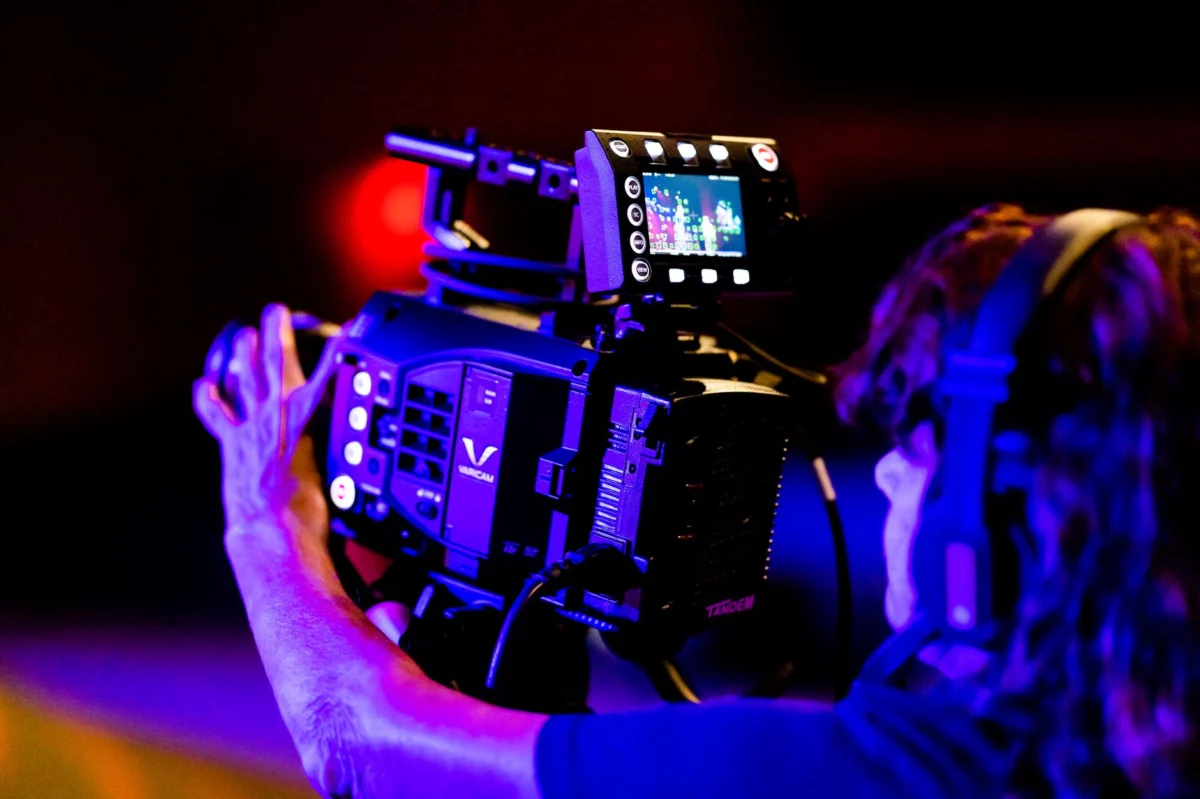
In television production, a dress rehearsal or dry run exists to remove uncertainty before the real audience arrives. Camera positions are checked, audio levels are tested, blocking is confirmed, compliance is reviewed, and producers work through the timing of every cue. For a show built around locked rooms, live switching, and unpredictable human behaviour, the rehearsal is not a side note. It is the control room in miniature. Live-streaming that process means the test itself becomes the product.
| Feature | Traditional dry run | Live-streamed dry run |
|---|---|---|
| Audience | Internal crew only | Public viewers and superfans |
| Main purpose | Technical stability and timing | Technical stability plus publicity |
| Main risk | Hidden production errors | Visible mistakes, spoilers, and overexposure |
| Value | Operational reliability | Attention, transparency, and audience curiosity |
The table makes the trade-off clear. A normal rehearsal protects the illusion. A live-streamed rehearsal monetises the backstage. That is a very modern decision, and it fits the logic of broadcasting in the live streaming era: if a production asset can be turned into a shareable moment, it probably will be.
Why is Big Brother live-streaming its dry run?
The simplest answer is marketing. In a fragmented attention economy, the launch of a reality show is no longer enough; the process has to be turned into a sequence of events. A live rehearsal creates an extra beat before episode one, giving fans something to dissect on social media while the mainstream audience is still being reminded that the series exists. It also gives the broadcaster something that clips cleanly, travels fast, and feels more immediate than a standard trailer.
There is a second reason: controlled transparency. Reality television has always sold itself as access, but access is only convincing when the audience believes that producers are not hiding too much. A public dry run says, in effect, we are confident enough to show the plumbing. That is a useful signal for a brand built on rules, surveillance, and player psychology. It reassures the core audience without requiring the show to become genuinely unfiltered.
The more a reality show reveals its machinery, the more it has to prove that the game itself still matters.
That tension sits at the centre of the experiment. The live stream is not a surrender of control. It is a different way of exercising it. Viewers see the set-up, but the broadcaster still controls the frame, the feed, and the pace. The point is not to eliminate production authority. The point is to make production authority look confident.
What the audience really gains, and what it does not
For viewers, the obvious benefit is curiosity. Superfans of Big Brother tend to care deeply about format mechanics, house design, and launch-day theatre. A live rehearsal gives them a rare chance to see how much is built before the first housemate crosses the threshold. It can also deepen audience participation, because people no longer just react to the show; they react to the process that produces the show.
But the audience should not confuse visibility with truth. A live-streamed rehearsal is still curated. Camera angles are selected. Interesting moments are foregrounded. Boring moments are omitted or compressed. That means viewers get process, not full disclosure. In practice, the stream adds another layer of performance, not a complete removal of performance. The difference matters, because too many viewers treat backstage access as if it were neutral evidence. It is not. It is still editorialised.
That is where the format becomes smarter than it first appears. Big Brother has always asked viewers to believe that what they are seeing is both raw and shaped. A public dry run simply admits the shaping earlier. For a media-literate audience, that can be more persuasive than pretending the machine does not exist.
The celebrity crossover is not incidental
The article’s hook about an I’m a Celebrity…Get Me Out of Here! winner is not just a casting note. It is a distribution strategy. Reality franchises trade on recognisable personalities, and the faster one show can borrow attention from another, the cheaper attention becomes to acquire. A familiar winner entering the orbit of Big Brother gives the launch a cross-franchise story that can travel beyond the usual fan base.
That is particularly useful because the viewing habit itself has changed. Many people no longer discover a programme through live television alone. They find it through clips, recaps, memes, and commentary on social media. A known face increases the odds that the story will travel in those spaces, where celebrity still functions as a shortcut to attention. In this sense, the live dry run is not only a technical experiment. It is a publicity engine with a narrative attached.
The risks broadcasters cannot ignore
There are, however, real costs. In broadcasting, the margin for error is small when the audience is watching live. A dry run can expose set details, camera placement, logistical weak points, and editorial priorities that would normally remain hidden until launch. It can also create spoiler pressure. If the rehearsal reveals too much of the house, the game structure, or the tone of the launch, the first episode may feel less like an event and more like a continuation.
Spoilers are not the only issue
There is also the problem of overexposure. Reality TV depends on a carefully maintained tension between familiarity and unpredictability. If the production process becomes too visible, viewers may start to analyse mechanics rather than personalities. That can be useful for a niche audience, but it can weaken the mass-market appeal that keeps the format commercially valuable.
Operational discipline still matters
Live rehearsal streams also increase pressure on crews. Errors that would normally be corrected quietly can become public. This raises the stakes for compliance, security, and technical discipline. The best version of this strategy requires a production team that can tolerate visibility without becoming defensive. If the stream feels panicked or chaotic, the publicity gain evaporates.
It is also worth remembering that openness can sharpen criticism. A sceptical audience may use the live rehearsal to accuse the show of scripting, manipulating, or overproducing a format that presents itself as spontaneous. In that respect, the stream can become evidence for both the fans and the detractors.
How this could shape the next reality-TV cycle
If the experiment works, it will not be copied because it is novel. It will be copied because it is efficient. A public dry run turns a cost centre into content, and that is exactly the kind of logic that survives in a market dominated by streaming media and fragmenting viewer loyalty. Broadcasters do not need every show to go live backstage. They need enough behind-the-scenes access to keep audiences engaged before launch and invested after it.
The most likely future is selective openness. Expect more hybrid launches, more rehearsal clips, more companion streams, and more promotion designed to blur the line between production and programme. The channel or platform that can do this without exhausting the format will have a real advantage. The trap is obvious: too much access makes the show feel hollow; too little makes it feel evasive. The winning position sits in the middle.
That is why the Big Brother move matters beyond one launch. It is a test of how much contemporary audiences want to see the gears. The answer may not be universal. Dedicated viewers will probably welcome the access, casual viewers may ignore it, and sceptics may read it as a stunt. But the industry lesson is harder to ignore: in a crowded media landscape, the making of the show can be almost as valuable as the show itself.
FAQ
What is a dry run on Big Brother?
A dry run is a rehearsal of the show’s technical and editorial setup before housemates enter the house. It lets producers test camera work, sound, timing, and safety procedures without the pressure of the live game.
Why would Big Brother live-stream its dry run?
To build anticipation, generate social media conversation, and signal transparency. It also turns a routine production task into a piece of promotional content that can reach fans before the main launch.
Does a live-streamed rehearsal make reality TV more honest?
Not fully. It makes the production process more visible, but the feed is still curated. Viewers see more of the machinery, not the entire machine.
Will other reality shows copy this approach?
Possibly, if the engagement payoff outweighs the risk of spoilers and operational mistakes. Formats with strong fan communities are the most likely candidates.
The next reality-TV advantage will be controlled openness
The key insight is that Big Brother is not merely opening a door to the public. It is testing whether a reality format can turn its own preparation into appointment viewing without draining suspense from the launch. That is a more serious question than it looks. If the live-streamed dry run attracts attention, it will prove that audiences are willing to watch television make itself. If it falls flat, it will show that viewers still want mystery even when they are promised access.
What to watch next is not just the audience reaction, but the way broadcasters respond to it. If the stream drives conversation, more franchises will start exposing rehearsals, setup, and casting mechanics as part of the campaign. If it feels too revealing, the industry will pull back and return to a more traditional model of controlled hype. The most plausible prediction is a compromise: more visibility, but only in carefully framed doses. In reality TV, the real product may no longer be pure spontaneity. It may be the disciplined performance of being seen to prepare for spontaneity.
SEO DATA
Primary Focus Keyphrase: Big Brother live-streamed dry run
Related Keyphrase 2: Big Brother live stream
Related Keyphrase 3: Big Brother dry run rehearsal
Related Keyphrase 4: How does the Big Brother dry run work?
Related Keyphrase 5: reality TV live streaming
Primary Keyphrase Synonyms:
Big Brother rehearsal stream, live rehearsal broadcast, streamed dry run, behind-the-scenes live test, reality TV rehearsal livestream
SEO Title:
Big Brother Live-Streamed Dry Run: Why the Reality TV First Matters
Meta Description:
Big Brother live-streamed dry run turns rehearsal into public event. See why it matters for spoilers, transparency, and reality TV strategy.
URL Slug:
big-brother-live-streamed-dry-run
Image Filename:
big-brother-live-streamed-dry-run.jpg
Image ALT Text:
Behind-the-scenes television crew filming a reality show rehearsal in a studio set
Image Title:
Big Brother live-streamed dry run studio rehearsal
Image Caption:
A live rehearsal turns production setup into public-facing entertainment.
Search Intent:
Mixed informational and news/current event
Frequently Asked Questions
Does live-streaming the dry run undermine the mystery that Big Brother depends on?
Not necessarily. It reveals the production process, but not the full game. The broadcaster still controls what viewers see, so the mystery shifts from “what is happening?” to “how is this being made?” That can actually strengthen interest, because the audience feels closer to the format without losing the sense that the show is still managed.
Why would a broadcaster risk showing mistakes, technical glitches, or spoilers?
Because the upside can outweigh the risk. A visible rehearsal creates buzz, gives superfans something to analyse, and makes the launch feel like an event rather than a single premiere. The broadcaster is betting that a controlled amount of imperfection will feel authentic and engaging, while the benefits in attention and publicity will be more valuable than the occasional misstep.
Is a live-streamed dry run the same as the actual live feed of the show?
No. A dry run is still a rehearsal, so the structure is planned and the content is limited to production setup. The live feed of the actual show is meant to capture housemate behaviour and unfolding drama. In this case, the rehearsal is being turned into content, but it remains a production tool rather than the core narrative itself.
What does this move say about how reality TV is changing in the streaming era?
It shows that the value of reality TV is no longer just in the finished episodes. Platforms like ITVX reward constant visibility, social sharing, and ongoing conversation. That means behind-the-scenes material, teasers, and process-driven content can become part of the product. The launch becomes a series of moments, not just one broadcast date.
Why does the article connect Big Brother with shows like I'm a Celebrity...Get Me Out of Here!?
The connection is about familiarity and brand energy. Big Brother is using a recognisable reality TV style to attract attention before the main series even starts. In a crowded market, a known face or format cue can help viewers immediately understand the tone. It also reflects how reality franchises now market themselves through atmosphere and process, not just outcomes.