
The Son of Sam law loophole matters because it exposes a blunt fact about criminal justice: moral outrage is not the same thing as a constitutionally valid restraint. In a case like Lindsay Clancy’s, the public instinct is simple: if a person is accused of an atrocity, why should that person ever profit from a true crime book, a documentary film, or a podcast? The legal answer is messier. Once the issue touches freedom of speech and the First Amendment to the United States Constitution, the state has to justify every dollar it tries to seize.
That is why the debate is not just about one high-profile defendant. It is about how modern media turns notoriety into currency, how states try to stop that conversion, and how often those efforts fail when courts decide the law is too broad. The result is a recurring pattern: outrage, legislation, litigation, and then a narrower legal rule that still leaves room for profit if the contract is structured carefully enough.
What the Son of Sam law was meant to stop
The phrase comes from the aftermath of David Berkowitz, the serial killer nicknamed Son of Sam. New York responded with a law aimed at keeping criminals from cashing in on the publicity generated by their crimes. The idea was direct: if a person sold the story of a crime, the money should go to victims instead of the offender. That impulse spread far beyond New York, and many states adopted some version of the same concept, often under the label Son of Sam law.
But the original New York approach had a constitutional problem. In Simon & Schuster, Inc. v. Members of the New York State Crime Victims Board, the United States Supreme Court struck down the law because it singled out speech about crime. The Court did not say that states have no legitimate interest in compensating victims. It said the mechanism was too blunt. A law that targets specific subject matter is not a neutral financial rule; it is a speech restriction disguised as a payment rule.
That distinction is the core of the problem. A state can pursue restitution, forfeiture, and debt collection through generally applicable laws. It cannot simply say that one category of speech is forbidden from producing income while others are not. That is why the phrase Son of Sam law has become shorthand for a legal ambition that sounds obvious to the public but becomes fragile the moment a court applies constitutional scrutiny.
How the loophole works in practice
The so-called loophole is usually not a single hidden trick. It is the gap between what the law wants to reach and what the law actually names. A state statute may cover direct profits from a confession or memoir, but it may not reach every commercial arrangement connected to the story. The money can arrive through book publishing, a podcast, consulting fees, option payments, documentary licensing, or compensation framed as access rather than authorship.
That matters because media companies do not buy only words. They buy exclusivity, access, timing, and marketability. If a defendant’s name is already in the headlines, the market may value that notoriety before any formal conviction has been entered. In the commercial logic of the entertainment industry, unresolved cases can be more valuable than closed ones. That is especially true in documentary film and true crime, where the audience often consumes the narrative as much for uncertainty as for closure.
There is also a doctrinal issue that often gets misunderstood. People assume a defendant cannot profit because the law must be waiting in the wings. In reality, many legal remedies depend on timing. If the state has not secured a conviction, a restitution order, or a valid asset restraint, money can move before the government does. Once payments are recharacterized as third-party contracts or consulting fees, it becomes harder to prove that they are directly traceable to the crime itself.
That is why this is not just a question of morality. It is a question of contract drafting, asset tracing, and the limits of statutes written in response to public shock.
Can criminals profit from book deals in practice?
The short answer is yes, sometimes, though often indirectly. The longer answer is that the commercial mechanism matters. A story can be monetized through a manuscript, a screen adaptation, a serialized interview package, or access fees paid to producers. In each case, the payment may be framed differently enough to fall outside a narrow statute, even if the public sees no real difference.
This is where the right of publicity is often confused with victim-compensation law. The right of publicity protects a person’s name, likeness, and other identity markers from unauthorized commercial use. It is not a general permission slip for the state to confiscate all story-related income. Similarly, a claim that a killer should not benefit from fame is ethically persuasive but legally incomplete. The state still has to identify a valid collection route.
That route may exist in ordinary criminal law or through civil forfeiture if the assets are connected to crime in a legally provable way. It may also exist through a civil judgment or restitution order. But the law does not automatically convert public disgust into a seizure power. And because double jeopardy limits repeat criminal punishment, lawmakers cannot just relabel a payment ban as a second criminal penalty and expect it to survive.
That is the practical lesson for publishers and producers too. They can structure payments, but they cannot assume a structure is immune from challenge. If the optics are bad, the litigation risk is real.
Why a mistrial changes the economics, not the ethics
A mistrial matters because it leaves the legal status of the case unresolved. It is not the same as acquittal. It is not the same as conviction. In plain terms, it means the case did not end in a final verdict. That uncertainty can affect everything from retrial strategy to media pricing.
For the public, that can feel upside down. People expect that a defendant facing the most serious allegations should be financially isolated immediately. But the law is not built on instinct; it is built on procedure. Until the government secures a conviction or a valid civil order, the practical ability to prevent payment depends on the strength of the state’s legal tools.
This is why a high-profile defendant may still draw interest even before a case is resolved. The unresolved nature of the story is itself a commodity. That is a feature of the modern media market, not a bug. Producers know that the audience for a case grows when there are unanswered questions, contested facts, and public frustration. The result is a perverse alignment of incentives: the more unresolved the case, the more commercially attractive the narrative can become.
The ethical objection is easy. The legal fix is hard.
What victim-compensation laws can actually reach
States are not powerless. They can pursue restitution, enforce judgments, and use generally applicable collection rules. Victim compensation systems, however, are usually modest compared with the scale of media payments that a notorious case can generate. They are designed to help victims cover expenses, not to compete with entertainment markets.
The distinction matters because public discussion often blurs three separate ideas: punishment, restitution, and profit interception. Punishment belongs to criminal law. Restitution tries to make victims whole. Profit interception aims to keep a wrongdoer from turning notoriety into income. Only the third category directly speaks to the Son of Sam problem, and it is the hardest to write into law without triggering constitutional objections.
There is also a procedural point that gets overlooked. A person seeking to intercept payments usually needs a clear basis to show that the money is actually tied to the offense. If a payment is routed through a company, a spouse, or a rights intermediary, the tracing problem becomes sharper. Courts are generally more comfortable with broad collection tools than with speech-specific restrictions, but they still require evidence and process. In other words, the law is not a blunt refund button.
That is why the real leverage often comes from financial controls rather than headline-grabbing bans. Asset freezes, liens, and restitution orders are slower than outrage, but they are also more defensible.
The constitutional line courts keep enforcing
Courts have repeatedly signaled that the government cannot burden speech simply because it dislikes the speaker or the subject. That is the core lesson of Simon & Schuster. A law that targets only books, interviews, or confessions about crime is a law aimed at content. Once a statute does that, the First Amendment problem becomes severe.
This is where the public debate often becomes too simplistic. Many people assume that because the speech is morally repugnant, it can be treated differently. But constitutional law is built to protect unpopular speech precisely when public anger is strongest. That protection is not a moral endorsement; it is a structural limit on government power.
So if a state like Massachusetts wants to prevent a defendant from profiting, the safer route is to use laws of general application: restitution, forfeiture where legally justified, creditor remedies, and victim claims. Those tools may not satisfy public anger, but they are far more likely to survive review than a statute that says, in effect, you may speak, but if you speak about this crime, the state takes the money.
That is the line lawmakers keep testing, and courts keep drawing back.
What to watch in the Clancy case
The most important thing to monitor is not speculation about a future deal. It is the legal posture. If the case ends in a retrial, a plea, a conviction, a civil judgment, or a settlement affecting assets, that will determine whether any proceeds are reachable. A media deal before final resolution may still occur, but whether the state can seize the money depends on the statute, the contract structure, and the timing of collection.
Readers should also watch the wider market response. In any notorious case, producers and publishers test the boundary between legitimate reporting and monetization. That market pressure often outpaces legislation. It is one reason why the debate over crime stories never stays confined to courtrooms. It spreads into editorial policy, platform moderation, and the business decisions of book publishing and streaming companies.
In that sense, the question is not whether one defendant will be paid. The question is whether the legal system can stop the conversion of notoriety into income without drafting a law so broad that it collapses under the weight of the First Amendment.
Frequently asked questions
What is a Son of Sam law?
A Son of Sam law is a statute designed to keep a person from profiting from crimes by diverting proceeds from story deals, memoirs, or related publicity toward victims or the state. The concept comes from the backlash to violent crime and the public objection to criminals cashing in on notoriety.
Why was the original law challenged?
The original New York version was struck down because it singled out speech about crime. The Supreme Court treated that as a content-based burden on speech, which is exactly the kind of law the Constitution makes hard to defend.
Can someone accused or convicted of a crime still sign a media deal?
Yes, sometimes. The existence of a deal is not the same as the legality of keeping the money. The answer depends on the contract, the state’s collection tools, whether there is a conviction, and whether the funds can be reached through restitution or forfeiture.
Does a mistrial block a story deal?
No. A mistrial leaves the case unresolved, but it does not itself prohibit a contract. It may even increase commercial interest because the story is still contested.
The real question lawmakers still have not solved
The strongest insight here is not that criminals should never speak. It is that the state cannot easily punish speech by taking its proceeds without running into constitutional limits. That is why the old style of Son of Sam law keeps failing in one form or another, even though the public instinct behind it remains powerful.
What should happen next is probably narrower, not broader. Legislatures are more likely to survive by refining restitution, asset tracing, and generally applicable forfeiture rules than by writing new speech-based bans. Publishers and streamers will keep trying to price notoriety, and courts will keep asking the same hard question: is the government targeting a crime, or is it targeting speech about a crime?
That question is still unsettled in the public mind, but not in constitutional doctrine. The law can punish conduct. It can redistribute proven criminal proceeds. What it cannot do easily is turn a subject into contraband simply because the market finds the subject profitable. The unresolved issue is whether lawmakers can build a tighter, fairer mechanism before the next notorious case exposes the same gap again.
SEO Data
- Primary Focus Keyphrase: Son of Sam law loophole
- Related Keyphrase 2: killer profiting from crime stories
- Related Keyphrase 3: can criminals profit from book deals
- Related Keyphrase 4: what is a Son of Sam law
- Related Keyphrase 5: First Amendment and Son of Sam laws
- Primary Keyphrase Synonyms: Son of Sam statute loophole, crime-story profit loophole, notoriety proceeds loophole, criminal memoir loophole, victim restitution gap
- SEO Title: Son of Sam Law Loophole: Why a Killer Could Still Profit From a Story Deal
- Meta Description: Explore the Son of Sam law loophole, why it survived free-speech limits, and how victims’ compensation laws try to catch the money.
- URL Slug: son-of-sam-law-loophole
- Image Filename: son-of-sam-law-loophole-courtroom.jpg
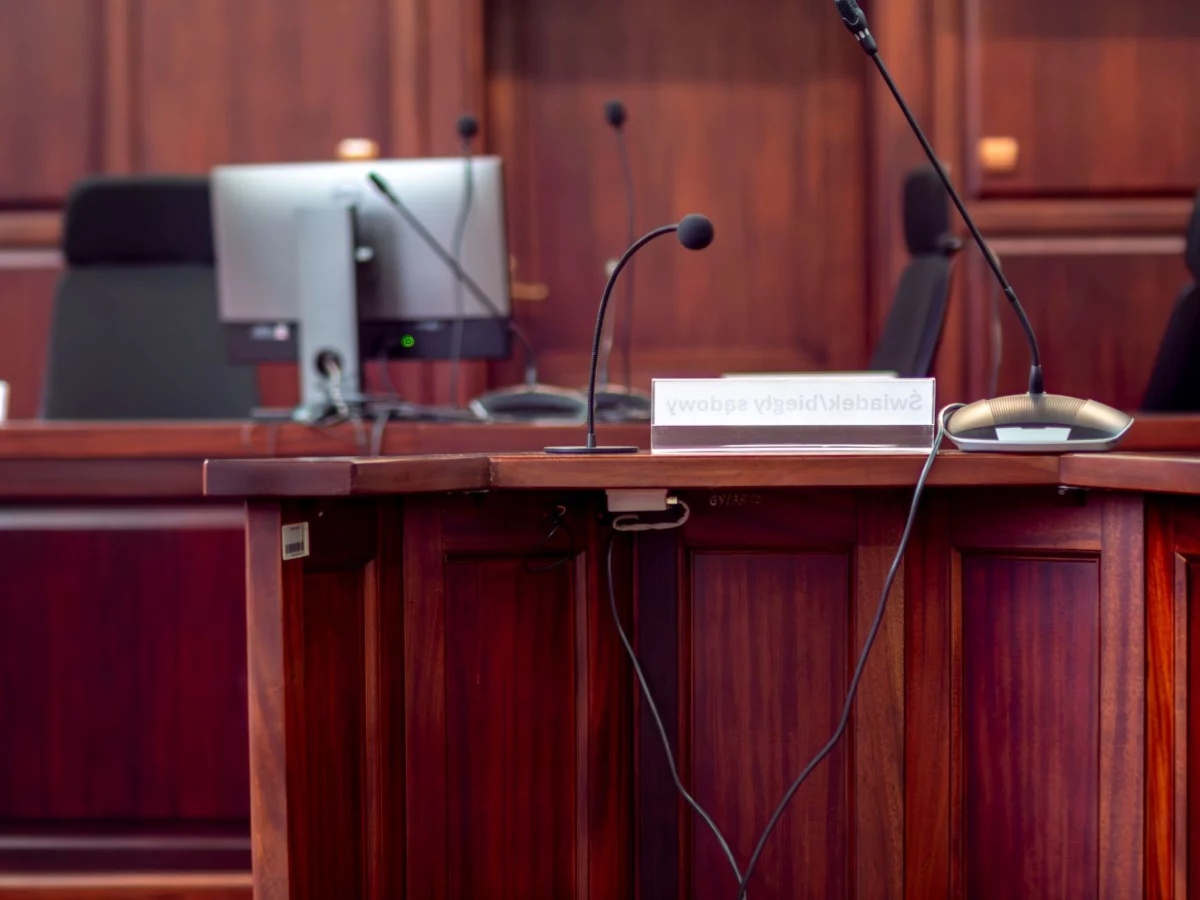
- Image ALT Text: Courtroom documents and media microphones representing the Son of Sam law loophole
- Image Title: Son of Sam law loophole in a courtroom
- Image Caption: The legal fight is over money, speech, and victim compensation.
- Search Intent: Informational
Frequently Asked Questions
Why did the Supreme Court strike down the original Son of Sam law if helping victims seemed fair?
The Court did not reject victim compensation as a goal. It rejected the way the law was written. The original New York statute singled out speech about crime and treated those earnings differently from other income. That made it a content-based speech restriction, which triggers strict First Amendment scrutiny and is hard to justify even when the state has a strong moral case.
What actually counts as a profit from a crime story under these laws?
It is not always just a book advance or memoir payment. Money can come from documentary rights, podcast deals, consulting fees, option payments, appearance fees, or compensation for access and exclusivity. The legal question is whether the payment is truly tied to the crime story or is structured as a separate commercial transaction that falls outside the statute.
If the accused has not been convicted yet, can the state still block story-related payments?
Sometimes, but not automatically. Before conviction, the state often lacks the same tools it would have after judgment, such as restitution orders or finalized forfeiture claims. That timing gap can allow contracts and payments to move forward first. Whether the money can later be seized depends on the statute, the evidence, and how the payment was structured.
Why do media companies care so much about unresolved criminal cases?
Because uncertainty can be commercially valuable. In true crime, audiences are often drawn not just to the facts but to the evolving story, public reaction, and legal uncertainty. A case that is still unfolding may generate more attention than one that is fully resolved, which makes early rights deals attractive to publishers, filmmakers, and podcast producers.
Can states fix the loophole without violating the First Amendment?
Yes, but the law has to be carefully drafted. States are more likely to survive constitutional review when they use generally applicable tools like restitution, forfeiture, and debt collection rather than laws targeting speech about crimes. The challenge is to regulate proceeds in a neutral way without singling out a specific topic or speaker for punishment.