
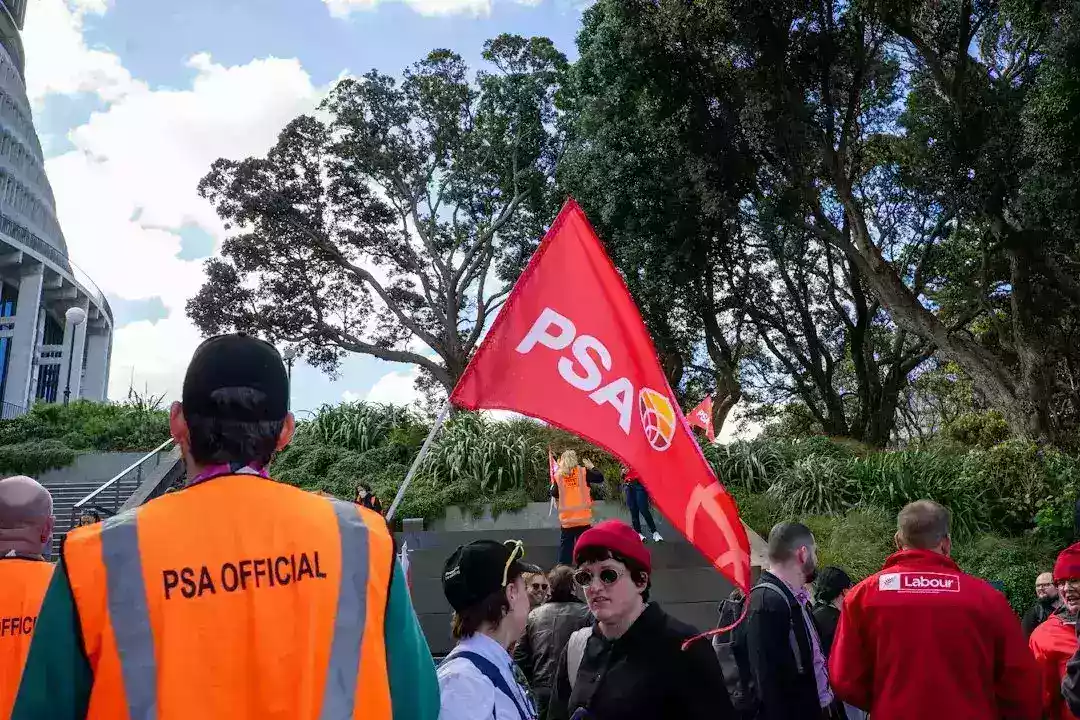
The latest joke from the Socialist Campaign Group was funny because it landed on top of a serious political truth: if Andy Burnham can make the language of social justice, public service, and municipal pride sound newly persuasive, then Labour’s long-standing left-wing caucus has to ask what role it still plays. At a rally organised by the group, Rebecca Long-Bailey’s quip about disbanding after Burnham’s speech sounded playful on the surface, but it also captured a deeper uncertainty inside the Labour Party: what happens to a political faction when its ideas begin to travel beyond the people who originally defended them?
That question matters because this is not just a personality story. It is a story about the survival of left-wing politics inside a party that has spent years trying to look disciplined, unified, and electorally credible. The old rhythms of internal Labour life — speeches at rallies, union presence, parliamentary solidarity, ideological self-definition — are still there, but they operate under tighter constraints. The result is a strange and revealing moment: the language of democratic socialism can sound fresh in one mouth, nostalgic in another, and strategically dangerous in a third.
What the Socialist Campaign Group actually is
The Socialist Campaign Group is not simply a club for people on the left; it is a parliamentary group that has functioned for decades as a home for Labour MPs who want to keep the party rooted in socialism, trade unionism, and a more confrontational critique of inequality. In that sense, it belongs to the longer story of Labour’s ideological family tree, including the traditions associated with Bennism, the Bennite left, and the broader currents of moral politics that have shaped the party since the late twentieth century.
To understand why the group has mattered, it helps to remember that Labour has never been a simple machine. It has always been a coalition of ideas as much as a coalition of voters. The party’s MPs sit inside the House of Commons, but they also answer to constituencies, unions, activists, and internal traditions. The Socialist Campaign Group became one of the places where those loyalties were gathered, defended, and made visible. It gave the Labour left a collective voice when individual MPs might otherwise have been isolated and easier to ignore.
That is why the group’s symbolism matters even when its formal power is limited. A parliamentary faction can rarely control the party on its own, but it can shape tone, create networks, and keep certain ideas alive during lean years. The question now is whether the group still needs to exist as a distinct banner, or whether the values it once guarded have already seeped into the wider bloodstream of Labour politics.
Why Andy Burnham’s speech landed so heavily
Burnham is not a member of the Commons and does not operate like a traditional Labour factional organiser. Yet his political appeal is easy to understand. As mayor of Manchester and Greater Manchester, he speaks the language of place, public service, and civic identity with a confidence that many national politicians struggle to match. He can sound practical without sounding technocratic, and interventionist without sounding doctrinaire. For some on the left, that makes him feel less like a tribune of protest and more like a possible bridge to power.
His style matters because the Labour left has often struggled with a familiar dilemma: it can diagnose social pain very clearly, yet still struggle to persuade sceptical voters that it can govern calmly and competently. Burnham, by contrast, can appear to combine emotional conviction with administrative credibility. That combination is especially attractive in a political era in which the boundary between social democracy and managerial politics often feels blurred.
We’re considering disbanding the Socialist Campaign Group, we got a lot of socialism in Andy’s speech.
Rebecca Long-Bailey
The joke worked because it contained admiration and irony at once. It suggested that Burnham was speaking in a register usually associated with the left, but without the baggage of old factional warfare. That is a serious challenge to any movement built on the assumption that it alone owns the moral vocabulary of redistribution and public ownership. If a broader Labour figure can use that language successfully, then the faction that once specialised in it has to justify its continued separateness.
Labour’s left wing between identity and influence
Every party faction eventually faces the same test: is it a vehicle for influence, or merely a vessel for identity? That question has become sharper for the Labour left under Keir Starmer, whose leadership has emphasised discipline, message control, and the reputational repair that followed the years associated with Jeremy Corbyn. In such an environment, a visible internal caucus can look either necessary or outdated depending on one’s point of view.
Supporters of the Socialist Campaign Group would argue that it remains essential because Labour, like any large movement party, will always drift unless there is an organised force pushing it toward equity, public ownership, and stronger worker protections. They would say that the group provides memory: it keeps alive arguments about the party’s historic mission, and it prevents those arguments from being smoothed away by political fashion.
Critics, however, see a different reality. They argue that the symbolism of a permanent left faction can trap its members in a permanent posture of opposition. In that view, the group becomes less a machine for changing policy and more a theatre of self-definition. If the purpose of politics is to win power and use it, then a faction that always reads as a permanent conscience may not be enough. That tension is especially acute in a party that wants to present itself as a government-in-waiting rather than a movement in perpetual protest.
There is also a generational shift underneath the surface. The symbolic battles that defined earlier eras of Labour conflict — the language of socialism versus moderation, the contest between parliamentary strategy and movement authenticity — still exist, but they now unfold in a more fragmented public sphere. Voters do not follow factional labels the way activists do. They notice whether politicians sound serious, humane, and credible. That means the old factional toolkit has to work harder to prove that it still matters.
Why unions still shape the story
One reason the debate cannot be understood only through Westminster optics is that Labour has always been linked to the broader world of the trade union movement. Organisations such as Unison remain significant because they connect parliamentary politics to workplaces, public services, and the lived experience of members who care about pay, staffing, pensions, and local services. Their presence reminds Labour politicians that the party’s story has never been purely electoral.
That is why the Left’s internal arguments are often less about abstract doctrine than about power: who speaks for members, who shapes conference debates, and who can turn trade-union backing into policy leverage. In a party built around movement politics as much as parliamentary politics, the link between MPs and unions is not ornamental. It is part of the organisational DNA of Labour, even when that relationship becomes tense or inconsistent.
At the same time, unions are not frozen in one ideological moment. Some are more interested in influence than in internal factional purity. That means the Labour left cannot assume that historic loyalties will automatically translate into present-day authority. If Burnham or another broad social-democratic figure can speak more convincingly to public service workers, local members, and sceptical voters, then the old factional map starts to look less decisive.
What disbanding would really mean
Talk of disbanding should not be read literally as a political extinction event. More likely, it signals a strategic question about branding, coherence, and reach. A faction can keep its values while changing its form. It can merge into broader alliances, shed a formal label, or become a lighter-touch network instead of a visible parliamentary bloc. The real issue is whether the current structure still helps or now hinders the left’s broader ambitions.
| Option | What it offers | What it risks |
|---|---|---|
| Stay intact | Clear identity, solidarity, and a visible left voice | Looking nostalgic, insular, or permanently oppositional |
| Disband or rebrand | More flexibility, broader appeal, and fewer factional labels | Loss of memory, organisational discipline, and recognisable leadership |
The most persuasive argument for change is that politics has become less tolerant of inherited labels. A group called a campaign group can sound like a relic if it no longer appears to be campaigning for something distinctive. Yet the strongest argument for keeping it is that political memory matters. Once a movement gives up its institutions, it often discovers that its ideas survive only as vague sentiments. A label may be imperfect, but it can still act as a container for discipline, recruitment, and internal debate.
In practical terms, the question is whether the group can still help Labour win arguments about wages, housing, public services, and industrial strategy. If it can, then it remains useful. If it mainly serves as a badge of moral purity, then it may have outlived its strategic purpose. That is the hard reality behind the joke.
What readers should watch next
The next few months will show whether Burnham’s broader appeal is an isolated moment or part of a larger realignment. If he continues to sound like a plausible custodian of socially democratic ideas without the baggage of internal factionalism, then he may become a more important figure in Labour’s emotional landscape than many Westminster figures currently realise. His value would lie not in replacing the left, but in demonstrating that its themes can be made popular beyond its own networks.
For the Socialist Campaign Group, the crucial question is whether it can adapt from being a defended identity to being a disciplined influence. That means moving from symbolism to persuasion: less self-reference, more public argument; less nostalgia, more coalition-building. A faction does not need to disappear to evolve, but it does need to know when its old shape has become a constraint.
The wider Labour Party will also be watching its own internal weather. Under Starmer, the leadership has little appetite for overt factional performance, but it still needs the energy and moral seriousness that the left can provide. If the party becomes too smooth, it risks losing its emotional core. If it becomes too factional, it risks losing public trust. The balance between those two dangers will define much of Labour’s next chapter.
Questions readers are asking
What is the Socialist Campaign Group?
It is a grouping of Labour MPs associated with the party’s left wing. Over time, it has served as a forum for MPs who want to defend socialist principles, trade-union ties, and a more interventionist economic programme inside the broader Labour Party.
Why would it consider disbanding after a Burnham speech?
Because the speech was seen as capturing many of the ideas the group has long championed, but in a form that sounded broader, more polished, and less factional. If another politician can communicate the same instincts with wider appeal, the case for a separate left label becomes harder to defend.
Does this mean Andy Burnham is leading Labour’s left?
Not necessarily. Burnham is better understood as a figure who can translate some of the left’s concerns into a more general, electorally fluent language. That makes him influential, but not automatically the leader of any faction. In political terms, influence is often more powerful than ownership.
The next test for Labour’s left
The most important insight here is that the future of the Labour left will not be decided by how loudly it names itself, but by how effectively it shapes the party’s governing imagination. A faction can survive a lot; what it cannot survive for long is irrelevance. If the Socialist Campaign Group becomes a memory of arguments already won elsewhere, it may indeed fade as a formal brand. If, however, it can help Labour turn moral language into durable policy, then it will remain useful even in a more muted form.
The open question is whether British politics is moving toward a world in which broad social-democratic language becomes mainstream again, or one in which the left remains trapped between aspiration and caution. Burnham’s speech suggests that the old vocabulary still has power when it is spoken with confidence and locality. The real challenge for Labour’s left is to decide whether it wants to guard that vocabulary, share it, or reinvent it before someone else makes it feel indispensable.
Frequently Asked Questions
What is the Socialist Campaign Group’s real purpose if it cannot control Labour on its own?
Its main purpose is less about direct control than about continuity. The group gives Labour’s left a collective parliamentary voice, helps MPs coordinate, and keeps socialist ideas visible when they might otherwise be sidelined. Even when it lacks formal power, it can still influence the party’s language, internal debate, and sense of identity.
Why does Andy Burnham’s popularity create pressure on the Socialist Campaign Group?
Burnham matters because he can make left-leaning ideas sound practical, modern, and electorally safe, rather than merely oppositional. If his version of social justice and public service appeals beyond the traditional left, it raises a difficult question for the group: is it still needed as the guardian of those ideas, or have they already moved into the mainstream of Labour politics?
Does talk of disbanding the group mean Labour’s left is disappearing?
Not necessarily. It may mean the opposite: that some of its ideas have become less tied to one faction and more widely accepted across the party. A faction can fade without the politics it represented disappearing. In that sense, disbanding could signal success, adaptation, or simply a search for a new form of left-wing organisation.
Why is the article so focused on tone and style rather than policy alone?
Because in Labour politics, presentation often shapes whether ideas seem governable or merely idealistic. The article suggests that the same socialist language can sound fresh, nostalgic, or risky depending on who says it and how. Tone matters because it affects whether voters and MPs see the left as credible, not just principled.
What makes Burnham different from the traditional Labour left factional style?
Burnham speaks more as a civic leader than a factional tribune. He grounds his message in municipal pride, public service, and administrative competence rather than internal party battles. That makes him attractive to people who want a left politics that feels rooted in everyday governance, not just in ideological loyalty or parliamentary solidarity.