
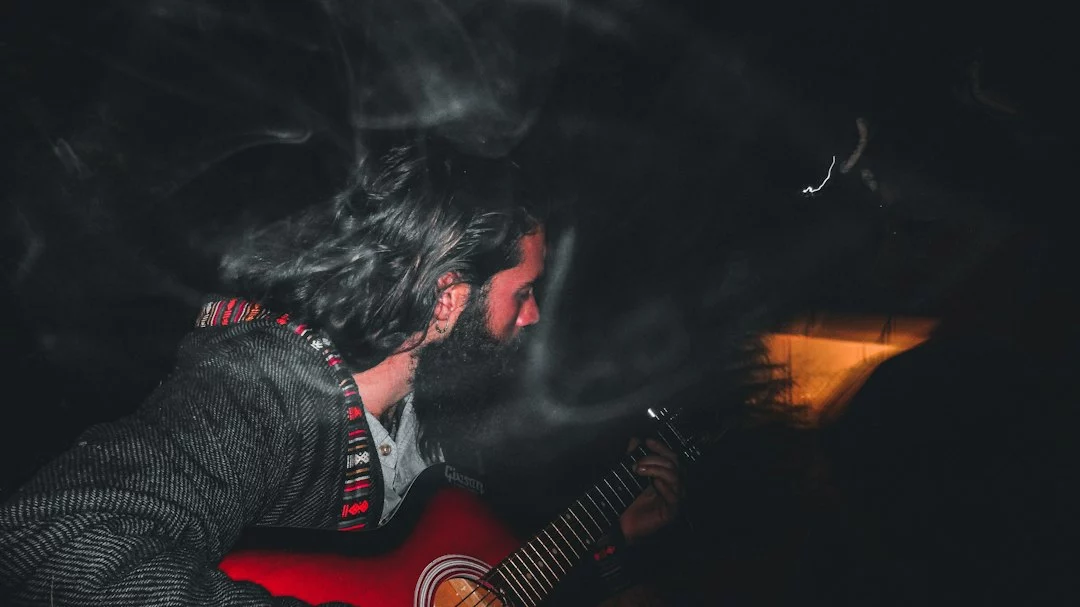
Nirvana guitarist lighting a cigarette on stage sounds trivial until you account for what that image carries. It invokes Nirvana‘s legacy, the old mythology of grunge, and the still-sensitive question of whether a live show should look rebellious or simply follow the rules. A small act on a concert platform can become a test of taste, policy, and audience expectation.
The clip spread because social media removes context faster than it adds it. What might once have passed as a fleeting bit of live performance now gets replayed, clipped, and interpreted as a statement. That is why the reaction was not simply about a cigarette; it was about what the cigarette seemed to say about the performer, the venue, and the audience watching at home.
Why the Nirvana guitarist lighting a cigarette on stage mattered
In the orbit of Kurt Cobain, Dave Grohl, and Pat Smear, even a minor gesture becomes symbolic. Nirvana was not just a band; it became one of the defining reference points of rock music in the 1990s, and its image still carries a residue of defiance. When a former or associated guitarist lights up onstage, viewers do not just see a habit. They see a version of the old rock bargain: chaos in exchange for authenticity.
That bargain no longer works automatically. The modern audience is less willing to treat visible rule-bending as proof of credibility. In the era of endless clips, the same action can be read as swagger by one group and as needless self-mythology by another. The gesture is small; the audience interpretation is not.
The symbolism of an old rock habit
For decades, punk rock and grittier forms of rock culture used smoking as shorthand for resistance. It worked because fans already expected rock stars to look casual, reckless, and faintly unavailable. A lit cigarette fit that script. It suggested that the stage was not corporate space but temporary territory reclaimed by attitude.
That symbolism still survives, but it is weaker than it used to be. The image of a singer or guitarist smoking can now look less like rebellion and more like nostalgia for a rebellion that has been packaged and resold for years. The audience is not wrong to notice the difference. In fact, that difference is the story.
In rock culture, a cigarette once signaled danger; now it often signals that the performer is still playing by an older script.
The practical problem beneath the image
Once the lights go up, a concert is also a shared indoor environment, not just a stage. The legal and operational context matters. A concert venue has to think about ventilation, crowd density, staff safety, and local law. Many regions impose a smoking ban in enclosed public spaces for reasons that have nothing to do with taste and everything to do with exposure, compliance, and liability.
The public-health case is straightforward. The Centers for Disease Control and Prevention has long warned about the harms of second-hand smoke. That matters because stage smoking is not an isolated private act; it happens in a shared room. Even a brief cigarette break can matter if the space is crowded, the airflow is poor, or the venue has explicit rules against indoor smoking. The issue is not moral panic. It is public health.
Why the venue absorbs most of the risk
A music venue is responsible for more than the set list. It has to manage crowd behavior, enforce policies, and avoid situations that trigger complaints or inspection failures. A lit cigarette can complicate all three. It can irritate audience members, violate house rules, and create an immediate fire safety concern if the space is tight or the performer is handling cables, fabrics, or pyrotechnic effects.
That is why the legal question is usually less important than the operational one. The performer may be thinking about mood or image. The venue is thinking about insurance, staff instructions, and whether the clip will live online longer than the show itself.
| Viewer group | Immediate reading | Underlying concern |
|---|---|---|
| Longtime fans | Rock posturing | Whether the gesture still fits the band’s legacy |
| Venue operators | Policy breach | Liability, ventilation, and enforcement |
| Health-focused viewers | Second-hand exposure | Public-health norms and indoor smoking |
| Casual clip viewers | Shock value | Context stripped away by social media |
Why viewers reacted so differently
The strongest disagreement comes from the fact that people were not watching the same event in the same way. Some saw a veteran rocker acting like a veteran rocker. Others saw an outdated gesture dressed up as authenticity. Both readings have merit, but they rely on different assumptions about what live music is supposed to offer.
- Fans of classic rock mythology often read the cigarette as a familiar prop from an older stage language.
- Health-conscious viewers focus on the exposure question and the example set in a crowded room.
- Venue professionals see a compliance issue before they see an aesthetic one.
- Online audiences see a short clip with no surrounding context, which makes overreaction more likely.
That split is amplified by the fact that live performance now lives on the internet as much as in the room. A small action can be watched by people who were never present, never inhaled the air in the venue, and never heard the rest of the set. Once that happens, the image stops being local and becomes symbolic.
What the episode says about stage behavior now
There was a time when stage behavior in rock was intentionally hard to separate from personal identity. That made sense in an era when the band, the venue, and the audience were all part of the same physical experience. Today, the same behavior is filtered through phones, platforms, and comment sections. What once looked spontaneous can now look calculated.
The core problem is not that artists have become too careful. It is that audiences now expect a higher standard of explanation. If a musician smokes on stage, many viewers want to know why. Is it a joke, a habit, an act of defiance, or simply a lack of discipline? The performance may not provide an answer, but the internet will invent one.
What professionals should take from it
Artists and managers do not need to become sterile, but they do need to understand how quickly a small gesture can turn into a brand issue. The most useful response is clarity, not melodrama.
- Set the policy before the show. If smoking is prohibited, make that rule explicit with the artist team and crew.
- Coordinate with the venue. A stage manager should know who has authority to intervene and how to do it discreetly.
- Assume the clip will travel. Plan every visible moment as if it could become a headline still.
- Do not confuse looseness with charisma. Some audiences will forgive transgression; others will see carelessness.
- Offer substitutes for image-driven acts. Lighting, blocking, and timing can create edge without creating a compliance problem.
That last point matters. The modern live show does not have to be polite, but it does have to be intelligible. If an artist wants to project tension, risk, or spontaneity, there are safer ways to do it than lighting up in a crowded room.
FAQ
Is lighting a cigarette on stage automatically illegal?
No. It depends on local law, the venue’s policy, and whether the performance takes place in a prohibited indoor smoking environment. Even when it is not criminal, it can still violate contract terms or house rules.
Why do some musicians still smoke on stage?
Usually for one of four reasons: habit, image, stress, or a deliberate attempt to preserve an old rock persona. In some genres, especially those shaped by punk rock and late-20th-century rock music, smoking has long been treated as part of the visual language.
Does one clip define the performer?
Not on its own. But a clip can define the public conversation around the performer for days, which is often enough to shape the story. In the age of social media, the question is not whether the act was important in absolute terms. It is whether the act was visible enough to become the meaning of the moment.
What this moment says about the future of live music
The deeper lesson is that live music is moving further away from the older idea that danger automatically equals authenticity. The audience still wants energy, edge, and unpredictability, but it is less willing to accept behaviors that create avoidable risk for other people. That tension will keep widening as venues tighten rules and social platforms keep amplifying isolated moments.
The most likely future is not the disappearance of rock gesture but its substitution. Artists will keep trying to look untamed, but they will increasingly have to do it without triggering public-health criticism, venue enforcement, or viral backlash. The unresolved question is simple: if a performer cannot rely on cigarettes, rule-breaking, or old icons of self-destruction, what visual shorthand will replace them? The answer will determine whether rock still knows how to look dangerous, or whether it will have to learn how to look convincing in a different way.
Frequently Asked Questions
Why did such a small gesture like lighting a cigarette become such a big talking point?
Because the cigarette was never seen as just a cigarette. In the context of Nirvana’s legacy, it carried ideas about rebellion, authenticity, and rock mythology. Once the clip spread online, people read meaning into a moment that might otherwise have disappeared inside a live show.
Was the backlash mainly about smoking itself, or about what it symbolized?
Mostly about what it symbolized. For many viewers, the act suggested an older rock-star script: disregard for rules as a sign of credibility. Others saw it as stale self-mythology rather than genuine defiance. The smoking mattered, but the larger debate was over image and intent.
Why do clips like this provoke stronger reactions today than they used to?
Because social media strips away the full context of a concert and freezes one moment into a public statement. A gesture that once felt fleeting can now be replayed endlessly, commented on instantly, and interpreted by people who were not in the room and do not see the full performance around it.
Is the issue only about public image, or are there real venue concerns too?
There are real venue concerns. Indoor smoking can conflict with local laws, house rules, ventilation limits, and fire safety procedures. The venue also has to consider liability, audience complaints, and staff enforcement. So even if the gesture seems minor artistically, it can create operational problems very quickly.
Why do some fans still see stage smoking as authentic when others see it as outdated?
Because the meaning of the gesture has changed. Older rock fans may still associate smoking with grit, danger, and anti-establishment attitude. Younger or more health-conscious audiences often read the same act as unnecessary, performative, or out of step with modern expectations. The divide is really about changing cultural codes.