
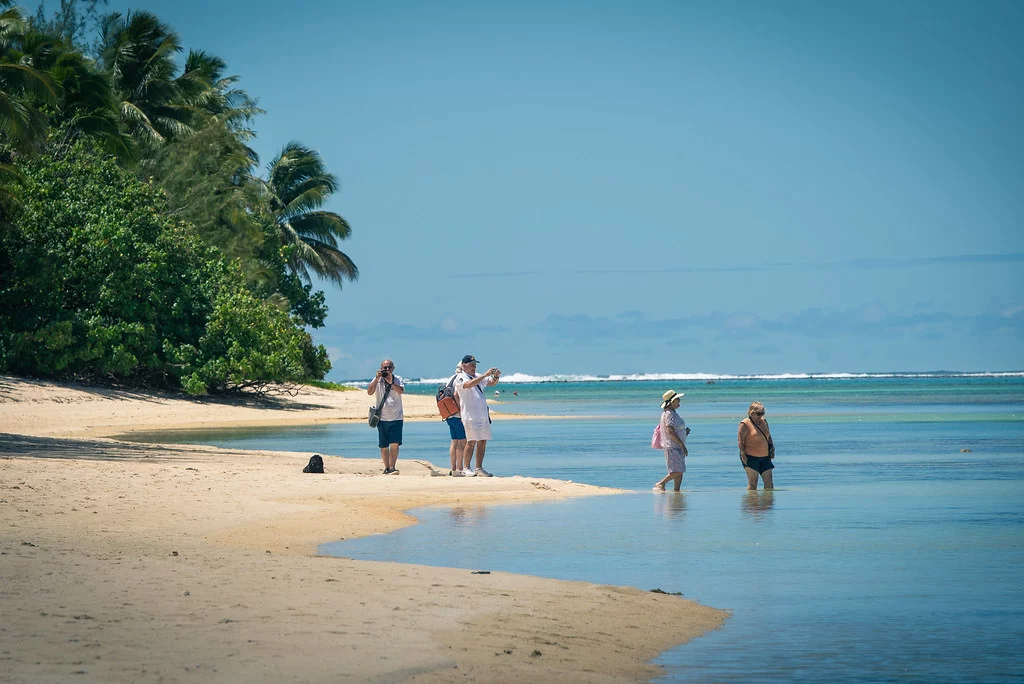
St Helena tourism is stepping into a new phase: one that treats distance not as a drawback, but as the island’s most distinctive promise. In the vast South Atlantic Ocean, the island of St Helena is using its remoteness, history and raw landscape to attract travellers who want more than a standard beach holiday. The message is bold and beautifully simple: if you want something different, come and find it.
That positioning matters because St Helena is not trying to compete with mass-market islands. As one of the world’s most remote inhabited places, and part of the British Overseas Territories, it has to convert its constraints into character. In practice, that means selling experience rather than convenience: dramatic scenery, deep history, rare wildlife and the kind of quiet that modern travellers increasingly struggle to find elsewhere.
What makes the current moment so interesting is that the island’s tourism story is no longer about simply opening a door. It is about deciding what kind of visitor St Helena wants to welcome, how many it can absorb, and how to protect the very qualities that make the journey worthwhile. In other words, this is not just a travel story. It is a test of whether a tiny island can build a future without becoming ordinary.
Why remoteness is now St Helena’s most persuasive feature
For generations, remoteness was the island’s biggest obstacle. Today, it is the headline. The rise of remote island travel, slow travel and experience-led itineraries has changed the way people evaluate destinations. Travellers who once chased proximity and ease are now chasing rarity, story and emotional payoff. St Helena offers all three in abundance.
That is why the island’s ‘Come and Find Me’ invitation feels smart rather than whimsical. It reframes distance as a form of exclusivity. The journey is part of the product, and that is exactly how a destination like St Helena should be sold. There is a difference between being hard to reach and being unreachable. St Helena lives in that narrow, fascinating space where getting there remains an achievement, but one that rewards the effort with a sense of discovery.
St Helena is not trying to be everything to everyone. It is trying to be unforgettable to the right traveller.
This is a crucial strategic shift. The island does not need a flood of short-stay visitors scrolling for the next tropical stop. It needs people who value depth: history lovers, walkers, birders, photographers and travellers who are willing to slow down. That kind of visitor is less likely to consume the island as a backdrop and more likely to engage with it as a place.
A small island with a huge historical shadow
The island’s story is inseparable from empire, navigation and exile. Long before it became a tourism talking point, St Helena was a waystation in the age of sail, a remote pin in the map that mattered because ships needed somewhere to stop. That history still shapes the island’s identity. A visit here is not just a nature escape; it is a walk through a layered archive of maritime power and imperial ambition.
Few names are as strongly associated with St Helena as Napoleon, whose final years on the island continue to shape global curiosity about it. His exile at Longwood House gives St Helena a historical magnetism that far exceeds its size. The island’s place in the Napoleonic Wars is not an abstract footnote; it is part of the texture of the land, the roads and the built environment.
Jamestown and the island’s living memory
The capital, Jamestown, Saint Helena, is one of the clearest expressions of that history. Narrow, steep and compact, it feels like a settlement carved into a corridor between sea and cliff. The town is a reminder that on St Helena, space has always been precious. Its scale also helps explain why travellers often describe the island as intimate rather than grandiose.
Just outside the capital, landmarks such as High Knoll Fort and Plantation House, Saint Helena show how governance, defence and administration shaped the island over time. Together with Longwood House, they give visitors more than a timeline. They offer a sense of continuity, of a place that has always been strategically important even when it seemed far from the centre of the world.
What travellers actually come to see
St Helena tourism works best when it is understood as a blend of landscapes, wildlife and memory. The island is not selling one iconic attraction; it is selling an atmosphere. Travellers arrive for the feeling of scale, the way the terrain changes quickly, and the shock of discovering how much drama can be contained in such a small place.
Wildlife and wild places
Nature is one of St Helena’s strongest cards. Diana’s Peak National Park protects a precious slice of cloud forest and endemic plant life, reminding visitors that small islands can contain fragile ecosystems of extraordinary complexity. For birders, the St Helena plover, known locally as the wirebird, is a signature species and an emblem of conservation in action.
Then there is Jonathan (tortoise), perhaps the island’s most affectionate living symbol. He embodies something the island’s marketers intuitively understand: longevity, patience and a rhythm that refuses to be rushed. That is exactly the mood many visitors are looking for. They do not come to hurry through a checklist. They come to witness a slower, more grounded way of being.
Culture at human scale
Unlike destinations built around oversized resorts, St Helena rewards conversation. Local life is visible, accessible and close-up. Visitors notice details: how people know one another, how history is not packaged into a separate zone, and how the island’s small size creates an unusually direct relationship between residents and travellers. For the right visitor, that intimacy is priceless.
It also means the island’s tourism economy can feel more personal. A guided walk, a family-run guesthouse or a small heritage site does not disappear into the noise of a mass market. It stands out. That is a major advantage, but it comes with responsibility. On a small island, every transaction has the potential to either strengthen or strain local trust.
How people get there and why logistics matter
For much of its history, access was part of St Helena’s mythology. The retirement of the RMS St Helena marked the end of an era, when sea travel defined the rhythm of the island’s connection to the wider world. Today, the key gateway is St Helena Airport, which transformed the island’s accessibility while preserving its sense of distance.
That balance is delicate. Too little access and tourism remains niche to the point of fragility. Too much access and the island risks undermining the very qualities that make it special. This is why logistics matter so much. On St Helena, transport is not merely a practical issue; it is part of the destination’s identity. The act of getting there continues to shape the kind of traveller who arrives.
In strategic terms, the island’s challenge is to maintain a low-volume, high-value model. That usually means visitors who stay longer, spend more locally and are willing to plan ahead. It also means destinations like St Helena must be honest about what they are not: they are not spontaneous weekend escapes, and they should not pretend to be.
The economics of small-island tourism
Tourism can be a lifeline for remote communities, but on a tiny island it also becomes a question of scale. The most successful models are rarely built on raw volume. They are built on visitor quality, local retention of spending and careful alignment between tourism growth and community capacity. St Helena’s opportunity lies in strengthening this model rather than chasing unrealistic expansion.
That approach has clear benefits. It supports jobs in accommodation, transport, guiding, hospitality and heritage management. It also helps diversify an economy that cannot rely on size. Yet there are risks too. A small market can become dependent on a narrow visitor segment. If flights, marketing or global demand shift, the island may feel the shock more quickly than a larger destination would.
There is also a lesson here from other remote places such as Ascension Island and Tristan da Cunha. South Atlantic isolation can be an asset, but only if infrastructure, governance and environmental protections grow at the same pace as tourism interest. Otherwise, the destination becomes vulnerable to overpromising and underdelivering.
Sustainable tourism will decide the island’s future
The word sustainability is often used too loosely, but on St Helena it has real meaning. A small island cannot absorb infinite pressure. Water, waste, paths, accommodation, energy and habitat all matter. If tourism grows without guardrails, even a modest increase in visitor numbers can have outsized consequences.
That is why conservation is not a side story here. It is the foundation of the product. Visitors who come for birds, walking and heritage should be encouraged to understand that their presence has an impact. Trail care, wildlife protection and responsible development are not optional extras; they are the conditions that make future tourism possible.
The deeper opportunity is to position St Helena as a model of conservation-led tourism. That means protecting endemic species, supporting local businesses and shaping visitor experiences that feel rewarding without being extractive. If the island can do that well, it could become a reference point for other small destinations struggling to find balance between exposure and preservation.
What smart visitors should expect before they go
St Helena rewards preparation. Travellers who succeed here tend to do a few things well:
- They book early and accept that transport options are limited.
- They stay longer than they would on a typical island break.
- They pack for walking, changing weather and rugged terrain.
- They come with curiosity about history, not just scenery.
- They choose local services and treat the island as a community, not a backdrop.
That last point is especially important. The best way to enjoy St Helena tourism is to match the pace of the island itself. This is not a destination that rewards rushing. It rewards noticing. The curve of a hillside, the colour of a harbour, the silence of a trail, the memory of a story told by a local guide: these are the details that become the real souvenir.
Frequently asked questions about visiting St Helena
Why visit St Helena?
Because it offers a rare blend of remoteness, history and nature. Visitors come for the feeling of discovery, the link to Napoleon, the landscapes around Diana’s Peak National Park and the chance to experience a destination that still feels genuinely singular.
How do you get to St Helena?
Most visitors arrive by air through St Helena Airport. Because access is limited, travellers should plan well in advance and check current schedules before committing to dates.
Is St Helena only for history lovers?
No. History is a major draw, but so are walking, birdwatching, photography and the island’s quiet, slow pace. The appeal is broad as long as the visitor is comfortable with a remote, low-key experience.
Is St Helena good for wildlife tourism?
Yes. The island’s ecological value is a major part of its identity, especially its endemic species and birdlife, including the St Helena plover. Visitors interested in conservation travel will find plenty to engage with.
Can visitors see Napoleon-related sites?
Yes. The island’s historic landscape includes Longwood House and other places tied to Napoleon’s exile, making the island unusually rich for travellers interested in European and imperial history.
The real test for St Helena’s next chapter
The most important insight about St Helena tourism is that the island does not need to become bigger to become more important. Its power lies in staying rare while becoming better understood. That requires discipline: disciplined marketing, disciplined infrastructure and disciplined conservation. It also requires an honest answer to a difficult question: how much visibility can a place built on solitude accept before it changes what made people seek it out in the first place?
Over the next few years, watch three things closely: access, stewardship and visitor behaviour. If connectivity improves without eroding the island’s character, if conservation remains central rather than decorative, and if travellers arrive ready to engage rather than consume, St Helena could become a model for the next generation of responsible island tourism. The island’s future may depend less on how many people can find it than on whether it can remain worth finding.
Frequently Asked Questions
Why is St Helena’s remoteness considered an advantage instead of a problem for tourism?
Because the island is selling rarity, not convenience. For travellers seeking slow travel, deep history and a strong sense of place, the journey itself becomes part of the appeal. St Helena’s distance helps it stand out from mass-market destinations and creates a feeling of discovery that many modern travellers now actively seek.
What kind of visitor is St Helena actually trying to attract?
St Helena is aiming for visitors who value depth over speed: history enthusiasts, walkers, birdwatchers, photographers and people who want a quieter, more immersive trip. It is less suited to travellers looking for quick beach breaks or heavily packaged holidays. The island works best for people willing to slow down and engage with its character.
Is St Helena’s tourism based only on Napoleon, or is there more to see?
Napoleon is a major draw, but he is only one part of the story. The island also offers dramatic landscapes, rare wildlife, maritime history and distinctive settlements such as Jamestown. Its appeal comes from the combination of natural beauty and layered history, not from any single landmark or historical figure alone.
How can St Helena grow tourism without losing what makes it special?
The key is controlling scale. The article suggests the island needs to decide how many visitors it can absorb and what kind of experience it wants to protect. By favouring slower, more respectful travel and avoiding mass-market volume, St Helena can build tourism around preservation rather than overdevelopment.
What makes the island’s history important to the visitor experience?
St Helena’s history is visible in its roads, buildings and landscape, not just in museums. Its role in the age of sail, the Napoleonic era and British imperial history gives the island a strong sense of continuity. Visitors are not just looking at old stories; they are moving through a place shaped by them.