
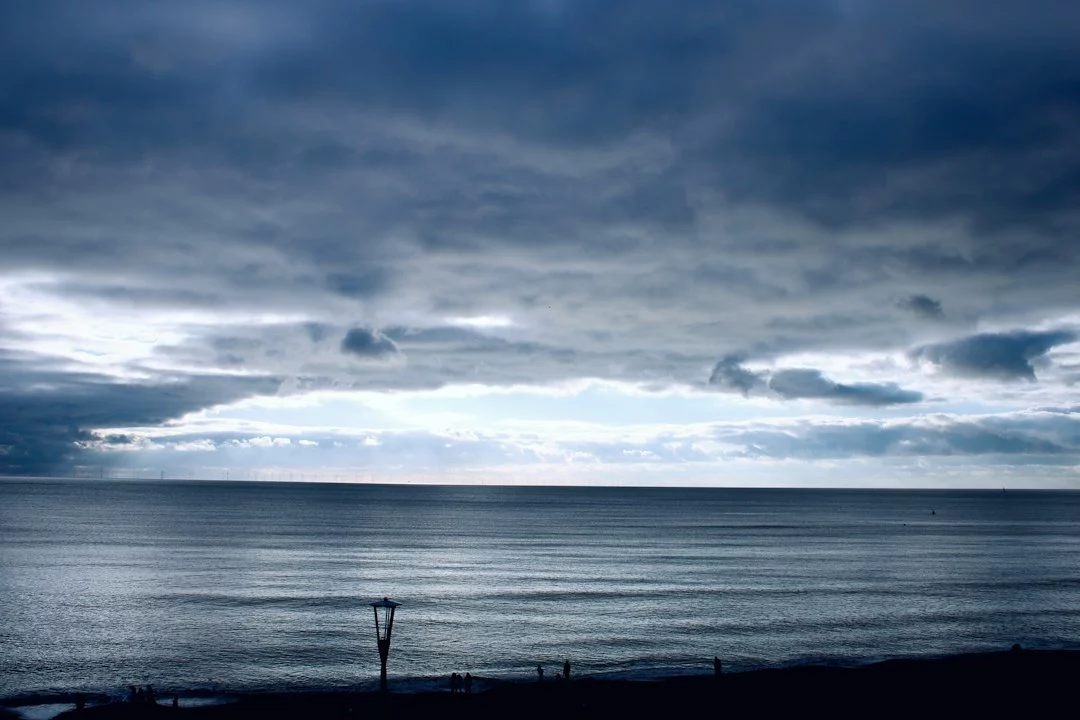
The Brighton beach drowning investigation has narrowed the facts without closing the case. Police say there is no evidence of criminality or third-party involvement in the deaths of three sisters whose bodies were recovered from the sea off Brighton on 13 May. A post-mortem examination found that all three died by drowning. That is a precise statement, and precision matters. It tells us what investigators have ruled out so far, not the full sequence of events that led to the tragedy in Brighton, on the coast of East Sussex.
What the police update actually establishes
In plain terms, the police have said they do not currently have evidence that another person caused the deaths. That is a narrower claim than many readers assume. It usually means the evidence gathered so far, including scene examination, witness accounts, forensic material, and any available digital or environmental records, does not support a charge of assault, homicide, or another form of unlawful interference.
It does not, however, tell the public everything. A death by drowning can arise from many different sequences: accidental entry into the water, misjudgment of conditions, sudden illness, exhaustion, cold shock, or other medical and environmental factors. Without a full coroner-led process, the evidence is still provisional.
| Finding | What it means | What it does not mean |
|---|---|---|
| No evidence of crime | Police have not found signs of unlawful killing or assault. | The broader circumstances are fully explained. |
| No third-party involvement | No evidence another person directly caused the deaths. | There were no environmental or medical contributors. |
| Death by drowning | The post-mortem identified drowning as the cause of death. | Why the women entered the water, or what happened immediately beforehand. |
This is why the distinction between police inquiries and a legal finding matters. Police investigate to determine whether a criminal offence may have occurred. A coroner investigates sudden or unexplained deaths to establish identity, cause, and circumstances. If needed, an inquest follows. Those are related but not interchangeable processes.
The key lesson is simple: a police update is a boundary around the evidence, not a finished narrative.
Why the wording is careful, and why that care is necessary
No evidence is not a dramatic phrase, but it is the correct one. Investigators are not obligated to say more than the evidence supports. In high-profile deaths, loose language can easily become an accidental verdict. The public may hear no third-party involvement and translate it into the case is solved. That is not what the police statement says.
It is also worth resisting the temptation to fill gaps with speculation. The fact that the women were sisters is emotionally powerful, but kinship is not evidence. Nor is the location by itself. A beach can be a place of leisure, recreation, and visibility, yet the same shoreline can become hazardous in minutes.
In that sense, the case sits at the intersection of human grief, forensic restraint, and public curiosity. Responsible reporting should not hunt for motive where none has been established. It should ask what is verified, what is unknown, and what comes next.
Why the sea matters more than the headlines suggest
Coastal deaths often expose a basic misunderstanding: the sea is not stable, predictable, or visually honest. A stretch of the sea beside a busy beach can look deceptively calm while still carrying risk from cold water, currents, waves, and fatigue. The rip current is a well-known example: it can pull swimmers away from shore faster than they can react.
That is why organisations such as the Royal National Lifeboat Institution and HM Coastguard repeatedly warn that emergencies offshore can become critical before bystanders fully register what is happening. Drowning is often silent. Victims may not scream, may not thrash in the cinematic way people expect, and may lose the ability to keep their airway clear within moments.
The practical implication is obvious but frequently ignored: even where a beach is familiar, risk assessment cannot be casual. In a place like Brighton, one of Britain’s best-known seaside cities, public familiarity can produce overconfidence. The environment does not reward confidence.
That is especially true in colder water, when lifeguards are absent, or when tide and weather conditions change faster than people on the promenade expect. Public coastal spaces are not controlled environments. They are dynamic risk zones.
What families and beachgoers should watch for
- Unexpected changes in tide, wind, or wave pattern.
- Cold water that can trigger loss of coordination or breathing control.
- Distance from shore that feels manageable but is not.
- False confidence from calm-looking water near the beach.
- Delayed calls to emergency services when trouble starts.
For anyone near water, the practical rule is simple: if someone is in difficulty, call 999 and ask for the Coastguard, and do not improvise a rescue unless you are trained and have flotation support. That advice is not abstract. It is how preventable drownings sometimes become multiple casualties.
How this should be reported, and why families deserve discipline from the press
There is a moral difference between reporting facts and constructing a story from grief. The first is journalism; the second is speculation dressed up as certainty. When the deceased are named, related, and young, media coverage can become emotional fast. That does not justify collapsing standards.
The careful phrase no evidence of third-party involvement should keep speculation in check. It should not be stretched into claims about motives, hidden relationships, or unverified scenarios. It should also not be used to diminish the seriousness of the deaths. A finding that no crime is evident is not a trivial finding. It is simply a narrower one than the public may want.
Good reporting also leaves room for uncertainty. If more details emerge from the coroner’s process, the article should be updated. If not, the absence of a neat explanation is still a legitimate outcome. Not every death produces a satisfying public narrative, and the refusal to invent one is a strength, not a weakness.
FAQ: what readers are likely asking
What does no evidence of criminality mean in practice?
It means police have not found material that currently supports a criminal charge or a theory that someone else unlawfully caused the deaths. It does not mean the investigation is over, and it does not prevent a coroner from continuing to examine the circumstances.
Does a post-mortem that finds drowning answer the full question?
No. A post-mortem examination can establish cause of death, but not necessarily the complete sequence that led there. In a case like this, it confirms how death occurred in medical terms; it does not always explain why the victims were in danger in the first place.
Why would an inquest still be needed if police found no crime?
Because a police investigation and an inquest answer different questions. The inquest process can examine environmental factors, timing, witness evidence, and medical findings to produce an official account. It is the mechanism that often turns fragments of information into a legal conclusion.
Could weather or sea conditions still matter?
Yes. Even when no third party is involved, conditions such as tide, visibility, currents, and cold water may still be relevant. Those factors are commonly considered in coastal deaths because they help explain how a person became unable to survive in the water.
The next official finding still has to answer the hardest question
The most important insight in this Brighton case is not that the police have ruled out one explanation. It is that the sea can still leave a family with partial answers and a public with unfinished understanding. The formal process now matters more than the speculation around it.
Watch the coroner’s findings, any further forensic detail, and whether investigators publish a clearer chronology of events. Those are the pieces that can move the story from what is not true to what most likely happened. Even then, the final account may explain mechanism without resolving every human question. That is often the reality in death investigations: the evidence can clarify the facts, but it cannot always restore the story people wish they had.
In the coming weeks, the crucial test will be whether the official record adds context without overreaching. The best investigations do not chase certainty beyond the data. They leave behind a disciplined account of what the evidence can support, and a sober reminder that familiar coastal places, including Brighton, can become dangerous faster than most people are willing to believe.
Frequently Asked Questions
Does “no evidence of criminality” mean the case is over?
No. It means police have not found evidence so far that another person unlawfully caused the deaths. The investigation can still continue, and a coroner may later examine the deaths in more detail. That process can help establish the full circumstances, even when police do not suspect a crime.
What does a post-mortem finding of drowning actually tell us?
It confirms the immediate cause of death, but not the full sequence of events. Drowning can happen after an accident, a medical episode, exhaustion, cold shock, or other factors. So the post-mortem answers how they died, but not necessarily why they entered the water or what happened first.
If there was no third-party involvement, could the deaths still have been avoidable?
Yes. A lack of third-party involvement only rules out another person directly causing the deaths based on current evidence. It does not rule out environmental hazards, a sudden health problem, or a tragic accident. Those possibilities can still be explored through the coroner’s process and any further evidence.
Why do police and a coroner investigate the same death separately?
They have different roles. Police focus on whether a crime may have occurred and gather evidence for that question. A coroner investigates sudden or unexplained deaths to establish identity, cause, and circumstances. An inquest, if held, can examine the broader context without being a criminal trial.
Why is the wording in the police statement so cautious?
Because investigators should only state what the evidence supports. Saying there is no evidence of criminality is not the same as proving exactly how the deaths happened. Careful wording avoids turning an incomplete investigation into a premature conclusion, especially in a case that is emotionally charged and widely reported.
Could the sea conditions around Brighton have played a role even if the deaths were not criminal?
Yes. Coastal waters can be deceptively dangerous because of currents, cold water, waves, and fatigue, even near a populated beach. A person can get into difficulty very quickly without anyone else being at fault. That is why the location matters, even when police find no sign of crime.