
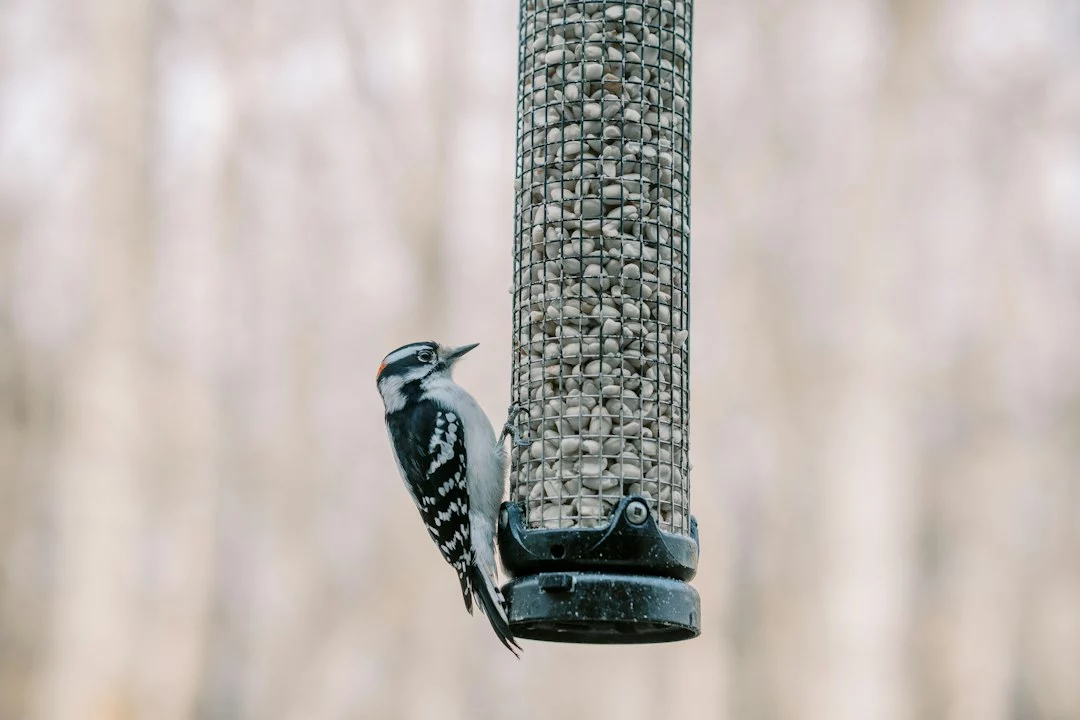
Smart bird feeders have moved from novelty gadget to serious backyard tool because they combine a familiar bird feeder with a digital camera, Wi-Fi, and a mobile app that can identify visitors, save clips, and send alerts. The appeal is obvious: people want a closer look at the birds already using their yards, but they also want convenience, learning, and a better record of what they see. That is why the category sits at the intersection of birdwatching, home tech, and connected devices shaped by the Internet of things.
What makes this shift interesting is that smart feeders are not just about prettier photos. They are changing how non-experts participate in ornithology, how hobbyists document seasonal patterns, and how ordinary homes collect useful wildlife data. In other words, the product is no longer only a feeder; it is becoming a compact observation platform for avian life.
What a smart bird feeder actually is
A smart bird feeder is a feeder with built-in sensing, imaging, and connectivity. Some are simple camera bird feeders that capture motion-triggered clips. Others are more advanced and use software to label species, store footage in the cloud, and push notifications to your phone when a new bird lands. The best-known designs turn the feeder into a living feed of your backyard rather than a static piece of garden hardware.
In practice, a modern feeder usually combines four things: a feeding chamber, a camera, a network connection, and a recognition engine. The camera sees the bird, the app shows the image, and the software compares what it sees to species patterns. That recognition layer is where computer vision and machine learning do the heavy lifting.
How do smart bird feeders work?
Most systems use motion detection or image-triggered capture. When a bird lands, the feeder records a short photo burst or video clip and sends it to an app on a smartphone. From there, the software may suggest a match, store a library of visits, or let the user confirm the species manually. The process is simple for the user, but it depends on careful tuning behind the scenes.
Some feeders rely heavily on remote servers, which means the recognition happens through cloud processing. Others lean more on local hardware and only use the network for alerts and sync. That difference matters because it affects speed, subscription costs, privacy, and whether the feeder keeps working when the home internet is unstable.
Why people are buying them now
The category has grown because it solves a real problem: most people love birds, but they miss the moment when a warbler, finch, or hummingbird appears and disappears in seconds. A smart feeder keeps the moment from vanishing. Instead of a blurred glimpse, the user gets a clear image and, sometimes, an identification suggestion. For many households, that makes wildlife photography and backyard observing feel accessible without needing a telephoto lens or advanced field skills.
Another reason is that smart feeders fit the way people already use tech. A single app can sort visits by date, generate species lists, and save favorite clips. That makes the experience feel closer to a modern fitness tracker or home security camera than a traditional feeder. In an era of connected devices, that convenience matters.
There is also a social component. People share the best clips, compare species lists, and use the data to learn the habits of local birds. That sense of discovery has helped the category spread beyond dedicated hobbyists into households that are simply curious about backyard life.
Why the category resonates with citizen science
One underrated reason for the surge is its fit with citizen science. People are increasingly comfortable contributing observations from home, especially when the data is structured and easy to review. A feeder that records timestamps, weather conditions, or repeated visitors can support more than entertainment; it can also produce observations that matter for local habitat awareness and broader ecology.
The real value of a smart bird feeder is not the camera itself. It is the way it turns a brief backyard visit into a record you can compare over time.
What the technology can do well, and where it still struggles
Smart feeders are impressive, but they are not magic. A model may identify a cardinal correctly in bright morning light and then struggle with a partially hidden sparrow, a wet lens, or a bird seen from below. Species with similar shapes and colors remain difficult, especially when the angle is poor or the bird is only on screen for a moment. Even strong systems can confuse close relatives, and the user often has to verify the result.
That limitation is important because the software is not just looking for a bird; it is trying to infer a species from partial visual clues. In a field like computer vision, context is everything. A feeder with a plain seed tray and poor lighting gives the model fewer clues than a still frame of a bird posed neatly on a perch. This is why many manufacturers now emphasize better optics, low-light performance, and clearer app workflows rather than simply promising more AI.
Another issue is that connected devices bring recurring software costs. A feeder may be sold as a piece of hardware, but the long-term experience often depends on subscription storage, advanced identification, or richer alerts. Buyers should understand whether they are paying once or paying over time.
What to look for before you buy
If you are trying to choose the best smart bird feeder for backyard birds, start with the practical basics. A beautiful app is useless if the feeder clogs, leaks, or is hard to clean. A strong camera does not help if the enclosure fogs up or birds cannot perch comfortably. The best products balance hardware design, software quality, and bird-friendly engineering.
| Feature | Why it matters | What to check |
|---|---|---|
| Camera quality | Determines whether birds are identifiable | Resolution, field of view, low-light performance, and focus distance |
| Recognition software | Shapes how useful the app feels day to day | Species accuracy, manual correction tools, and update frequency |
| Power options | Affects uptime and maintenance | Battery life, solar support, and charging convenience |
| Weather resistance | Protects the electronics and seed supply | Seal quality, drainage, and condensation control |
| Cleaning access | Critical for hygiene and bird health | Easy disassembly, washable parts, and smooth surfaces |
| Storage model | Changes the total cost of ownership | Local storage, cloud storage, and subscription terms |
There is also a difference between a useful feeder and a clever gadget. A useful feeder is designed for the birds first and the software second. That means it should be easy to refill, easy to clean, and mounted in a way that keeps the camera stable while minimizing stress for visiting birds.
Camera bird feeder features that matter most
- Reliable motion detection that avoids constant false alerts from leaves, rain, or squirrels.
- Clear app design so users can review clips without digging through confusing menus.
- Realistic species labels that acknowledge uncertainty instead of overpromising certainty.
- Weatherproof construction so the feeder performs through heat, humidity, and winter cold.
- Easy sanitation because wet seed, mold, and debris can undermine both bird health and camera performance.
Using a connected bird feeder responsibly
A smart feeder should improve the birding experience without making the yard less safe. That means placing it thoughtfully, cleaning it regularly, and being aware of how the feeder changes bird behavior. Because feeders attract repeat visits, they can also concentrate birds in ways that make hygiene and spacing more important than they would be with a single occasional sighting.
The Cornell Lab of Ornithology and Audubon both emphasize good feeder maintenance and clean seed handling as part of responsible backyard bird care. That advice becomes even more important with camera-equipped devices, because owners may be tempted to treat the feeder like a set-it-and-forget-it gadget. It is not. The best experience comes from regular cleaning, fresh seed, and careful placement away from hazards.
It is also wise to think about windows, cats, and predator exposure. A feeder placed too close to glass can increase collision risk, while a feeder mounted too low or too accessible may invite unwanted visitors. Because smart feeders often include cameras, they can also capture more of the surroundings than the owner expects. That matters for privacy, especially in dense neighborhoods where neighboring yards are visible.
Bird migration and seasonal patterns matter
Feeder use changes through the year. During bird migration, you may see short-term spikes in traffic, unexpected species, and changing feeding behavior. A smart feeder can make those shifts easier to document, but it can also create a false sense that every visitor is part of a stable pattern. In reality, the data only makes sense when viewed seasonally.
That is why repeated observations matter more than single viral clips. A feeder can help a household notice when a species first appears in spring, when young birds begin visiting, or how feeding habits shift after storms. Those patterns are small, but they are precisely the kind of patterns backyard observers have always tried to track.
Who gets the most value from these feeders
The strongest use cases are not identical for every buyer. Families often use smart feeders as educational tools because children can watch birds up close without disturbing them. Casual homeowners value the convenience and the occasional surprise of a rare visitor. Dedicated hobbyists appreciate the logs, the identification history, and the ability to compare species over time. And people interested in local nature often enjoy the sense that a modest backyard is now part of a larger living system.
For people who already enjoy field guides, binoculars, and regular yard checks, the feeder is an extension of existing habits, not a replacement for them. For people who are new to birding, it can be a gateway into deeper observation. That matters because technology often succeeds when it lowers the barrier to an established hobby rather than trying to invent a new one.
At the same time, not every buyer will love the trade-offs. If you dislike subscriptions, prefer simple tools, or want a feeder that works with no app at all, a smart model may feel more complicated than helpful. The product is best for people who want the data, the alerts, and the close-up image library.
What the next generation is likely to change
The next wave of smart bird feeders will probably improve in three areas: recognition, privacy, and cost. On the recognition side, better models should become more accurate with partial views, difficult lighting, and seasonal plumage changes. On the privacy side, more products may offer on-device processing so images do not need to be uploaded for every identification. On the cost side, buyers will likely keep demanding more value without a heavy subscription burden.
There is also a broader trend to watch. As machine learning improves and hardware gets more efficient, the line between a feeder, a camera, and a nature-monitoring device will blur further. That could make these products more useful for ordinary households and more interesting for local conservation work, but it will also raise questions about data ownership and how much wildlife imagery should live in vendor-controlled platforms.
In other words, the category is likely to split in two directions: premium products that promise richer insight, and simpler products that focus on clean design and minimal software dependency. The winners will probably be the brands that make the experience feel trustworthy instead of noisy.
FAQ
Do smart bird feeders scare birds away?
Usually not, if the feeder is quiet, stable, and designed with appropriate perches and spacing. Birds care more about safety, food availability, and routine than about the fact that a camera is present.
Do smart bird feeders need Wi-Fi?
Most do, at least for live alerts, cloud storage, or app syncing. Some models can record locally and upload later, but the feature set is typically reduced without a connection.
Are smart bird feeders worth the subscription?
That depends on how much you value storage, identification history, and app-based alerts. If you mainly want a feeder that records occasional clips, a no-subscription model may be enough. If you want frequent identification and a searchable archive, the paid tier may be more useful.
Can a smart bird feeder work in winter?
Yes, but winter exposes weak points quickly. Battery performance drops, condensation becomes more likely, and seed can clump if the enclosure is not well protected. Cold-weather use is a good test of whether the product is built for real outdoor conditions.
The real test for smart bird feeders is not novelty
The most important insight is that smart bird feeders are becoming observation tools, not just gadgets. The best ones help people notice more, learn faster, and document patterns they would otherwise miss. The weaker ones merely turn a backyard feeder into a subscription-driven camera.
What to watch next is whether the category can keep improving recognition accuracy while reducing friction. If companies can make the software more trustworthy, keep the hardware easy to clean, and give users better control over privacy and storage, smart feeders may become a lasting part of backyard birding. If not, the market may split between practical tools and short-lived novelty.
That leaves one unanswered question worth following: when a connected feeder becomes a common source of backyard wildlife data, will buyers treat it as a product to consume or as an instrument that changes how we participate in local ecology? The answer will shape what the next generation of birdwatching looks like.
Frequently Asked Questions
Do smart bird feeders still work if the Wi-Fi goes down?
Usually yes, but with limits. Most feeders can continue to feed birds and may still record locally, but features like app alerts, cloud identification, and remote viewing often pause until the connection returns. Models that rely more on on-device processing tend to keep more functionality offline, while cloud-dependent systems are more affected by internet outages.
How accurate is the species identification, especially with similar-looking birds?
Accuracy can be very good for common species, but it is not perfect. Lighting, angle, partial views, and birds that look alike can cause mistakes. Many apps improve results by letting users confirm or correct identifications, which also helps the system learn over time. Rare species and juveniles are usually harder to identify reliably.
Are smart bird feeders bad for the birds because of the camera or electronics?
Not inherently, as long as the feeder is designed and maintained well. The main risks are the same as with any feeder: poor cleanliness, overcrowding, wet seed, or unsafe placement. A camera and sensors usually do not bother birds much if the feeder is stable, quiet, and positioned to avoid predators and collisions.
What is the difference between feeders that use cloud processing and those that use local processing?
Cloud-based feeders send images to remote servers for analysis, which can improve recognition but may involve subscription costs and more privacy tradeoffs. Local processing handles more tasks on the device itself, which can be faster and more private, but may offer fewer advanced features. The choice affects speed, reliability, and how much data leaves your home.
Can smart bird feeder data actually be useful beyond personal birdwatching?
Yes. Timestamps, repeat visits, and seasonal species patterns can help users notice migration timing, feeding behavior, and changes in local bird activity. In some cases, this information can support citizen science projects or broader habitat awareness. Even simple visit logs can become valuable when collected consistently over weeks or seasons.
Do smart feeders need special placement to get good images?
Yes. Placement has a big impact on image quality and bird safety. They usually work best in bright but not harsh direct sunlight, with a clear background and minimal branch obstruction. The feeder should also be mounted securely and placed where birds feel safe but predators cannot easily reach them.