
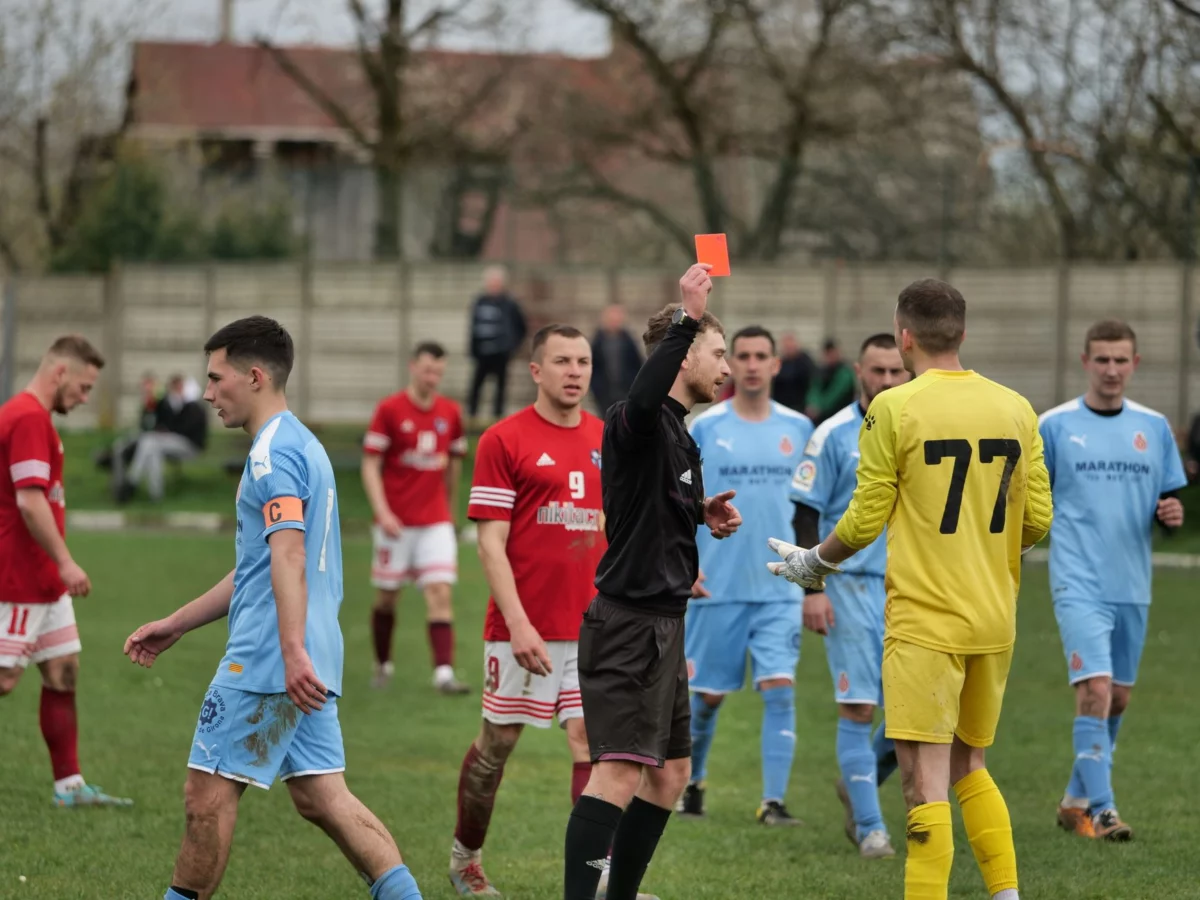
The Premier League‘s refereeing body has admitted a Manchester derby refereeing error over the decision that allowed Erling Haaland’s winner to stand, and the significance reaches far beyond one scoreline. In a fixture as charged as the Manchester derby, where every major call is replayed instantly across television, social platforms, and dressing rooms, an acknowledged mistake can reshape the conversation about video assistant referee checks, officiating standards, and the public’s confidence in the people tasked with enforcing the Laws of the Game.
What makes this episode especially important is that it is not just another post-match complaint. When the system itself concedes a judgement call was wrong, the story moves from fandom to process: how errors happen, why VAR did not correct them, and what English football can realistically do to reduce them without turning association football into a machine-run sport.
Background and context: how elite officiating works in England
At the top level of English football, match officials operate inside a framework shaped by Professional Game Match Officials Limited, the on-field referee, the assistant referees on the touchlines, and the VAR team in the control room. The wider rule set comes from The International Football Association Board, which sets the laws used by competitions such as the Premier League. That division matters because a controversial match decision is rarely just one person’s mistake; it is usually the end result of a chain of judgement, communication, and protocol.
Since VAR arrived in elite English football, the debate has shifted. The old question was whether technology should be introduced at all. The current question is whether technology is being used consistently enough to justify the trust placed in it. In theory, VAR exists to correct only clear mistakes. In practice, it must operate inside a sport where speed, angle, body contact, and momentum all complicate certainty.
How VAR is supposed to work on a goal
According to the official IFAB Laws of the Game, the review system is meant to intervene in a limited set of incidents: goals, penalties, direct red cards, and mistaken identity. For a goal, the reviewers may examine whether there was an offside position, a foul in the buildup, a possible handball, or a clear factual error. The important detail is that VAR is not designed to re-referee every contact. It is supposed to step in only when the evidence is strong enough to justify overturning the on-field call.
In elite football, the hard part is not installing technology; it is deciding which moments technology should overturn and which moments must remain human judgement.
That distinction explains why the phrase judgement error matters. A judgement error is not the same as a broken camera feed, a missed replay, or an ignored protocol. It means the officials followed the process but still reached the wrong conclusion. The system worked as designed and still produced a result that one side, and now the body itself, believes was incorrect.
Why the Haaland winner matters beyond the scoreline
The Erling Haaland goal sits inside a wider sporting and emotional context. The match involved Manchester City F.C. and Manchester United F.C., two clubs whose rivalry is among the most scrutinised in world football. In a derby, the result is never just three points. It affects momentum, media narratives, supporter mood, and the way every future decision is interpreted.
That is why the refereeing body’s admission is significant. A regular league fixture can absorb a disputed call more easily. A derby cannot. The winner becomes a symbol, and the officiating decision becomes a test of fairness. Supporters are not merely asking whether the call was wrong; they are asking whether the current review system is capable of self-correction before a decisive moment becomes a headline.
The location also amplifies the pressure. Whether the match is framed around the Etihad Stadium or Old Trafford, the atmosphere around the Manchester derby is hostile to hesitation and unforgiving of inconsistency. A single decision can feel bigger than the game because it is being judged by two sets of supporters, two clubs, broadcasters, analysts, and the broader neutral audience all at once.
Why an admitted mistake hits trust so hard
Fans can live with disagreement more easily than they can live with silence. When a governing body or refereeing body admits an error, it creates a paradox: the honesty is welcome, but it also confirms that the mistake was avoidable. That is especially damaging in a competition that asks supporters to accept a blend of human judgement and technological review. Once the league acknowledges that the wrong call stood, every future borderline decision gets measured against that admission.
For clubs, the issue is practical as much as emotional. Coaches plan around points, goal difference, and momentum. Players live with the reality that a goal allowed or disallowed can shape an entire week of preparation. A post-match apology does not restore the lost opportunity. It only clarifies the historical record.
How a judgement error survives replay
Most controversial incidents are not simple mistakes of eyesight. They are the product of compressed time, incomplete angles, and the tension between what is obvious in slow motion and what is invisible in real time. In football, that tension is unavoidable. The ball moves quickly, bodies collide, and the exact moment of contact or pass is often ambiguous even after multiple replays.
There are several reasons a wrong call can still stand, even with video assistance:
- Angle selection: one camera can hide contact or make a marginal action look more certain than it is.
- Frame timing: a pass, touch, or deflection may be judged on a frame that is not fully definitive.
- Protocol limits: VAR intervenes only for a high threshold of error, not every debatable moment.
- Human pressure: the final decision still depends on officials making a call under intense scrutiny.
- Communication lag: quick sequences can create uncertainty between the on-field referee and the review room.
That is why goal-line technology is widely accepted but VAR remains controversial. Goal-line tech answers a binary question: did the ball cross the line? VAR often answers a much harder one: did the incident clearly meet the standard for intervention? One is factual and precise; the other is interpretive and dependent on football context.
Human factors are still decisive
Referees and review officials work under enormous cognitive load. They are expected to interpret pace, contact, player movement, and intent while also anticipating how a decision will be perceived. In a match as emotionally charged as a derby, that burden grows. Crowd noise, bench reaction, and the knowledge that every camera is trained on them do not create the error, but they do make consistent judgement harder.
That is also why the concept of clear and obvious error is so important. It is not enough for viewers to think a decision was probably wrong. Under the current VAR model, the mistake has to be strong enough that the officials can say the original call should not stand. Critics argue that this threshold is too high; defenders argue that without it, the game would be interrupted too often and referees would lose authority.
Technical factors matter too
Technical limitations are real, even in the Premier League. Camera coverage may not provide the perfect angle. A replay may be affected by frame rate, lighting, or obstruction. Automated systems can help, but they do not eliminate the need for interpretation. The most advanced system still depends on a human deciding what the images mean.
That is why many analysts now talk about technology in sport as a support tool rather than an answer in itself. The tool can narrow uncertainty, but it cannot fully remove interpretation from football. And because football is a continuous game, not a stop-start sequence of discrete plays, the room for subjective judgement will always remain larger than in some other sports.
What the Premier League and PGMOL need to do next
The most useful response to a mistake is not outrage alone; it is process improvement. If an officiating body admits an error, then the next step is to show supporters and clubs what will be done differently. That can include better incident review, clearer public explanations, stricter training on edge cases, and a stronger culture of accountability inside the officiating structure.
Transparency is the biggest demand. More fans now expect post-match explanations, fuller communication about what was checked, and greater openness around what the VAR team actually saw. The call for public audio from review rooms keeps returning because it would let supporters hear the reasoning rather than guess at it. Supporters do not need every officiating conversation turned into theatre; they do need enough visibility to understand why a call stood or fell.
There is also a case for tighter internal standards. If an admitted judgement error becomes just another line in a weekly apology cycle, the credibility problem will deepen. The Premier League, the refereeing body, and competition officials need to treat each correction as evidence that the process should be refined, not merely that the public should be reassured. For readers who publish football coverage, this story also pairs naturally with internal articles on VAR in the Premier League and the offside rule explained, because those pieces help separate the law from the narrative.
For the rulebook and competition framework, the most useful primary sources are the official IFAB Laws of the Game and the Premier League website. They do not settle every debate, but they do show where the line between reviewable fact and football judgement is supposed to sit.
Practical lessons for clubs, coaches, and supporters
The fallout from a derby error is not only for officials. Clubs and coaches can respond more intelligently if they treat the episode as a case study rather than a grievance. Supporters, too, can benefit from a better understanding of how the system works and where its limits are.
- For clubs: use match footage and formal channels to challenge patterns, not just isolated anger.
- For coaches: build game plans that reduce exposure to marginal decisions, especially in set-piece and transition moments.
- For analysts: compare the incident with the current Laws of the Game rather than with social-media consensus.
- For supporters: separate the legitimacy of the result from the legitimacy of the process; both matter, but they are not identical.
- For media teams: avoid turning every disputed call into a conspiracy when a simpler explanation is inconsistency.
One of the most persistent misconceptions around refereeing is that an error must imply bias. In reality, the more common problem is inconsistency under pressure. That does not make the mistake acceptable, but it does change the conversation from accusation to accountability.
Frequently asked questions
Can a result be changed after the refereeing body admits an error?
Usually not. In most football competitions, an admitted mistake does not automatically overturn the final score. Results can only change if competition rules allow a formal replay, a disciplinary process, or another exceptional remedy. In practice, that is rare. The more common outcome is an official acknowledgement and a review of the officiating process.
Does an admitted judgement error mean VAR failed completely?
Not necessarily. It means the system did not produce the correct outcome on this occasion. That can happen because the incident fell below the review threshold, because the available angles were not decisive, or because the officials interpreted the evidence differently. A single error does not prove the entire VAR framework is broken, but repeated errors of the same kind would be a serious warning sign.
How does VAR review a goal in the Premier League?
VAR checks whether the goal involved a reviewable incident under the IFAB protocol. That usually means looking for offside, fouls, handball, or mistaken identity. If the review team believes there is a clear and obvious error, the referee is asked to overturn the original decision. If not, the on-field call stands.
Why do controversial calls still happen if there is so much camera coverage?
Because more cameras do not automatically create certainty. Football is full of small margins: body shape, shoulder position, contact timing, and the angle at which a pass is made. The more interpretive the incident, the more likely it is that different officials will reach different conclusions even when they are looking at the same footage.
The real question football must answer next
The most important insight from this case is not that football can never be officiated fairly; it is that fairness in modern football depends on choosing the right balance between human judgement and technological correction. The Manchester derby reminded everyone that the sport still lives with a fundamental trade-off: the more authority technology is given, the more football must accept delays, reviews, and public scrutiny of its own rules.
What happens next will probably define the next phase of elite officiating. We may see faster offside checks, wider use of semi-automated systems, more transparent audio, and stricter internal auditing. But the unresolved question is deeper than technology: how much subjectivity should remain in the game when a title race, a derby, or a season’s momentum can be altered by one disputed call? That is the issue supporters, clubs, and officials will keep confronting long after this particular Haaland decision has faded from the headlines.
Frequently Asked Questions
If the refereeing body admitted the decision was wrong, why didn’t VAR overturn it during the match?
Because VAR is not meant to re-check every questionable contact; it intervenes only when there is a clear and obvious error within its remit. In this case, the officials may have followed the protocol but still reached the wrong judgement. That means the issue was not necessarily a missed review, but a review that did not produce the correct conclusion.
What is the difference between a VAR mistake and a judgement error?
A VAR mistake usually suggests a failure in process, such as ignoring a key angle, missing a reviewable incident, or not following protocol. A judgement error means the process was used, but the officials still made the wrong call based on the evidence. The article’s point is that the system can function properly and still produce a controversial outcome.
Does an admitted refereeing error automatically mean the result should be changed?
No. In football, an error being acknowledged does not normally alter the match result after full time. The result stands unless competition rules provide a rare formal remedy, which is unusual. The bigger effect is reputational and procedural: it raises questions about officiating standards, VAR thresholds, and whether future decisions should be handled differently.
Why does this particular Manchester derby call matter more than a similar mistake in another Premier League match?
Derby matches carry far more scrutiny, emotion, and long-term narrative weight. A disputed call in Manchester United versus Manchester City is replayed, debated, and used to frame the rivalry itself. That makes the error feel bigger than one goal, because it influences confidence in officiating and shapes how supporters interpret future decisions.
What does this incident reveal about the way VAR is currently being used in English football?
It suggests the core problem is not whether VAR exists, but whether it is being applied consistently and aggressively enough to correct major mistakes. The article highlights a tension in modern football: technology is expected to reduce obvious errors, yet too much intervention can make the game feel overly mechanical. Finding the balance remains the challenge.
Can the officials’ mistake be blamed on one person, or is it usually a chain failure?
At elite level, controversial decisions are rarely the fault of just one official. They usually result from a chain involving the on-field referee, assistant referees, VAR officials, and communication between them. The article emphasizes that a single wrong outcome often reflects a broader system of judgement, interpretation, and protocol rather than one isolated lapse.