
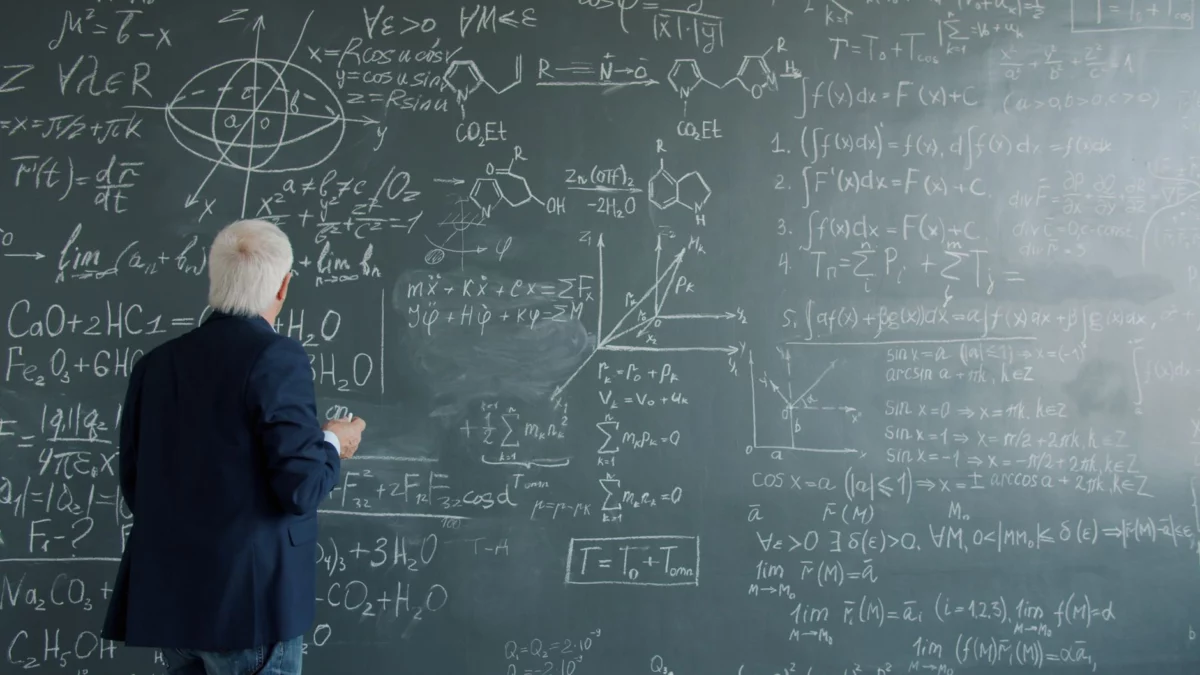
AI in mathematics is no longer a futuristic idea reserved for labs and demos. It is already changing how problems are posed, how proofs are searched for, and how researchers think about the boundary between human insight and machine output. That is why the reaction from mathematicians such as Steven Strogatz feels so revealing: the disruption is not just about speed, but about whether modern artificial intelligence, especially machine learning and large language models, can begin to shape a field that has always prized certainty, explanation, and proof.
How AI Is Rewriting Mathematical Discovery
The most important development is not that computers can now do arithmetic or symbolic manipulation. Those abilities have been routine for decades through the computer algebra system and symbolic computation. What has changed is that systems built on deep learning and artificial neural networks can now propose conjectures, search enormous spaces of possibilities, and sometimes generate proofs or proof sketches that look startlingly creative. That makes the current moment unlike earlier waves of automation in mathematics.
For readers trying to understand why this matters, the key question is simple: when a machine can produce a result that is useful, plausible, and sometimes correct, but not always transparent, what exactly counts as mathematical understanding? That is the tension behind the recent surge of interest in automated theorem proving, proof assistants, and tools like ChatGPT, which can write fluent explanations but still require rigorous checking. The practical impact is real, but so are the limits.
What Actually Changed in the Recent Wave of AI
The recent breakthrough is not a single invention; it is a convergence. Large models trained on vast text and code corpora can now recognize patterns in notation, language, and problem structure. That makes them useful for brainstorming in ways earlier software could not match. At the same time, specialized systems from organizations such as Google DeepMind have shown that AI can be paired with search, heuristics, and formal verification to tackle math tasks that are hard for ordinary language models alone. The result is a new hybrid model: generative AI suggests, symbolic tools check, and proof systems enforce correctness.
Projects such as AlphaGeometry point in this direction. Their significance is not that they magically replace mathematicians. It is that they show how systems can solve classes of problems by combining statistical prediction with structured reasoning. In other words, AI is starting to move from being a calculator to being a research partner, albeit one whose ideas must still be audited by humans.
From Search to Suggestion
Traditional software in mathematics usually works by following explicit instructions: if you know the algorithm, the machine executes it. AI changes this by generating candidate moves that were never explicitly programmed. That matters in mathematical proof, where the space of possible paths is huge. A model may notice an analogy, propose a lemma, or suggest a transformation that a human might overlook. Even when the model is wrong, it can still be useful because it broadens the search space.
Why This Feels So Unsettling
Mathematicians are trained to value not only correctness but explanation. A proof is more than an answer. It is a chain of reasons that makes the result durable, teachable, and transferable. If AI delivers results that are verifiable only after substantial machine checking, then the human relationship to the result changes. Some researchers see that as acceptable; others see it as a fracture in the culture of the discipline. Steven Strogatz’s concern is understandable in that light: math has always been a field where insight and proof reinforce one another, and AI may separate those two functions.
In mathematics, the hardest part is often not getting an answer. It is knowing why the answer deserves to be trusted.
Where AI Already Helps Mathematicians
Despite the anxiety, there are clear and concrete benefits. AI is useful when the task involves pattern detection, search, or large-scale verification. In research settings, that can save time and reveal avenues that might otherwise remain invisible. In education, it can act as an interactive tutor. In formal methods, it can reduce the manual labor of turning informal reasoning into machine-checkable form.
| Task | Where AI Helps | Human Role |
|---|---|---|
| Conjecture generation | Finds candidate patterns and relationships quickly | Tests significance and mathematical meaning |
| Proof search | Explores many possible steps at high speed | Evaluates whether the proof is elegant and valid |
| Formal verification | Checks each step in a strict logical framework | Specifies assumptions and interprets the result |
| Symbolic manipulation | Rearranges expressions and simplifies algebra | Chooses the right formulation of the problem |
Conjectures Before Proofs
One of the most promising uses of AI is not theorem proving itself, but conjecture discovery. A model can scan examples, identify relationships, and propose statements worth investigating. That is especially valuable in computational mathematics, where experiments often precede theory. The catch is that conjectures can be seductive. A pattern in sampled data may not hold generally, and a fluent explanation can disguise a fragile idea.
Formal Systems Raise the Bar
In a proof assistant, every inference has to be explicit. That makes machine-generated reasoning more reliable, but also more cumbersome. The advantage is rigor; the cost is friction. Human mathematicians still need to encode definitions, choose the right abstractions, and interpret the output. This is why hybrid systems are so important: the AI handles breadth, while the proof environment enforces discipline.
The Role of Mathematics Software
Long before current AI, tools such as formal proof systems and algebra software changed how researchers worked. What is new now is scale and flexibility. AI can absorb messy notation, natural language prompts, and incomplete ideas. That makes it easier to prototype mathematical thinking, but it also introduces ambiguity. The machine may appear to understand a theorem when it is really extrapolating from patterns in the training data.
The Limits That Matter Most
The central limitation is that statistical fluency is not the same as mathematical validity. A model can produce a convincing derivation with a subtle mistake, omit a necessary condition, or silently switch definitions. In a research context, those errors are not just technical bugs; they can mislead entire lines of inquiry. That is why many experts insist that AI should be treated as a powerful but fallible collaborator, not an authority.
Hallucinated Logic
Language models are especially vulnerable to generating reasoning that sounds coherent but fails under scrutiny. In mathematics, this is more than a stylistic problem. A single missing hypothesis can destroy an argument. Unlike ordinary prose, mathematical statements can be checked precisely, which means AI must be held to a higher standard than fluency. A polished answer is not enough.
Opacity and Verification Bottlenecks
Some AI systems can produce outputs that are difficult even for experts to interpret. That creates a new bottleneck: not discovery, but verification. If a machine suggests a long proof that only a small number of people can validate, then the field gains speed but may lose accessibility. This is where the culture of mathematics diverges from some other sciences. In many areas, approximation is acceptable; in mathematics, the proof itself is the product.
What Human Intuition Still Does Better
Human mathematicians are still better at choosing meaningful definitions, identifying deep symmetries, and deciding which problems are worth pursuing. That judgment depends on experience, taste, and an understanding of the field’s history. AI can imitate the surface form of insight, but it does not yet reliably know which ideas matter most. That distinction is crucial.
How This Changes Teaching and Research Culture
For teaching, the biggest challenge is not cheating alone. It is that students may use AI to bypass the productive struggle that builds mathematical intuition. If every intermediate step is outsourced, then the learner may arrive at a correct answer without developing the habits that make the answer meaningful. Educators will need to design assignments that assess reasoning, explanation, and verification, not just final results.
For research, AI may change hiring and collaboration patterns. Mathematicians who can work fluently with automated theorem proving, symbolic tools, and formal methods may have an edge. More importantly, teams may become more interdisciplinary, blending mathematicians, computer scientists, and specialists in deep learning. The future researcher may need to be part theorist, part systems thinker, and part auditor.
There is also a social dimension. If machine-assisted proof becomes common, then the prestige of mathematical work may shift away from elegance alone and toward the ability to orchestrate complex human-machine workflows. That could broaden participation, but it could also reward different skills than the field has traditionally celebrated.
What to Watch Next
The next phase will likely be driven by better integration. The strongest systems will probably combine language models, search, symbolic manipulation, and formal verification rather than relying on any one technique. That is already visible in research from Google DeepMind and in the broader ecosystem around theorem proving. The most significant advances may come not from general chatbots, but from narrowly designed systems that understand specific branches of mathematics and can talk directly to proof tools.
Another trend to watch is whether AI begins to influence what mathematicians consider a good question. If machines become capable of exploring huge spaces of possibilities, then human creativity may shift toward framing, interpretation, and synthesis. That would not make mathematicians obsolete. It would make their role more strategic. The same is true in areas related to computational mathematics and symbolic computation, where the tool itself starts to shape the frontier.
FAQ
Can AI really prove new theorems?
In some constrained settings, yes. Systems can search for proofs, assist with formal verification, and solve problems that fit their architecture. But most meaningful results still require human oversight, careful problem design, and strict checking.
Will AI replace mathematicians?
That is unlikely in the strong sense. AI can automate parts of the workflow, but mathematics depends on judgment, problem selection, explanation, and creativity. What is more plausible is that AI becomes a standard research tool, much like symbolic software or proof assistants.
How should students use AI for mathematics?
Students should use it as a tutor, checker, and idea generator rather than a shortcut. The goal is to understand why a step works, not just to obtain an answer. If the model provides a solution, verify it line by line and try to reproduce the reasoning without assistance.
What is the biggest risk of AI in mathematics?
The biggest risk is false confidence. A machine-generated argument may appear authoritative while containing a subtle flaw. In a field where validity is everything, that can be costly. The safest path is to combine AI’s search power with human skepticism and formal verification.
The Unanswered Question That Will Define the Next Decade
The most important issue is not whether AI can help mathematics. It already can. The real question is whether the field will remain human-legible as AI systems become more capable. If the answer is yes, then we may enter an era in which machine assistance expands mathematical imagination without eroding understanding. If the answer is no, mathematics may become a discipline where correctness can be established by machines, but comprehension becomes rarer, narrower, and more expensive.
That possibility is what makes the current moment so consequential. The next breakthroughs will not be measured only by theorems proved or problems solved. They will also be measured by whether mathematicians can still explain, teach, and trust what the machines discover. The deeper challenge is not speed. It is preserving meaning in a field that is now learning to think alongside machines.
Frequently Asked Questions
If AI can generate a proof sketch, why isn’t that already enough for mathematicians?
Because a proof sketch is not the same as a proof. Mathematicians need every step to be logically airtight, reproducible, and understandable by others. An AI-generated sketch may be helpful for exploration, but if key steps are hidden, incorrect, or unverifiable, the result cannot be trusted as mathematical knowledge until it is formally checked.
How is modern AI in mathematics different from older computer algebra systems?
Computer algebra systems mainly execute explicit symbolic operations, such as simplifying expressions or solving equations, based on fixed rules. Modern AI can propose new paths, infer patterns from examples, and suggest conjectures or proof strategies that were never directly programmed. That makes it more exploratory and less deterministic than traditional mathematical software.
Why are hybrid systems combining AI, search, and formal verification getting so much attention?
They address each other’s weaknesses. AI is good at generating promising ideas, search can explore many possibilities efficiently, and formal verification ensures that the final result is correct. Together, they create a workflow that is more powerful than a language model acting alone, especially in problems where correctness matters more than fluent explanation.
Can large language models actually understand mathematics, or are they just pattern matching?
They do rely heavily on pattern recognition, but that does not make them useless. In mathematics, recognizing structures, analogies, and common proof patterns can lead to valuable suggestions. The limitation is that pattern matching alone does not guarantee truth, so their output still needs rigorous checking before it can count as genuine mathematical progress.
Will AI eventually replace mathematicians if it keeps improving?
That is unlikely in the near term, because mathematics is not only about producing answers. It also involves deciding which questions matter, framing problems in fruitful ways, and building explanations that humans can trust and extend. AI may become a powerful collaborator, but the role of human judgment is still central to the field.