
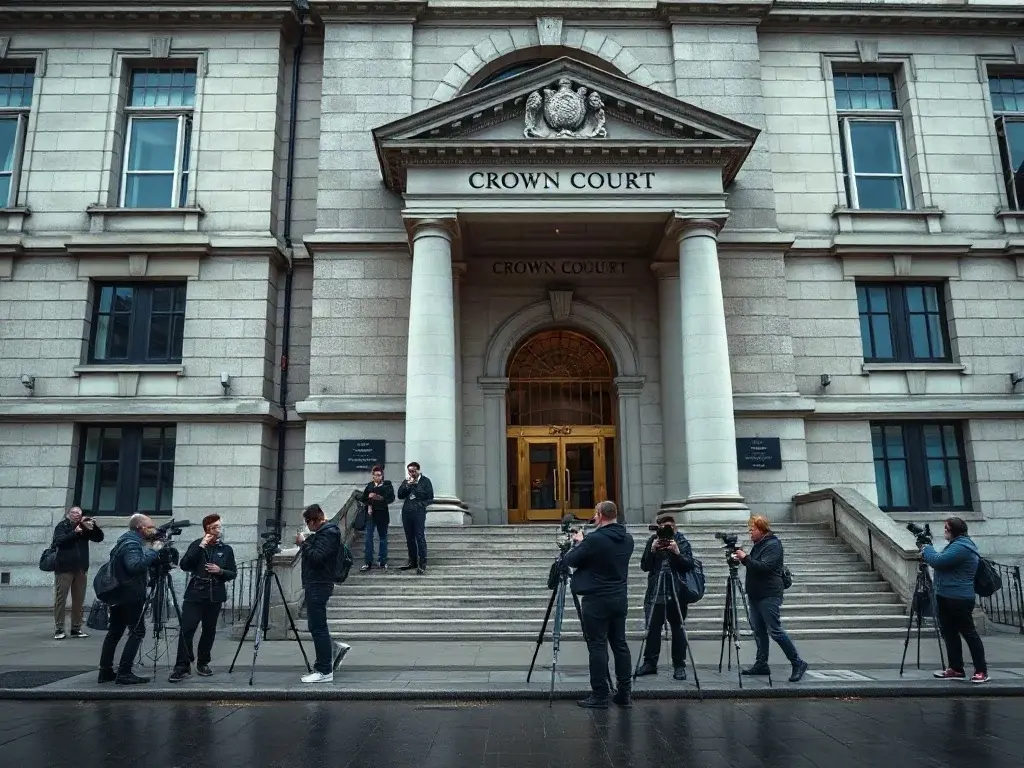
The news that Russell Brand found guilty of rape and sexual assault marks the most consequential legal moment of the comedian’s career. According to the initial report, the court has told him to expect a prison sentence “of some length”, and it can now also be reported that he faces further rape allegations. This analysis separates what is established from what remains unknown, explains how the English criminal process reaches this point, and sets out what the verdict is likely to mean for sentencing, appeals, and the wider debate about accountability for powerful men.
“Brand is told to expect a prison sentence ‘of some length’ and faces more rape allegations, it can now be reported.”
Precision matters here. The headline facts are a conviction on rape and sexual assault charges, a judicial warning about custody, and the lifting of restrictions on reporting further allegations. Details such as the exact counts, the sentencing date, and the nature of the additional allegations should be taken from court reporting and official statements, not from social media commentary.
What the Verdict Establishes and What It Does Not
A guilty verdict from a jury means twelve people were sure, on the evidence presented, that the prosecution had proved the offences. It is a legal finding, not a moral summary of a whole career. It also applies only to the counts on which the jury returned guilty verdicts. Where verdicts differed across counts, each one stands independently.
The warning that Brand should expect a sentence “of some length” is a judicial signal, not a sentence. Judges use such language to prevent defendants from assuming bail or a non-custodial outcome. It tells us the court regards the offending as serious enough to cross the custody threshold by a wide margin, but it fixes no number of years.
The presumption of innocence has ended for those counts
Throughout the trial, the presumption of innocence applied. Brand pleaded not guilty and denied all allegations. Once a jury convicts, that presumption no longer protects him on those counts. It does continue to apply to any charge or allegation not yet tried, which is central to the next phase of this case.
Background: From Media Investigation to Crown Court
The case began publicly in September 2023, when The Sunday Times, The Times, and the Dispatches programme on Channel 4 published a joint investigation containing allegations from several women. Brand denied them. The Metropolitan Police later investigated, and in April 2025 the Crown Prosecution Service authorised charges relating to alleged offences between 1999 and 2005. The case moved through the magistrates’ court to the Crown Court, where serious sexual offences are tried.
The chronology shows how long such cases take. Allegations of conduct from more than two decades earlier passed through media scrutiny, a police investigation, a charging decision, and a jury trial. The delay is a recurring feature of historic sexual offence prosecutions, and it cuts both ways: it complicates evidence for the prosecution and the defence alike.
How a Conviction Is Reached in Cases Like This
The legal framework
Rape and sexual assault are defined by the Sexual Offences Act 2003, which turns on lack of consent and the defendant’s reasonable belief in consent. Offences committed before 2004 may instead fall under earlier legislation, which is why historic charges can carry different labels, such as indecent assault. For an overview of the offence itself, see the Wikipedia entry on rape in English law.
The standard of proof
The prosecution must prove guilt beyond reasonable doubt. Many such trials rest largely on witness testimony, with limited physical evidence, particularly where the events are decades old. Juries therefore assess credibility, consistency, corroboration, and any evidence of pattern. A conviction in this setting indicates that the jury found the complainants’ accounts reliable to the criminal standard, despite robust cross-examination.
What a Sentence “Of Some Length” Is Likely to Mean
Sentencing in England and Wales follows guidelines issued by the Sentencing Council. For rape, the guideline assigns offences to categories based on harm and culpability. Starting points range from several years to 15 years’ custody for the most serious category, with category ranges reaching up to 19 years. The statutory maximum is life imprisonment. The Sentencing Council website publishes the full guidelines.
Factors that move the number
- Harm to the victim: psychological and physical harm, and any lasting effects.
- Culpability: planning, abuse of trust or power, and any targeting of vulnerable people.
- Number of victims and counts: multiple offences can lead to consecutive or concurrent terms, with the totality principle preventing an excessive overall sentence.
- Aggravating and mitigating factors: previous convictions, remorse, personal circumstances, and the age of the offences.
One point deserves emphasis. Offences committed years ago are generally sentenced according to the maximum available at the time and the guidelines’ approach to historic cases, which can affect the range. The final figure will depend on the judge’s findings, not on public expectation.
Consequences beyond prison
A conviction for a sexual offence triggers notification requirements, commonly known as the sex offenders register, and may lead to protective orders. The judge may also consider whether the defendant meets the statutory definition of dangerousness, which would affect release arrangements.
The Further Rape Allegations and Reporting Restrictions
The statement that further rape allegations “can now be reported” reflects the operation of the Contempt of Court Act 1981. Under that law, publishing material that creates a substantial risk of serious prejudice to active proceedings can be contempt of court. If separate charges are awaiting trial before a different jury, courts can postpone reporting until the first trial ends. That is why such information often emerges only after a verdict.
Readers should be cautious about what this means. Further allegations are not proof of anything. If they lead to a separate trial, Brand retains the presumption of innocence on those charges. Complainants in sexual offence cases also have lifelong anonymity under the Sexual Offences (Amendment) Act 1992, so commentary that identifies or tries to identify them can itself be unlawful.
Appeals, Platforms, and Public Reaction
The appeal route
A convicted defendant can seek permission to appeal to the Court of Appeal. Successful appeals against jury verdicts usually require identifying a legal error, a misdirection, fresh evidence, or an unsafe conviction. Dissatisfaction with the outcome is not enough. Sentences can also be challenged as excessive, and in some cases the prosecution can refer unduly lenient sentences for review.
Commercial and platform consequences
Brand’s online audience had been built on platforms such as YouTube and Rumble. After the 2023 allegations, YouTube suspended his ability to earn advertising revenue on his channel. A criminal conviction changes the calculation for platforms, advertisers, and partners, because their policies typically distinguish between unproven allegations and adjudicated guilt. The strength of any remaining audience support is an open question.
The wider accountability debate
The case belongs to the lineage of the Me Too movement, alongside prosecutions such as that of Harvey Weinstein in the United States and the UK reckoning that followed the Jimmy Savile revelations. A critical reading finds a recurring pattern: the allegations surfaced through journalism years before any court acted, which raises questions about how entertainment institutions respond to complaints and how long it takes the justice system to act on them. A balanced reading also recognises the risk of trial by media, which is why the verdict, not the 2023 coverage, is the proper basis for judgment.
How to Read Coverage of the Case Responsibly
- Check the counts. Establish which charges produced guilty verdicts and which did not.
- Distinguish verdict from sentence. Until sentencing, any prediction of years is speculation.
- Separate convicted conduct from allegations. Further allegations are not findings.
- Prefer primary sources. The CPS and court reports are more reliable than reposted summaries; see the Crown Prosecution Service for official statements.
- Respect complainant anonymity. Do not share anything that could identify them.
For publishers and site owners, a practical point: coverage of an active case should be reviewed by someone who understands contempt law, and updated promptly when reporting restrictions change.
FAQ
Has Russell Brand been found guilty?
According to the news report on which this article is based, yes: Russell Brand has been found guilty of rape and sexual assault. The exact counts should be confirmed against official court reporting.
What sentence will Russell Brand get?
It has not been announced. The judge told him to expect a prison sentence “of some length”. The final term will depend on the sentencing guidelines, the number and nature of the offences, and the judge’s findings.
Can Russell Brand appeal?
He can apply to the Court of Appeal against conviction or sentence. Permission is required, and success depends on identifying a legal flaw or an unsafe verdict, not on disagreement with the jury.
Why can the further rape allegations be reported only now?
Reporting restrictions usually protect the fairness of any pending trial. Once the first trial concludes, the court can lift or relax them, which is what the report indicates has happened.
The Verdict Is a Beginning for the Legal Questions, Not an End
The most important insight is structural: a guilty verdict resolves one set of questions and opens three others. The first is the sentence, where the range of possible outcomes is wide and depends on findings the public has not yet heard. The second is the status of the further allegations, which may lead to a second trial and must be judged on their own evidence. The third is institutional: what the case reveals about the gap between public allegations in 2023 and a criminal verdict years later.
Readers should watch the sentencing remarks closely. A judge’s reasoning, including how they assess abuse of status and the credibility of the complainants, will say more about the case than any headline. They should also watch whether prosecutors proceed with further charges, whether an appeal is lodged, and how platforms and commercial partners revise their policies. A reasonable prediction is a long custodial sentence followed by an application to appeal, but that remains a prediction. What the verdict does confirm is that a high-profile defendant, a decades-old timeline, and sustained cross-examination did not prevent a jury from reaching a conviction.
Frequently Asked Questions
Does the judge's warning of a sentence 'of some length' mean Brand will definitely go to prison?
In practice it is a strong signal that immediate custody is almost certain, but it is not the sentence itself. The judge still has to hold a sentencing hearing, weigh aggravating and mitigating factors, and set the actual number of years.
Why can further rape allegations only be reported now?
Reporting restrictions normally prevent coverage that could prejudice a jury while a trial is under way. Once verdicts are returned, the court can lift those limits. Reporting the additional allegations is therefore lawful, but they remain unproven and he is still presumed innocent of them.
Why were historic offences from 1999 to 2005 charged under different labels?
The Sexual Offences Act 2003 only applies to conduct after it came into force in 2004. Earlier alleged offences are prosecuted under previous legislation, so charges can carry older names such as indecent assault, even when the underlying behaviour resembles modern rape or sexual assault.
How can a jury convict when events are decades old and physical evidence is scarce?
Juries judge credibility, consistency, corroboration and any pattern of behaviour across witnesses. Even without forensic material, testimony can meet the criminal standard of proof if jurors are sure it is reliable after cross-examination. The age of the case does not by itself prevent a conviction.
If the jury returned different verdicts on different counts, how does that affect the outcome?
Each count is decided independently. A guilty verdict stands only for that specific allegation, and a not guilty or undecided verdict on another count does not cancel it out. Sentencing is then based on the offences of which he was actually convicted.
Can Brand appeal the conviction?
Yes, but appeals in England and Wales are limited. He would normally need permission from the Court of Appeal and must show the conviction is unsafe, for example because of a legal error or irregularity at trial. Disagreeing with the jury's assessment of the evidence is not enough.