
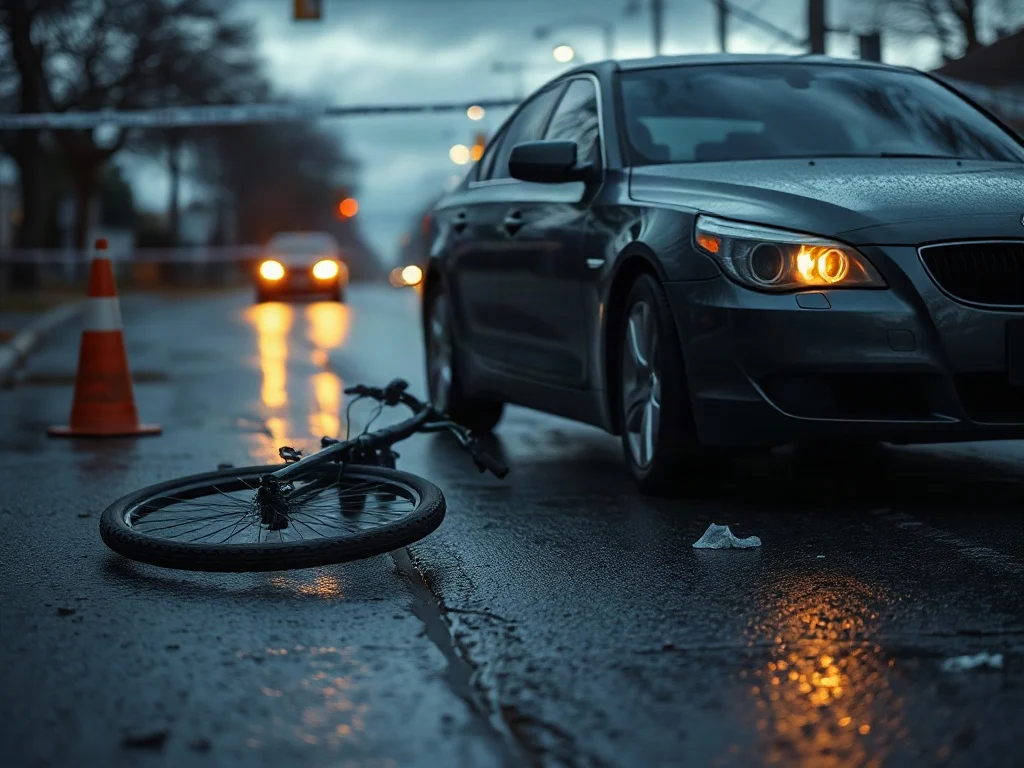
A driver has been convicted of murder after striking a cyclist and dragging him to his death beneath a car, a case that has drawn attention to how the law treats deliberate and reckless conduct on the road. Simon Richardson was found guilty of murdering head teacher Michael Mullins, and he is scheduled to be sentenced on Monday. The verdict matters because it addresses a question that road traffic offences rarely answer: when does a vehicle collision stop being an accident and become a deliberate act of violence? Understanding the outcome requires looking at the legal definitions involved, the evidence that typically shapes such cases, and what the conviction signals for cyclists, drivers, and prosecutors.
Background of the Case
The victim, Michael Mullins, was a head teacher, a professional role that carries public responsibility and community standing. The incident involved a motor vehicle striking a cyclist and the cyclist becoming trapped beneath the car, which was then driven while he was still underneath. The jury’s decision to convict on a murder charge indicates that they were satisfied the defendant acted with the required mental state, not merely that a collision occurred. Reporting on the verdict establishes the core facts, but the detailed evidentiary record, including forensic findings and witness testimony, is what ultimately supports the conviction.
Key Legal Terminology
Several concepts are central to understanding this verdict. Murder in English law generally requires proof of unlawful killing with malice aforethought, meaning either an intention to kill or an intention to cause grievous bodily harm. Causation must also be established, linking the defendant’s conduct to the death. Prosecutors must additionally prove the defendant’s state of mind, which is often inferred from the surrounding circumstances rather than admitted directly.
Why Dragging Cases Are Legally Distinct
Most fatal road collisions are prosecuted as causing death by dangerous driving or, in some jurisdictions, death by careless driving. These offences focus on the standard of driving, not on intent to kill. The dragging element changes the analysis significantly. Continuing to drive with a person beneath the vehicle suggests awareness of their presence and a conscious decision to proceed, which can support an inference of intent or extreme recklessness. This is why cases involving continued movement after impact are treated more severely than collisions where the driver had no knowledge of the victim.
The Role of Mental State
The distinction between a driver who did not know and a driver who knew is the decisive legal question. Courts typically assess this through CCTV footage, vehicle damage patterns, physical evidence on the road surface, and the driver’s conduct before and after the impact. Defence arguments in such cases often centre on whether the defendant genuinely perceived the cyclist, which is why the prosecution’s evidence about awareness carries so much weight.
Evidence That Typically Matters
- Vehicle telematics and speed data showing whether the car accelerated or braked after impact.
- Forensic analysis of the victim’s injuries and the pattern of dragging.
- Witness accounts of the driver’s behaviour at the scene.
- Post-incident conduct, such as attempts to leave or conceal the vehicle.
Road Safety for Cyclists and Policy Implications
Cycling fatalities are a recurring concern for road safety authorities. Cyclists are considerably more vulnerable than vehicle occupants, and collisions involving heavy vehicles or inattentive drivers frequently result in serious harm. Cases like this one prompt debate over whether existing sentencing and charging frameworks adequately reflect the danger posed by aggressive or reckless driving. Advocates argue for clearer offences covering deliberate endangerment on the road; critics caution that expanding murder-level charges to road incidents could complicate prosecutions and blur the line between intentional violence and tragic accidents.
Practical Considerations for Cyclists and Drivers
- Cyclists should use visible lighting and high-visibility clothing, particularly in low-light conditions.
- Drivers should maintain safe passing distances and check mirrors and blind spots before manoeuvring near cyclists.
- Anyone involved in a collision should remain at the scene and contact emergency services, as leaving the scene is itself a serious offence.
- Witnesses should preserve dashcam or phone footage and provide it to police promptly.
Sentencing and What Comes Next
A murder conviction carries a mandatory life sentence in England and Wales, with the judge setting a minimum term that reflects culpability and aggravating factors. The sentencing hearing will determine how long the defendant must serve before becoming eligible for parole. Readers should monitor the sentencing outcome closely, as the length of the minimum term will indicate how the court has weighed the deliberate nature of the act against mitigating circumstances.
Frequently Asked Questions
Is dragging someone with a car always murder?
No. A conviction for murder requires proof of intent to kill or cause grievous bodily harm. Many cases are prosecuted under driving offences instead, depending on the evidence of the driver’s awareness and intent.
What is the difference between dangerous driving and murder?
Dangerous driving focuses on the manner of driving and does not require intent to kill. Murder requires proof of malice aforethought, which the prosecution must establish beyond reasonable doubt.
What should I do if I witness a collision involving a cyclist?
Call emergency services immediately, provide first aid if trained to do so, and record any relevant footage or details about the vehicle that can assist investigators.
The Question This Verdict Leaves Open
The most important insight from this case is that the legal system’s classification of road deaths depends almost entirely on what a driver knew and chose to do in the moments after impact. Continued movement with a person beneath a vehicle transforms the evidentiary picture, and the verdict reflects that shift. What readers should watch next is whether this outcome prompts any review of charging guidance for road-related homicides, and whether the sentence reinforces or narrows the threshold for murder in such cases. The unresolved question is whether the existing framework, built around distinctions between accident, recklessness, and intent, can reliably protect vulnerable road users without relying on exceptional and highly publicised tragedies to expose its gaps.
Frequently Asked Questions
Why was this driver convicted of murder rather than dangerous driving?
Murder requires proof of intent to kill or cause grievous bodily harm, not just poor driving. Prosecutors had to show the driver knew the cyclist was beneath the car and chose to keep moving anyway. Continuing to drive after impact is what shifted the case from a collision into deliberate violence, which is why the jury accepted a murder charge.
How can a court prove what a driver was thinking at the time?
Mental state is usually inferred from circumstantial evidence rather than admitted. Courts examine CCTV, vehicle damage patterns, marks on the road surface, speed and braking data, and the driver's behaviour before and after the impact. If the evidence shows acceleration or an attempt to leave the scene, juries can reasonably conclude the driver was aware of the victim.
What is the difference between causing death by dangerous driving and murder?
Causing death by dangerous driving focuses on the standard of driving, judging whether it fell far below what a competent driver would show. It does not require any intention to harm anyone. Murder requires malice aforethought, meaning intent to kill or cause serious injury. The gap between these offences is the driver's state of mind, which is why dragging cases are so contested.
Does dragging someone with a car always lead to a murder charge?
No. Each case depends on what the evidence reveals about awareness and intent. A driver who genuinely did not perceive the cyclist, even if they continued moving, may face lesser charges. Murder becomes realistic only when the prosecution can show the driver knew someone was trapped and proceeded regardless, so the outcome turns on proof rather than the dragging alone.
Why do critics oppose expanding murder charges to road incidents?
Critics worry that murder-level charges could blur the line between intentional violence and tragic accidents, making prosecutions harder and juries more uncertain. They argue existing offences can already address reckless driving. Supporters counter that current sentences may not reflect the danger of deliberate endangerment, so the debate centres on whether the law captures genuinely violent conduct on the road.