
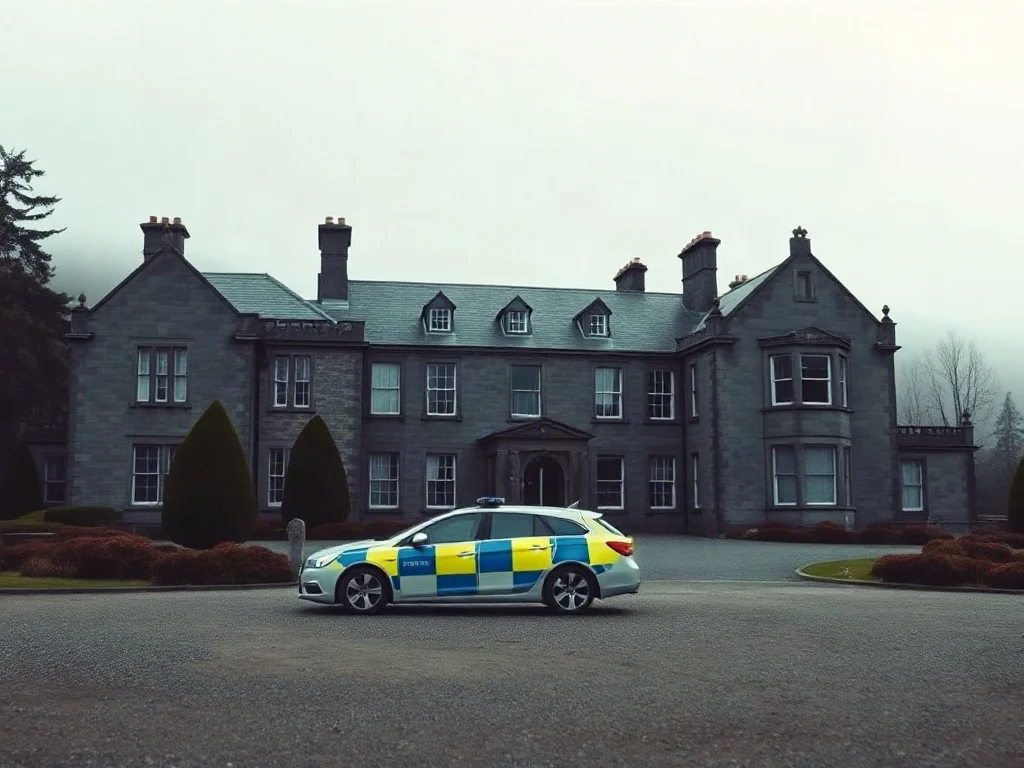
Police Scotland has confirmed that it is carrying out “active inquiries” into reported visits by Prince Andrew and Jeffrey Epstein to Balmoral, the Scottish estate of the British royal family. The force says it has received information relating to the matter, but it has stressed that its inquiries are at “an early stage”. The development places a long-running controversy surrounding the former Duke of York and the convicted sex offender Jeffrey Epstein under renewed scrutiny in Scotland, where a police investigation into historic allegations is a distinct legal process from the civil and criminal matters pursued elsewhere.
The significance of the announcement lies less in what has been established than in what it signals. Police forces do not typically describe inquiries as active unless they have reason to believe that further investigation is warranted. At the same time, an early-stage inquiry is not a finding of wrongdoing, and no charges have been reported. Distinguishing between these two positions is essential for an accurate reading of the story, and it is the first analytical point readers should keep in mind.
Background: The Andrew and Epstein Association
Prince Andrew, Duke of York, was a close associate of Jeffrey Epstein, the American financier who was convicted in 2008 of soliciting prostitution from a minor and who died in federal custody in 2019 while awaiting trial on further sex trafficking charges. Their association became a major public issue after a 2019 BBC Newsnight interview with Andrew, which was widely regarded as damaging to his public standing. Andrew subsequently stepped back from public duties and, in a civil matter in the United States, reached a settlement with a woman who had alleged she was trafficked and abused. He has denied those allegations.
For context on the institutions involved, the Police Scotland force is the single national police service for Scotland, and the Balmoral Castle estate in Aberdeenshire is a private residence of the British monarchy. Visits to a private royal estate raise distinct questions about access, security arrangements, and the records that exist of who was present, which is one reason the matter has attracted investigative attention.
What Police Scotland Has Said
Police Scotland has stated that it received information and that its inquiries remain at an early stage. The force has not, in the material reported, named individuals as suspects or set out the specific offences under consideration. This restraint is standard practice: police investigations into historic or sensitive matters often proceed quietly for months before any public update, and early statements tend to be deliberately limited to avoid prejudicing evidence or the rights of those involved.
Why the Jurisdiction Question Matters
A recurring difficulty in cases involving transnational offending is jurisdiction. Epstein’s crimes were prosecuted principally in the United States, and much of the associated evidence and litigation has been American. The Scottish inquiry, by contrast, concerns events that may have occurred on Scottish soil. This creates a different legal footing. Scottish police can investigate offences committed within Scotland regardless of the nationality or status of the individuals involved, but they must establish that an offence occurred within their jurisdiction and that sufficient evidence exists to support it.
The distinction carries practical consequences. Witness testimony from events years earlier is often difficult to corroborate, and the passage of time complicates evidence gathering. Scottish law, like that of most jurisdictions, applies limitation rules to certain offences, though serious sexual offences are generally treated more permissively than lesser matters. Analysts should be cautious about assuming that a historic allegation will necessarily result in a prosecution, since evidential thresholds are demanding regardless of public interest.
Established Facts Versus Interpretation
It is important to separate what is confirmed from what is inferred. The confirmed elements are that Police Scotland has received information and is conducting inquiries. The inferred elements, which commentators may advance but which remain unverified, concern the content of any allegations and the likelihood of charges. Responsible coverage keeps these categories distinct, and readers should be wary of reporting that presents speculation about outcomes as settled.
The Wider Institutional and Ethical Dimensions
Beyond the criminal question, the case raises issues of institutional accountability. Royal households operate with a degree of privacy that is rarely afforded to ordinary citizens, and questions about who was granted access to private estates, under what arrangements, and with what oversight have legitimate public interest. Commentators have argued that such matters should be examined with the same rigour applied to any other institution, while others caution against conflating associations with culpability. Both positions have merit: an association is not evidence of a crime, yet the circumstances of access to sensitive properties can warrant examination in their own right.
The case also illustrates a broader tension in how the public and the press handle allegations against prominent individuals. The presumption of innocence is a foundational principle of criminal justice, and it applies regardless of wealth or status. At the same time, the public interest in transparency about powerful figures is real. Balancing these requires restraint in reporting unproven claims and rigour in pursuing verifiable facts.
An early-stage police inquiry establishes that a matter merits examination, not that an offence has been committed.
Practical Implications for Readers and Observers
For readers trying to follow developments, several practical steps improve understanding. First, rely on official statements from Police Scotland and on court records once proceedings begin, rather than on secondary commentary. Second, note the difference between allegations, investigations, charges, and convictions, since these represent successive stages with very different evidential requirements. Third, be alert to updates that revise earlier claims, as early reporting in complex cases is often incomplete.
- Verify whether a statement comes from the police, a court, a complainant, or a commentator.
- Distinguish reported information from confirmed evidence.
- Recognise that inquiries can conclude without charges.
- Monitor official channels for procedural milestones.
What to Watch Next
The immediate indicators to monitor are whether Police Scotland issues further updates, whether it identifies specific lines of inquiry, and whether any individual is formally interviewed or charged. Each of these would represent a meaningful shift in the case. Equally important is whether the inquiry produces documentary or testimonial evidence that can be independently assessed, since the credibility of the eventual account will depend on corroboration rather than on the volume of reporting.
The most important insight from the current stage is that the story is defined by what remains unknown. The force has signalled seriousness without disclosing substance, and that gap will determine the trajectory of the story. Whether the inquiry leads to prosecution, to a finding that no offence can be proven, or to a prolonged and inconclusive process, will test both the investigative capacity of Scottish policing and the public’s capacity to hold judgment until evidence supports it. The unanswered question is not simply whether the allegations are true, but whether the process can establish the truth in a manner that satisfies both legal standards and public confidence.