
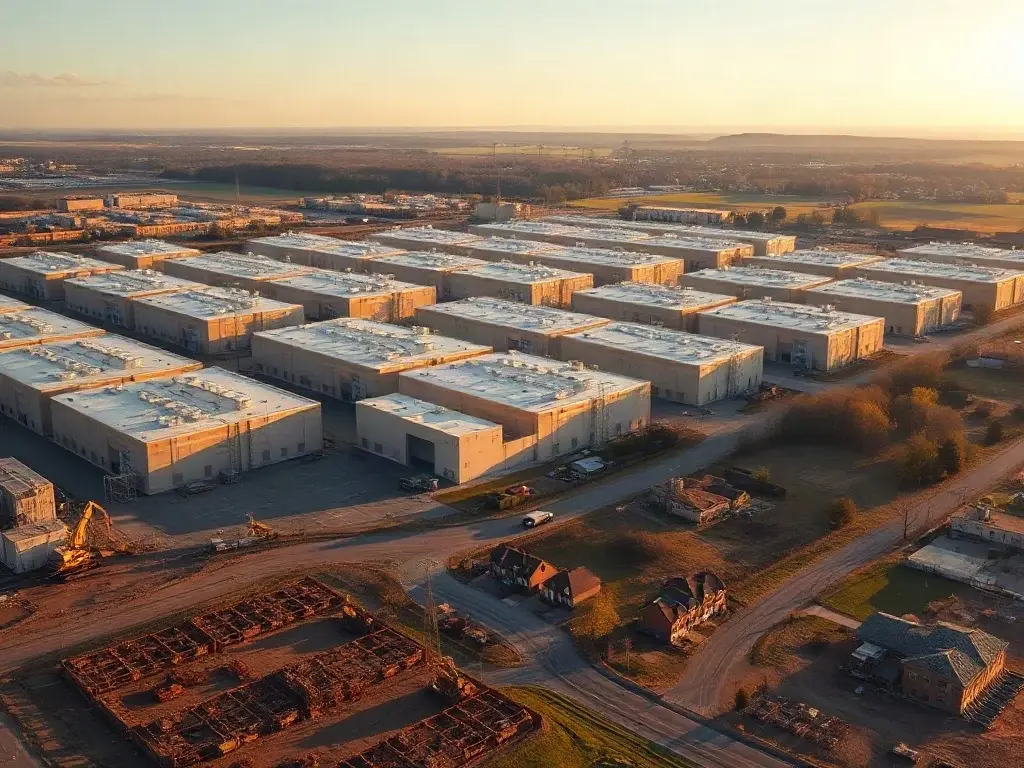
The Loudoun County data center pause is the clearest sign yet that the world’s densest data center market is reconsidering its own growth model. The Board of Supervisors in Loudoun County, Virginia voted this week to halt action on legislative applications for data centers and electrical substations for up to a year. The county says the break gives it time to finish a policy review it began in February 2024. This analysis looks at what the pause does and does not do, why it matters beyond one Virginia county, and what to watch as the review moves toward a decision.
What Loudoun County Actually Decided
The facts are narrower than many headlines suggest. The board voted to pause legislative applications for data centers and electrical substations. The pause ends once the board decides on amendments to the county’s comprehensive plan and zoning ordinance. County officials say the aim is to complete the ongoing review of current data center policies and regulations.
Three details matter:
- Applications can still be filed. Developers may keep submitting, and county staff will keep reviewing them and scheduling hearings before the planning commission.
- The board will not hold public hearings or votes on these applications until the review is complete.
- About 33 active applications could be affected, according to the county.
This is therefore a procedural freeze at the final decision stage, not a ban. Projects stay in the queue. They simply cannot reach the body that grants approval. The practical effect is a growing backlog, which the board will face once the new rules are in place.
Why Data Center Alley Matters
Loudoun has the highest concentration of data centers in the world, which is why it is nicknamed Data Center Alley. The cluster grew out of the commercial internet’s early infrastructure. In the 1990s, MAE-East, an early internet exchange point, helped anchor networking in the Washington, D.C. area. Colocation providers such as Equinix then built where the connectivity already existed. Cloud giants followed, including Google and Amazon Web Services.
This history shows how agglomeration works. Dense fiber, abundant land, supportive local government, and a mature supply chain attract more facilities, which in turn strengthen the same advantages. The mechanism also explains why a pause in Loudoun matters beyond the county line. Any slowdown in the largest cluster pushes demand to other parts of Northern Virginia and to other states.
What the Pause Does and Does Not Change
Legislative applications versus by-right development
The word legislative is doing real work here. In US land-use practice, a legislative application generally means a request that needs discretionary approval from elected officials, such as a rezoning or a special exception. A by-right project, by contrast, conforms to existing zoning and typically needs only administrative approvals. The county’s announcement concerns legislative applications, so how many projects actually remain blocked depends on how each is classified. Readers should check the county’s own materials on loudoun.gov rather than assume the pause stops all construction.
A moratorium in function, not in name
A formal moratorium usually bars new filings outright. Loudoun chose a softer design that keeps filings open and staff work running. This has a strategic logic. It avoids a legal fight over a blanket prohibition, and it lets the county test its draft rules against real projects. The cost is uncertainty. Developers carry land and financing costs while waiting, and they cannot know what standards will apply when the pause ends.
Why Communities Are Pushing Back on Data Centers
Loudoun is not alone. Many US towns and cities have paused or banned large data center projects as residents debate their effects. The dispute follows a recognizable pattern.
The case for data centers
- Tax base: Data centers are capital-intensive and need few municipal services, so they can generate substantial property tax revenue. Loudoun officials have long pointed to this benefit.
- Jobs and local spending: Supporters cite construction employment and local economic activity. Permanent staffing at a finished facility is usually modest relative to its size, which is a frequent point of criticism.
- Strategic infrastructure: The facilities underpin cloud computing and the fast-growing demand for artificial intelligence services.
The case against
- Electricity and utility costs: Large campuses need new generation, transmission lines, and substations. Residents worry that those costs, and the pressure on prices, will fall on ordinary ratepayers. Virginia’s legislative watchdog, JLARC, has examined the industry’s effect on the state’s power system, and its work is worth reading directly at jlarc.virginia.gov.
- Environmental footprint: Concerns include energy use, backup generators, and water consumption for cooling. Efficiency metrics such as power usage effectiveness describe how well a facility uses energy, but they do not capture total demand.
- Quality of life: Noise, transmission corridors, and the visual effect of windowless warehouse-scale buildings next to residential areas drive much of the local opposition.
These disputes cannot be dismissed as simple NIMBY reflexes. In Loudoun, the objections come from people who live next to the densest cluster on earth and have seen the cumulative effect firsthand. Their argument is that the marginal project imposes costs the first projects did not.
The Politics Behind the Pause
The vote lands in a charged national context. Despite support from the Trump administration and influential tech leaders, data centers proved deeply unpopular in the midterm elections earlier this month. Reporting by Business Insider says they played a major role in a so-called blue wave of Democratic candidates.
Two interpretations are plausible, and the evidence does not yet settle between them. The first is that data centers have become a genuine electoral issue, tied to household electricity bills and local land use. The second is that they are a proxy for broader anger about cost of living and big technology companies. The distinction matters. An issue voters care about directly forces policy change, while a proxy mostly supplies campaign rhetoric. Either way, local officials in both parties now have less incentive to approve projects quickly, which strengthens the case for pauses like Loudoun’s. The federal posture, shaped by the second Trump administration’s backing for AI infrastructure, now collides with local land-use authority, which is where most of these decisions are actually made.
Practical Implications for Stakeholders
Developers and investors
- Treat the review outcome as a repricing event. Likely changes include stricter siting rules, larger setbacks, tougher noise and design standards, and more scrutiny of power and substation plans.
- Model delay explicitly. A year-long hold on board votes means sites in the pipeline will likely not be entitled until the review concludes, and perhaps well after.
- Diversify geographically, but expect similar scrutiny elsewhere. Pushback is spreading, not confined to one county.
Utilities and grid planners
Substation applications are covered by the pause, so the interconnection pipeline and local land-use policy are now explicitly linked. Utilities such as Dominion Energy cannot plan around load forecasts without knowing which projects local governments will approve.
Residents and local officials
- Follow the comprehensive plan amendments, not just the headline pause. The plan sets the long-term rules that later zoning decisions must follow.
- Press for measurable standards, such as noise limits, water-use reporting, and cost-allocation rules, rather than general promises.
- Watch the planning commission. Hearings there continue, and its recommendations will shape what the board eventually sees.
What Could Happen Next
The following are reasoned expectations, not confirmed outcomes.
- The review will likely tighten rather than abolish. Data centers are too central to the county’s fiscal base for a full reversal, so the more probable result is stricter conditions and fewer approvals.
- A backlog will test the new rules. If dozens of applications emerge at once when the pause ends, the first decisions will set the real precedent.
- Other jurisdictions will copy the template. A pause that keeps staff review alive while freezing votes is easy to replicate and legally cautious.
- Power will remain the binding constraint. Even without local opposition, grid capacity limits how fast any cluster can grow.
Frequently Asked Questions
Has Loudoun County banned data centers?
No. The board paused action on legislative data center and electrical substation applications for up to a year. Existing facilities are unaffected, and applications can still be submitted and reviewed by staff.
Why are communities pausing data center projects?
Residents and officials cite electricity demand, utility costs, environmental effects, and quality-of-life concerns. Supporters counter with tax revenue, jobs, and the economic importance of digital infrastructure.
How many applications does the Loudoun pause affect?
The county says the decision could affect 33 active applications.
When does the pause end?
The pause ends when the board decides on amendments to the comprehensive plan and zoning ordinance. The county has described the pause as lasting up to a year, but the endpoint depends on the review.
The Question Loudoun’s Review Must Answer
The most important insight from this episode is that the world’s most successful data center cluster is now arguing with itself about its own limits. Loudoun has benefited enormously from the industry, yet it has concluded that its rules, written for an earlier and smaller era, no longer fit the scale of what is being built.
The real test comes when the pause lifts. If the new standards make approval depend on verifiable commitments, such as who pays for grid upgrades, how much power and water a campus draws, and how it fits next to homes, Loudoun could set a template other counties adopt. If the standards turn out vague, the backlog of 33 applications will move through quickly and the pause will look like political theater.
Watch three things: the text of the comprehensive plan amendments, the first board votes after the freeze, and whether neighboring jurisdictions absorb the displaced demand or follow Loudoun’s lead. The unanswered question is whether local land-use law can govern an industry whose growth is driven by national and global demand for computing power.
Frequently Asked Questions
¿Does the Loudoun pause stop developers from filing new data center applications?
No. Developers can still submit applications, and county staff will keep reviewing them and scheduling planning commission hearings. What stops is the board's public hearings and votes until the policy review ends. Projects stay in the queue and cannot get final approval, so a backlog is likely to build.
Why does the word legislative matter in this pause?
A legislative application needs discretionary approval from elected officials, such as a rezoning or special exception. A by-right project already conforms to zoning and usually needs only administrative approvals. So the pause may not block every project, and the real impact depends on how each one is classified.
How is Loudoun's pause different from a formal moratorium?
A formal moratorium usually bars new filings entirely. Loudoun keeps filings open and staff work running while freezing only the final decision stage. This may reduce the risk of a legal challenge and lets the county test draft rules against real projects, but it leaves developers uncertain about future standards.
When will the Loudoun data center pause end?
The pause lasts up to a year, but it ends as soon as the board decides on amendments to the comprehensive plan and zoning ordinance. The end date therefore depends on how quickly the review, begun in February 2024, reaches a decision, not on a fixed calendar date.
Could the pause shift data center growth outside Loudoun County?
Probably, at least in part. Loudoun is the largest cluster, and a slowdown there can push demand to other parts of Northern Virginia and to other states. The same factors that attracted facilities to Loudoun, such as fiber, land and supply chains, can be found elsewhere, though not always at the same density.
How many projects does the pause affect, and where can I confirm the details?
The county says about 33 active applications could be affected. The final number depends on how each application is classified, so readers should check the county's own materials on loudoun.gov rather than assume the pause stops all data center or substation construction.