
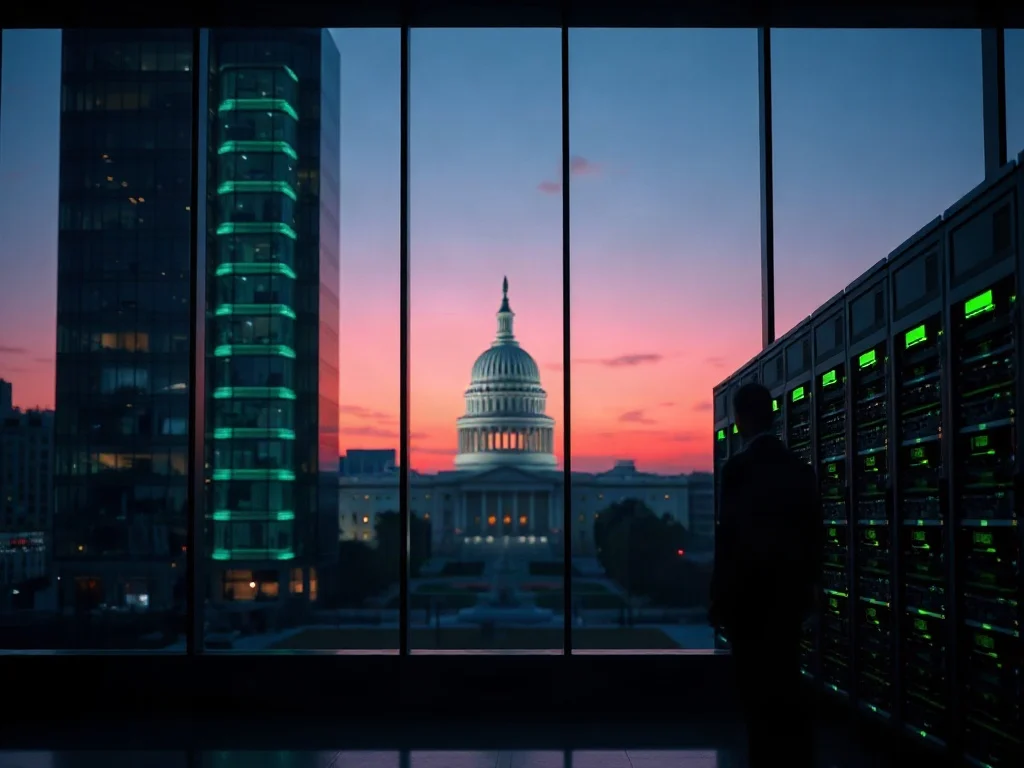
The debate over Jensen Huang‘s China ties has become a test of whether Washington can scrutinize its most valuable chipmaker’s leadership at all. Reporting and expert commentary around the CEO’s return to the spotlight suggest that Nvidia’s central place in the US economy may have outweighed concerns about his connections to a suspected Chinese intelligence asset. This article does not adjudicate those allegations. It examines the structural question behind them: when a single company becomes critical infrastructure for the American economy and for artificial intelligence, who has the leverage, and the will, to hold it to account?
What the Debate Is Actually About
The core claim, as framed by national security and foreign policy experts, is not that a court or agency has found wrongdoing. It is that the suspected links between the head of Jensen Huang’s company and a person believed to be a Chinese intelligence asset would ordinarily raise alarms, and that the response has been muted. Their explanation is economic gravity rather than exoneration.
That distinction matters. A suspicion is not a finding, and a lack of consequences is not proof of innocence. It does show how the incentives around a company this large can reshape what counts as an acceptable risk. Readers should separate three layers: what is documented, what experts infer, and what remains unknown.
Facts, Inference and Open Questions
- Documented: Nvidia sits at the center of AI computing and is among the most valuable public companies in the world.
- Expert inference: Scale and market importance reduce the political appetite for aggressive scrutiny of its leadership.
- Unknown: The full nature of any relationship, and whether any government body has formally reviewed it, is not something public reporting alone can settle.
Why Nvidia Became Hard to Challenge
Nvidia began in 1993 as a maker of graphics processing units for gaming. Its 2006 launch of the CUDA software platform made those chips programmable for general computing. When deep learning took off, Nvidia’s hardware and software stack became the default for training and running AI models. That combination of silicon and developer ecosystem is hard to replace quickly.
Market Weight and Index Concentration
Nvidia’s market capitalization has crossed multi-trillion-dollar thresholds, and it now carries a large weighting in the S&P 500. Pension funds, retirement accounts and index funds hold it by default. A sharp fall in its share price would therefore register well beyond Silicon Valley. This is the logic behind the phrase too big to fail, and the headline extends it to a related idea: too big to police.
Dependence Across the AI Supply Chain
Cloud providers, startups, defense contractors and research labs all depend on Nvidia accelerators. Those chips are manufactured largely by TSMC in Taiwan, which ties the company to the geopolitics of the Taiwan Strait. Any forceful action against Nvidia’s leadership would ripple through the wider supply chain and could slow US AI development, the outcome policymakers say they most want to avoid in competition with Beijing.
Nvidia Export Controls on China: The Policy Backdrop
The scrutiny of Huang’s connections cannot be separated from Nvidia export controls on China. Beginning in October 2022, the Commerce Department’s Bureau of Industry and Security restricted exports of advanced AI chips and chipmaking tools to China under the Export Administration Regulations. The rules have been tightened and adjusted several times since. Nvidia responded by designing China-specific chips that stayed under performance thresholds, and later rounds of rules narrowed that room.
Official rules and guidance are published by the Bureau of Industry and Security. Press reports in 2025 described shifting licensing decisions for some China-oriented Nvidia products, including reported revenue-sharing arrangements. Those reports have been contested and the details evolved, so they should be read as reported developments, not settled policy. The pattern still shows that export policy toward Nvidia is negotiated, not only enforced, which gives the company’s leadership unusual access and influence.
The Dual-Use Problem
AI accelerators are classic dual-use technology. The same chip can power a chatbot, a drug-discovery model or a military surveillance system. That ambiguity makes it difficult to write clean rules and easier for companies to argue that restrictions harm commercial innovation more than they protect security.
Why Is Nvidia Too Big to Regulate? Competing Explanations
Experts offer several overlapping answers when asked why Nvidia seems insulated from pressure. Each captures something real, and none is sufficient alone.
1. Economic Systemic Risk
Economists use the term systemic risk for threats that spread across a whole system. A shock to Nvidia could hit equity markets, data-center investment and the AI buildout simultaneously. Regulators may see that exposure and become cautious.
2. Strategic Indispensability
The US government wants to lead in AI. If Nvidia is the main engine of that lead, weakening it, even to address a security concern, can look self-defeating. Officials may prefer quiet risk mitigation over public confrontation.
3. Influence and Access
Large companies invest in lobbying and relationships with lawmakers and executive-branch officials. Critics describe the risk of regulatory capture, where an agency’s decisions start to reflect the interests of the industry it oversees. Whether that has happened here is a matter of interpretation, not established fact.
4. Legal Thresholds
Contact with a suspected intelligence asset is not automatically unlawful. Counterintelligence concerns can exist without evidence meeting the standard for espionage charges or for agency action. In such gaps, the practical response is often mitigation, such as briefings and restrictions on access, and it is rarely visible to the public.
The Counter-Argument: Scrutiny Without Panic
Not every observer agrees that the response has been inadequate. Defenders of Nvidia and its CEO argue that global companies routinely engage with Chinese officials, partners and intermediaries, and that engagement in China is a normal part of running a business with a large customer base there. Some national security analysts also warn that treating every contact as a threat leads to overreach and unfair stigma, particularly for executives and employees of Asian origin. Huang was born in Taiwan and has long been an American business figure, and critics of the scrutiny caution against assumptions based on heritage.
A fair reading holds both points. Vigilance about intelligence risk is legitimate, and so is the demand for evidence and due process. The problem experts describe is less about the outcome in one case than about whether an equally powerful company would receive the same treatment as a smaller competitor.
Where Oversight Could Actually Bite
| Mechanism | What It Can Do | Limitation |
|---|---|---|
| Export licensing | Restrict which chips reach which customers | Does not address personal or leadership ties |
| Congressional oversight | Hold hearings and request documents | Subject to political cycles and partisan priorities |
| Securities disclosure | Require disclosure of material risks to investors through the SEC | Only covers matters deemed material |
| Security vetting | Condition government contracts and clearances on personal conduct | Opaque and rarely public |
| Investment review | The CFIUS process can scrutinize foreign transactions | Focused on investments, not executives of US companies |
Practical Takeaways for Investors, Executives and Policy Watchers
What to Monitor
- Export-rule changes: Watch Federal Register notices and BIS announcements for shifts in chip thresholds and licensing practice.
- Risk-factor disclosures: Nvidia’s annual and quarterly filings describe China exposure and regulatory risk. Changes in wording can signal changes in the company’s own assessment.
- Congressional activity: Letters, hearings and proposed legislation on AI chip exports show where bipartisan pressure is building.
- China revenue share: A shrinking or growing share of sales to China changes how exposed the company is to policy swings.
Common Mistakes
- Treating allegations as proven facts, or the absence of public action as proof that no action is taking place.
- Assuming a market-leading company is immune to policy shocks. Export rules have already reshaped Nvidia’s product lines.
- Ignoring the diplomatic dimension of the US-China trade war, where chip access is also a bargaining chip.
What Could Change Over the Next Few Years
Several developments could alter the balance. Rivals such as Huawei in China, and custom chips from US cloud providers, may reduce the sense that Nvidia is irreplaceable, which would weaken the economic argument for leniency. Congress may also push for clearer statutory rules on AI chip exports instead of leaving them to agency discretion and negotiation. A change in administration, a Taiwan-related crisis or a major AI market correction could each change how much weight officials place on economic stability versus security. These are plausible scenarios, not forecasts, and each carries uncertainty.
Frequently Asked Questions
Why is Nvidia considered too big to police?
Experts argue that its market value, role in AI infrastructure and importance to US competitiveness make aggressive action politically and economically costly. This is an interpretation of incentives, not a legal designation.
Has Jensen Huang been found guilty of anything?
Nothing in the reporting framing this debate indicates a formal finding of wrongdoing. The concerns involve suspected connections, which are different from proven violations.
How do export controls affect Nvidia’s business in China?
They limit which advanced chips Nvidia may sell there, forcing redesigned products, licensing negotiations and uncertain revenue. Rules have changed several times since 2022.
Who can scrutinize a company’s CEO for national security concerns?
Intelligence and law enforcement agencies, Congress, the Commerce Department for export matters, and the SEC for investor disclosures all have partial roles. No single body covers everything.
The Question Washington Has Not Answered
The most important insight is that the Nvidia case is less about one executive than about a structural bind. The more essential a company becomes to national power, the harder it is to apply the same scrutiny that national security would normally demand. That is a design problem for institutions, not just a story about one CEO.
Watch for three signals: whether Congress writes durable rules for AI chip exports, whether Nvidia’s disclosures about China risk become more specific, and whether alternative suppliers grow enough to reduce dependence. If they do, scrutiny of Nvidia’s leadership may become easier. If they do not, the market’s reliance on one company could keep hard questions in the category of the unasked. The open question is whether the United States can build oversight that works before a crisis forces its hand.