
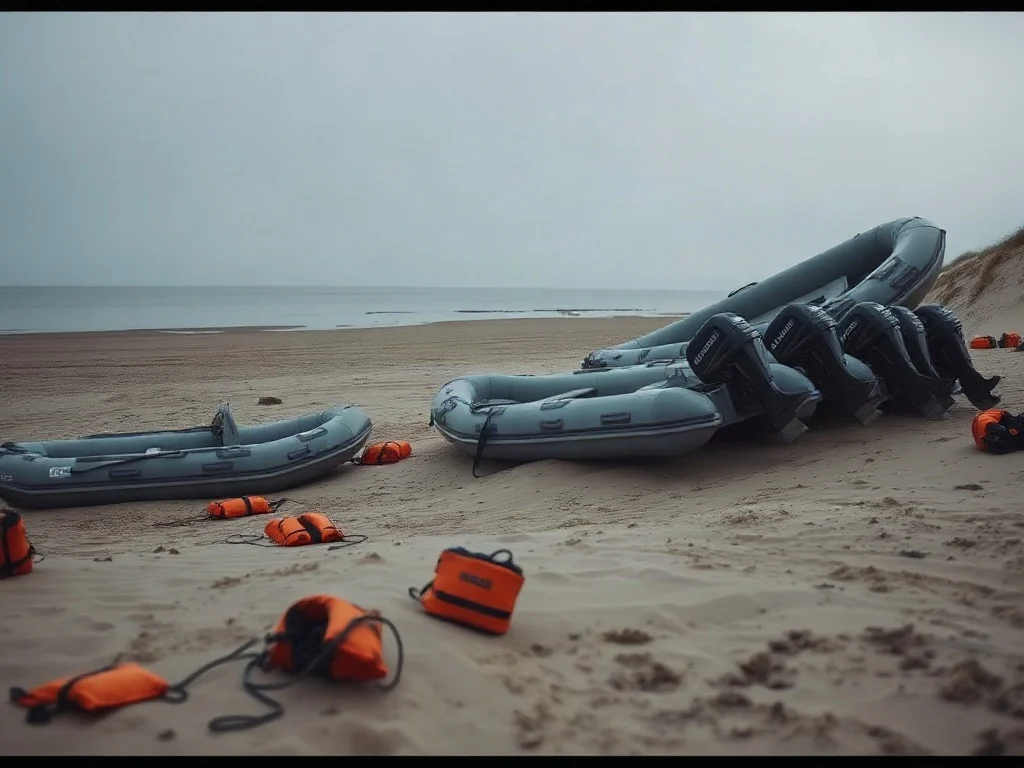
A BBC investigation has put a spotlight on a part of the Channel smuggling gangs business that rarely makes headlines: the hardware. According to the BBC’s findings, a German boat dealer is suspected of supplying the criminal networks behind small boat crossings, and nearly a third of crossings in early 2026 allegedly involved boats or engines from his firm. The claims are allegations and suspicions, not court findings. If they hold up, they show that enforcement focused on beaches and boats at sea has been missing a chokepoint much further up the chain.
Why Channel Smuggling Gangs Depend on a Supply Chain
Crossing the English Channel in a small boat looks improvised, but it depends on repeatable logistics. Each launch needs an inflatable boat, an outboard motor, fuel, and often lifejackets, all moved to the northern French coast near places such as Calais. Because boats are usually abandoned or seized after one use, the networks need a steady flow of new equipment.
That is why a single high-volume supplier matters. A network that can reliably buy boats and engines in bulk can plan more launches and avoid the delays that come from seizures. This is how human smuggling has become more industrial over time.
What the BBC Findings Do and Do Not Show
The headline figure is striking. Nearly a third of crossings in early 2026 allegedly involved boats or engines linked to one dealer’s company. Several points need care, though.
- Allegation, not conviction: The dealer is described as a suspect. Selling boats and engines is lawful, and the key legal question is knowledge or intent.
- Attribution is hard: Linking equipment to a firm usually relies on serial numbers, seized items, packaging, or intelligence. Each method has limits, and the BBC’s exact methodology should be read directly in its report.
- Share is not total volume: A third of crossings is a large share, but smuggling gangs can switch suppliers quickly.
How Do Smugglers Get Boats for Channel Crossings?
Earlier reporting and law enforcement statements have pointed to equipment sourced from several countries, then moved across Europe by road. Organised networks often split the work: buyers, transporters, storage handlers, and the people who run the launches. This organised crime model makes each link replaceable, so arresting one courier rarely stops the operation. Targeting the supplier is more likely to cause lasting disruption, because bulk sourcing is harder to replace than a driver.
The Legal Problem: Lawful Goods, Unlawful Use
Boats and engines are not controlled items in the way weapons are. They are closer to dual-use goods, with legitimate and criminal uses. Prosecutors would generally need to show that a seller knew, or deliberately ignored, that the goods were destined for smuggling. Warning signs could include:
- Large cash purchases or unusual payment methods.
- Repeated bulk orders of identical models with no sign of a legitimate retail business.
- Requests to remove branding or serial numbers.
- Delivery to locations far from the buyer’s stated base.
Regulators use know-your-customer checks in finance, and similar due diligence could be applied to high-risk retail categories. Anti-money laundering rules already put this kind of duty on some businesses. Extending something like it to marine equipment would be a policy choice, with costs for legitimate sellers.
Cross-Border Enforcement: Who Can Act?
Because the alleged supplier is in Germany while the boats are launched from France and arrive in Britain, no single agency controls the case. The UK’s National Crime Agency, the Home Office, and Border Force work with European partners, including Europol and Frontex. Evidence has to be gathered under several legal systems, which slows prosecutions. Governments have also turned to sanctions against smuggling facilitators, and a supplier could in principle become a target, though that depends on the evidence.
Why Cutting Off the Supply Is Harder Than It Sounds
Displacement
If one source is closed, the gangs may buy elsewhere. The effect depends on whether alternatives are as cheap, available in volume, and suitable for crossings. Supply-side action works best when several sources are hit at once.
Quality and risk
Cheaper, lower-quality equipment can raise the danger for people on board. Enforcement that merely pushes gangs toward worse boats could, in theory, increase the risk of deaths at sea, a trade-off worth monitoring.
Demand remains
Equipment is only one factor. The number of asylum seekers trying to reach the UK depends on conflict, legal routes, and policy on both sides of the Channel. Home Office figures, published through GOV.UK migration statistics, show how much crossings have varied from year to year, including a record above 45,000 in 2022.
Practical Steps for Policymakers and Industry
- Trace equipment systematically: Record serial numbers on seized boats and engines and share the data between agencies.
- Engage manufacturers and distributors: Voluntary reporting of suspicious bulk orders is faster than legislation.
- Follow the money: Payment trails often reveal more than the goods.
- Measure outcomes: Track whether supply disruption changes crossing numbers or only the equipment used.
The Real Test: Will a Supplier Case Change the Model?
The most important insight from the BBC’s reporting is not the individual dealer but the vulnerability it exposes. A trade that looks decentralised may depend on a few suppliers. Watch for three things next: whether German authorities open or confirm a formal investigation, whether the dealer’s firm responds or faces charges, and whether crossing patterns shift as equipment sources change. If supplier prosecutions can be made to stick, they could become a more effective tool than intercepting boats at sea. If not, the story will show how easily lawful commerce can feed unlawful trafficking, and how slowly the law adapts.
Frequently Asked Questions
Does the BBC investigation prove the German dealer broke the law?
No. The dealer is described only as a suspect, and the claims are allegations rather than court findings. Selling boats and engines is lawful, so prosecutors would need to show he knew, or deliberately ignored, that the goods were destined for smuggling.
How can investigators link a boat or engine to a specific company?
Attribution usually relies on serial numbers, seized items, packaging or intelligence. Each method has limits, for example when serial numbers are removed or packaging is generic. Readers who want the precise methodology should consult the BBC's original report directly.
Why would targeting a supplier disrupt smuggling more than arresting couriers?
Smuggling networks split the work among buyers, transporters, storage handlers and launch teams, so each link is replaceable. Arresting a driver is easily absorbed, while a high-volume supplier offering bulk, reliable stock is harder to replace quickly.
What warning signs might show a seller knew the goods were for smuggling?
Possible red flags include large cash payments or unusual payment methods, repeated bulk orders of identical models without a genuine retail business, requests to remove branding or serial numbers, and deliveries to places far from the buyer's stated base.
Why is it so hard to prosecute a supplier across borders?
The dealer is in Germany, the launches are from France and the boats arrive in Britain, so no single agency controls the case. Agencies like the NCA, Europol and Frontex must gather evidence under several legal systems, which slows prosecutions.
If one supplier is shut down, will Channel crossings stop?
Probably not on their own. A third of crossings is a large share, but smuggling gangs can switch suppliers quickly. Closing one source may cause displacement to others, so supply-side action would need to be combined with wider enforcement and policy measures.