
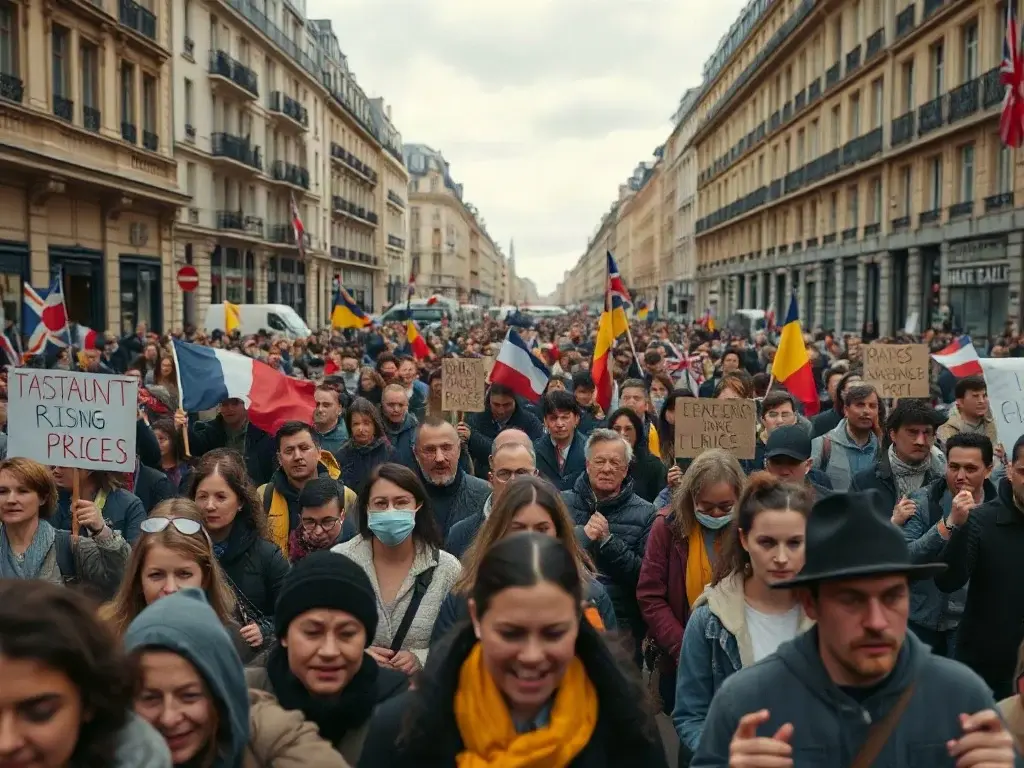
The France cost of living protests reached a new peak of public attention on Saturday, when around 320,000 demonstrators marched in a third mass mobilisation over household budgets, according to the interior ministry. Organisers put the figure at nearly half a million. Tensions flared at the end of marches in some cities, yet authorities described most demonstrations as largely peaceful. This analysis separates what is confirmed from what is still unclear, and explains why the gap between the two counts matters as much as the crowds themselves.
What Happened During the Third Day of Protest
Saturday’s marches were the third nationwide protest over living costs in France. The interior ministry estimated 320,000 participants. Organisers counted close to 500,000. Reports indicate that clashes or confrontations broke out at the tail end of some marches, but the overall picture was one of orderly processions rather than street unrest.
Beyond those points, details such as arrests, injuries and city-by-city turnout were not part of the initial reporting. Any analysis should treat them as unknown until officials or reputable news agencies publish verified figures.
How Many People Protested in France? Understanding the Numbers
The most common search question after a march is simple: how many people actually turned out? The answer depends on who is counting. A gap of roughly 180,000 between the official and organiser figures is not unusual in French politics, because each side has different incentives and methods.
Why Crowd Estimates Differ
Crowd counting is imprecise by nature. Marches move, swell and thin out, and counting points vary. Organisers, often a coalition of trade unions and civic groups, tend to emphasise cumulative attendance. Governments tend to count at fixed points. Neither figure is necessarily dishonest, but both are strategic.
What the Trend Signals
Because this was the third mass protest, the more revealing question is whether turnout is growing, stable or fading. Without verified figures from the earlier marches in this reporting, the sustained scale of Saturday’s turnout is the safest conclusion: the issue has not lost its mobilising power.
The Economic Roots of the Anger
The cost of living is a deceptively simple phrase. It captures the combined pressure of food, energy, housing and transport prices on household income. When inflation outpaces wages, purchasing power erodes, and people feel poorer even if the headline economy grows.
Readers who want hard data should consult Insee, France’s national statistics institute, and Eurostat for European comparisons, rather than relying on slogans from either side of the debate.
A Long French Tradition of Street Politics
Mass protest is deeply embedded in French political culture. The yellow vests movement, which began over a fuel tax dispute, showed how quickly price grievances can become a wider challenge to the government of Emmanuel Macron. Unions, meanwhile, have long used general strikes and large rallies as leverage in collective bargaining.
That history explains why Saturday’s events will be read politically. A repeated, large and mostly peaceful mobilisation is harder to dismiss than a single flash of anger.
Policing, Peaceful Protest and the Risk of Escalation
The most fragile moment of any march is often the end. As crowds disperse, small groups can break away, and riot control units may intervene. Reports of tension at the close of some marches fit this familiar pattern.
The distinction matters. If the dominant image is of nonviolent mass participation, organisers keep moral and political momentum. If the dominant image is of clashes, the government can reframe the story around public order. Both sides understand that the final hour of a march can overshadow the preceding six.
What Different Actors Want
- Unions and organisers: measures that protect purchasing power and a credible government response to repeated mobilisations.
- The government: to show it listens while avoiding concessions that strain public finances.
- Households: relief at the checkout, the petrol pump and the energy bill, rather than abstract macroeconomic reassurance.
These aims are not necessarily incompatible, but they pull in different directions, and the resulting negotiation will play out in French politics and the National Assembly.
How to Follow the Story Responsibly
- Compare official and organiser figures instead of trusting either alone.
- Check turnout across several marches to judge momentum.
- Look for verified data on arrests and injuries before judging how peaceful an event was.
- Track official inflation and wage statistics to test the protesters’ claims.
Frequently Asked Questions
How many people took part in the protests in France?
The interior ministry estimated about 320,000 participants, while organisers counted nearly 500,000.
Were the protests violent?
Authorities said most demonstrations were largely peaceful, although tensions flared at the end of marches in some cities.
Why are people protesting in France over living costs?
Protesters are reacting to pressure on household budgets from the rising price of essentials. The specific demands should be confirmed through organisers’ statements and official sources.
What Saturday’s Marches Really Reveal
The most important insight is not whether the true number was 320,000 or closer to 500,000. It is that a third mass protest still drew a crowd of that size, which suggests the grievance is durable rather than fleeting. The next test is whether the government answers with concrete measures on purchasing power or waits for the movement to tire.
Watch three things: whether turnout holds in the next mobilisation, whether the end-of-march tensions grow into a defining image, and whether official inflation and wage data back up the protesters’ case. If all three move against the government, the question will shift from how many marched to how long it can afford to leave their demands unanswered.
SEO DATA
Primary Focus Keyphrase: France cost of living protests
Related Keyphrase 2: French trade unions demonstration
Related Keyphrase 3: why are people protesting in France over living costs
Related Keyphrase 4: how many people protested in France
Related Keyphrase 5: purchasing power crisis in France
Primary Keyphrase Synonyms: French living-cost protests, cost-of-living demonstrations in France, French anti-inflation marches, nationwide protests over prices in France, French street protests over living costs
SEO Title: France Cost of Living Protests: 320,000 March Nationwide
Meta Description: France cost of living protests drew about 320,000 people, per the interior ministry, and nearly 500,000 per organisers. See what the gap means.
URL Slug: france-cost-of-living-protests
Image Filename: france-cost-of-living-protests-paris-march.jpg
Image ALT Text: Large crowd of demonstrators marching with banners down a wide French city boulevard
Image Title: France cost of living protest march
Image Caption: Demonstrators march in a mass protest over living costs in France.
Search Intent: News/current event with informational elements
Internal link suggestions: link to site articles on French politics, inflation and household budgets, or European labour movements, using descriptive anchor text.
Frequently Asked Questions
Why do the interior ministry and the organisers report such different turnout figures?
Each side counts differently and has its own incentives. Governments usually count at fixed points along a route, while organisers, often unions and civic groups, tend to add up cumulative attendance. The 180,000 gap is not unusual in France, and neither figure is necessarily dishonest, though both are strategic.
Do the clashes at the end of some marches mean the protests turned violent?
Not according to the initial reporting. Authorities described most demonstrations as largely peaceful, and tension appeared only at the tail end of some marches. This is a familiar pattern, since small groups can break away as crowds disperse. Details on arrests and injuries have not been verified yet.
Is the movement growing or fading after three mass protests?
That cannot be stated with certainty, because verified figures from the earlier marches were not available in this reporting. The safest conclusion is that Saturday's sizeable turnout shows the cost of living issue still has mobilising power, but a real trend needs comparable data across all three days.
Where can I find reliable data on prices and purchasing power in France?
Insee, France's national statistics institute, publishes official figures on inflation, wages and household purchasing power. Eurostat offers comparable data across European countries. Consulting them is more reliable than slogans from either side, and it helps you judge whether prices are really outpacing incomes.
How does this movement compare with the yellow vests protests?
Both began with price grievances. The yellow vests started over a fuel tax dispute and grew into a wider challenge to Emmanuel Macron's government. The current marches are described as mostly peaceful and often backed by unions, though it is unclear whether they could escalate in the same way.
Why does the end of a march matter so much politically?
The final hour often shapes the dominant image of the day. If coverage shows nonviolent mass participation, organisers keep moral and political momentum. If it shows clashes, the government can reframe the story around public order, so a few incidents can overshadow a largely peaceful march.