
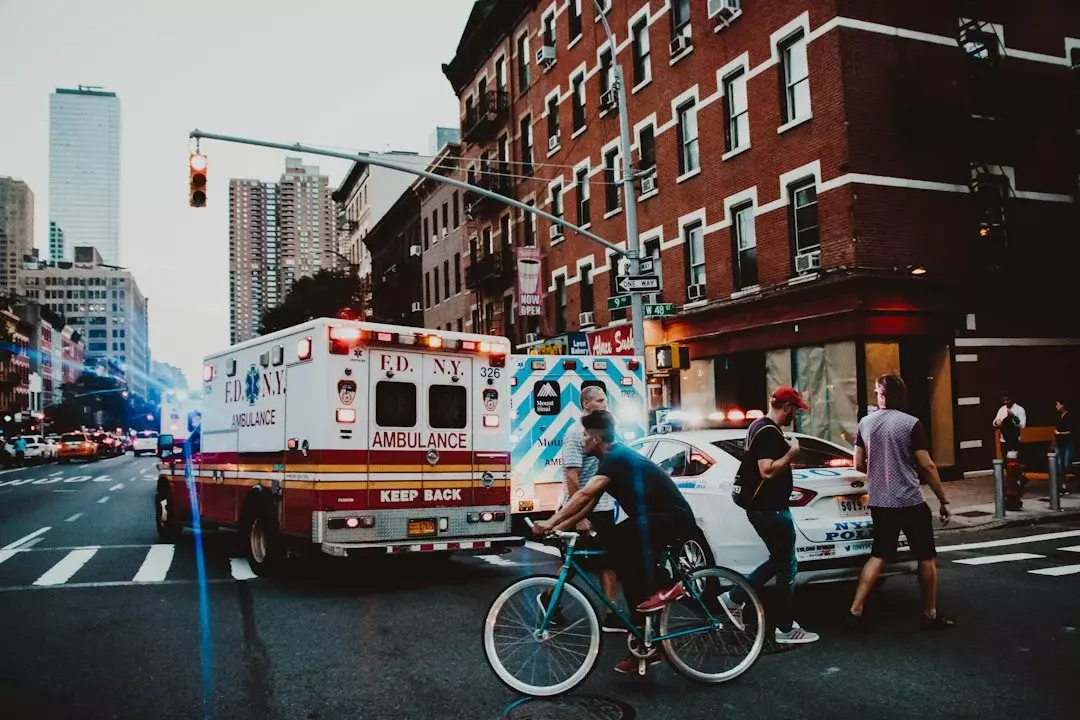
The report that Beverley Callard passed out on the set of her new soap and needed an ambulance is not just another celebrity-health headline. It is a blunt reminder that the Beverley Callard breast cancer battle is not a neat public narrative. It is the kind of illness story that can interrupt ordinary work without warning, even in a controlled studio environment.
Callard is best known for Coronation Street, one of the most recognisable soap operas in British television. But the point of this incident is not nostalgia or fandom. It is the medical reality behind a collapse: fainting, or syncope, is a symptom, not a personality detail, and in the context of breast cancer it can signal anything from dehydration to a more serious treatment-related problem.
This analysis keeps the speculation out of the frame. The available facts are limited, so the useful question is not what happened in dramatic terms, but what a collapse on set usually means, why cancer treatment can leave people physically fragile, and why a television production should treat that fragility as a workplace issue rather than a continuity inconvenience.
What a collapse on set can mean medically
A person can pass out for many reasons, and most of them are not visible to onlookers. In a cancer patient, the list becomes even more complex. Chemotherapy can contribute to nausea, dehydration, weakness, and a drop in energy. Radiotherapy may intensify fatigue. Surgery, including a mastectomy, can leave the body with less reserve than before. Side effects from pain relief, hormone therapy, or infection can add another layer of risk.
One common mechanism is anaemia, which reduces the blood’s ability to carry oxygen. Another is low blood pressure, especially after standing for long periods under hot studio lights. In plain terms, the body can be pushed past a threshold it could once tolerate. None of that proves the cause in Callard’s case, because the medical details have not been publicly disclosed. It does explain why a sudden collapse should be treated as urgent rather than theatrical.
There is also a broader point about cancer itself. The disease is not the only problem; the treatment can be the most exhausting part. Oncology has made major gains in survival, but those gains often come with a daily price: fatigue, immune suppression, appetite changes, sleep disruption, and the simple unpredictability of whether someone can get through a workday without a setback.
What the Beverley Callard breast cancer battle reveals about recovery
The phrase breast cancer battle sounds resolute, but it can also distort reality. Illness is not won through attitude alone. It is managed through diagnosis, staging, treatment selection, monitoring, and repeated reassessment. In breast cancer, that pathway may begin with mammography or other imaging, move through surgery or systemic treatment, and then continue for months or years through follow-up care. The process is medical, not motivational.
That matters because public narratives often reward the image of someone who keeps working and keeps smiling. In practice, recovery is rarely linear. A person can look stable one day and be unable to stand safely the next. A collapse therefore tells you something important about the limits of the body, but not enough to turn it into a tidy story of bravery. The honest reading is less flattering and more useful: even a skilled, experienced performer can be physically overmatched by treatment.
This is why people following Callard’s story should resist two opposite errors. The first is minimising the episode as a minor wobble. The second is assuming that a dramatic collapse reveals the full state of her illness. Neither is true. The responsible position is to recognise uncertainty, because the facts that matter are the ones her doctors and her care team actually see.
Why a soap set is a workplace, not a refuge
It is easy to imagine a television set as a glamorous space insulated from ordinary risk. It is not. A busy television studio is a workplace with noise, heat, cables, standing time, deadlines, and pressure to keep moving. That matters in long-running production systems such as ITV drama, where continuity is valuable but health must come first. A collapse on set is therefore not just a personal medical event; it is a work-safety event.
From an occupational safety and health standpoint, the correct response is obvious: pause the shoot, assess the person, and involve medical professionals. Productions routinely manage stunts, lighting risks, and fatigue. They should also manage illness-related vulnerability. If someone is visibly unwell, the production should not be asking how to preserve the schedule; it should be asking how to reduce harm.
This is where the presence of an ambulance becomes significant. It signals that the people on site did not treat the event as something to be walked off. That is the right instinct. Rapid assessment matters because the difference between simple fainting and a more dangerous cause may not be obvious to non-medical staff. In other words, the correct corporate response is caution, not confidence.
Why celebrity illness stories often mislead more than they reveal
Public figures attract attention because their lives feel familiar, but that familiarity is deceptive. A well-known actress is still just a patient. The moment a health story becomes media content, it starts to pull in expectations the person did not ask for: proof of strength, proof of gratitude, proof of optimism. That pressure can make serious illness look simpler than it is.
Callard’s career on Coronation Street gave her a huge public profile, which means people will try to map the character of Liz McDonald onto the reality of her health. That is a mistake. Medical fragility is not a storyline arc, and disclosure is not a contract to provide constant updates. The public may want clarity, but the patient’s privacy still comes first.
There is also a language problem. The language of battling illness can be useful, but it can also imply that collapse equals failure. It does not. Many cancer patients do everything right and still faint, still need emergency help, still have days when their body refuses to cooperate. The proper lesson is not that they lacked resilience. It is that resilience has a ceiling.
What readers should watch in real life
For practical guidance, the NHS breast cancer page, the NHS fainting advice, and Cancer Research UK’s breast cancer information are stronger references than social media speculation. If someone undergoing cancer treatment faints, the key question is not whether they recover quickly enough to keep working. It is whether the episode exposes a problem that needs immediate review.
- Seek urgent help if the collapse follows chest pain, breathlessness, or palpitations.
- Treat repeated fainting, confusion, or injury as medically serious.
- During cancer treatment, pay close attention to fever, vomiting, dehydration, or signs of infection.
- Do not assume a brief recovery means the episode was harmless.
- Let the oncology team decide whether work can safely continue.
The practical mistake many people make is waiting for certainty before acting. That is the wrong standard in a treatment context. If a person is already medically vulnerable, a fainting episode can be the body’s way of announcing that something has changed. The correct response is to check, not to guess.
FAQ
Can breast cancer treatment cause fainting?
Yes. Treatment can contribute to dehydration, low blood pressure, anaemia, fatigue, infection, or medication side effects. Any new collapse should be medically assessed rather than dismissed.
Should a performer keep working during cancer treatment?
Only if the medical team says it is safe and the production can make real accommodations. The answer depends on treatment stage, energy levels, infection risk, and the physical demands of the role.
When is fainting an emergency?
When it is followed by injury, chest pain, breathlessness, repeated episodes, confusion, or neurological symptoms. In a cancer patient, fever or dehydration should also raise concern quickly.
What happens next is more important than the headline
The most important insight in this story is that visibility does not equal recovery. A public figure can look active, speak candidly, and still be one step away from needing emergency care. That is why the episode matters beyond celebrity interest: it exposes how fragile the gap is between treatment and ordinary function.
What to watch next is less the gossip cycle and more the standard of care around people who work while ill. Productions may become more cautious about scheduling, rest breaks, and on-site medical support. Audiences may become more skeptical of the idea that illness should be hidden until it becomes impossible to ignore. The unresolved question is whether the industry will keep treating health as a private inconvenience or start treating it as a serious operational risk.
If there is a reasonable prediction here, it is this: public conversations about cancer will keep moving away from heroic language and toward operational truth. The body sets the limits. Work has to adapt to that fact, not the other way around.
Frequently Asked Questions
Does fainting on set mean Beverley Callard’s breast cancer has got worse?
Not necessarily. Fainting can happen for many reasons, including dehydration, low blood pressure, anaemia, medication side effects, or post-treatment fatigue. Without medical details, it would be wrong to treat a collapse as proof of progression. The key point is that the episode is a serious symptom that deserves assessment, not speculation.
Why can cancer treatment make someone collapse even if they seem well enough to work?
Cancer treatment can leave a person with very limited physical reserve. Chemotherapy, radiotherapy, surgery, pain relief, and hormone therapy can all cause fatigue, weakness, appetite loss, or dizziness. Someone may look composed for a while, then suddenly be unable to tolerate standing, heat, or exertion, especially under studio conditions.
Could studio conditions themselves trigger a fainting episode in a cancer patient?
Yes. Long takes, hot lights, dehydration, irregular meal breaks, and standing for extended periods can all contribute to a collapse, especially if someone is already unwell or recovering from treatment. A set may feel controlled, but it still creates physical demands that can push a vulnerable body past its limit.
Is a collapse like this just a temporary setback, or can it affect recovery?
It can be either, depending on the cause. A one-off fainting episode may be quickly corrected if it is linked to something simple like dehydration. But in a cancer context, it can also be a sign that treatment side effects or complications are building up. That is why prompt medical evaluation matters.
Why does the article stress workplace risk instead of celebrity drama?
Because the most important issue is not the spectacle of someone passing out, but the duty of care owed to an employee who may be medically fragile. A television set is a workplace, and productions should adapt schedules, conditions, and expectations when health problems make ordinary tasks unsafe or unpredictable.
Can someone still appear to be recovering from breast cancer and yet be medically fragile?
Absolutely. Recovery is often uneven and can change from day to day. A person may look stable, attend work, and function normally for a time, then become suddenly weak or dizzy. Breast cancer recovery is not a straight line, and outward composure does not always reflect what the body is coping with internally.