
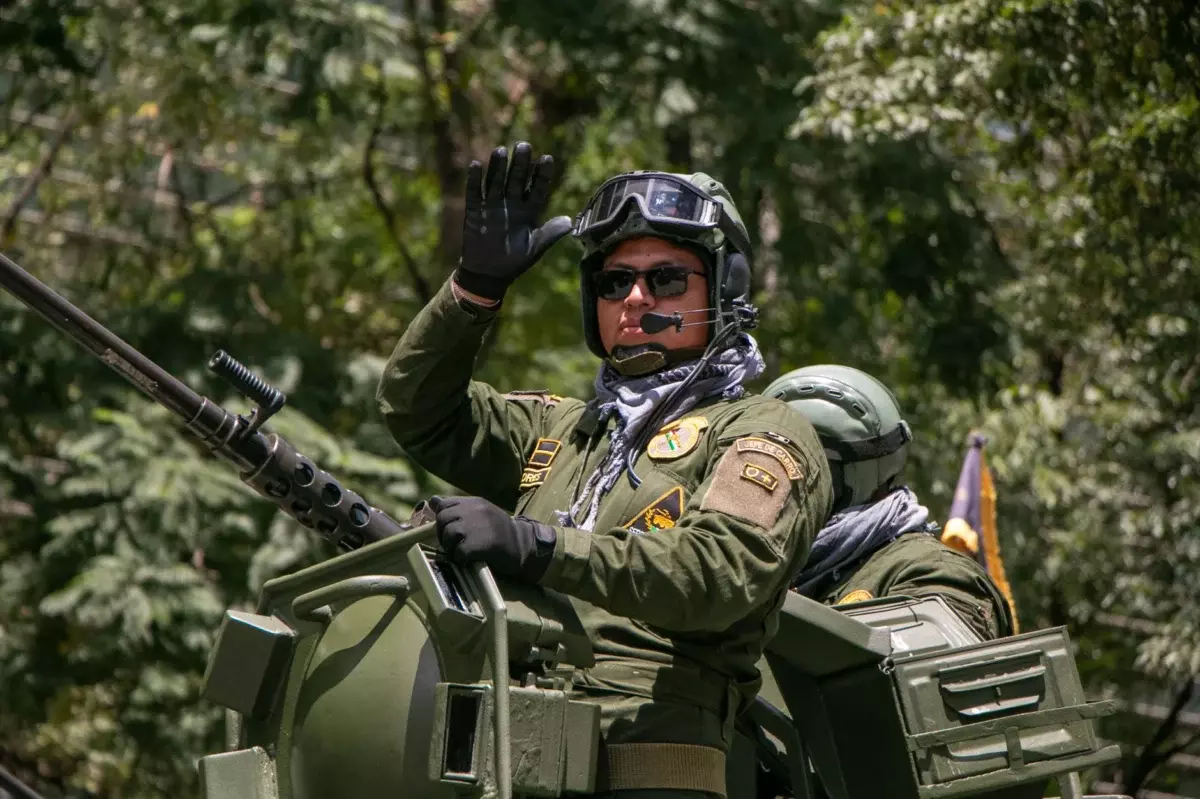
In 2026, the story isn’t only that the Taliban control Afghanistan again—it’s that Taliban U.S. firepower is now visible in the streets of Kabul. In this guide, you’ll learn what it likely means when Taliban forces appear in American armored vehicles and carry U.S.-style weapons, how this situation can emerge from past drawdowns and stockpiles, and what the practical implications are for security, diplomacy, and civilians. If you’re trying to make sense of fast-moving coverage, you’ll also get a clear checklist for what to verify next.
Key Takeaways
- Taliban U.S. firepower in Kabul signals continued access to modern military hardware—whether captured, inherited from stockpiles, or obtained through networks.
- Visible U.S.-origin equipment changes the local security calculus for armed groups, police structures, and foreign risk assessments.
- For policymakers and humanitarian actors, the biggest question becomes how this affects governance, sanctions risk, and civilian protection.
What does Taliban U.S. firepower in Kabul actually change for security?
When armored vehicles and modern tactical gear appear in patrol footage, the shift is more than symbolic. It changes response times, deterrence dynamics, and the credibility of intimidation—especially in dense urban areas like Kabul where visibility and mobility matter. Even without claiming full combat capability, the presence of heavier platforms and standardized small arms can raise the perceived risk level for anyone challenging Taliban authority.
For residents, this often translates into a tighter
Frequently Asked Questions
What does it signal when Taliban patrols show U.S.-origin armored vehicles and weapons in Kabul?
It signals more than symbolism: it suggests Taliban forces have continued access to modern platforms and standardized small arms, whether through capture, inheritance from earlier stockpiles, or other networks. In practice, visible heavy mobility can shift deterrence dynamics, response timing, and how intimidating armed groups appear in dense neighborhoods, even if full operational capability isn’t confirmed.
How could U.S.-sourced firepower end up with the Taliban after past U.S. drawdowns?
Common pathways include captured materiel from Afghan government forces, leftover or poorly secured stockpiles during transitions, diversion through local intermediaries, and equipment leakage into illicit transfer networks. Even when U.S. forces reduce presence, hardware can remain in the country, and during power collapses or bargaining, some items can be absorbed by whoever controls territory.
Does seeing U.S.-style weapons automatically mean the Taliban can use them like a modern U.S. unit?
Not automatically. Visible equipment doesn’t prove training, maintenance capacity, ammunition supply, communications, or combined-arms integration. Heavier platforms may require spare parts and skilled mechanics, and standardized weapons still depend on logistics and doctrine. So the key question is sustainment and operational use over time, not a single patrol clip.
How does this change the security calculus for Kabul’s police, other armed groups, and foreign assessments?
It can raise the perceived and actual threshold for challenging Taliban authority, because armored mobility and familiar small-arms patterns affect both deterrence and immediate threat levels. Police and local armed actors may adjust tactics, visibility, and patrol routes. For foreign risk assessments, it increases uncertainty: even limited engagements can feel more consequential when modern gear is present.
What does this likely mean for diplomacy, sanctions risk, and humanitarian work?
Diplomatically, it complicates engagement strategies because partner governments may view continued access to modern hardware as evidence of entrenched capacity. For sanctions policy, it can increase scrutiny of funding and procurement routes linked to the Taliban. Humanitarian actors may face tighter compliance demands, greater access constraints, and higher perceived security risk for staff and facilities.
If reports move fast, what should readers verify to assess claims about U.S.-sourced equipment?
Look for provenance signals: serial numbers, markings, distinctive optics or weapon accessories, and whether the footage matches known inventories. Cross-check multiple sources, including other camera angles and time/location metadata. OSINT comparisons—like matching vehicle models to public U.S. or Afghan force references—can help. Finally, distinguish between confirmed identification and speculation about how the equipment was obtained.