
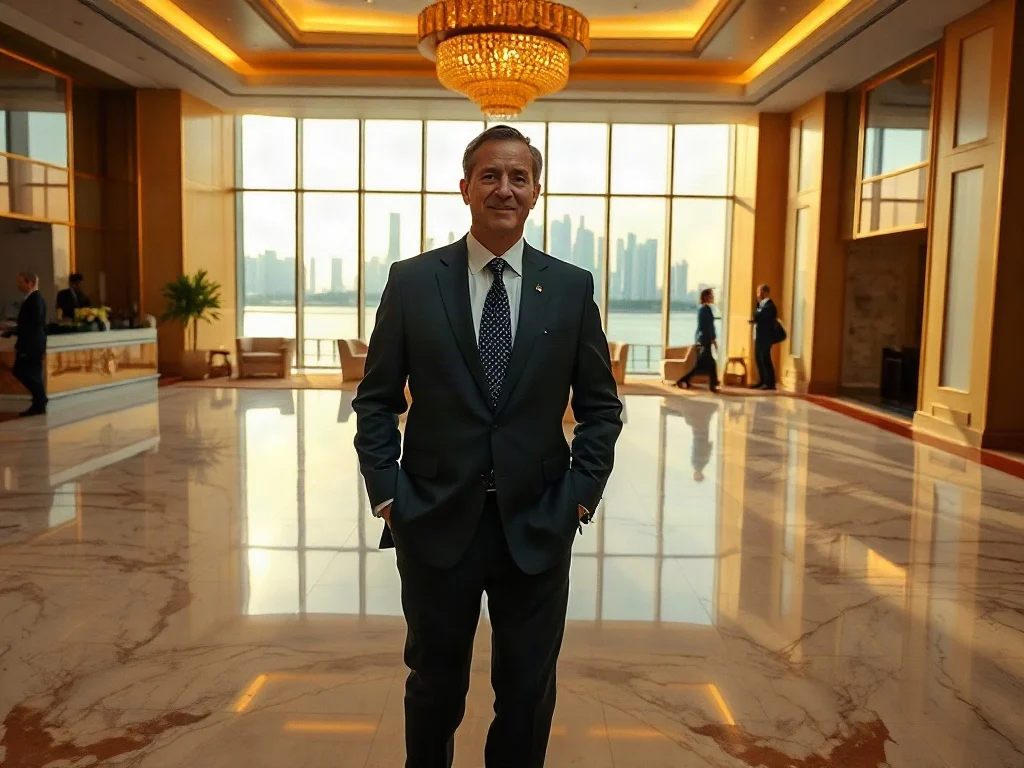
The appointment of a Bob Suri Four Seasons regional vice president role, effective October 1, 2026, is more than a change of title. It signals how one of the world’s most recognizable luxury hospitality brands wants to organize leadership across some of its most varied destinations. Suri has been named Regional Vice President for Four Seasons properties across Africa and the Indian Ocean, and he will continue as General Manager of Four Seasons Hotel Abu Dhabi at Al Maryah Island. This article looks at what the announcement says, what it implies, and what it shows about modern luxury hotel leadership.
The announcement is short, so this analysis separates what is confirmed from what is reasonable interpretation. The confirmed facts are the title, the geographic remit, the effective date and the continuation of his Abu Dhabi role. Everything else is context and informed analysis, not reported detail from Four Seasons.
What the Appointment Confirms
Four facts anchor the news. Suri’s new position is Regional Vice President. His territory covers Four Seasons properties across Africa and the Indian Ocean. The role takes effect on October 1, 2026. He will keep his post as general manager of the Abu Dhabi hotel.
That last point matters most. Many regional promotions require an executive to leave a single property and move into a corporate or travelling role. Here, Four Seasons is layering regional responsibility on top of a flagship hotel position. That suggests confidence in Suri’s operational track record and a preference for leaders who stay close to guest-facing reality.
Understanding the Four Seasons Leadership Model
Four Seasons Hotels and Resorts was built by founder Isadore Sharp, whose first hotel opened in Toronto in the early 1960s. The company grew around a reputation for consistent service delivered through empowered local teams. Its official website, fourseasons.com, describes the current portfolio of hotels, resorts and residences.
Like most international hotel brands, Four Seasons tends to manage its portfolio through regional structures. Vice presidents sit between individual property leaders and senior corporate executives. They translate brand standards into local reality, coordinate resources and help general managers handle commercial, operational and people challenges that no single hotel can solve alone.
The General Manager as the Foundation
In a luxury hotel, the general manager is both chief executive and cultural guardian of the property. The person holds responsibility for guest experience, financial performance, owner relations and team morale. A regional vice president who still works as a general manager keeps real operating experience in the room when regional decisions are made.
Why Africa and the Indian Ocean Is a Demanding Portfolio
The phrase Four Seasons Africa and Indian Ocean covers an unusually diverse set of markets. It joins desert cities, safari landscapes, remote island resorts and historic urban centers, each with different guests, regulations, labor markets and logistics. The exact list of properties in Suri’s remit should be confirmed with Four Seasons, but the brand’s presence in the wider geography is well known and includes locations such as Cairo, Marrakech, the Serengeti, Seychelles, Mauritius and the Maldives.
Urban Luxury Versus Remote Escape
A city hotel competes on business travel, events, dining and local clientele. A safari lodge or island resort competes on exclusivity, immersion and the quality of a once-in-a-lifetime stay. The first depends on year-round demand and local partnerships. The second depends on long-haul air access, seasonality, supply chains and staff who may live on site for extended periods. One regional leader must hold both realities in mind at once.
Nature, Community and Sustainability
Destinations built around safari experiences and ecotourism increasingly face scrutiny over environmental impact and community benefit. Island properties also confront climate exposure, marine conservation concerns and dependence on imports. Regional leadership therefore involves more than occupancy and rates. It involves credible stewardship, because guests at this level notice the difference between genuine commitment and marketing language.
The Dual Role: Strength and Strain
Suri’s dual position is the most interesting part of the story, and it deserves a balanced reading. The arrangement keeps him tied to a major city hotel in Abu Dhabi, on Al Maryah Island, a financial and lifestyle district in the United Arab Emirates. The Abu Dhabi hotel opened in 2016, so it has had time to build an established operating rhythm and a mature leadership team.
Potential Advantages
- Operational credibility: Colleagues across the region are led by someone who still faces daily guest, staff and owner pressures.
- Continuity: The Abu Dhabi property avoids the disruption of a sudden leadership vacuum.
- Strategic geography: The United Arab Emirates is a major aviation and tourism hub, which is useful for connecting travelers to African and Indian Ocean destinations.
- Cost efficiency: A dual role can reduce layers of management, although that is an interpretation, not a stated rationale.
Potential Risks
- Time dilution: Regional travel and property visits compete with daily hotel leadership.
- Dependence on the second tier: The arrangement works only if the Abu Dhabi executive committee can operate with considerable autonomy.
- Perception issues: Other general managers may question whether a regional leader can give full attention to their needs.
In hospitality, the quality of a dual role is rarely determined by the title. It is determined by how well the second layer of leadership is trained to act without waiting for permission.
That observation is analytical, not a quotation from Four Seasons. Dual roles of this kind are well known in hotel operations, and their success depends on delegation, clear escalation routes and disciplined scheduling.
What Does a Regional Vice President Do in a Luxury Hotel Company?
For readers asking what a regional vice president does in hotels, the answer varies by company, but several responsibilities are common across the hospitality industry.
- Performance oversight: Reviewing revenue, profitability, guest satisfaction and service quality across multiple hotels.
- Talent development: Coaching general managers, shaping promotion pipelines and supporting succession planning.
- Owner and partner relations: Many luxury hotels are owned by investors and run by an operator under a management agreement, so alignment between those parties is essential.
- Brand consistency: Ensuring service standards remain recognizable without erasing local character.
- Crisis and risk management: Supporting properties through security events, health concerns, natural hazards or political change.
- Pipeline and openings: Helping prepare new properties and renovations to meet brand expectations.
Four Seasons has not published a detailed job description for Suri’s role in the announcement, so these responsibilities describe the category in general rather than his specific mandate.
Why Luxury Hotel Leadership Appointments Matter to Travelers
Guests rarely read leadership announcements, yet luxury hotel leadership appointments influence what they experience. Leaders decide where to invest, how to staff, which partnerships to prioritize and what standards to protect during busy periods. In regions where infrastructure and labor conditions differ widely, the quality of regional management often determines whether a brand’s promise survives long supply lines and unpredictable conditions.
The effect is also economic. Large hospitality operators in African tourism markets and island economies are significant employers and buyers of local goods and services. Leadership choices about training, sourcing and community engagement can shape how widely the benefits of luxury tourism are shared. Precise figures vary by country and are best sourced from national tourism authorities or international bodies such as the UN Tourism organization.
Practical Lessons for Hospitality Professionals
Build a Bench Before You Need One
The most transferable lesson is structural. A leader can only hold a regional and a property role if the property team is strong enough to run without constant supervision. Aspiring general managers should therefore invest early in the skills of their deputies, from financial literacy to guest recovery.
Learn Multiple Hotel Types
A career that includes city hotels, resorts and remote lodges prepares an executive for the variety found in regional portfolios. Exposure to different ownership models and cultures is often more valuable than a long run in one setting.
Common Mistakes to Avoid
- Applying one operating playbook to every destination without local adjustment.
- Treating regional visits as inspection tours rather than coaching opportunities.
- Neglecting owner communication until performance problems appear.
- Overlooking staff housing, welfare and training in remote locations.
Frequently Asked Questions
Who is Bob Suri?
Bob Suri is a Four Seasons executive who serves as General Manager of Four Seasons Hotel Abu Dhabi at Al Maryah Island. He has been named Regional Vice President for Four Seasons properties across Africa and the Indian Ocean.
When does Bob Suri’s new role begin?
The appointment takes effect on October 1, 2026.
Will Bob Suri leave the Abu Dhabi hotel?
No. According to the announcement, he will continue to lead Four Seasons Hotel Abu Dhabi at Al Maryah Island as General Manager while taking on the regional role.
Which countries are included in the region?
The announcement refers broadly to Africa and the Indian Ocean. A precise country-by-country list was not provided in the information available, so readers should check Four Seasons for the current portfolio.
What is a regional vice president in the hotel industry?
It is a senior operations leader who oversees several hotels in a geographic area, supporting general managers, protecting brand standards and aligning performance with owner and company goals.
The Real Test Begins After October 1, 2026
The deepest insight in this appointment is that Four Seasons is betting on proximity. By keeping a regional leader inside a working flagship hotel, the company suggests that credibility in luxury hospitality still comes from daily operating experience, not distance from it.
What should observers watch? First, whether Four Seasons strengthens the leadership team in Abu Dhabi to protect the flagship during regional travel. Second, whether new openings, renovations or leadership moves appear across the African and Indian Ocean portfolio in the months after the start date. Third, how the company communicates its approach to sustainability and community partnerships in sensitive safari and island environments.
A reasonable prediction, not a confirmed plan, is that dual-hatted leadership will become more common as brands try to combine operational depth with regional coordination. The unanswered question is whether that model can sustain the personal attention that defines true luxury across destinations as different as a desert capital and a remote Indian Ocean island. The answer will be written in guest reviews, team stability and the quiet consistency of service long after the announcement fades.
Frequently Asked Questions
Will Bob Suri leave his job in Abu Dhabi when he becomes Regional Vice President?
No. According to the announcement, he will keep his position as General Manager of Four Seasons Hotel Abu Dhabi at Al Maryah Island. The regional vice president responsibilities are added on top of that role, starting October 1, 2026.
Which properties does Suri's new regional remit cover?
The announcement only states Africa and the Indian Ocean in general terms. The exact list of hotels and resorts in his remit has not been detailed and should be confirmed with Four Seasons. Well-known brand locations in the wider region include Cairo, Marrakech, the Serengeti, Seychelles, Mauritius and the Maldives.
Why is it unusual that a regional vice president also remains a general manager?
Many regional promotions pull executives out of a single hotel and into a corporate or travelling role. Combining both jobs suggests Four Seasons trusts Suri's operational record and values leaders who stay close to daily guest-facing reality when making regional decisions.
What does a regional vice president actually do at a hotel brand like Four Seasons?
A regional vice president sits between individual hotel leaders and senior corporate executives. The role translates brand standards into local practice, coordinates resources and supports general managers with commercial, operational and people challenges that a single property cannot solve alone.
Why is the Africa and Indian Ocean portfolio considered demanding to lead?
It combines very different settings: desert cities, safari landscapes, remote island resorts and historic urban centers. Each has distinct guests, regulations, labor markets and logistics, so one leader must balance city demand drivers with seasonality, air access, supply chains and sustainability concerns in remote destinations.
How much of the article is confirmed by Four Seasons versus interpretation?
Only four facts are confirmed: the Regional Vice President title, the Africa and Indian Ocean territory, the October 1, 2026 effective date and his continued Abu Dhabi role. Everything else, including leadership implications and market context, is analysis and not reported detail from Four Seasons.