
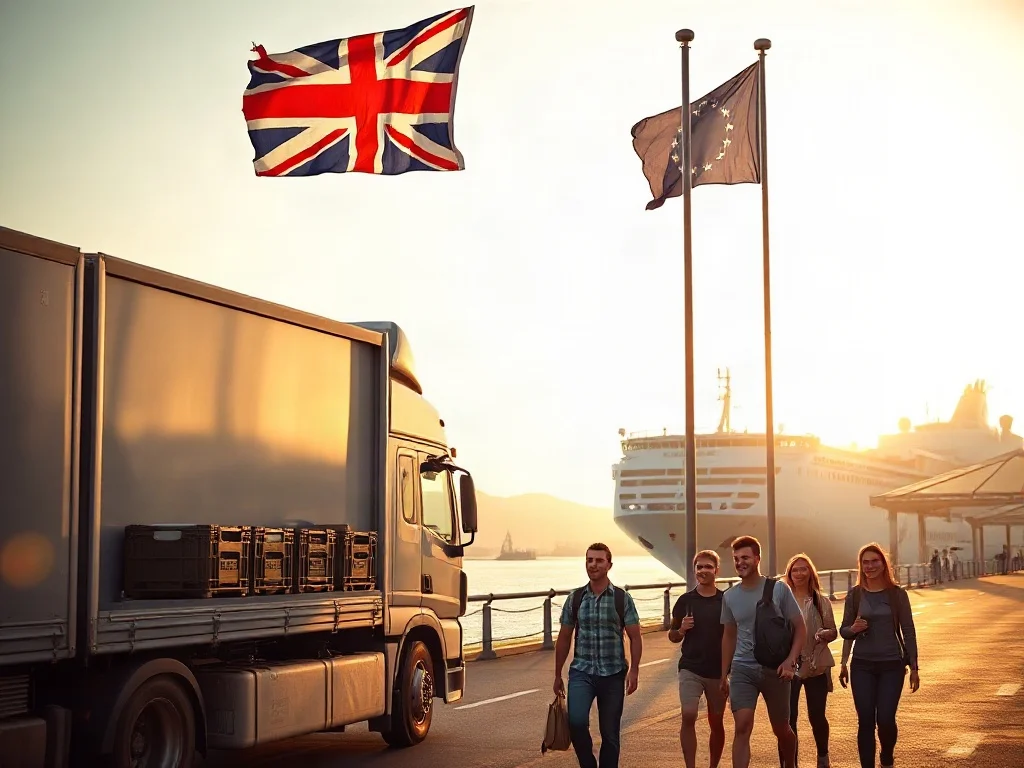
The UK-EU deal agreed on Friday covers British food exports, emissions trading and a youth experience scheme, and Burnham says the UK will now explore even closer ties with the bloc. The headline matters because it suggests the agreement is a starting point rather than a final settlement. This article looks at what each strand of the deal is likely to involve, who gains, where the trade-offs sit, and what to watch next. Reporting so far gives only the headline outline, so details that are not confirmed are flagged as such.
Background: How the UK-EU Relationship Got Here
Since Brexit, trade between the United Kingdom and the European Union has run under the Trade and Cooperation Agreement. That deal avoided tariffs on most goods but left the UK outside the single market and the customs union. The result was new paperwork, inspections and non-tariff barriers, which hit food producers and small exporters hardest.
Food, carbon markets and youth mobility were all on the agenda of the May 2025 UK-EU summit under Keir Starmer‘s Labour government. The latest agreement appears to carry those themes forward. Beyond the headline, the details of what Andy Burnham said are not set out here, so the focus below is on the substance of the three policy areas.
What Does the UK-EU Deal Cover?
British Food Exports to the EU
Food is the most commercially significant strand. Since 2021, UK food exports to the EU have faced export health certificates and border checks under sanitary and phytosanitary (SPS) measures. An SPS agreement would aim to remove most of those routine checks on animal and plant products. In exchange, the UK would normally have to follow EU rules in these areas, a principle known as dynamic alignment.
The benefit is faster, cheaper trade in meat, dairy, fish and fresh produce. The cost is reduced regulatory freedom. Alignment could limit the UK’s room to strike trade deals that rely on different food standards, and disputes could involve the Court of Justice of the European Union. A similar alignment logic already operates in Northern Ireland under the Windsor Framework.
Linking Emissions Trading Systems
The second strand concerns carbon pricing. The UK Emissions Trading Scheme is a standalone version of the EU Emissions Trading System, and both rely on emissions trading to cap emissions. The main commercial reason to link them is the EU’s Carbon Border Adjustment Mechanism. That levy targets carbon-intensive imports to prevent carbon leakage. A link could spare UK steel, cement, aluminium and fertiliser exporters from paying twice for carbon. The official European Commission ETS page explains how the EU system works.
The Youth Experience Scheme
The third strand is a youth experience scheme. It would likely resemble the existing Youth Mobility Scheme model, giving young people time-limited rights to live, study or work abroad. The UK left the Erasmus Programme in 2020 and replaced it with the Turing Scheme. Key terms such as age limits, visa costs, caps and duration are the details that decide whether the scheme has real impact, so readers should check them against official announcements on GOV.UK and the European Commission website.
Why Closer Ties Are Contested
Supporters argue that deeper alignment reduces friction, supports growth and gives businesses predictability. Critics argue it trades sovereignty for access, since the UK would follow rules it has less power to shape. Economists broadly agree that Brexit increased trade costs, but estimates of the long-term effect vary by methodology. Any claim about the precise gains from this deal should therefore be treated as a projection, not a certainty.
Practical Implications for Businesses and Individuals
- Food exporters: audit current certification costs so you can quantify savings once checks ease.
- Carbon-intensive manufacturers: model exposure to the EU border carbon levy and track whether an exemption or linkage applies to your sector.
- Students and young workers: wait for official eligibility rules before making plans, and avoid third-party sites promising early access.
- Policy teams: map which rules the UK would have to follow dynamically and assess the compliance burden.
Frequently Asked Questions
What does the UK-EU deal cover?
According to the report, it covers British food exports, emissions trading and a youth experience scheme.
Will the deal make food exports to the EU easier?
That is the intended aim, but the real effect depends on how many border checks are removed and on the alignment conditions attached.
Does the deal mean the UK is rejoining the EU?
No. Nothing in the headline points to UK membership of the EU, the single market or the customs union.
The Real Test: How Far Can Alignment Go?
The central insight is that each strand of this deal rests on the same trade-off: easier access in return for shared rules. Burnham’s call to explore closer ties moves the debate from whether to cooperate to how much alignment the UK will accept. Watch for the detailed legal texts, the role of dispute resolution, and whether the youth scheme has meaningful caps or fees. The open question is whether voters will accept ever deeper alignment without a clearer say in how EU rules are made. If the first results are visible quickly, in lower costs for exporters and fewer border delays, pressure for further steps will grow. If they are not, this deal may mark the limit of the current political appetite.
Frequently Asked Questions
What does dynamic alignment mean for UK food producers under an SPS agreement?
Dynamic alignment means the UK would automatically follow EU rules on food safety, animal health and plant health as they change. In return, most routine export health certificates and border checks would be removed. The trade-off is less regulatory freedom and possible involvement of the Court of Justice of the European Union.
Why does linking the UK and EU emissions trading systems matter for exporters?
The main reason is the EU's Carbon Border Adjustment Mechanism, which charges carbon-intensive imports. Without a link, UK steel, cement, aluminium and fertiliser exporters could pay for carbon in the UK and again at the EU border. Linking the two systems could prevent that double charge.
Would the new youth experience scheme be the same as Erasmus?
Not necessarily. The article says it would likely resemble the Youth Mobility Scheme model, with time-limited rights to live, study or work abroad. The UK left Erasmus in 2020 and now uses the Turing Scheme. Age limits, visa costs, caps and duration remain unconfirmed and will decide its real impact.
Does this agreement take the UK back into the single market or customs union?
No. Nothing in the reported outline suggests that. The UK remains outside both under the Trade and Cooperation Agreement. The deal appears to target specific areas such as food standards, carbon pricing and youth mobility, though Burnham says even closer ties will now be explored.
Can we trust the economic gains claimed for the deal?
Treat them cautiously. Economists broadly agree Brexit raised trade costs, but estimates of long-term effects differ by methodology. Any figure quoted for this deal is a projection, not a guaranteed result, and the actual benefits will depend on final terms and how they are implemented.
What should businesses and young people do now while details remain unclear?
Food exporters can audit current certification costs to measure future savings. Carbon-intensive manufacturers should model their exposure to the EU border carbon levy. Students and young workers should wait for official eligibility rules, checking GOV.UK and the European Commission website rather than relying on early reports.