
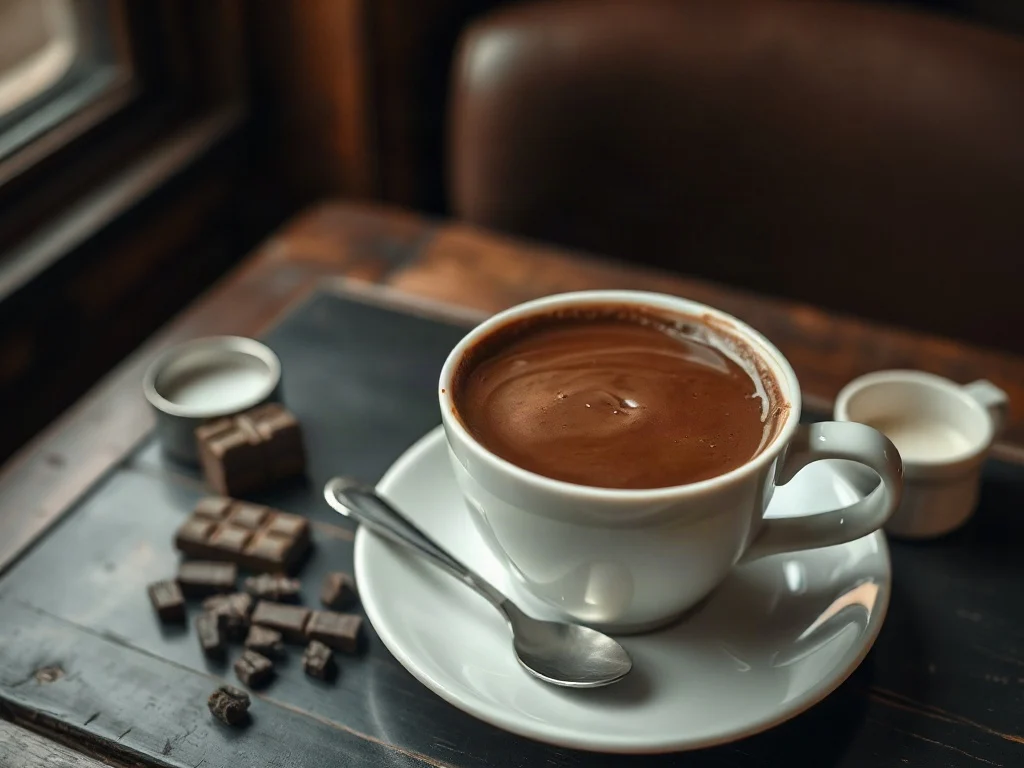
French hot chocolate is not a sweeter version of the powdered drink most people grew up with. It is closer to a pourable dessert: dark, glossy, and thick enough to coat a spoon. The method behind this chocolat chaud is simple, and the difference comes almost entirely from one decision: using real chocolate instead of cocoa powder and sugar. This analysis explains why that choice changes the drink, how to apply it at home, and where the common advice falls short.
What Makes French Hot Chocolate Different
Standard hot chocolate in much of the English-speaking world is built on cocoa powder, sugar, and milk. The powder is made from cocoa solids after most of the fat has been pressed out. That makes it easy to dissolve, but it also removes much of the body and mouthfeel.
The French approach melts dark chocolate directly into hot milk, often with a little cream. The bar brings its own cocoa butter, which stays in the drink. The result is richer, more aromatic, and noticeably less sweet.
The Science of the Texture
The thickness is not magic. Melted chocolate disperses fat and fine cocoa particles through the milk, forming a loose emulsion. The more fat and solids you add, the higher the viscosity. The technique is a cousin of ganache, which is essentially chocolate and cream in a stable emulsion, thinned here with milk until it can be sipped.
A Short History Behind the Cup
Chocolate began as a drink long before it became a bar. The Aztecs and earlier Mesoamerican cultures prepared a bitter, frothy beverage from ground cocoa beans, and the molinillo, a wooden whisking tool, still reflects that tradition. European courts later sweetened and refined the drink. Modern French chocolate drinks, served in Parisian tea rooms and cafés, inherit that older idea of chocolate as a substantial liquid, not a children’s treat.
How to Make French Hot Chocolate at Home
A reliable French hot chocolate recipe needs only a few ingredients and about ten minutes. The ratios below are a practical starting point, not a fixed rule.
- Chop the chocolate finely. Use about 100 g of dark chocolate for every 250 ml of liquid. Small pieces melt evenly and are less likely to seize.
- Heat the liquid gently. Warm whole milk, optionally with a splash of cream, until steaming but not boiling.
- Melt, then whisk. Add the chocolate off the heat and use a whisk until fully smooth. Return to low heat for a minute to thicken slightly.
- Season sparingly. A pinch of salt sharpens the flavor. A little vanilla works if the chocolate is very bitter.
Choosing the Best Chocolate for Hot Chocolate
The chocolate is the recipe. Look for a bar with a short ingredient list, where cocoa mass and cocoa butter come before sugar. Many cooks favor roughly 55 to 70 percent cocoa. Lower percentages produce a sweeter, milder cup. Higher percentages can taste harsh and chalky unless you add more cream and sugar. Avoid chocolate chips: they often contain stabilizers designed to hold their shape, which resists smooth melting.
Optional Thickener
Some traditional recipes add a small amount of corn starch for a pudding-like body. This is a legitimate technique, but it changes the character of the drink. Good chocolate and the correct ratio usually deliver enough thickness without it.
Common Mistakes and Edge Cases
- Boiling the milk. High heat can scorch the milk and make the chocolate grainy or oily.
- Using cocoa powder as a shortcut. Natural and Dutch-process cocoa taste different from each other, but neither replicates the fat content of a bar.
- Over-sweetening. The French style relies on the bitterness of the chocolate. Adding sugar by default hides what you paid for.
- Ignoring the label. A bar made with chocolate liquor and cocoa butter behaves differently from one padded with vegetable fat.
There is also a fair criticism of the method: it is calorie-dense, and a full serving is closer to a dessert than a beverage. Smaller cups are the traditional answer, and a sound one.
FAQ About French Hot Chocolate
What is the difference between French and American hot chocolate?
American versions typically start with cocoa powder and sugar and are thinner and sweeter. French hot chocolate melts bar chocolate into milk or milk and cream, giving a thicker, more bitter, more aromatic drink.
Can I make thick hot chocolate without cornstarch?
Yes. Increase the ratio of chocolate to liquid, use chocolate with a higher cocoa butter content, and replace part of the milk with cream.
Which milk works best?
Whole milk gives the best balance. Lower-fat milk produces a thinner cup, and plant-based milks vary widely in how well they emulsify with chocolate.
What the Method Reveals About Everyday Food
The most useful lesson in French hot chocolate is that quality in a simple recipe comes from the main ingredient, not from technique tricks. When one component carries the whole dish, shortcuts show immediately. The cocoa powder and sugar mix remains convenient, and it has its place, but it cannot match a drink built from actual chocolate.
The next thing to watch is how consumers respond to rising cocoa prices. If chocolate gets more expensive, will home cooks trade down to powder, or will they treat a smaller, richer cup as the better value? The French answer has always been the second one, and the economics may increasingly agree.