
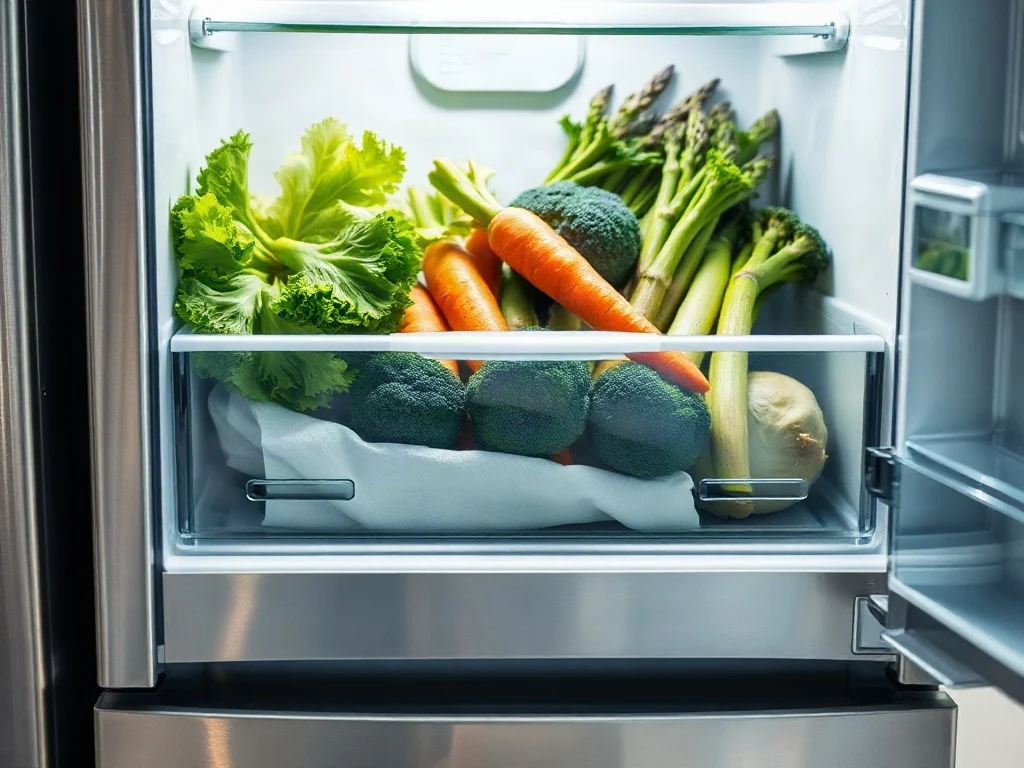
Most people who store vegetables in a crisper drawer treat it as a bin with a lid. That habit explains a lot of limp celery and slimy spinach. The drawer is a small piece of engineering with an adjustable vent, and most households never touch it. Setting it correctly and sorting produce by how it behaves takes about five minutes and noticeably extends freshness. This article explains why it works and where the common advice breaks down.
What a Crisper Drawer Actually Does
A crisper drawer is a sealed compartment inside a refrigerator that holds a different microclimate from the main shelves. Its job is to manage relative humidity. Cold air in a fridge is dry, and dry air pulls moisture out of produce through transpiration. Harvested vegetables are still alive and keep losing water, which is why they wilt.
Many drawers have a slider or vent. Closing it traps moisture and creates high humidity. Opening it lets air and gases escape, giving low humidity. Designs vary between brands, so check your manual. Some labels read “fruits” and “vegetables” instead of “high” and “low,” and some fridges have no adjustment at all.
The Two Variables That Decide Shelf Life
Moisture Loss
Leafy vegetables such as spinach have a high surface area relative to their mass, so they dehydrate fast. The same goes for carrots, celery and asparagus. These belong in the high-humidity drawer with the vent closed.
Ethylene Exposure
Ethylene is a gas that drives ripening. Apples and ripe tomatoes emit a lot of it. Ethylene-sensitive items such as broccoli, leafy greens and cucumbers yellow, soften or decay faster when they share an enclosed space with these emitters. That is why a closed drawer full of mixed produce is a poor setup.
A Practical Sorting System
- High humidity (vent closed): leafy greens, herbs, carrots, celery, asparagus, broccoli and other cruciferous vegetables.
- Low humidity (vent open): ethylene producers and items prone to rot in damp air, such as apples, pears, melons and bell peppers.
- Outside the crisper entirely: potatoes and onions, which generally do better in a cool, dark, ventilated spot, and tomatoes, which tend to lose flavor and texture when chilled before they are ripe.
Exceptions exist. Mushrooms are not a classic crisper item because trapped moisture speeds spoilage. A paper bag on a regular shelf is a common alternative.
Small Adjustments That Make a Measurable Difference
Control Surface Moisture
Humidity is not the same as dripping wet produce. Excess surface water encourages mold and bacterial breakdown. Wash produce just before use, not before storage, or dry it thoroughly. Lining the drawer with a paper towel absorbs condensation and is a cheap fix for greens that turn slimy.
Avoid Overpacking
A drawer crammed to the top restricts air movement and traps ethylene. Leave some space, and remove spoiled items promptly, since a single decaying vegetable can accelerate the loss of its neighbors.
Check the Temperature
The FDA recommends keeping refrigerators at or below 40°F (4°C). Crisper drawers can run slightly warmer or colder than the main compartment, so a cheap fridge thermometer is worth the money. Leafy greens that freeze at the back of the drawer turn translucent and mushy after thawing.
Why This Matters Beyond Your Kitchen
The USDA has estimated that roughly 30 to 40 percent of the US food supply goes to waste, and household spoilage is a meaningful share of that. Food waste costs money and wastes the water, energy and labor used to grow the food. For a single household the savings are modest but real, and they come from changing a habit rather than buying anything. The USDA’s FoodKeeper tool offers storage guidance for specific items.
Where the Advice Falls Short
The standard humidity rule is a sound heuristic, but it is not a guarantee. Drawer seals vary, fridges cycle temperature, and produce arrives at different stages of freshness. Store-bought vegetables may already have spent days in the cold chain, so no drawer setting can restore what has been lost. Treat the system as a way to slow decline, not stop it.
FAQ
Should the crisper vent be open or closed for vegetables?
Closed for most vegetables, especially leafy greens, carrots and broccoli, because it holds humidity. Open it for ethylene-producing fruit and items that rot in damp conditions.
Can fruits and vegetables share a crisper drawer?
It is better not to. Ethylene from fruit can speed up yellowing and decay in sensitive vegetables, so separate drawers are preferable.
Why do my vegetables still go bad in the crisper?
Common causes are excess surface moisture, overcrowding, inconsistent temperature and produce that was already near the end of its life at purchase.
The Real Lesson Behind a Five-Minute Fix
The crisper drawer rewards attention to biology, not gadgetry: moisture loss and ethylene explain most of what goes wrong. The unresolved question is whether appliance makers will make this easier. Clearer labeling, humidity sensors and better seals could remove the guesswork that currently falls on the user. Until then, the most useful step is to learn how your own drawer behaves. Sort your produce by type, and watch what survives a week.