
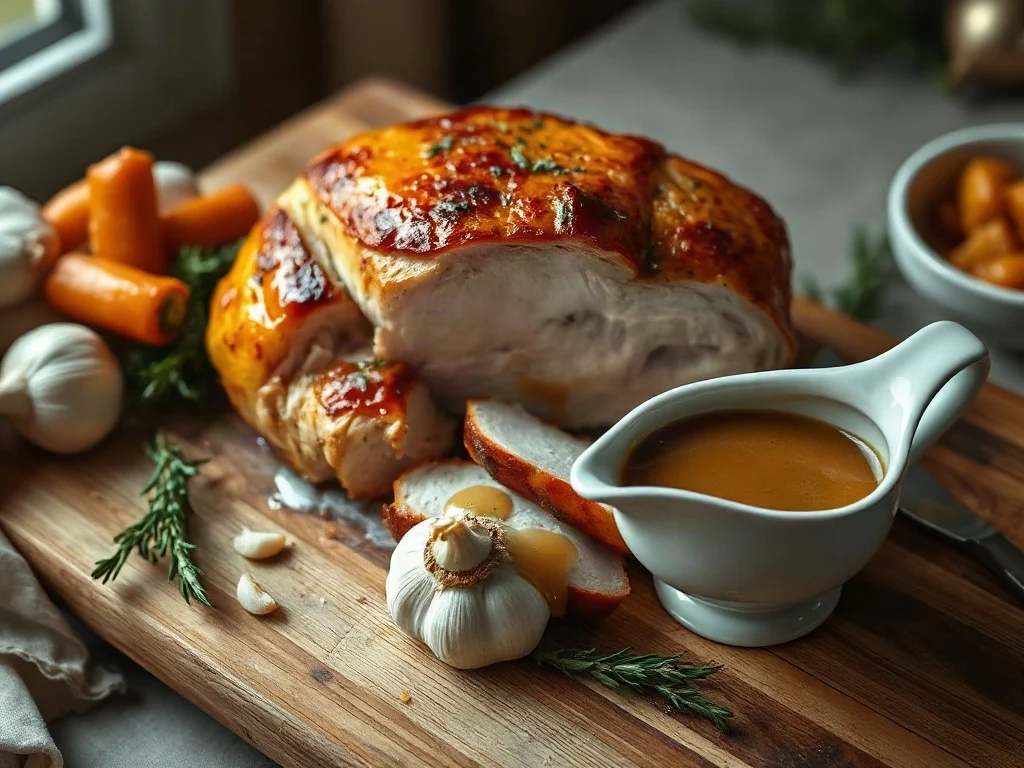
A roast turkey breast is the sensible answer to a problem most holiday cooks refuse to admit: a whole bird is too much for six to eight people. The recipe in question pairs the cut with a homemade roasted garlic gravy and promises an easy path to a centerpiece. This analysis tests that promise, separating what is technically sound from what is merely convenient, and explains how to get consistent results.
Why a Turkey Breast Suits Small Gatherings
A whole turkey is a compromise by design. The breast and the legs cook at different rates, so cooks either overcook the white meat or serve undercooked thighs. Roasting only the breast removes that conflict. You manage one muscle group, one target temperature and one timeline.
The trade-off is flavor. Without the legs, carcass and skin surface of a full bird, you lose some of the fat and collagen that keep roasts moist and give gravy body. That is exactly why the gravy matters here. It is not a garnish. It compensates for what the lean cut lacks.
The Core Technique for Roasting a Turkey Breast
Seasoning and Moisture Control
Lean poultry punishes imprecision. Two methods improve results reliably: salting ahead of time (a dry brine) and rubbing softened butter with herbs under and over the skin. A traditional wet brine also works, but it takes fridge space and can dilute the pan juices you want for gravy. For a small gathering, a dry brine is the more practical choice.
Temperature, Not Time
Recipes that quote only minutes per pound are guidelines at best. Breast size, oven calibration and starting temperature all shift the result. The USDA Food Safety and Inspection Service specifies a safe internal temperature of 165°F (74°C) for poultry. Measure it with a meat thermometer in the thickest part, away from bone. Many cooks pull the roast a few degrees early and allow carryover cooking to finish it during the rest, but that only works if you verify the final reading. Poultry carries Salmonella risk, and guessing is not a strategy.
Roasted Garlic Gravy: The Real Value of the Recipe
Roasting garlic converts its sharp sulfur compounds into a mellow, sweet paste. Stirred into gravy, it adds depth without the harshness of raw garlic. The browned surfaces of the roast and pan also depend on the Maillard reaction, which creates the savory compounds that make drippings worth saving.
How the Gravy Comes Together
- Roast a head of garlic until soft, then squeeze out the cloves.
- Collect the pan drippings and skim excess fat.
- Build a roux with fat and flour, or thicken with cornstarch if you want a gluten-free option.
- Whisk in stock gradually, add the garlic paste, and simmer until it coats a spoon.
A weakness worth noting: a breast-only roast produces fewer drippings than a whole bird. Plan to supplement with good stock, or the gravy will taste thin and one-dimensional.
Common Mistakes That Ruin a Roast Turkey Breast
- Skipping the rest. Slicing immediately pushes juices onto the board. Rest the meat for 15 to 20 minutes, loosely tented.
- Trusting pop-up timers. They are often set conservatively and are no substitute for a probe thermometer.
- Roasting straight from the fridge. A cold center prolongs cooking and dries the outer layers.
- Burning the pan. Overly dark drippings make bitter gravy. Add a little liquid to the pan if it begins to scorch.
Scaling and Planning for a Holiday Meal
For Thanksgiving or a smaller Christmas dinner, the main advantage is oven space. A breast frees capacity for side dishes and shortens the cook window. If you want an internal link, point readers toward your own guides on holiday side dishes or make-ahead gravy.
FAQ
How long does it take to cook a turkey breast?
It depends on weight, bone-in or boneless, and oven temperature. Most bone-in breasts take roughly 1.5 to 2.5 hours at moderate heat, but the thermometer reading, not the clock, determines doneness.
What internal temperature should a turkey breast reach?
The USDA recommends 165°F (74°C), measured in the thickest part of the meat.
Can I make roasted garlic gravy ahead of time?
Yes. Roast the garlic and prepare the base a day early, then reheat and whisk in fresh drippings just before serving.
How do I keep turkey breast from drying out?
Salt it ahead, use fat under the skin, avoid overcooking, and rest it properly before carving.
The Real Test of a Simple Turkey Recipe
The most important insight is that a roast turkey breast succeeds or fails on measurement and the quality of its sauce, not on the novelty of the seasoning. The gravy carries the dish, and the thermometer protects it.
Watch how home cooks continue to shrink their holiday menus. As smaller households become common, expect more recipes built around partial birds, probe thermometers and make-ahead sauces. The open question is whether the tradition of the whole carved turkey survives as a ritual or becomes a restaurant-only spectacle.
Frequently Asked Questions
Why does a turkey breast need a better gravy than a whole bird does?
A breast-only roast lacks the legs, carcass and extra skin that supply fat and collagen. That means fewer drippings and less body in the sauce. A well-built roasted garlic gravy, supplemented with good stock, makes up for the lean cut's missing richness and moisture.
Is a dry brine really better than a wet brine for a small gathering?
For most home cooks, yes. A dry brine needs only salt and some fridge time, not a large container of liquid. It also keeps the pan juices concentrated, which matters because a breast produces few drippings and a wet brine can dilute them.
Can I pull the turkey out before it hits 165°F?
Many cooks remove the roast a few degrees early because carryover heat keeps cooking it while it rests. This only works if you take a final reading in the thickest part, away from bone, and confirm it reaches 165°F (74°C) before carving.
How do I keep the gravy from tasting thin or bitter?
Thin gravy comes from too few drippings, so add quality stock to build flavor. Bitterness comes from scorched pan juices, so add a little liquid to the pan if the drippings begin to darken too much. Simmer until the gravy coats a spoon.
Can I make the gravy gluten-free?
Yes. Instead of a flour-and-fat roux, thicken the gravy with cornstarch. Whisk the stock in gradually, stir in the roasted garlic paste, and simmer until it coats a spoon. Check that your stock is also labeled gluten-free.
Why shouldn't I rely on a pop-up timer?
Pop-up timers are often set conservatively and can trigger late or inconsistently. Breast size, oven calibration and starting temperature all affect cooking. A probe thermometer gives the real internal temperature, which is the only reliable check for doneness and food safety.