
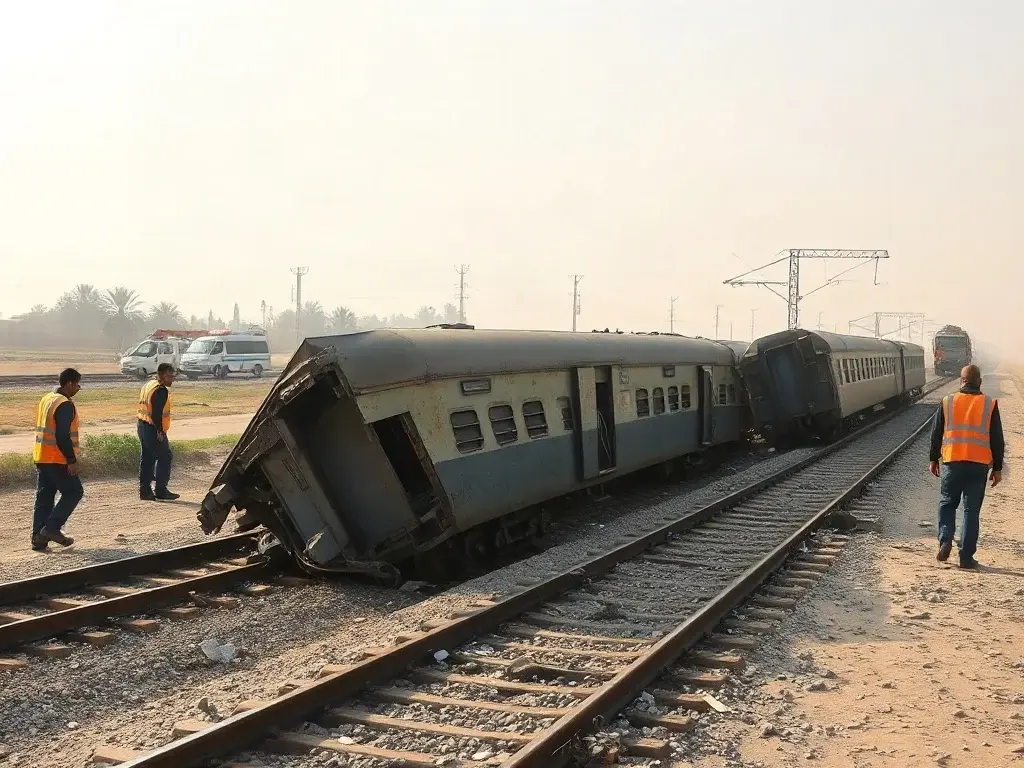
The latest Egypt train crash has left carriages off the tracks and a country asking a familiar question: is this an isolated failure or another symptom of a strained system? Footage of the derailed carriages has circulated widely. The cause is still unclear. President Abdel Fattah al-Sisi has said an investigation is underway and will “hold accountable anyone who proves their negligence.” This analysis separates what is confirmed from what is speculation, sets the crash in the history of Egyptian rail accidents, and explains what the investigation will need to show for the pledge to mean anything.
What Is Confirmed About the Crash and What Is Not
The confirmed facts are few. A train has derailed, the crash was fatal, and video shows carriages displaced from the track. The president has publicly promised an inquiry and sanctions for proven negligence. Everything beyond that is unverified, including the root cause, the final casualty figures and the condition of the track and signals at the site.
That gap matters. In the first hours after a rail accident, commentary tends to settle on a single villain: a driver, a signaller, a broken rail or a speeding service. Investigators in mature safety systems treat that instinct with suspicion, because major accidents rarely have one cause.
Why the Wording of the Presidential Statement Matters
The phrase “anyone who proves their negligence” is conditional. It commits the state to accountability only after negligence is established, and it leaves open who will decide that and how transparently. It also centres on individual fault. That is a legitimate concern, but it is a narrower frame than the systemic one favoured by modern safety culture thinking.
Egypt Railway Safety in Historical Context
Rail transport in Egypt is among the oldest in Africa and the Middle East. It carries a very large number of passengers each year over a network of roughly nine thousand kilometres or more. The operator is Egyptian National Railways. Because the system is old, heavily used and affordable, the consequences of any failure are large.
Several earlier accidents shape how the public reads this one:
- 2002: A fire on a passenger train near Al Ayyat killed at least 370 people, according to official figures. It remains one of the deadliest rail disasters in Egyptian history.
- 2012: A train hit a school bus at a level crossing in Manfalut, killing dozens of children. It became a national symbol of unguarded crossings.
- 2018: A fire after a collision at Cairo’s Ramses station killed around 25 people. The transport minister, Hisham Arafat, resigned soon afterwards.
- 2021: The Sohag train collision killed nearly 20 people and injured almost 200. Authorities pursued rail employees and officials in the aftermath.
The pattern is consistent. Each accident is followed by a pledge of accountability and a round of arrests or dismissals, then public attention fades. The structural conditions that make such crashes possible are addressed more slowly and less visibly.
How Derailments Happen: The Candidate Causes
A derailment occurs when a train’s wheels leave the rails. Asking what causes train derailments leads to four broad categories, and investigators will examine each.
Infrastructure Defects
Broken or buckled rails, worn fastenings, poor track geometry and failed points can all push a train off the track. Heat, ageing and deferred maintenance interact. A track that meets standards on paper may still fail under load if inspection intervals have slipped.
Rolling Stock Failures
Axle, bogie and wheel defects can cause derailments, especially on older fleets. Maintenance records, wheel profiles and brake-system logs are standard evidence in this strand of an inquiry.
Operational and Human Factors
Excessive speed, mishandled signals and miscommunication between drivers and control centres are classic factors. The human error label should end an investigation’s questions rather than answer them. Fatigue, training, staffing levels and a punitive workplace culture that discourages incident reporting all shape error rates.
Signalling and Protection Gaps
Systems such as railway signalling, interlocking and automatic train protection exist to stop a single human mistake from becoming a disaster. Where they are absent, outdated or only partly deployed, a driver’s error can go uncorrected. The European Train Control System is a widely used example of such protection, and it is a common benchmark in international modernization programmes.
The Swiss cheese model of accident causation describes this layering well. Disasters happen when holes in several defences line up. A credible investigation should therefore map every layer, not just the last human decision before impact.
Analysing the Accountability Pledge
Holding people to account for negligence has genuine value. It deters carelessness and gives victims’ families a sense of justice. As a stand-alone strategy, though, it has real weaknesses.
- It can target the wrong level. Front-line staff such as drivers, signallers and maintenance workers are the easiest people to blame, while budget, scheduling or procurement decisions upstream escape scrutiny.
- It can suppress information. If staff expect punishment for reporting near-misses or defects, they report less, and the system loses the early-warning data that prevents accidents.
- It can substitute for reform. A visible arrest is quicker and cheaper than replacing signalling across a national network.
Independent investigation models separate safety learning from criminal blame. Agencies such as the UK’s Rail Accident Investigation Branch and the US National Transportation Safety Board work to establish causes and make recommendations, not to apportion liability. Whether Egypt’s inquiry will publish findings in that spirit is the most telling indicator available.
What the Investigation Should Examine
For readers following the story, the key evidence is concrete. A thorough inquiry would be expected to cover:
- Data from the train’s event recorder, where fitted, showing speed, braking and driver inputs.
- Track and points inspection records for the section, including the most recent maintenance dates.
- Signalling and control-centre logs showing what instructions the crew received.
- Rolling stock maintenance history for the derailed vehicles.
- Staffing, working hours and training records for the crew and local operations staff.
- Any level crossing or external obstruction involved. Level crossings have been a recurring hazard in Egypt.
Publication matters as much as collection. A report that is never released cannot inform other operators, engineers or the public.
Practical Lessons for Operators, Planners and Passengers
For Rail Operators and Regulators
Evidence from accident research across many countries points to a few priorities: protect against single points of human failure with automatic train protection, protect and eliminate high-risk crossings, protect reporting channels so staff can flag defects without fear, and keep investigations independent of operators. Maintenance backlogs should be tracked as a safety metric, not just a financial one.
For Passengers and Observers
Treat early casualty counts and cause claims as provisional. Official figures change. Wait for statements from the prosecutors and the investigating body, and look for technical detail rather than broad assurances. Passengers can do little individually, but they should know the location of exits and avoid blocking aisles with luggage, as evacuation speed affects survival in accidents involving fire or collapse.
Common Mistakes in Public Debate
- Naming a cause before evidence exists.
- Treating one accident as proof the entire network is unsafe, or as proof it is safe.
- Equating arrests with solutions.
Modernization and the Road Ahead
Egypt is investing in large-scale rail projects. In 2021 the government signed an agreement with Siemens to build a high-speed network. New lines, however, do not automatically fix a legacy network where most passengers travel. The most important investments for everyday safety are less glamorous: signalling renewal, track replacement, crossing upgrades and workforce training on the existing lines.
Over the next few years, reasonable expectations, which are interpretation and not confirmed fact, include continued pressure for signalling upgrades, closer scrutiny of maintenance budgets after each accident and growing demand for published investigation findings. Whether those demands translate into policy will depend on whether this inquiry’s results are made public.
Frequently Asked Questions
What caused the Egypt train crash?
The cause has not been established. President al-Sisi has said an investigation is underway. Any claim about the cause before official findings is speculation.
What did President al-Sisi say about the crash?
He said an investigation is underway and that the state will hold accountable anyone who proves their negligence.
Is Egyptian rail travel safe?
Egypt has a record of serious accidents, including Al Ayyat in 2002 and Sohag in 2021, and rail safety has been a persistent public concern. Safety varies by line, equipment and maintenance. Modernization of signalling and crossings is the main way risk is reduced.
What usually causes a train to derail?
Typical causes include track defects, rolling stock failures, excessive speed or operating errors, and gaps in signalling and train protection. Major accidents usually involve several of these factors together.
The Test That Follows the Headlines
The central insight from Egypt’s history of rail accidents is that the promise of accountability has been easier to deliver than the evidence of reform. The pledge to punish proven negligence is only the first test. The second is whether investigators examine budgets, signalling, maintenance regimes and workplace culture, not only the last person to touch the controls.
Watch for three things in the coming weeks: whether a technical cause is published, whether officials above front-line level are examined, and whether the findings lead to funded changes to signalling and protection on the affected line. If the inquiry names only individuals and the report stays unpublished, the pattern of the past two decades will have repeated. If it publishes a layered account of failure with firm recommendations, this crash could become a turning point instead of another entry on a long list.
Frequently Asked Questions
Why is it too early to say what caused the Egypt train crash?
Only a few facts are confirmed: a train derailed, the crash was fatal, and video shows displaced carriages. The root cause, final casualty figures and the condition of the track and signals are unverified. Major accidents rarely have a single cause, so investigators need time to examine evidence.
What does Sisi's pledge to hold negligent people accountable actually commit the state to?
The wording is conditional. Accountability applies only to anyone who proves their negligence, so it depends on negligence being established first. It does not say who will decide that or how transparent the process will be, and it focuses on individual fault rather than systemic problems.
How does this crash compare with earlier Egyptian rail accidents?
Earlier disasters include the 2002 Al Ayyat train fire, the 2012 Manfalut school bus collision, the 2018 Ramses station fire and the 2021 Sohag collision. The article describes a repeating pattern: a pledge of accountability, arrests or dismissals, then fading attention while structural issues are fixed slowly.
What are the main causes investigators look at in a derailment?
They examine four broad categories. These are infrastructure defects such as broken rails or failed points, rolling stock failures such as axle, bogie or wheel faults, operational and human factors such as speed or signalling errors, and wider systemic conditions like maintenance and staffing.
Why is blaming 'human error' considered insufficient in a rail investigation?
The label should open questions rather than close them. Mature safety systems ask why an error happened, looking at fatigue, training, staffing and communication between drivers and control centres. Blaming one driver or signaller can hide the deeper conditions that made the accident possible.
Why do rail failures have such large consequences in Egypt?
Egypt's network of roughly nine thousand kilometres or more is old, heavily used and affordable, so it carries a very large number of passengers every year. Because so many people depend on it, any failure in track, trains or operations can cause severe harm.