
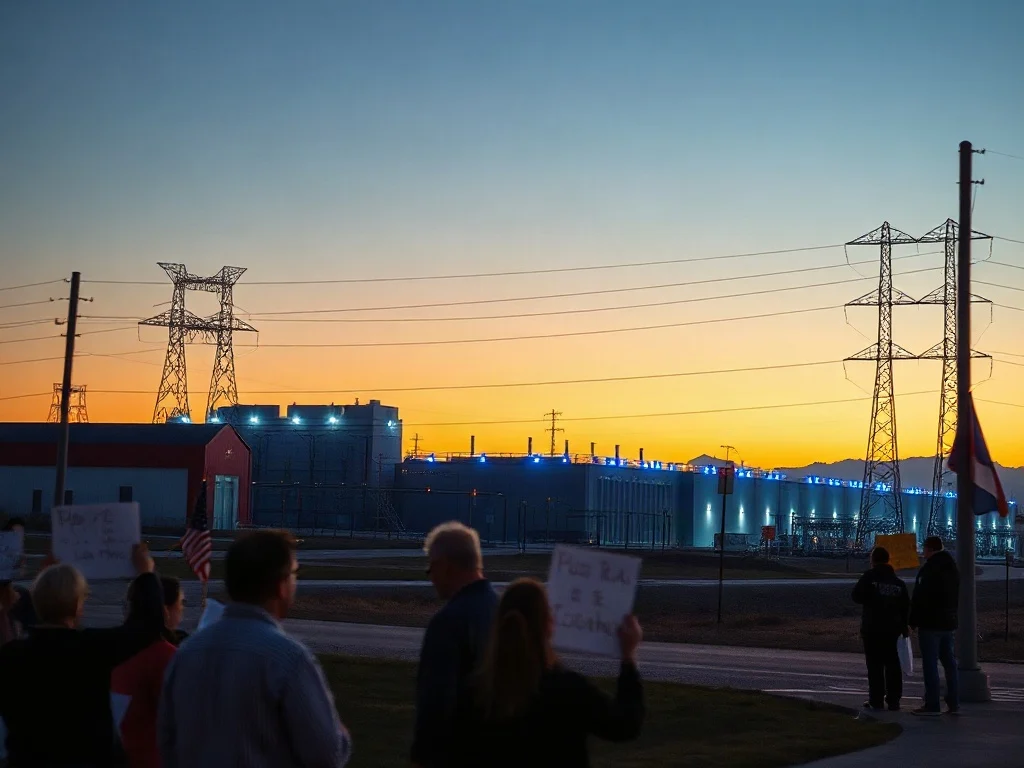
The data centre backlash has moved from county planning meetings into national political debate. BBC Verify has asked a pointed question: did a data centre revolt shape the US mid-term election results, and what could anti-AI sentiment mean for the industry? This analysis does not assume the answer is yes. It examines what evidence could support the claim, what cannot, and why the distinction matters to utilities, developers and candidates.
The question matters because the AI build-out depends on public consent as much as on chips and capital. A data centre needs land, power, water and local permits. All of these are decided by elected or politically accountable bodies.
What the Question Actually Asks
A midterm election is a poor instrument for measuring single-issue sentiment. Voters bundle inflation, immigration, healthcare, presidential approval and local concerns into one ballot decision. Claiming that data centres “swung” a result requires evidence that the issue changed votes, not merely that it was present in the campaign.
BBC Verify, the BBC’s fact-checking and verification unit, frames the issue as a test of a popular narrative. That is the right approach. Three separate claims are often blurred together:
- Data centres are unpopular in some communities.
- That unpopularity changed how some candidates campaigned.
- It changed enough votes to alter outcomes.
The first claim is well supported. The second is plausible and partly documented. The third is the hardest to prove.
Why Data Centres Became a Political Issue
Electricity Bills Are the Transmission Belt
The strongest link between server farms and voters is the household power bill. The International Energy Agency estimated that data centres used about 415 TWh of electricity in 2024, roughly 1.5% of global demand. It projects consumption could roughly double by 2030 in its Energy and AI analysis. A 2024 report from Lawrence Berkeley National Laboratory put US data centres at about 4.4% of national electricity use in 2023, and projected a range of roughly 6.7% to 12% by 2028.
The political mechanism runs through wholesale markets. In the mid-Atlantic, the grid operator PJM Interconnection saw capacity auction prices jump sharply for the 2025/26 delivery year, and then hit a price cap for 2026/27. PJM and independent market monitors have linked part of that pressure to forecast data centre load growth. Utility bills reflect many other factors, including gas prices, transmission upgrades and ageing infrastructure. Even so, voters see a bill rise and a new campus nearby, and they connect the two.
Land, Water and Who Benefits
Opposition also draws on older grievances. Residents object to noise, transmission lines, water use for cooling, and farmland conversion. Many facilities employ few permanent staff once built, and local governments often grant a tax incentive to attract them. This is a classic NIMBY dynamic, but it has an unusual feature: the cost is visible locally while the benefit, access to AI services, is diffuse and global.
Testing the Claim: Evidence and Its Limits
Treat the electoral claim as a hypothesis and ask what would support it. The main problem is the confounding of data centre exposure with other variables. Counties that host many facilities also tend to be fast-growing, affluent or exurban, and they vote differently for unrelated reasons.
| Type of evidence | What it can show | Main weakness |
|---|---|---|
| County-level vote shifts near large campuses | Whether results moved where facilities are concentrated | Cannot isolate data centres from cost of living or partisan trends |
| Exit polls and issue surveys | How often voters cite power bills or AI | Data centres are rarely a separate response option |
| Campaign messaging analysis | Whether candidates made the issue central | Shows supply of rhetoric, not voter response |
| Local referendums and zoning votes | Direct opposition to specific projects | Small samples, not generalisable nationally |
The Georgia and Virginia Signals
Two cases are often cited. In November 2025, Democrats won two seats on the Georgia Public Service Commission, the body that regulates the state’s utilities, in contests where rising power bills were central. In Virginia, home to Data Center Alley in Loudoun County, the 2025 gubernatorial election saw candidates address who should pay for grid expansion.
Both cases are consistent with a data centre effect, but neither proves one. Utility regulation races are low-information contests in which national mood often dominates. A more defensible reading is that electricity affordability was the operative issue, and data centres were one explanation voters and candidates reached for.
Where the Revolt Is Real: Local Land-Use Fights
The clearest evidence of a data centre revolt is not in national vote totals. It is in project outcomes. Industry-tracking groups such as Data Center Watch have reported that tens of billions of dollars of projects were blocked or delayed by local opposition in recent years. These figures come from an advocacy-adjacent source with its own methodology, so treat them as indicative rather than definitive.
What is verifiable is the mechanism. Zoning boards, county commissions and utility regulators hold real veto and delay power. Moratoria, rezoning denials and tougher conditions on large-load customers are all within their authority. Opposition does not need to win a national election to change industry economics. It only has to add months to a permitting timeline.
Anti-AI Sentiment Is Not the Same as Data Centre Opposition
BBC Verify’s framing links two things that overlap but differ. Anti-AI sentiment covers worries about jobs, misinformation, copyright, child safety and concentration of corporate power. Opposition to data centres is concrete and local, about power, land and water.
Surveys by the Pew Research Center have repeatedly found that Americans are more likely to say they are more concerned than excited about artificial intelligence. That is a favourable environment for political entrepreneurs. Data centres give abstract unease a physical target: a building, a substation, a rate case. This helps explain why people who use large language model tools daily may still oppose a facility down the road.
A Cross-Partisan Problem
The issue is politically awkward because it does not map neatly onto party lines. Environmental groups object to emissions and water use. Rural conservatives object to land use and transmission lines. Consumer advocates object to cost allocation. Federal and many state leaders want to attract investment. An issue that splits both coalitions is more likely to produce local surprises than a clean national swing.
What the Industry and Officials Should Do
Practical Responses for Developers
- Pay for the grid you use. Large-load tariffs and minimum-take contracts that protect residential customers directly answer the bill concern.
- Disclose water and power use early. Secrecy and non-disclosure agreements with local officials are a recurring trigger for backlash.
- Bring generation with the load. Co-located or contracted new supply weakens the claim that households subsidise AI.
- Quantify local benefits honestly. Overstated job numbers are quickly exposed and damage credibility.
Common Mistakes
The most frequent error is treating opposition as a communications problem. If a project raises regulated rates or strains water supply, better messaging will not fix it. A second error is assuming one favourable state policy is permanent. Utility commissions and legislatures change, as the Georgia result showed.
What Analysts Should Monitor
Watch Federal Energy Regulatory Commission rulings on large-load interconnection, state large-customer tariffs, capacity auction results, and local moratorium activity. These indicators tell you more about industry risk than any single election.
Future Developments
Confirmed trends: hyperscale operators continue to announce record capital spending, and demand forecasts keep rising. Reasonable predictions: cost-allocation rules will tighten, more states will require data centres to cover grid upgrade costs, and permitting will increasingly depend on bringing new power supply. These are inferences, not certainties. Forecasts of AI power demand have a history of large revisions, and efficiency gains or a slowdown in AI investment could ease the pressure. If demand falls short, ratepayers may be left with stranded infrastructure costs, and that scenario would intensify the political fight.
Frequently Asked Questions
Did data centres affect the midterm elections?
There is no definitive evidence that data centres alone changed national outcomes. There is credible evidence that electricity prices, which data centre demand may influence, were a campaign issue in some states, and that local opposition affects individual projects.
Do data centres raise electricity bills?
They can, depending on the market and the rules. Rising load can raise capacity and transmission costs, as seen in PJM’s territory. But bills also reflect fuel prices, grid ageing and weather. Tariff design determines whether other customers bear the cost.
Is anti-AI sentiment growing in the US?
Surveys show more concern than enthusiasm among many Americans, though results vary by question and by year. Concern about AI in general does not automatically translate into votes against specific projects.
The Ballot Box Is a Blunt Instrument for an Infrastructure Fight
The most important insight is that the data centre backlash is real but misread if measured only by national election results. Its power lies in local permitting, utility regulation and cost-allocation rules, where small groups of motivated residents can delay or reshape projects. A single midterm tally is the wrong yardstick.
The question to watch is whether electricity affordability stays tied to AI in the public mind. If households see bills rise while new campuses open, opposition will broaden and harden. If operators visibly fund their own power supply and grid upgrades, the issue may fade. The industry’s political risk is no longer abstract. It will be decided by who pays for the next gigawatt.
Frequently Asked Questions
Can a midterm election result really prove that data centres changed how people voted?
Not easily. Voters weigh inflation, healthcare, immigration, presidential approval and local concerns in a single ballot choice. To show data centres swung a result, you need evidence that the issue changed votes, not just that it appeared in campaigns. That is the hardest of the three claims to prove.
Why do data centres affect household electricity bills?
The link runs through wholesale power markets. In the mid-Atlantic, PJM capacity auction prices jumped and then hit a price cap, and PJM and market monitors tie part of that pressure to forecast data centre load growth. Gas prices, transmission upgrades and ageing infrastructure also push bills up.
How much electricity do data centres actually use?
The IEA estimated about 415 TWh in 2024, roughly 1.5% of global demand, and says this could roughly double by 2030. Lawrence Berkeley National Laboratory put US data centres at about 4.4% of national electricity in 2023, rising to roughly 6.7% to 12% by 2028.
Why is local opposition to data centres different from ordinary NIMBY protests?
The usual objections apply: noise, transmission lines, water use for cooling and farmland loss. The unusual part is the imbalance. Residents bear the visible costs, while the benefit, access to AI services, is diffuse and global. Facilities also employ few permanent staff, and tax incentives reduce local financial gains.
Why is county-level voting data a weak test of the data centre backlash?
Counties with many data centres tend to be fast-growing, affluent or exurban, and they vote differently for unrelated reasons. County-level shifts therefore cannot separate data centres from cost of living or broader partisan trends, so they show correlation at best, not a causal effect.
Why does public opinion on data centres matter to the AI industry?
The AI build-out needs public consent as well as chips and capital. Data centres require land, power, water and local permits, and elected or politically accountable bodies decide all of these. Even if voters did not swing an election, local hostility can slow projects, raise costs and shape utility planning.