
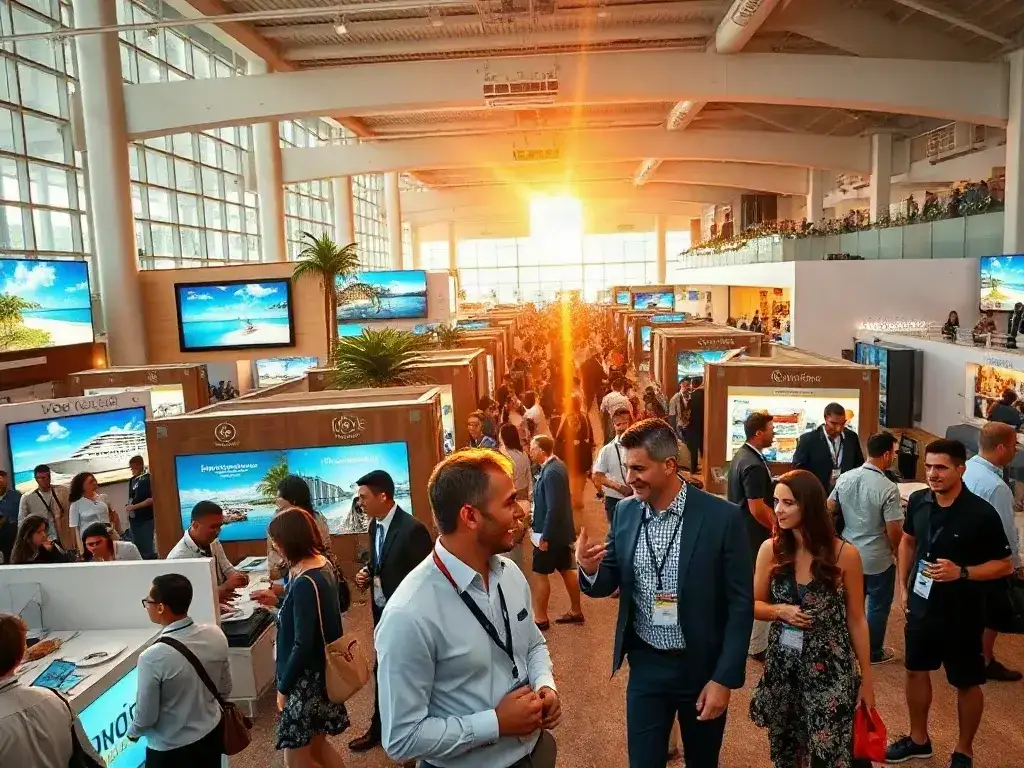
WTE Miami 2026 has closed its doors, and the headline number tells a story of its own: more than 5,000 travel trade professionals from 54 countries and territories filled the Miami Beach Convention Center on October 27–28 for two days of business development, supplier connections and industry networking. In a sector where deals still hinge on trust, eye contact and a well-timed handshake, that kind of turnout matters. This article looks at what the final event recap tells us, why a travel trade show in Miami carries such strategic weight, and how agents, suppliers and destinations can turn a crowded two-day schedule into measurable results.
WTE Miami 2026 brought together more than 5,000 travel trade professionals from 54 countries and territories for two days of business development, supplier connections and industry networking at the Miami Beach Convention Center on October 27–28.
The recap is concise, so this analysis separates what is confirmed from what is interpretation. The confirmed facts are the attendance figure, the geographic reach, the dates, the venue and the three stated pillars of the event. Everything else below is informed context and practical analysis, not reported results.
What Is WTE Miami? Understanding the Event
If you are asking what is WTE Miami, the shortest answer is a business-to-business gathering for the travel trade. It is not a consumer fair where holidaymakers browse brochures. It is a working marketplace where people who sell, package and distribute travel meet the suppliers and destinations that provide it. A trade fair of this kind compresses months of emails, calls and speculative introductions into a few intensive days.
The Confirmed Facts at a Glance
| Detail | Reported Information |
|---|---|
| Event | WTE Miami 2026 |
| Dates | October 27–28 |
| Venue | Miami Beach Convention Center |
| Attendance | More than 5,000 travel trade professionals |
| Reach | 54 countries and territories |
| Stated focus | Business development, supplier connections, industry networking |
Who the Audience Is
The phrase “travel trade professionals” typically covers a broad ecosystem: independent and corporate travel agencies, tour operators, destination representatives, hotels, cruise lines, airlines and technology vendors. The recap does not publish a breakdown by segment, so any claim about the exact mix would be speculation. What the figures do confirm is breadth: 54 countries and territories in one hall is a meaningful geographic spread for a two-day show.
Why Miami Beach Is a Natural Stage for a Travel Trade Show
Location is never incidental in this industry. Miami Beach sits at one of the great crossroads of the Western Hemisphere. The Miami Beach Convention Center is a large exhibition venue within reach of Miami International Airport, a major gateway for international and Latin American traffic, and of PortMiami, one of the world’s best-known cruise hubs.
That combination of air and sea connectivity gives the city a natural claim as a meeting point for buyers and sellers from Latin America, the Caribbean, North America and beyond. Florida’s tourism economy is also deeply embedded in the local business culture, which means exhibitors are rarely explaining the value of travel to a skeptical audience. They are discussing how to grow it.
The Experience Factor
There is an intangible element as well. A destination expo held in a destination that sells itself on sunshine, architecture and nightlife creates a different mood than a show held in an industrial exhibition park. Relaxed delegates tend to network more openly, and that is precisely the kind of environment in which supplier relationships begin. This is an observation about event psychology rather than a measured finding from WTE Miami, but experienced organizers consistently build their programs around it.
Reading the Numbers: What 5,000 Attendees from 54 Countries Really Signals
Attendance figures are easy to quote and harder to interpret. Does 5,000 mean unique badge holders? Does it include exhibitor staff? The recap does not say, and responsible analysis should acknowledge that gap. Still, several reasonable inferences can be drawn.
- International appeal: Representation from 54 countries and territories suggests that the event functions as more than a regional meeting.
- Trade-focused quality: The description specifically refers to travel trade professionals, which implies a buyer-and-seller audience rather than casual visitors.
- Compact format: Two days is short. Short formats tend to reward well-prepared attendees and punish those who arrive without appointments.
Compared with the biggest fixtures on the global calendar, such as ITB Berlin or World Travel Market in London, a two-day Miami event is a more focused proposition. Focus can be an advantage. A smaller floor plan means that a supplier can realistically meet a large share of the people they came to see.
The Three Engines of Value: Business Development, Supplier Connections and Networking
The recap names three purposes. Each deserves separate treatment, because they reward different behaviors.
Business Development
Business development at a trade event is about creating new revenue pathways, not collecting business cards. For a destination, that might mean securing a commitment from a tour operator to feature a new itinerary. For an agency, it might mean negotiating better commission structures or exclusive group rates. The best outcomes are specific and documented before the attendees leave the hall.
Supplier Connections
Strong supplier connections in the travel industry shorten the distance between a client’s request and a confirmed booking. When an agent has met a hotel’s sales manager in person, a problem during peak season becomes a phone call to a known contact rather than a ticket in an anonymous queue. That resilience is difficult to quantify, yet many experienced agents rank it among the most valuable outputs of any show.
Industry Networking
Formal business networking is often undervalued because its payoff is delayed. A conversation in a corridor might become a referral partnership six months later. Networking also supports knowledge exchange, with colleagues comparing notes on shifting traveler preferences, distribution changes and operational headaches that rarely appear in press releases.
How to Get Real Return from a Travel Trade Expo
Attending is easy. Converting attendance into revenue requires discipline. The following approach reflects widely accepted trade-show practice rather than any specific WTE Miami program.
Before the Event
- Define three measurable goals. Examples include securing five qualified supplier meetings or signing two preferred-partner agreements.
- Book appointments early. In a two-day format, unscheduled time disappears quickly.
- Research counterparts. Know which destinations, products and price points the other party actually sells.
During the Event
- Prioritize depth over volume. Ten meaningful conversations outperform fifty superficial ones.
- Take structured notes immediately. Record promises, deadlines and next steps while they are fresh.
- Attend educational sessions selectively. Choose those that address a current business problem.
After the Event
Follow up within days, not weeks. Effective lead generation collapses when contacts go cold. Measure return on investment against your original goals, counting not only booked revenue but also new partnerships, pricing intelligence and content assets such as destination imagery or product training.
Common Mistakes to Avoid
- Arriving without a target list and drifting from booth to booth.
- Collecting brochures instead of commitments.
- Failing to brief colleagues who were not present, which wastes institutional learning.
- Treating evening receptions as purely social rather than as extensions of the working day.
The Pressures Shaping the Travel Trade
Events like this do not happen in a vacuum. Several forces are reshaping how professionals buy and sell travel, and they likely colored many of the conversations in Miami.
Technology and Disintermediation
The rise of the online travel agency model and direct supplier booking has pressured traditional intermediaries for years. Many agents have responded by emphasizing advice, curation and problem-solving, which are areas where human expertise still carries a premium. Artificial intelligence adds a new layer: it can speed up itinerary drafting and customer service, but it also raises questions about accuracy, accountability and differentiation. How much it will reshape agency economics remains an open debate among industry observers.
Sustainability Expectations
Pressure around sustainable tourism continues to grow, with suppliers increasingly asked to substantiate environmental and community claims. Agents who can speak credibly about these issues may find it easier to win certain corporate and high-end leisure clients.
Climate and Seasonal Risk
Florida and the Caribbean operate under the shadow of the Atlantic hurricane season. Supplier relationships, flexible cancellation terms and contingency planning are therefore not abstractions in this region. They are core commercial protections, which is another reason face-to-face trust matters.
Frequently Asked Questions About WTE Miami 2026
When and where did WTE Miami 2026 take place?
The event ran on October 27–28 at the Miami Beach Convention Center in Miami Beach, Florida.
How many people attended WTE Miami 2026?
According to the final event recap, more than 5,000 travel trade professionals attended, representing 54 countries and territories.
Who should attend a travel trade show like this?
Travel agents, tour operators, destination marketers, hospitality suppliers and technology providers who want to build partnerships, negotiate products or learn about market trends are the natural audience.
What is the main benefit of attending in person?
In-person events allow for rapid relationship-building, direct negotiation and informal conversations that are harder to replicate by video call or email.
Is a two-day event enough to generate business?
It can be, provided attendees arrive with clear objectives, scheduled meetings and a plan for follow-up. The format rewards preparation.
The Real Test Begins After the Badge Scan
The most important insight from the WTE Miami 2026 recap is not the number 5,000. It is what that number represents: a large group of professionals who chose to invest time and travel budgets to meet face to face in an era when almost every transaction could be handled online. That choice is a vote of confidence in relationships as the true currency of the travel trade.
What happens next will determine whether the event’s promise translates into results. Watch for three signals over the coming months: whether exhibitors report concrete new partnerships, whether the organizers publish a more detailed audience breakdown, and whether attendance from outside the Americas continues to grow. A rise in the number of countries represented would suggest that Miami is strengthening its role as a global meeting point, not just a regional one.
A reasoned prediction, clearly labeled as such, is that events combining compact scheduling with data-supported matchmaking will gain ground, as buyers and suppliers grow less tolerant of wasted time. The unanswered question is whether the human element that makes a destination expo so effective can survive increasing automation, or whether technology will simply make those two days in Miami more productive than ever.
Frequently Asked Questions
Is WTE Miami open to the general public or only to industry professionals?
WTE Miami is a business-to-business event, not a consumer fair. It is designed for people who sell, package and distribute travel, such as agents, tour operators and destination representatives, who meet suppliers and destinations to do business rather than browse holiday brochures.
Does the 5,000 attendance figure include exhibitors?
The recap does not say. It reports more than 5,000 travel trade professionals but does not clarify whether that means unique badge holders or whether exhibitor staff are counted. Anyone using the figure to judge audience quality should treat it cautiously and ask the organizers for a breakdown.
What types of companies attend a travel trade show like this?
The term usually covers independent and corporate travel agencies, tour operators, destination representatives, hotels, cruise lines, airlines and technology vendors. However, the recap publishes no breakdown by segment, so the exact mix of attendees at WTE Miami 2026 is not confirmed and any claim about it would be speculation.
Why does Miami work well as a location for a travel trade event?
Miami combines air and sea connectivity. Miami International Airport is a major gateway for international and Latin American traffic, and PortMiami is a leading cruise hub. This makes it a convenient meeting point for buyers and sellers from Latin America, the Caribbean and North America, within reach of the Miami Beach Convention Center.
What does having 54 countries and territories represented actually tell us?
It confirms geographic breadth, which is meaningful for a two-day show. It suggests exhibitors can meet contacts from many source markets in one place. It does not show how many deals were closed or how attendees were split by country, since the recap reports no results.
How can attendees get measurable results from a two-day schedule?
The recap reports no outcomes, so this is practical advice rather than a confirmed result. Agents, suppliers and destinations should set clear goals beforehand, book meetings in advance, and follow up quickly afterward, because the event compresses months of emails and calls into a few intensive days.