
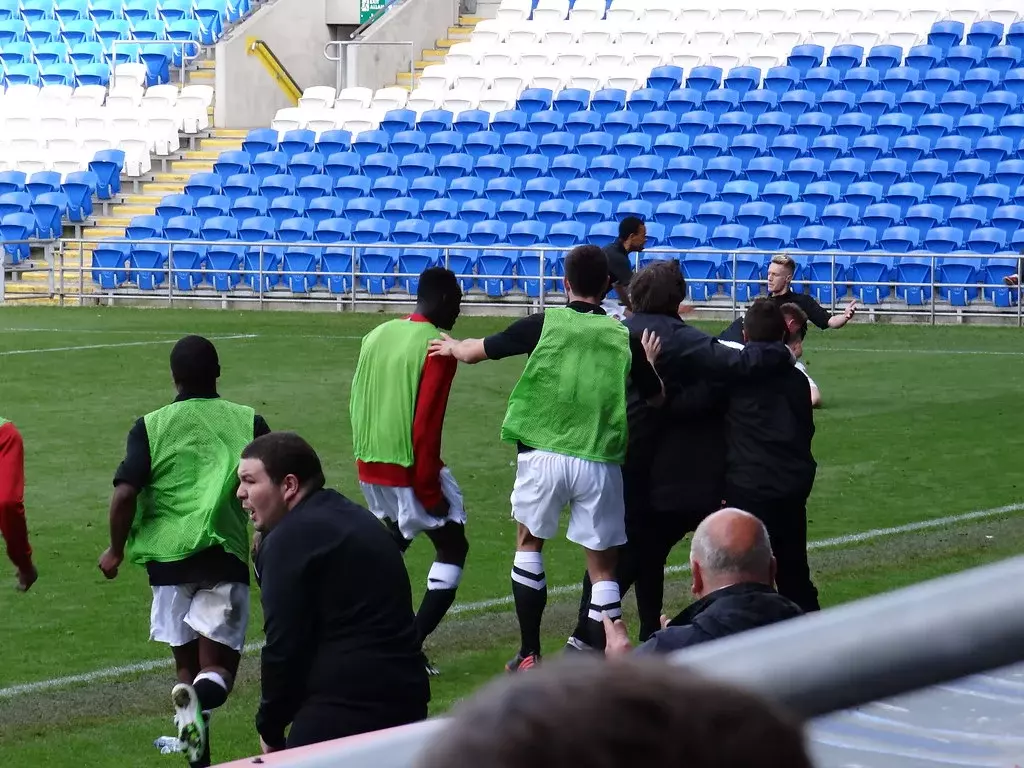
On a night when Tottenham Hotspur were reduced to 10 men and Old Trafford felt ready to close around Manchester United, Dominic Solanke’s added-time finish turned frustration into relief. The Tottenham vs Manchester United draw was not just a late equaliser; it was a reminder that in the Premier League, control and outcome are not the same thing.
In association football, a sending-off often rewrites the match script. Shape changes, passing options narrow, and the team with more possession can become the more vulnerable side if its rest defence is poor. This game offered a live demonstration of that principle, with the referee’s decisions guided by The IFAB Laws of the Game and momentum repeatedly interrupted by VAR checks and stoppages.
What changed once Tottenham went down to 10 men?
The simplest answer is territory, but the more useful answer is geometry. Once Tottenham Hotspur were a man short, every passing lane became harder to open and every forward run had to be judged twice. A team with 10 players cannot defend space in the same way a full team can, so the shape usually becomes narrower, deeper, and more cautious. That is often the right response, but it also gives the opponent time to build pressure and recycle attacks.
Manchester United, playing at Old Trafford, tried to turn that advantage into sustained control. Yet sustained control is not automatically decisive. A side can keep the ball, push the opponent back, and still fail to create enough clear chances if the final pass is rushed or the box is overcrowded. That is where many modern matches are decided: not by who sees more of the ball, but by who understands how to turn pressure into high-quality opportunities.
The broader lesson is that a red card changes the whole attacking ecology of a game. High pressing becomes riskier because one mistimed jump can create a huge lane behind the first line. At the same time, a compact block becomes more valuable because it forces the attacking side to keep circulating the ball rather than slipping a runner into the box. In that kind of match, patience can help United, but impatience can also help the undermanned team if the home side overcommits.
Why the late equaliser mattered tactically
The equaliser in stoppage time mattered because it punished the narrow gap between pressure and control. A team like United can look dominant without being secure, while a 10-man side can look broken without ever being out of the game. The final minutes are especially volatile because fatigue reduces reaction speed, structure loosens, and the first mistake often becomes the decisive one.
That is why the final sequence felt so significant. Tottenham did not need to play beautifully to survive; they needed one clean attack, one calm touch, and one forward who could finish under pressure. In a match shaped by a dismissal and late tension, the decisive moment was less about volume than about timing.
| Tactical factor | Tottenham’s response | Manchester United’s response | Why it mattered |
|---|---|---|---|
| Numerical disadvantage | Compressed the shape and protected central areas | Pushed territory and tried to overload the final third | Created a pressure-vs-space battle |
| Ball progression | Looked for direct exits and safer passes | Controlled the ball but needed faster penetration | Showed the difference between possession and danger |
| Late-game fatigue | Defended deeper but stayed alive for one transition | Pushed for control as the game opened up | Opened the door to a stoppage-time equaliser |
The hardest point to earn is often the one rescued after the match has been bent out of shape by a dismissal.
Dominic Solanke’s finish was more than a poacher’s moment
Dominic Solanke‘s goal was important because it showed why elite forwards are judged on more than raw finishing. In a congested game, the striker has to read the movement before the pass is made, choose the right run, and stay composed once the chance appears. That is a different skill from simply arriving in the box and hoping for the best.
Solanke’s late contribution also highlights how valuable forward play becomes when a team has spent long stretches without the ball. If your side is under pressure, the striker has to hold up play, create a foul, or stretch the back line enough to turn defence into attack. When the equalising moment finally arrives, it usually rewards the player who has stayed switched on mentally even while the match seemed to be drifting away.
For Tottenham, that matters because a late equaliser is not just a statistic. It is proof that the team can still connect phases under duress. If Postecoglou’s side want to remain competitive through a long campaign, they will need more than attractive possession spells. They will need forwards who can turn chaotic moments into points.
What this says about Ange Postecoglou and Erik ten Hag
The managerial angle is impossible to ignore. Ange Postecoglou has built a reputation for proactive football, but proactive football becomes harder to sustain when a team is reduced to 10 men. The coach then has to decide how much of the original identity he can preserve without exposing the team to a second blow. That is a delicate balance between principle and pragmatism.
For Erik ten Hag, the frustration is different. United had the situation that managers want at home: territorial control, the crowd behind them, and a man advantage to exploit. But matches like this expose a familiar problem in modern possession football: the ball can move well without the final pass arriving with enough speed or conviction. If the crossing is predictable, the cut-backs are blocked, or the box is too crowded, the advantage begins to flatten out.
Neither manager can be judged on this result alone, but both can be judged on how their teams responded to the game state. Spurs had to show resilience; United had to show ruthlessness. Only one side fully achieved its immediate objective.
How the match exposed the fine margins of elite football
One of the most useful things about a game like this is how clearly it reveals the margins around set pieces, second balls, and transition timing. When a match becomes tense, teams often stop creating from open play and start creating from dead-ball moments, defensive mistakes, and half-cleared crosses. That is why discipline matters so much.
It also explains why late-game decisions carry so much weight. A defensive line stepping a yard too high can open the lane for a runner; a midfielder losing his reference point can let the ball slip between the lines; a forward losing concentration for a second can turn a point into none. In a match where offside timing and box movement are already under pressure, one small lapse can undo 80 minutes of work.
Practical lessons for coaches, analysts, and serious supporters
- Discipline changes everything. A dismissal is not just a personnel loss; it changes passing lanes, pressing triggers, and recovery runs.
- Possession is not the same as threat. United’s control only mattered if it turned into clear chances, not just more touches in the attacking third.
- Late goals usually reward structure. Solanke’s finish was possible because Spurs still had a workable attacking pattern when many teams would have simply collapsed into pure defending.
- Game management is a skill. The best teams know when to slow the rhythm, when to attack space, and when to protect the point.
- Bench decisions matter. Substitutions in matches like this often decide whether a team survives or runs out of energy.
FAQ: Tottenham vs Manchester United draw
How did Tottenham manage to get a point with 10 men?
They adjusted into a compact defensive shape, reduced the space United could attack, and stayed alert for one chance to break. In matches where a team is short-handed, one clean transition can matter more than long periods of possession.
Why are stoppage-time goals so important in the Premier League?
Because fatigue, pressure, and uncertainty all peak at the end of matches. A stoppage-time goal can flip the emotional and tactical balance instantly, which is why it often has a bigger effect than an early chance that is missed.
What does this result mean for the two managers?
It reinforces the same question for both clubs: can they turn structure into decisive moments? Tottenham showed resilience, while United showed pressure without a kill shot. Over a season, that difference can define where each side finishes.
What to watch next as the season develops
Results like this rarely stay isolated. For Tottenham, the key question is whether this kind of resistance becomes a repeatable habit or just a dramatic one-off. For Manchester United, the issue is whether territorial control can become ruthless enough to close out matches against depleted opponents. That is the next layer of the story, and it is more important than the single point itself.
Readers who want to follow the official record should check the Premier League site alongside the club channels of Manchester United and Tottenham Hotspur for lineups, match reports, and disciplinary updates. The deeper question, though, is not who was happiest at full time. It is whether the match exposed a durable pattern: one side can still survive under pressure, while the other still has to prove it can turn pressure into victory.
Frequently Asked Questions
Why did Tottenham look more dangerous with 10 men at times instead of simply collapsing?
A red card usually forces a team into a deeper, narrower shape, but that can also make it harder to break down. Tottenham could protect central spaces and wait for moments to counter or exploit a mistake. When the opponent has lots of the ball but attacks too quickly, the reduced team can survive longer than expected and even create one decisive opening.
Does having more possession after a red card usually mean a team is in control?
Not necessarily. Possession after a sending-off often reflects territory, not danger. A team can recycle the ball, push the opponent back, and still struggle to create clear chances if the final pass is blocked or the box is crowded. In this match, Manchester United’s control did not automatically translate into the kind of chances that would finish the game.
Why are stoppage-time equalizers more likely in matches with a sending-off?
Late in the game, fatigue makes defensive reactions slower and team structures less compact. A side protecting a lead after a dismissal often sits even deeper, which can invite repeated pressure. At the same time, the attacking team may overcommit. That combination creates space for one well-timed move to decide the result.
What tactical mistake does a team make most often after the opponent goes down to 10 men?
The most common mistake is overcommitting too early. Once an opponent is reduced to 10, the attacking side may push too many players forward and lose rest defence, leaving space behind the press. That can turn a game of patient control into one risky transition, which is exactly the kind of opening a short-handed team needs.
Why was Dominic Solanke’s finish considered more than just a simple striker’s goal?
Because in a tense, crowded match, the hardest part is often reading the move before the ball arrives. Solanke had to time his run, stay composed under pressure, and finish in a moment when fatigue and chaos could have easily spoiled the chance. That makes the goal a product of awareness and timing, not just instinct in front of goal.