
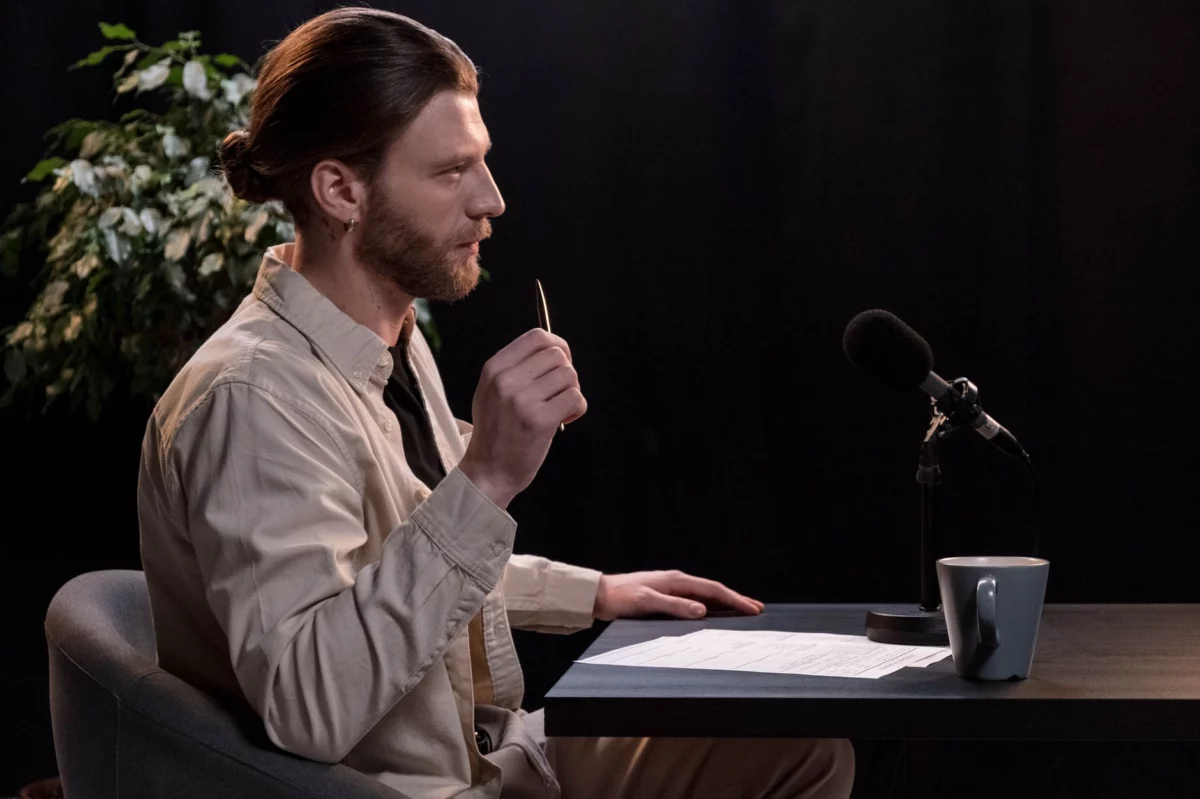
The Guido Fawkes Show sits at an important junction in modern political communication. In Britain, where Westminster drama now travels instantly from studio to smartphone, a live show can feel less like a broadcast and more like a public square. Viewers do not merely consume the conversation; they orbit it, react to it, clip it, share it, and sometimes help steer it. That is why a line-up featuring polling expert Joe Twyman, Conservative mayor Paul Bristow, and TaxPayers’ Alliance campaigner William Yarwood is more than a casual chat. It is a snapshot of how political argument, data, and activism now collide in real time.
The attraction of the format is not hard to see. Live political debate has the pulse of live streaming, the portability of YouTube, and the intimacy of a podcast. It also borrows the authority of broadcast journalism while leaning into the velocity of infotainment. That mix matters because political audiences rarely want only facts or only theatre; they want both, braided together in a way that feels immediate. In terms of agenda-setting theory, a show like this does more than comment on the news. It helps decide what feels urgent enough to debate at all.
Why live political commentary works so well right now
Politics has become a serial performance, but live digital media makes the script look improvised. That is part of the appeal. The audience can hear a point being built, see a challenge land, and watch the conversation change direction without the smoothing effect of an edit. A political stream can feel raw, even when the arguments are carefully prepared behind the scenes. It also fits the tone of Britain’s online political culture, where satire, outrage, and analysis often share the same stage. For that reason, the Guido Fawkes ecosystem sits close to political satire, even when the topic is serious.
There is also a structural reason this format has grown. The classic gatekeepers of the Westminster system still matter, but they no longer control the first draft of the public reaction. Social platforms reward short, emotionally legible segments. A live show can generate those segments in real time and then let them circulate long after the stream ends. The same discussion may appear as a long-form video, a clipped highlight, a reposted quote, and a podcast excerpt. That is why the modern political show is not one product but several, all born from the same conversation.
In live political media, the real story is often not what was said, but how quickly a single exchange became a public argument.
Reading the guest list as an editorial strategy
The choice of guests in a political live show is never neutral. It tells viewers what kind of conversation the host wants to create. Joe Twyman brings the language of measurement; Paul Bristow brings the language of office; William Yarwood brings the language of campaigning. Put together, those perspectives let the show move from numbers to power to pressure. That is a smarter editorial shape than a simple panel of commentators repeating the same instinctive takes.
| Guest | Primary lens | What that adds to the discussion |
|---|---|---|
| Joe Twyman | opinion poll and survey interpretation | Turns political noise into measurable public opinion |
| Paul Bristow | Elected office and local executive politics | Connects national debate to the realities of governing |
| William Yarwood | pressure group advocacy and tax politics | Shows how campaign groups try to shape the agenda |
Joe Twyman’s presence is especially important because polling is often misunderstood as prediction rather than diagnosis. A pollster is not merely saying who will win; a good pollster is showing how the public is thinking at a given moment, and how fragile that thinking can be. That is why a live show benefits from someone who can explain sampling, trend lines, and uncertainty without pretending that a single number can capture the entire electorate. The value of the discussion lies in resisting easy certainty. For viewers who want to see the organisational side of his work, Deltapoll offers the institutional backdrop to that polling perspective.
Paul Bristow adds a different energy. As a Conservative mayor in a politically mixed part of England, he brings executive reality into a space that can otherwise become abstract. The language of the Conservative Party sounds very different when it is filtered through a mayoralty, because mayoral politics sits at the meeting point of local delivery and national branding. The context of devolution in the United Kingdom matters here. Mayoral office has become one of the few places where voters can watch policy promises collide with administrative limits. In the case of the Cambridgeshire and Peterborough Combined Authority, that tension is especially visible because expectations for growth, transport, housing, and economic leadership are so high.
William Yarwood represents a third force: organised advocacy. A group like the TaxPayers’ Alliance is built to compress a complex fiscal debate into a vivid moral argument. That is not automatically a flaw. In politics, pressure groups exist precisely because they can focus public attention on one issue with greater intensity than a broad party platform often can. But the simplification cuts both ways. The tighter the message, the easier it becomes to mobilise supporters and alienate sceptics. On a live show, that tension is valuable because viewers can see the claim being tested in the moment rather than polished into a press release.
How audiences actually use political livestreams
One of the biggest misconceptions about live political content is that everyone watches for the same reason. They do not. Some viewers arrive to confirm what they already believe. Others want to hear an opposing voice without risking a full encounter with hostile commentary. A third group wants fragments: one memorable line, one chart, one clipped exchange they can share on social media. Those different audiences create different kinds of pressure on hosts and guests. The result is a hybrid medium that works as analysis, performance, and social object all at once.
This is where parasocial interaction starts to matter. Regular viewers can feel that they know the host’s instincts, not just the host’s opinions. That familiarity can be useful because it encourages return visits and sustained attention. But it can also deepen the risk of tribal loyalty. In a media environment shaped by perceived media bias, audiences often filter every statement through trust in the messenger rather than quality of the evidence. A live show that is honest about its own viewpoint can still be useful; the danger comes when style becomes a substitute for scrutiny.
For politically engaged viewers, the best way to use a show like this is to treat it as a starting point, not an endpoint. If a guest cites a polling trend, compare it with the original survey and the broader sample of recent polls. If a mayor describes policy constraints, check the official record and the council or combined authority context. If a campaigner makes a fiscal claim, look for the underlying budget line or government document. The show can illuminate the argument, but it should not become the argument’s only source.
Strengths, risks, and the trade-offs of the format
What live political shows do brilliantly
- They capture the temperature of politics before it cools into retrospective commentary.
- They allow polling, office, and advocacy to be compared in the same room.
- They reward clarity, so strong arguments are easier to distinguish from vague slogans.
- They create shareable moments that can reach audiences who would never watch a full broadcast bulletin.
Where the format can go wrong
- It can overvalue confidence and underweight evidence.
- It can turn disagreement into a performance for the already convinced.
- It can flatten complex policy into a few highly repeatable lines.
- It can encourage viewers to treat live reaction as if it were verification.
None of those risks is unique to the Guido Fawkes style of show; they are endemic to modern political media. The difference is that live streams make those risks visible rather than hidden. That transparency is useful if the audience knows how to read it. For broadcasters and campaigners, the guardrails still matter. Ofcom continues to shape expectations around standards, while the Electoral Commission remains relevant whenever political messaging crosses into campaigning territory. Serious political media cannot simply chase attention; it has to defend legitimacy.
What journalists, campaigners, and communicators can learn from the show format
The practical lesson from a show like this is that political communication now lives or dies by structure. A lively guest list is not enough. Good live political media is built on preparation, sharp moderation, and a willingness to distinguish evidence from emotion. Journalists can learn to ask more specific questions. Campaigners can learn that a repeatable message matters more than a dense manifesto bullet point. Political communicators can learn that the best live segments are not the loudest ones, but the ones that leave the audience with a clearer map of the issue.
- Lead with a single question. A live show should have a clear argumentative spine, not a scatter of loosely related talking points.
- Bring primary material. Polling tables, council documents, and budget lines are more persuasive than generic claims.
- Design for follow-up. Strong live shows generate clips, but the clip should still point back to the full context.
- Separate analysis from advocacy. If a guest is campaigning, the audience should hear that clearly.
- Test the edges of agreement. The most revealing moments often come when all three guests disagree for different reasons.
That last point is especially important. When a pollster, a mayor, and a campaigner all talk about the same issue, they are not merely disagreeing on policy; they are revealing different theories of politics itself. One believes politics is about measurement, another believes it is about delivery, and a third believes it is about pressure. Live television or streaming reveals that clash with unusual force.
Frequently asked questions about the Guido Fawkes Show
What is the Guido Fawkes Show?
It is a live political commentary format associated with the Guido Fawkes media ecosystem, built around fast-moving debate, topical guests, and an audience that expects opinion, analysis, and reaction in the same package.
Why do live political shows attract so much attention?
Because they compress the drama of politics into a visible, immediate exchange. Viewers can see how arguments are formed, challenged, and reframed without the delay that usually comes with edited television or print analysis.
How should viewers judge a politically charged livestream?
By separating style from substance. Check the original documents, compare claims with reliable data, and remember that strong presentation is not the same as strong evidence.
Is a live format better than a traditional interview?
Not always. It is better at revealing momentum, personality, and conflict. A traditional interview is often better for precision, verification, and depth. The strongest media strategy usually uses both.
The next test for live political media
The most important insight from the rise of the Guido Fawkes Show is not simply that people like watching politics live. It is that political authority is increasingly judged in public, in motion, and under pressure. The old model asked audiences to trust the finished product. The new model invites them to watch the product being assembled, debated, and contested in real time. That can deepen trust when it feels honest, or deepen suspicion when it feels performative.
What should readers watch next? First, whether live shows become better at verification, especially as clips are pulled into ever shorter formats across YouTube, podcasts, and social media. Second, whether more elected figures choose to bypass traditional interviewers and speak directly through commentary shows. Third, whether pressure groups and polling firms use these platforms to explain complexity rather than flatten it. The future likely belongs to formats that combine speed with rigor, not speed alone.
The unresolved question is the one that matters most: will live political commentary broaden participation in British debate, or will it simply make tribal politics more efficient? The answer may depend less on the hosts than on the habits the audience is willing to build. A live show can open the door. It cannot force anyone to think beyond the clip.
Frequently Asked Questions
Why do live political shows often feel more influential than traditional TV panels?
Because they do more than present opinions once and move on. A live format lets viewers watch arguments unfold in real time, then share short clips, quotes, and reactions across social platforms. That turns one conversation into many. The result is a political event that can shape what people discuss long after the broadcast ends.
Does featuring a pollster mean the show is trying to predict elections?
Not necessarily. A good pollster is more useful as a diagnostician than a fortune-teller. The value lies in explaining what the public is thinking at a specific moment, how uncertain that picture is, and which trends may matter. That helps viewers understand political mood without mistaking a snapshot for a guarantee.
Why is the guest mix of pollster, politician, and campaigner editorially important?
It creates a conversation that moves across different levels of politics. The pollster brings evidence, the politician brings the realities of governing, and the campaigner brings pressure from outside Westminster. Together, they turn abstract debate into something more concrete: how opinion forms, how power operates, and how activists try to change the agenda.
How can a political stream be serious analysis and satire at the same time?
In Britain’s online political culture, those modes often overlap. A sharp tone or ironic framing can make a serious point more memorable without removing the substance. That blend works especially well live, where viewers expect both insight and entertainment. The result is not less serious; it is a different style of seriousness.
What does agenda-setting mean in the context of the Guido Fawkes Show?
It means the show helps decide which issues feel important enough to dominate conversation. By choosing topics, guests, and framing, it can elevate certain disputes and leave others in the background. In that sense, the show does not just respond to Westminster events; it participates in defining what the audience sees as urgent.