
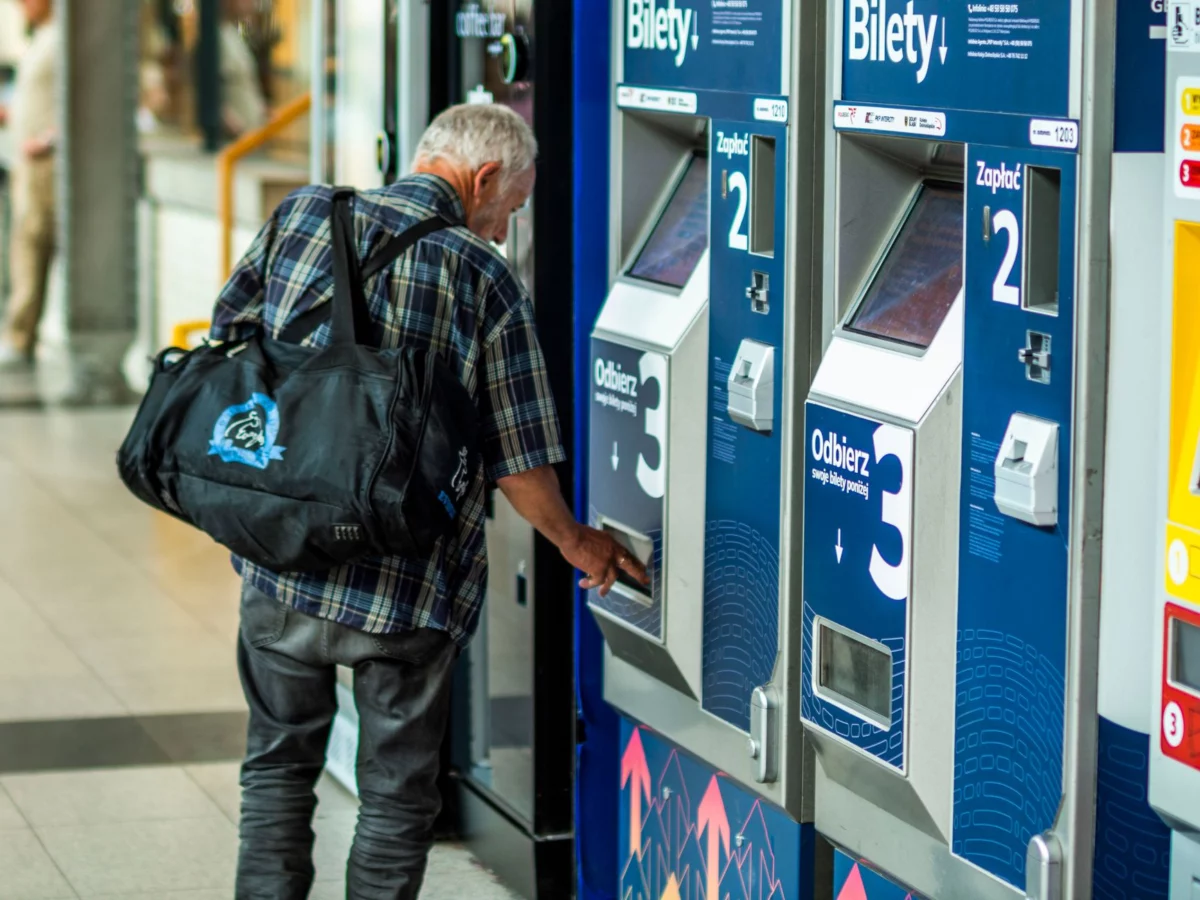
The vending machine now standing at Liverpool Lime Street railway station is easy to dismiss as a novelty. That would be a mistake. The machine is a compact response to a very ordinary problem: forgetful university students arriving without chargers, toothbrushes, notebooks, headphones, slippers, or other essentials. In a city defined by rail movement, dense student housing, and two major universities — University of Liverpool and Liverpool John Moores University — the machine says less about absent-mindedness than about how modern student life actually works.
The story matters because it connects three things that are usually analysed separately: student behavior, point-of-need retail, and the changing function of transport hubs in a city like Liverpool. The poll behind the story may be playful, but the commercial logic is not. When people forget something, they do not want a broad product catalogue; they want the nearest possible fix. That is where the vending machine model becomes more than a gimmick.
The story behind the machine is behavioral, not whimsical
The strongest reading of this installation is not that Liverpool students are uniquely disorganised. It is that student life creates the perfect conditions for small failures of planning. The move into undergraduate education disrupts routines, removes familiar support systems, and forces students to manage travel, packing, deadlines, and social commitments at once. In that context, forgetfulness is predictable.
The machine does not solve forgetfulness; it monetizes the moment when forgetfulness becomes expensive.
That distinction matters. A forgotten toothbrush is not a deep personal flaw. It is often the visible result of fragmented attention, late departures, and shifting routines. The machine captures a moment when inconvenience becomes urgent enough to pay for.
Why students forget essentials in the first place
Routine disruption and attention limits
Two concepts from psychology help explain the pattern. Working memory is limited, and prospective memory — remembering to do something later — is vulnerable when people are under pressure. Students packing for a train journey are rarely performing a calm, linear task. They are switching between messages, travel times, lectures, and accommodation logistics. It is a textbook case of cognitive load.
That is why the items most often forgotten are usually low-salience, high-utility objects: chargers, toiletries, notebooks, or spare clothing. They are not glamorous purchases, so they are easy to overlook. Yet once missing, they become disproportionately important.
Habit breaks down when the environment changes
In stable settings, habit carries a surprising amount of daily life. People pack the same way, travel the same way, and keep the same emergency supplies. University disrupts that machinery. For many students, it is the first time they have to build those habits without parental correction, shared household routines, or the rhythm of a long-established commute. The result is not chaos; it is unfinished habit formation.
That is why the story should be read as a transitional problem, not a moral one. A student who forgets a charger once is not evidence of character. It is evidence of a schedule that has become too fragmented for memory to do all the work.
Why a station vending machine makes commercial sense
From a retail perspective, the machine is a small but efficient piece of retail design. It sits where the need is felt, not where the category is theoretically planned. That matters because the purchase is triggered by urgency. A student who arrives at the station and realises they have forgotten a charger is no longer browsing. They are solving a problem.
This is where behavioral economics becomes useful. People routinely overvalue immediate relief over delayed savings. A slightly overpriced item near a platform can still feel like a rational buy if the alternative is a dead phone, a missed lecture, or a miserable first night in halls. In consumer behavior, convenience often outranks price when the customer is already in pain.
That same logic explains why convenience stores thrive near stations, campuses, and airports. The vending machine is simply a more compressed version of the same idea: low friction, fast decision, immediate reward. In a place shaped by rail transport in Great Britain, the station is not just a transit point. It is a retail environment with its own demand curve.
| Common forgotten item | Why it gets left behind | Why the machine can sell it |
|---|---|---|
| Phone charger | Usually packed last and easiest to leave on a desk | Immediate utility and high urgency |
| Toothbrush or toiletries | Assumed to be already in the bag | Low-cost fix for an overnight stay |
| Notebook or pen | Hidden behind digital habits | Useful for lectures, planning, and travel notes |
| Headphones | Often used right before departure and then forgotten | High perceived value during a long train journey |
Why Liverpool is a practical test case
Liverpool is not simply a backdrop. It is part of the explanation. The city has a strong student identity, substantial passenger flow, and a station that functions as a gateway for arrivals, departures, and weekend returns. That combination creates a real market for emergency essentials. A machine in a quieter town might be a curiosity. At Lime Street, it is a logical response to traffic patterns and student movement.
The city’s urban structure also matters. In urban studies, transport hubs are often understood as places where temporary populations concentrate. Liverpool’s rail station serves commuters, tourists, and students at different times of day, which makes it a strong location for a flexible retail device. The machine does not need everyone; it only needs enough people with urgent, predictable needs.
That is a subtle but important point. The machine is not designed around the average user. It is designed around the user who forgot something and needs an answer immediately.
What the poll can and cannot prove
The poll may be amusing, but it should be treated carefully. Without the full method — sample size, question wording, timing, and response options — it is impossible to know whether it measures real student behavior or simply self-perception. That is standard caution in survey methodology and basic statistics.
Self-reported forgetfulness is especially tricky. People often remember the most embarrassing lapse and forget the many times they packed correctly. A ranking can therefore reflect social identity as much as actual error rates. Liverpool students may be more willing to describe themselves as disorganised, or the city may simply have been more visible in the sample. Without transparency, the ranking is suggestive, not definitive.
That does not make the story irrelevant. It means the story is strongest when read as a snapshot of student culture, not as a scientific verdict on a city or a university population.
How universities and retailers should respond
The practical lesson is straightforward: if a demand is recurring, build for it deliberately. Universities and station operators do not need to guess what students want after a forgotten-packing moment. They can watch the pattern and stock accordingly.
- Place essentials where the mistake is felt. Arrival halls, station concourses, and student accommodation routes are better than generic retail zones.
- Stock for real emergencies, not novelty. Chargers, toiletries, basic stationery, and simple comfort items should come before gimmicks.
- Bundle products logically. A charger alone is useful. A charger plus cable plus notebook is often better.
- Keep pricing transparent. If the machine is seen as exploitative, the trust value disappears.
- Use data carefully. Demand patterns should improve assortment, not become a reason for wasteful overstocking.
Done well, this is not just convenience retail. It is infrastructure for messy human behavior. Done badly, it becomes overpriced clutter with a student-themed label.
Frequently asked questions
Why are university students so often the ones who forget things?
Because university life compresses attention. Students are usually balancing new routines, travel, deadlines, and social pressure. That raises the odds of lapses in prospective memory and creates more opportunities for small items to be left behind.
Do station vending machines actually solve a real problem?
Yes, when they stock the right products. Their value is not in replacing shops but in serving urgent, low-frequency mistakes. A station machine works best when it solves immediate needs better than a nearby store can.
Is this mostly about Liverpool, or could it work elsewhere?
The model could work in any city with strong student traffic and a busy station, but Liverpool is especially suitable because of its rail connections, student population, and concentrated arrival points. The exact product mix would need to match local behavior.
When convenience becomes infrastructure
The real insight is that the machine is not selling objects; it is selling recovery from a mistake. That is why the story matters beyond Liverpool. Cities increasingly build services around moments when routine breaks: charging stations, parcel lockers, self-checkout, late-night food, and now emergency student kits. Each one is a response to the same reality — modern life is too mobile, too compressed, and too interruptible for perfect planning.
The next question is whether this remains a clever one-off or becomes a predictable part of campus-adjacent retail. If station operators and universities keep seeing the same forgotten items, the response may shift from novelty to standard service. And once that happens, the more interesting question is no longer why students forget. It is how much of student life the transport system should quietly absorb.
Frequently Asked Questions
Why is the vending machine at Lime Street more than just a novelty item?
Because it responds to a real behavioural pattern: people forget essentials when they are rushed, distracted, or travelling. At a station, that moment of need is immediate, so the machine functions as point-of-need retail rather than a gimmick. Its value lies in convenience, urgency, and location, not in the novelty of the products themselves.
Are Liverpool students really more forgetful than students elsewhere?
Not necessarily. The article suggests that forgetfulness is less about Liverpool specifically and more about the pressures of student life. New routines, travel, deadlines, and independence all increase cognitive load. Liverpool simply provides a setting where those habits are especially visible because of its rail hub, dense student population, and university presence.
Why do students tend to forget practical items like chargers and toiletries instead of bigger things?
Small, ordinary items are easy to overlook because they do not feel urgent during packing, even though they matter most once missing. Chargers, toothbrushes, and headphones are low-salience but high-utility objects. People usually remember the obvious essentials first, while these routine items slip through when attention is divided.
What makes a station vending machine commercially smart in the first place?
It works because it sells where the problem happens. Someone who discovers they have forgotten something at a station is not comparing dozens of shops or waiting for a cheaper option. They want the nearest fix. That urgency means even an overpriced item can feel worthwhile if it prevents a bigger inconvenience.
Is the article really about student forgetfulness, or about how modern retail is changing?
It is about both, but the deeper point is retail adaptation. The machine is a small example of how commerce is moving toward immediacy and convenience, especially in transport hubs. Student forgetfulness is the trigger, but the broader story is how businesses increasingly sell solutions at the exact moment people realise they need them.