
Tom Kerridge’s admission that he still loves a Nando’s is not a betrayal of fine dining; it is a reminder that professional taste is shaped by more than prestige. A chef can respect the logic of the Michelin Guide and the status of a Michelin star while still admiring fast, reliable food from a restaurant chain. That tension matters when people ask how to identify the best seaside chippies in the UK. The answer is not nostalgia alone. It is technique, consistency and an ability to turn a modest menu into a disciplined piece of culinary arts.
Kerridge’s taste profile makes sense because great eating is usually about clarity, not hierarchy. A dish can be inexpensive and still be executed with precision; it can be popular and still be technically demanding. That is true of Tom Kerridge‘s world, and it is equally true of seaside food. A strong chip shop is not a museum piece. It is a working system, much closer to a fast casual restaurant than a temple of ceremony. When that system works, it is a serious expression of British cuisine.
Why a Michelin-star chef can still love a chain restaurant
The cleanest explanation is that chefs value reliability more than image. Nando’s built its reputation on a narrow promise: flame-grilled chicken, bold seasoning and predictable service. That is a commercial strength, not a weakness. It resembles the discipline that underpins many successful kitchens. The seasoning may be simple, but the execution must be repeatable, and repetition is where many restaurants fail. In that sense, a chain can teach the same lesson as a luxury dining room: the customer rarely wants surprise in the basics.
This is where the debate around low and high food becomes useful. Food culture often treats price as a proxy for seriousness, but that is lazy analysis. A chef who works at the highest level knows that a meal can be judged by its technical control, not by the size of the bill. That is why comfort food remains important in modern gastronomy. It is direct, legible and unforgiving. If the seasoning is flat or the texture is wrong, there is nowhere to hide. Nando’s succeeds because it understands that principle. So do the best chip shops.
Tom Kerridge’s point is therefore larger than a casual restaurant preference. It shows that professionals do not divide the food world into precious and unworthy. They divide it into well made and badly made. That distinction is exactly what matters when you stand in front of a fryer at the coast and try to decide whether you are looking at an ordinary tourist stop or one of the best seaside chippies in the UK.
What makes a great fish and chip shop, technically
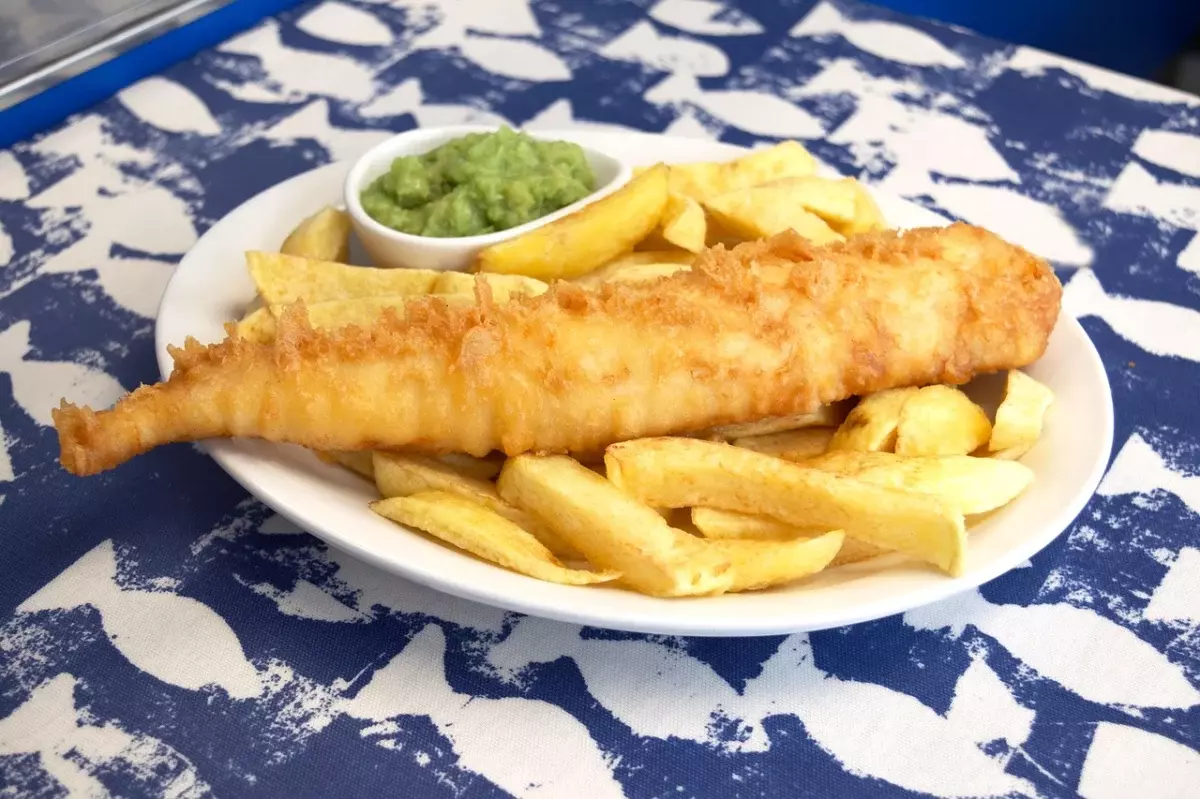
The foundation is the dish itself: fish and chips. The format looks simple, but it depends on a chain of decisions that each affect the final plate. The fish must be fresh enough to flake cleanly. The batter must protect without becoming heavy. The chips must be dry inside, crisp outside and properly seasoned. The oil must be hot, clean and managed with discipline. The whole operation is more complicated than the casual customer thinks. It is closer to a production process than a single recipe.
That is why the word chip shop should not be treated as a generic label. In practice, it describes a specific kind of kitchen engineering. A strong shop controls its turnover, its frying schedule and its holding times. A weak one relies on volume and hope. That difference is visible before the first bite. If the counter is cluttered, the fryers look neglected or the menu is trying to do too much, the food usually suffers.
Two technical details matter more than marketing slogans. First, deep frying is only as good as the operator’s control of heat and oil quality. Second, chips themselves are not an afterthought. The best shops choose potatoes for starch, texture and size consistency, because the potato determines how much moisture is lost and how the crust forms. If the potato is wrong, the chip is wrong. No amount of branding fixes that.
| What to look for | What it usually means | Why it matters |
|---|---|---|
| Short, focused menu | The kitchen is not trying to be everything | Better turnover and tighter execution |
| Clear frying oil | The station is maintained properly | Cleaner flavour and less greasiness |
| Fish that flakes cleanly | Heat and timing are under control | The texture is tender, not dry |
| Chips with dry interiors | Proper preparation and finishing | The chip stays crisp instead of collapsing |
| Locals returning regularly | The product is winning repeat custom | Better evidence than a one-off online review |
A good chippy is not judged by memory alone. It is judged by heat, timing and turnover.
How to judge the best seaside chippies in the UK in practice
The practical test is simple: observe before you order. In a seaside resort, the obvious target is the tourist crowd, but crowd size is not quality. Tourist traffic can keep a mediocre shop busy, while the better kitchen may be less visible because it is tucked away from the promenade. The best shops usually display confidence through restraint. They do not need to over-explain the food. They know that the product will do the talking.
Start with the fish. In the UK, cod and haddock remain the reference points because they offer reliable structure and clean flavour. But the real question is not which species appears on the board; it is whether the shop is honest about sourcing, freshness and seasonality. The wider seafood category matters here because a serious shop should understand what it can source well, not merely what it can advertise loudly. When the operator can explain that calmly, it is usually a good sign.
Then look at the rhythm of service. A strong chippy usually has a clear rhythm: food enters and leaves the fryer quickly, chips are not left to sit too long, and the staff know how to manage the queue without rushing the product. This is where reputation and reality often diverge. A place can have a famous name and still lack discipline. By contrast, a quieter shop can deliver excellent food because it understands the basics. That is exactly the kind of gap a careful diner should notice.
If you want a broader industry signal, the official guidance from the Sea Fish Industry Authority and the Food Standards Agency is far more useful than social media noise. Both organisations exist because seafood handling, traceability and hygiene are not abstract concerns; they directly affect flavour, safety and trust. You do not need to be obsessive about compliance to benefit from it. You only need to notice when a shop treats the basics seriously.
The five-minute chippy test
- Read the menu. If it is bloated, the kitchen may be distracted.
- Check the oil and the holding area. Clean stations usually signal better discipline.
- Watch what other customers order. Repeat fish and chips orders are useful evidence.
- Ask a direct question about the fish. Confident shops answer plainly.
- Look for freshness over performance. A loud brand is not proof of good frying.
The test is not perfect, but it is better than ranking shops by fame alone. The best seaside chippies in the UK usually reveal themselves through steady control, not theatrical claims.
Why awards, reviews and Michelin thinking can mislead
The Michelin Guide is valuable, but it is not designed for the specific physics of a chip shop. A tasting-menu restaurant and a seaside fryer are different businesses. One trades in layered sequencing; the other trades in speed, texture and consistency under pressure. Applying the wrong yardstick creates bad criticism. It is one reason some people misread what a food critic is doing when they compare luxury dining with everyday eating. Good criticism should respect context, not flatten it.
That context includes the social life of the coast. People go to the beach for ease, memory and indulgence. They expect fish and chips to fit the occasion, which makes seaside resorts vulnerable to formulaic pricing and lazy execution. A famous seafront does not guarantee a serious kitchen. In fact, fame can create complacency. The shop assumes the view is enough. It is not. The view may sell the queue, but the fryer sells the meal.
That is also why online reviews need to be handled carefully. They can flag hygiene problems or chronic inconsistency, but they also reward visibility and emotion. A loud reviewer may have had an off day, and a glowing one may have arrived at the peak of service. The better approach is to look for patterns. Do locals return? Does the shop stay controlled at busy times? Are there complaints about soggy batter, stale oil or long waits? Patterns matter more than isolated opinions.
In other words, the best chip shops and the best chefs are not chasing the same form of prestige, but they are answering the same question: can you make ordinary ingredients feel exact? That question is where British cuisine becomes serious rather than sentimental.
FAQ: practical questions diners ask before choosing a chippy
What fish is best for a seaside chippy?
Cod and haddock are the standard benchmarks because they fry well and offer a clean texture. The best choice depends on freshness, sourcing and how well the shop handles the cook. A less fashionable species can be excellent if it is treated properly.
Is a seaside chippy always better than an inland one?
No. Proximity to the coast does not guarantee quality. Some inland shops are better run, buy more carefully and have stronger frying discipline. A seaside location can create pressure, but it can also encourage complacency if the operator relies on tourists.
Should I trust online ratings when choosing a chip shop?
Use them as a starting point, not a verdict. Look for repeated comments about freshness, oil quality and service consistency. One dramatic review is less useful than a pattern of similar complaints or praise.
Why do chefs care about chain restaurants like Nando’s?
Because chains show whether a kitchen model can deliver the same standard every time. That is a useful test of operational discipline. If the basics are sound in a chain, the same principle can be applied to fish and chips, where consistency matters even more.
What to watch next: the future of seaside chippies
The next phase of the chippy trade will be shaped by cost pressure, labour shortages, energy bills and seafood supply volatility. Those forces already reward operators who can control waste, choose ingredients intelligently and communicate sourcing honestly. The winning shops will probably be less theatrical and more exact. They will care about oil management, portion control and traceability because those are the levers that preserve margin and quality at the same time.
There is also a cultural shift underway. Diners are becoming more willing to accept that comfort food can be judged with the same seriousness as restaurant food, provided the standard is clear. That is why Tom Kerridge’s fondness for Nando’s matters beyond celebrity trivia. It points toward a less snobbish food culture, one that recognises craftsmanship wherever it appears. In that world, a good chip shop is not a fallback option. It is a specialist kitchen with its own standards, its own risks and its own form of excellence.
The unanswered question is simple: when costs rise and competition intensifies, will seaside chip shops keep prioritising the fundamentals, or will more of them drift toward generic convenience? The shops that survive will be the ones that stay disciplined. The customer will still judge them on a plate of fish and chips, but the real contest will be quieter: who can keep quality visible when the easy answers disappear.
For a topic like this, the useful lesson is not to romanticise the coast or the celebrity chef. It is to recognise the same principle in both places: strong food is built on repeatable decisions. The best seaside chippies in the UK will be the ones that prove it, night after night, without needing to say so.
SEO DATA
Primary Focus Keyphrase: best seaside chippies in the UK
Related Keyphrase 2: Tom Kerridge loves Nando’s
Related Keyphrase 3: how to find a good chip shop
Related Keyphrase 4: what makes a great fish and chip shop?
Related Keyphrase 5: fish and chips quality
Primary Keyphrase Synonyms:
seaside fish and chip shops, top coastal chippies, best fish and chip shops by the sea, quality chip shops, top seaside fish bars
SEO Title:
Best Seaside Chippies in the UK: What Chefs Really Look For
Meta Description:
Best seaside chippies in the UK are judged on batter, chips and consistency. Tom Kerridge’s Nando’s taste shows why comfort food still matters.
URL Slug:
best-seaside-chippies-uk
Image Filename:
best-seaside-chippies-uk.jpg
Image ALT Text:
A chef serving fish and chips at a traditional seaside chip shop
Image Title:
Chef and seaside fish and chips
Image Caption:
A great chippy is judged by consistency, not branding.
Search Intent:
Informational
Frequently Asked Questions
How can you tell if a seaside chip shop is likely to be good before you even taste the food?
Look for signs of control rather than charm alone. A good shop usually has a tidy counter, a focused menu and fryers that look actively managed, not neglected. If the operation feels organised and the turnover is steady, that often indicates the food is being cooked and held with discipline rather than left to chance.
Is a busy chip shop always better than a quiet one?
Not necessarily. High footfall can mean popularity, but it can also mean rushed service and uneven frying if the kitchen is not well run. What matters more is whether the shop can handle volume without sacrificing crispness, seasoning and temperature. A smaller, calmer place may produce better food if the process is tighter.
Why does the article say chain restaurants can teach the same lesson as fine dining?
Because both depend on repeatability. A chain like Nando's succeeds by delivering the same core experience every time, and that mirrors the discipline chefs admire in high-level kitchens. The lesson is that good food is not about status; it is about reliable execution, clear flavours and control of basics.
What is the most common technical mistake in a bad fish and chip shop?
Usually it is poor control of heat, oil or timing. If the oil is too cool, the batter absorbs grease and goes heavy. If it is too hot, the outside can burn before the inside cooks properly. Even good ingredients can fail if frying and holding times are not managed carefully.
Why are the chips just as important as the fish?
Because chips are not a side issue; they are half of the dish's identity. The best chips depend on the right potato variety, moisture control and consistent size so they crisp properly outside and stay fluffy inside. If the chips are weak, the whole meal feels unbalanced, even when the fish is decent.