
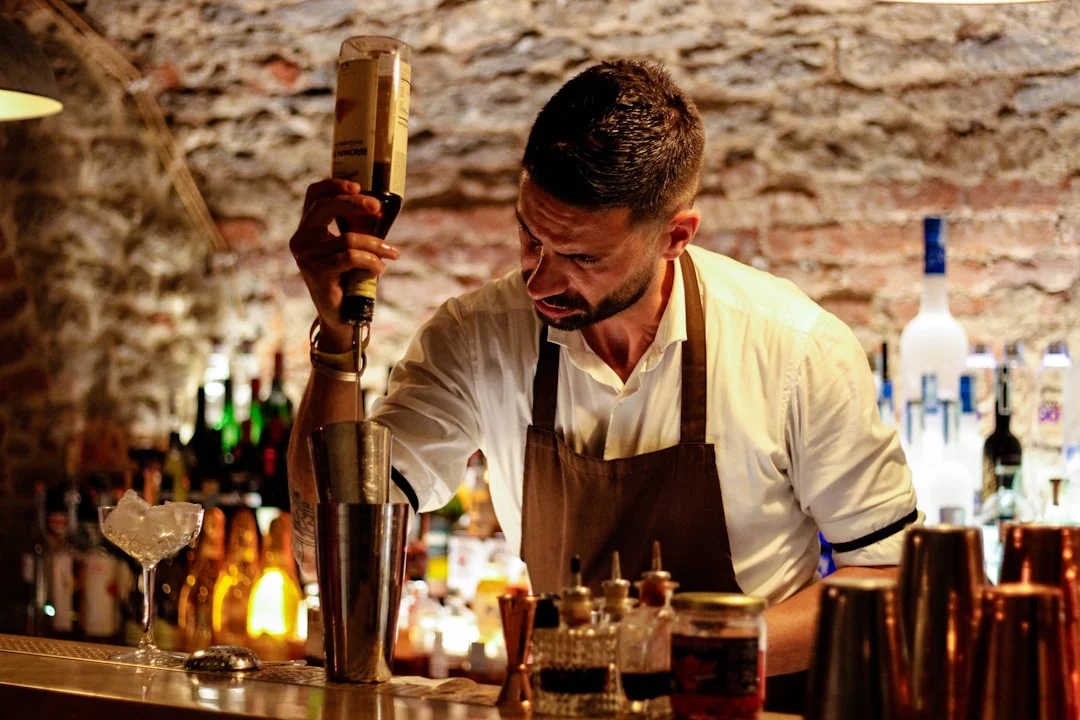
The free pint promotion that Young’s ran to mark its 195th anniversary looks, on the surface, like a straightforward giveaway. In practice, it is a compact lesson in how modern pubs try to buy attention without cheapening the brand. Young’s, a business rooted in the history of Young’s Brewery and the wider culture of the British public house, is not handing out beer out of sentimentality. It is using a controlled burst of generosity to create footfall, talkability, and a reminder that heritage still has commercial value.
The offer matters because it arrives at a time when pubs are fighting for the same scarce resource: attention. Consumers have more drinking options than ever, from chain venues and neighbourhood bars to home delivery and supermarket shelves. In that environment, a timed giveaway is not a gimmick. It is a measurable marketing tactic built around promotional pricing, the psychology of a free sample, and the logic of a loss leader. The real question is not whether a pint was free for a day. It is whether the promotion can convert one-time curiosity into repeat visits.
What the Young’s giveaway actually signals
Young’s said the promotion was tied to its anniversary and available for a limited time. That structure is important. A limitless discount trains customers to wait for the next discount. A short-lived giveaway does the opposite: it creates urgency, scarcity, and a reason to visit now rather than later. In marketing terms, the campaign is closer to a timed event than a price cut.
The company’s scale also matters. A pub chain with more than 270 sites is not operating like a single local bar. It can distribute a promotion across multiple venues, absorb the cost of free pints more easily than an independent operator, and turn a local celebration into a network-wide story. That does not make the drink free in an economic sense. It means the expense is shifted into a broader customer-acquisition budget.
That distinction is central to understanding the promotion. In the language of the hospitality industry, the giveaway is not an isolated loss. It is a calculated spend aimed at increasing average visit value, future frequency, and brand recall. If the campaign brings in guests who buy food, order additional drinks, or return later in the month, the first pint becomes a lead generator rather than a giveaway.
Why a free pint is a strong marketing tool
Attention, urgency, and social proof
A free pint works because it collapses the distance between awareness and action. A customer does not need to think about trying the venue later; the offer creates a reason to go immediately. It also invites social proof. When people post, message, or mention a free drink offer, the pub gains unpaid distribution. This is a familiar mechanism in experiential marketing: the event itself becomes the advertisement.
That is especially effective in a sector where atmosphere matters as much as price. A pint in a crowded, lively pub communicates something that a banner ad cannot. It suggests relevance, momentum, and local energy. In the context of a heritage brand such as Young’s, the free pint becomes a symbolic gesture: the company is saying that tradition is still active, not embalmed.
The economics of a loss leader
Economically, the promotion resembles a classic loss leader. The business accepts a short-term cost to stimulate broader purchasing behaviour. That only works if the operator understands demand elasticity. If the audience responds strongly to a free pint but weakly to full-price sales, the promotion risks becoming a subsidy for bargain hunters. If the audience treats the offer as an introduction to a venue they might otherwise ignore, the campaign can be profitable over time.
This is where the concept of price elasticity of demand becomes practical rather than theoretical. Beer consumers are often price-sensitive, but not uniformly so. Some are driven by habit, some by location, and some by the total experience. A promotion that increases visits without destroying perceived value has a better chance of working than a blunt discount that trains people to chase the cheapest pint in town.
| Objective | Likely upside | Key risk |
|---|---|---|
| Increase footfall | More visitors during the campaign window | Busy venues may reduce service quality |
| Strengthen brand recall | Higher awareness and shareability | The offer may overshadow the brand itself |
| Drive repeat visits | Potential long-term loyalty | Deal-seekers may not return |
| Celebrate heritage | Authentic story linked to the anniversary | The message can feel performative if poorly executed |
Why the heritage angle matters more than the beer
The best part of the campaign is not the discount. It is the story. Young’s is drawing on nearly two centuries of association with London’s pub culture, and that heritage is easier to monetise than most firms realise. A chain tied to London can use history as a commercial asset, especially in a market where many consumers still value continuity, local identity, and the social role of the pub.
That historical framing also helps distinguish the company from purely transactional competitors. In the UK, the pub is not only a place to drink beer; it is an institution shaped by custom, architecture, and habit. Whether the drink is a standard lager, a real ale, or a cask ale, the meaning of the visit is partly social. That is why anniversary-led promotions can feel more credible than generic discounting.
There is a difference between saying, buy cheap drinks, and saying, come raise a glass with us because we have been part of the landscape for 195 years. One is a price message. The other is a heritage message with a price attached. Brands in the beer trade have long relied on that distinction, from local breweries to larger operators such as Young’s Brewery and other pub groups competing in the same crowded market.
The operational risk hidden inside a simple offer
A free pint is easy to announce and harder to execute. Once the offer goes live, the operator has to manage queues, stock, staff workload, and the possibility that the campaign attracts customers who are there only for the giveaway. If the venue becomes too busy, the service experience can deteriorate fast, and that damages the brand more than the pint costs.
There is also a compliance layer. UK pubs operate under strict alcohol licensing laws of the United Kingdom, which means age checks, responsible service, and local licence conditions still apply. A time-limited promotion does not relax those rules. If anything, it increases the need for disciplined staff training because high traffic can create avoidable mistakes.
Another issue is channel conflict. Independent pubs and smaller operators cannot always compete with large chains on scale or promotional depth. When a chain gives away beer, it can reset customer expectations for what a pub visit should cost. That does not automatically harm independents, but it does reinforce the broader pressure that already exists in a market shaped by high operating costs and changing drinking habits. The pub industry is not short of competition; it is short of margin.
What consumers should understand before chasing free-drink campaigns
For customers, the obvious appeal is obvious: a free pint feels like a win. But the smartest drinkers read the fine print. Offers of this kind are usually limited by venue, time, stock, or participation rules. In other words, the promotion may be generous, but it is not necessarily frictionless. If the reward requires queuing, app downloads, or identity checks, the real value depends on how much the customer wants the experience itself.
Consumers should also recognise that a giveaway is often designed to produce data, not just goodwill. A business may want to capture visits, social engagement, or app sign-ups, all of which strengthen future targeting. That is not inherently bad. It is the trade-off behind modern customer loyalty programmes. The point is to understand that the free pint is part of a larger exchange.
The best customer response is simple: enjoy the offer, but judge the venue on what happens after the promotion ends. Is the service still good? Is the beer range strong? Does the pub feel like a place worth returning to without a headline offer? Those are the real tests of whether the campaign has created lasting value.
How a pub chain can make the promotion actually work
Large hospitality operators often underestimate how much execution shapes perception. A free drink can either feel generous or feel chaotic. The difference usually comes down to a few practical decisions.
- Keep the offer clearly time-boxed so urgency is real.
- Train staff to explain the rules quickly and calmly.
- Protect service quality so the venue does not feel overwhelmed.
- Link the giveaway to a stronger brand story, not just a price cut.
- Measure repeat visits after the promotion, not only the number of drinks handed out.
The strongest campaigns treat the free pint as an entry point, not the entire value proposition. The offer should open the door to a better understanding of the venue: food, atmosphere, location, and the sense that the pub is part of a broader social routine. Without that follow-through, the giveaway becomes a one-day headline and nothing more.
FAQ: What people usually want to know about a free pint promotion
Why do pubs give away free pints?
Usually to increase footfall, generate publicity, and encourage future visits. The free drink acts as a short-term cost that can support longer-term customer acquisition.
Is a free pint promotion just a loss leader?
Often, yes. But the better versions also serve a branding purpose. The aim is not simply to lose money on one drink; it is to create a memorable visit that may lead to higher spending later.
Do free-drink offers help small pubs too?
They can, but small venues rarely have the same scale or margin buffer as large chains. That makes execution more sensitive and the financial risk higher if the campaign is poorly designed.
What the giveaway says about the next phase of pub competition
The most important insight in this story is that the pub battle is no longer fought only on price, and it is no longer fought only on atmosphere. It is fought on the ability to combine both into a coherent experience that feels worth leaving the house for. A free pint promotion is effective only when it supports that larger aim.
That is why this kind of campaign is worth watching beyond the day it runs. If it works, expect more operators to lean harder on anniversary events, hyper-local offers, and time-sensitive rewards that feel personal rather than blanket-discounted. If it fails, the lesson will be equally clear: consumers will take the free drink, but they will not automatically take the brand.
The real unanswered question is whether pub groups can use heritage as a growth engine without turning it into marketing wallpaper. Young’s has shown one path: make the history visible, make the offer brief, and make the visit feel like part of something larger than a transaction. In a market where attention is expensive and loyalty is fragile, that may be the most valuable pint of all.
Frequently Asked Questions
Why would a pub chain give away free pints instead of just lowering prices for everyone?
A free pint is usually more effective than a broad discount because it creates urgency and a clear event. A permanent price cut can weaken perceived value and train customers to wait for deals. A short, anniversary-linked giveaway feels special, attracts attention quickly, and can be measured as a customer-acquisition campaign rather than an ongoing margin loss.
How can a free drink promotion make money if the first pint costs the business something?
The first pint is treated like a marketing expense, not a standalone sale. The promotion can pay off if visitors buy food, order extra drinks, or return later at full price. In that sense, the free pint acts as a loss leader designed to increase footfall, average spend, and repeat visits over time.
Why does heritage matter in a promotion like this?
Heritage gives the giveaway more credibility than a generic discount campaign. For a brand like Young’s, the anniversary frames the offer as a celebration of identity rather than a desperate price cut. That helps preserve brand status while still generating excitement, because customers read the gesture as part of a longer story rather than a one-off bargain.
What makes a limited-time giveaway stronger than an always-available offer?
A limited-time promotion creates scarcity, which pushes people to act now instead of postponing the visit. It also prevents the brand from training customers to expect discounts all the time. That matters in pubs, where timing, atmosphere, and spontaneity are part of the experience and can be more persuasive than a low price alone.
Could this kind of promotion hurt independent pubs that cannot afford it?
Yes, it can widen the gap between large chains and independents, because bigger operators can absorb the cost and spread the campaign across many sites. Independent pubs usually need to be more selective with promotions, focusing on loyalty, local community, or higher-margin add-ons. The lesson for smaller venues is not to copy the giveaway, but to borrow the urgency and event-driven logic.