
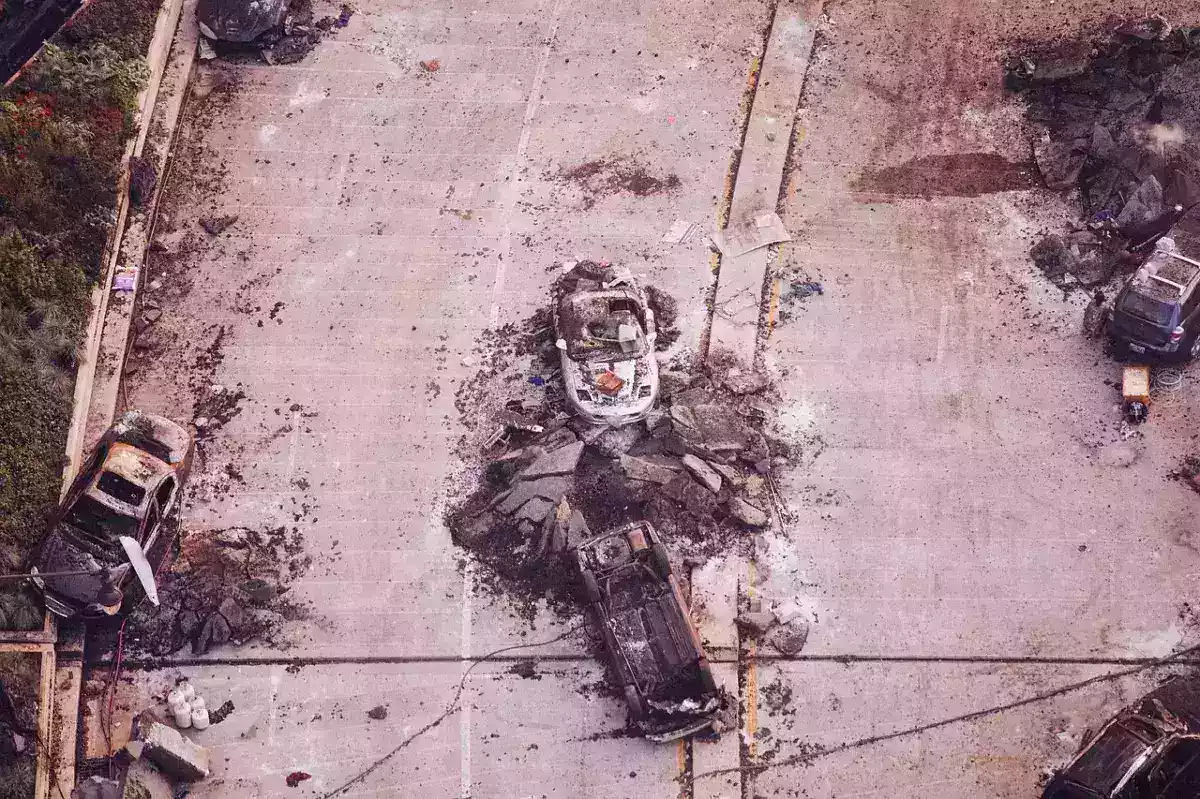
The reported Democratic Republic of the Congo school fire is more than a tragic local headline. It is a case study in how flame, smoke, crowd panic and weak emergency systems can turn one incident into a mass-casualty disaster. Early reports say at least 24 children are feared dead after a blaze ripped through two schools in eastern Congo and triggered a stampede, while more than 300 buildings were reportedly destroyed. The exact cause remains unconfirmed, but the mechanism of catastrophe is already recognizable: in a fragile setting, a fire is never only a fire.
That matters because eastern provinces such as North Kivu operate under conditions that leave very little room for error. Schools, housing and markets are often densely packed. Roads can be poor, firefighting capacity limited and medical access uneven. In places like Goma, the difference between a contained incident and a regional disaster can be measured in minutes, not hours. The broader context of education in the Democratic Republic of the Congo, chronic insecurity and recurring humanitarian pressure helps explain why school safety cannot be treated as an administrative afterthought.
Why the fire became a mass-casualty event
Fatal school fires rarely hinge on a single failure. They happen when several weak points align: an ignition source, combustible buildings, crowded corridors, confused adults and no reliable way to slow the spread. The initial flames may be small. The outcome is determined by what happens next.
The ignition is only the start
Investigators will eventually need to determine whether the blaze began with electrical faults, cooking equipment, fuel storage, arson or another source. But the origin of the fire is only one part of the chain. In a school, the more important questions are whether smoke could escape, whether exits were usable, whether children were supervised during evacuation and whether the building design forced people toward the same narrow points at the same time.
That is why fires in schools can quickly become crowd disasters. A child who sees smoke does not wait for a technical explanation. Students run. Teachers call for order. Younger pupils follow the nearest adult. If the route out is narrow, blocked or poorly marked, the pressure builds instantly. The result is the kind of chaotic crush often described in a human stampede, where the danger comes from people being pushed, trampled or trapped as much as from the flames themselves.
The countdown to disaster
Once a school fire is underway, the first few minutes are decisive. Fire science and emergency evacuation planning both stress the same point: the safest building is one that gives occupants a fast, simple route to leave without hesitation. In practice, that means functional alarms, doors that open outward, clear exit paths and staff trained to act before confusion spreads.
In a tragedy like this, the absence of one layer is bad; the absence of several is catastrophic. If a school has no alarm, no drills, overcrowded classrooms and limited nearby rescue capacity, a small ignition can become a lethal bottleneck. The outcome is then shaped by delay, not just heat. That is one reason child mortality in disaster settings is not merely a health statistic but a measure of institutional failure.
| Risk factor | Why it escalates the disaster | Practical fix |
|---|---|---|
| Overcrowding | Too many people compete for the same exits and corridors. | Limit occupancy and keep escape routes free. |
| Combustible construction | Fire spreads faster through timber, plastic and light roofing. | Use safer materials and fire breaks where possible. |
| Poor exit design | Narrow or inward-opening doors become choke points. | Install outward-opening exits and clear signage. |
| No drills | Children and staff improvise under stress. | Run frequent evacuation drills. |
| Weak response systems | Fire, rescue and medical help arrive too late. | Pre-position suppression tools and call trees. |
The fatal mechanism in a school fire is often not the ignition point but the sequence that follows: blocked exits, delayed alarms, crowd pressure and absent suppression. Remove any one link and the casualty curve changes.
What investigators should establish before anyone assigns blame
Public pressure after a disaster almost always demands a culprit. That pressure is understandable, but premature certainty can distort the investigation. The first duty is to establish facts: where the fire started, how quickly it spread, which buildings burned first and whether people were able to leave in an orderly way.
Scene preservation and witness accounts
In major incidents, especially where local services are stretched, evidence can disappear quickly. Charred debris is removed, walls collapse and the physical layout changes. Investigators therefore need to preserve the scene, collect witness accounts early and compare them against hospital admissions, school registers and local reports. This is standard disaster management, not bureaucracy for its own sake.
One line of inquiry may be arson, but that is only one possibility among several. Electrical faults, overloaded circuits, cooking fires and fuel storage remain more common explanations in many low-resource settings. The point is not to speculate, but to avoid treating the first rumor as a finding.
Fuel storage and power faults
Schools in fragile regions sometimes rely on improvised power, nearby generators or shared fuel stocks. If flammable materials are stored close to classrooms, corridors or sleeping areas, a small fault can accelerate quickly. The same is true when wiring is old, exposed or modified without proper oversight. Even when the original spark is minor, the presence of fuel, plastics and dry material can turn a manageable incident into a runaway fire.
Building layout and occupancy
School buildings are often treated as neutral spaces, but their design has consequences. A classroom full of children is a high-density environment. When several such rooms empty at once, the architecture itself becomes part of the risk. Corridors, gates and fences that look harmless on a normal day can become barriers under stress. That is why the terms overcrowding and evacuation bottleneck are not abstract concepts; they describe the physical conditions that decide who gets out first.
What this says about school fire safety in fragile settings
The deeper story is not that fires happen. Fires happen everywhere. The difference is whether a community has built enough redundancy to survive them. In a place with functioning infrastructure, a fire alarm, sprinklers, regular drills and quick response can contain the damage. In a place without those layers, the same ignition can become a social emergency.
Fire safety is often discussed as a checklist, but it is really a system. Schools need prevention, detection, evacuation and post-incident response working together. If any part is missing, the whole system weakens. In the eastern Congo context, that means the answer cannot be limited to sympathy, money or one-off donations. It requires structural change in how schools are built, monitored and supervised.
Non-negotiable measures
- Keep exits visible, unlocked during occupancy and free of storage.
- Separate classrooms from fuel, cooking areas and other ignition sources.
- Train teachers and staff to lead calm, immediate evacuations.
- Run drills often enough that children know the routine without shouting.
- Use simple suppression tools that work without electricity.
- Map routes for ambulances and fire responders before an emergency occurs.
Why drills fail on paper
Many school systems claim to have emergency plans that exist only in documents. A plan that is never practiced can make people overestimate their readiness. In a real fire, children do not follow policy manuals; they follow the behavior they have seen before. That is why drills matter. They reduce hesitation, but only if they are realistic and repeated. A single annual exercise is not enough to shape instinct.
Low-cost interventions with high payoff
Not every improvement requires a large budget. In many schools, the most effective measures are modest: clear signage, outward-opening doors, basic extinguishers, buckets of water or sand where appropriate, and strict limits on how many children occupy a room. These are not glamorous investments, but they are the ones that reduce deaths. For humanitarian agencies and local authorities, the challenge is to prioritize interventions that save lives now, not only long-term construction projects.
This is where humanitarian aid and school safety overlap. Emergency assistance often focuses on food, shelter and medical care. Those are essential. But if school facilities remain unsafe, the same children remain exposed to the next preventable disaster. UNICEF and other child-focused organizations regularly emphasize that protection in crisis settings includes the built environment, not just relief supplies.
Why early casualty figures are often unstable
Reports from disaster scenes are usually incomplete at first. Bodies may be recovered later, injured children may be transferred to different clinics and some pupils may be unaccounted for until families are contacted. In a fast-moving fire, initial counts can change sharply over the next 24 to 72 hours. That does not mean reports are wrong; it means the scene is still being assembled into a coherent picture.
In conflict-affected or remote areas, verification is slower. Access problems, damaged communications and strained hospitals make it harder to cross-check numbers. Responsible reporting should therefore distinguish between confirmed deaths, feared deaths and unverified claims. That distinction matters because disaster narratives harden quickly, and once a number is repeated it can become more influential than the underlying evidence.
The human cost goes beyond fatalities. Survivors may suffer smoke inhalation, burns, shock and long-term trauma. That is why emergency medical services and psychological support are part of the response, not an optional extra. In children, the aftermath can shape learning, sleep, behavior and trust in adults. The disaster does not end when the flames go out.
FAQ
Why do school fires turn deadly so quickly?
Because schools concentrate people in enclosed spaces. When exits are narrow, alarms are absent and adults have not practiced evacuation, smoke and panic can overwhelm orderly movement. The fire may be the ignition, but the death toll usually comes from the collapse of the evacuation process.
What should a school do first during a fire?
Staff should trigger the alarm, move students toward the nearest safe exit and keep people from re-entering the building. The priority is not saving property; it is reducing crowd pressure and getting children out in an orderly way. Every extra second spent debating increases risk.
Could better construction have reduced the casualties?
Very likely. Safer materials, wider exits, clearer routes and fewer overcrowded rooms all reduce the chance that a fire becomes a stampede. Construction alone cannot eliminate risk, but poor construction almost always makes outcomes worse.
Why do reported death tolls change after major fires?
Because the first numbers are often based on partial counts, eyewitness accounts and incomplete access to the scene. As hospitals, schools and families are cross-checked, the total may rise or fall. That is normal in the immediate aftermath of a disaster and does not automatically indicate bad reporting.
What this fire should change next
The most important lesson is not simply that a school caught fire. It is that preventable systems failures can turn a local blaze into a mass tragedy in minutes. If the investigation confirms basic safety breakdowns, then the relevant question becomes whether authorities will treat this as a one-off catastrophe or as evidence that school design, inspection and evacuation planning need urgent reform.
The next few months will matter. If this incident leads only to mourning, the structural risks remain intact. If it produces enforceable rules on school occupancy, safer building materials, routine drills and faster emergency access, then the tragedy may at least force a better standard of protection for children. The unresolved question is stark: will the region keep reacting to school fires after they happen, or will it begin preventing them before the next spark?
Frequently Asked Questions
Why did the stampede make the fire so much deadlier than the flames alone would have been?
In school fires, deaths often happen because people panic and move at the same time toward the same exits. Smoke reduces visibility, children run toward the nearest adult, and narrow or blocked corridors become choke points. In that crush, injuries, suffocation and trampling can kill even those who are not directly touched by the fire.
If the exact cause is still unknown, why do safety experts already focus on evacuation and building design?
Because the ignition source matters less than how the building behaves after the fire starts. A small electrical fault, cooking accident or arson can all become catastrophic if exits are narrow, alarms fail, or classrooms are overcrowded. Safety planning aims to stop a manageable incident from turning into a mass-casualty event regardless of the original cause.
Why are schools in places like eastern Congo especially vulnerable to deadly fires?
The risk is amplified by dense construction, limited firefighting access, poor roads, and uneven medical response. Many communities also face insecurity and resource shortages, which means schools may have weak infrastructure and few safety systems. When emergency services take longer to arrive, the first minutes inside the school become far more critical.
What are the most important fire-safety measures for schools in low-resource settings?
The highest-impact measures are often simple: keep exits unobstructed, make doors open outward, mark escape routes clearly, run evacuation drills, and reduce overcrowding. Safe storage for fuel and cooking materials also matters. Even without expensive equipment, these basics can dramatically lower the chance that panic turns a fire into a stampede.
Why do child deaths in school fires often become a wider issue than a single local tragedy?
Because they reveal whether institutions can protect children in everyday settings. A school fire exposes gaps in building safety, emergency planning, local rescue capacity and oversight. In fragile areas, such incidents also reflect broader conditions like poverty, conflict and poor infrastructure, so the tragedy is often seen as a systemic failure, not an isolated accident.