
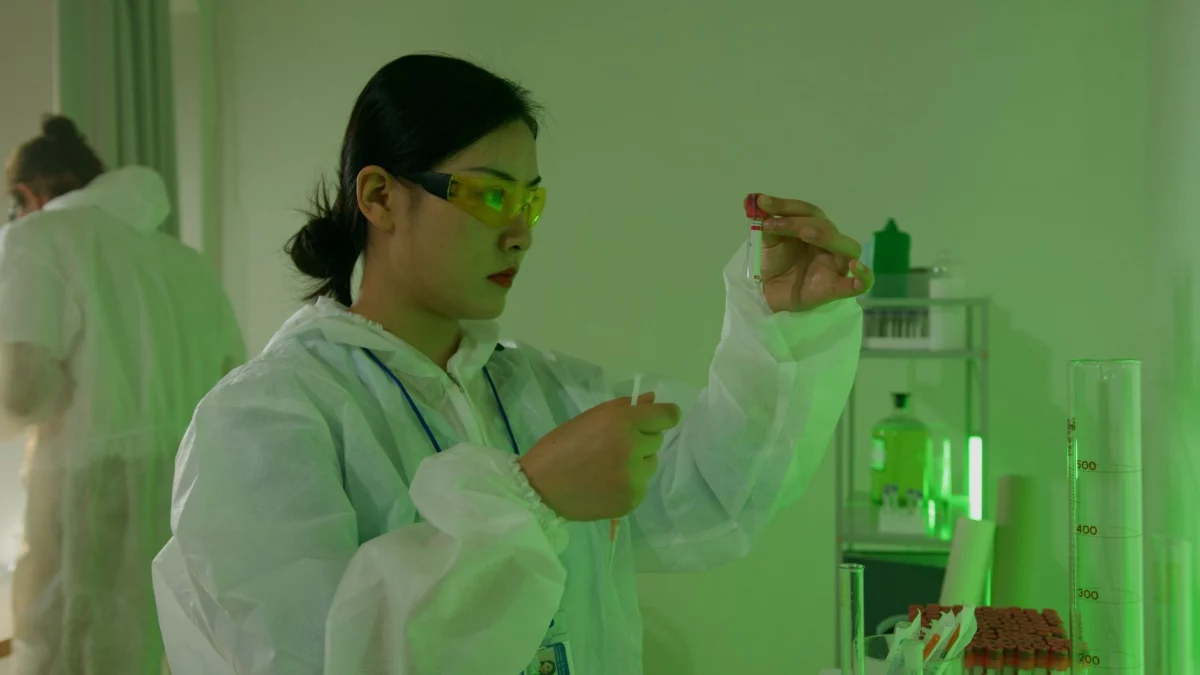
NASA food safety testing helped shift American food protection from inspecting finished products to preventing hazards throughout production. That distinction matters: inspectors can reject visibly spoiled food, but they cannot reliably detect every pathogen, toxin, or processing failure by examining a small sample at the end of a production line. Food prepared for astronauts demanded a more systematic solution because contamination inside a spacecraft could endanger a mission, while conventional testing could consume much of the limited food supply.
The resulting approach became known as Hazard Analysis and Critical Control Points, or HACCP. Developed through collaboration among NASA, the Pillsbury Company, and U.S. Army laboratories, it identified where significant hazards could enter a process, established controls at those points, and required monitoring before products reached consumers. NASA did not single-handedly create modern food regulation, but its space program provided an unusually demanding environment in which preventive food safety could be designed, tested, and demonstrated.
Food Inspection Before the Space Age
Modern U.S. food regulation began decades before NASA. Public reaction to unsanitary meatpacking conditions described in Upton Sinclair’s The Jungle contributed to the passage of the Pure Food and Drug Act and the Federal Meat Inspection Act in 1906. These laws strengthened federal oversight, targeted adulteration and misbranding, and established inspection requirements for meat processing.
That framework was a major advance, but early inspection remained heavily oriented toward sanitation, visible defects, facility conditions, and examination of finished products. Such measures are essential, yet they have limits. A food may look and smell normal while containing disease-causing microorganisms. In addition, laboratory testing of samples provides evidence only about the units tested, not absolute assurance about every package in a large production run.
Traditional end-product inspection therefore answers a narrow question: did the sampled item meet the test criteria? A preventive system asks a broader one: what could go wrong during production, where is control essential, and how can the processor prove that control was maintained?
Why Space Food Required a New Safety Model
When the United States began planning crewed missions through Project Mercury and the Apollo program, food safety became a mission-critical engineering problem. An episode of foodborne illness could incapacitate an astronaut, divert attention from flight operations, contaminate a confined cabin, or force mission objectives to be abandoned.
NASA also faced a statistical and practical constraint. Testing enough finished packages to claim extremely high confidence in safety could require opening and destroying a substantial share of the food intended for flight. Even intensive sampling could not guarantee that an untested package was free of contamination. The solution had to be built into the production process rather than added as a final checkpoint.
The NASA, Pillsbury, and Army Collaboration
NASA worked with the Pillsbury Company and U.S. Army research personnel to develop foods and manufacturing controls suitable for spaceflight. Pillsbury microbiologist Howard Bauman is closely associated with the development and later public explanation of HACCP. The team drew partly on engineering practices used in high-reliability industries, including failure analysis and control of essential process steps.
The resulting system was not simply a stricter version of final inspection. It treated food production as an interconnected process. Ingredients, equipment, workers, temperatures, packaging, storage, and distribution could each introduce or amplify hazards. Safety depended on understanding those relationships and controlling the steps where failure would have serious consequences.
How NASA Developed HACCP Principles
The HACCP food safety system begins with hazard analysis. A multidisciplinary team maps the production process and evaluates biological, chemical, and physical hazards. Biological hazards may include pathogens; chemical hazards may include undeclared allergens or cleaning residues; physical hazards can include metal, glass, or other foreign material.
The team then identifies critical control points: stages at which control can prevent, eliminate, or reduce a significant hazard to an acceptable level. In a thermal process, for example, time and temperature may be critical. In other operations, refrigeration, formulation, acidity, package integrity, or detection equipment may provide the essential control.
The Seven Principles Used Today
- Conduct a hazard analysis to identify significant, reasonably foreseeable hazards.
- Determine critical control points where essential preventive control can be applied.
- Establish critical limits, such as a validated minimum temperature or maximum processing time.
- Establish monitoring procedures that show whether each critical control point remains under control.
- Define corrective actions for deviations, including disposition of affected food and correction of the underlying cause.
- Establish verification procedures to determine whether the plan is scientifically sound and functioning as intended.
- Maintain records documenting the plan, monitoring results, deviations, corrective actions, and verification.
These principles are often presented as a checklist, but effective HACCP is analytical rather than mechanical. A critical limit must rest on scientific evidence or a validated process. Monitoring must occur frequently enough to detect loss of control. Corrective action must address both potentially unsafe products and the reason the deviation occurred.
Inspection Versus Prevention
| Approach | Main Question | Strength | Limitation |
|---|---|---|---|
| End-product testing | Does the tested sample comply? | Provides direct results for sampled units | May miss hazards in untested units |
| Facility inspection | Are conditions and practices acceptable? | Identifies sanitation and operational problems | Represents conditions observed at a particular time |
| HACCP | Are significant hazards controlled continuously? | Builds prevention, monitoring, and documentation into production | Depends on accurate hazard analysis and disciplined execution |
The approaches are complementary rather than mutually exclusive. Regulators still inspect facilities, review records, collect samples, investigate outbreaks, and enforce legal standards. HACCP changed what inspectors evaluate by making process controls, scientific validation, and documented preventive performance central to oversight.
How NASA Food Safety Testing Entered Civilian Regulation
Pillsbury presented the HACCP concept publicly at the 1971 National Conference on Food Protection. Its adoption expanded as regulators and scientific bodies recognized that preventive process control was more effective than relying exclusively on final-product sampling. The National Academy of Sciences endorsed broader use of HACCP principles in the 1980s, helping move the system into mainstream food policy.
The U.S. Food and Drug Administration incorporated HACCP-based controls into specific regulated sectors, including seafood and juice. FDA’s official HACCP guidance and regulatory resources explain the agency’s sector-specific requirements.
For meat and poultry, the U.S. Department of Agriculture’s Food Safety and Inspection Service issued the Pathogen Reduction/HACCP Systems final rule in 1996. Establishments under the rule were required to develop and implement HACCP systems, alongside sanitation requirements and microbial performance measures. Current compliance materials are available through the official FSIS HACCP portal.
Internationally, HACCP principles were adopted within the Codex Alimentarius, the food standards program operated by the Food and Agriculture Organization and the World Health Organization. That international reach helped make preventive hazard control a common language for regulators, manufacturers, auditors, and global food buyers.
How Did NASA Improve Food Safety?
NASA’s most important contribution was not a particular package, preservative, or laboratory test. It was helping establish a systems-engineering approach to food safety. Instead of assuming safety could be inspected into a finished product, HACCP required producers to identify hazards in advance, define measurable controls, react to deviations, and preserve evidence that the process operated correctly.
This model created several lasting changes:
- Responsibility moved upstream. Manufacturers became responsible for analyzing and controlling hazards during production.
- Controls became measurable. Vague instructions such as cook thoroughly could be replaced with validated limits for time, temperature, acidity, or other variables.
- Records became evidence. Monitoring data allowed companies and inspectors to examine performance over time rather than relying only on conditions observed during a visit.
- Corrective action became planned. Companies had to decide in advance how to respond when control was lost.
- Food safety became multidisciplinary. Microbiology, chemistry, engineering, maintenance, operations, and supplier management all became relevant to hazard prevention.
The influence is especially visible in processes such as canning and pasteurization, where small variations in formulation, temperature, or processing time can determine whether a hazard is controlled. HACCP provides a structure for connecting scientific knowledge to routine production decisions.
Limits, Misconceptions, and Implementation Risks
HACCP does not guarantee zero risk. Its effectiveness depends on the quality of the hazard analysis, the scientific validity of controls, employee training, equipment reliability, management commitment, and accurate records. A polished plan that does not reflect actual plant operations may create documentation without improving safety.
Common Failure Points
- Copying a generic plan without assessing the facility’s ingredients, equipment, products, and consumers.
- Classifying too many steps as critical control points, making meaningful monitoring difficult.
- Using critical limits that lack scientific validation.
- Recording measurements after the fact instead of when monitoring occurs.
- Treating corrective action as product disposal alone without investigating the cause.
- Ignoring hazards introduced by suppliers, rework, maintenance, packaging, or distribution.
- Assuming audits or laboratory tests can substitute for daily control of the process.
Another misconception is that NASA replaced federal inspectors with private quality systems. It did not. Government agencies retain regulatory and enforcement authority. Inspectors verify whether establishments meet legal requirements, examine HACCP plans and records, observe operations, collect samples, and respond to noncompliance. The enduring change is that inspection increasingly evaluates whether a preventive system is capable of controlling hazards consistently.
Practical Lessons for Modern Food Businesses
Organizations applying preventive food safety systems should begin with an accurate process-flow diagram verified on site. The HACCP team should include people who understand microbiology, production, sanitation, maintenance, quality assurance, and the behavior of the specific product. Hazard decisions should be based on credible scientific literature, regulatory guidance, challenge studies, or process-authority expertise where appropriate.
Businesses should also distinguish validation from verification. Validation asks whether a control is scientifically capable of managing the hazard. Verification asks whether the system is implemented and continues to work. Calibration reviews, record checks, direct observations, environmental monitoring, and targeted testing may contribute to verification, depending on the process.
Digital sensors and automated records can improve visibility, but technology does not correct poor system design. Alarm thresholds must match validated limits, sensors must be calibrated, access controls should protect records, and staff must know what to do when a deviation occurs. Connected production systems also introduce cybersecurity and data-integrity concerns that early HACCP designers did not face.
What the Next Era of Preventive Food Safety Must Address
The legacy of space food contamination control is likely to expand through real-time sensing, automated temperature monitoring, predictive analytics, whole-genome sequencing, and faster supply-chain traceability. These tools can identify patterns earlier and narrow the source of an incident, but they will complement rather than replace sound hazard analysis.
Regulators and manufacturers must also prepare for changing hazards associated with novel ingredients, alternative proteins, increasingly complex global supply chains, extreme weather, water constraints, and more vulnerable digital infrastructure. The central lesson from NASA remains relevant: when failure carries serious consequences, safety cannot depend on finding defects at the end.
The most important development to watch is whether richer production data produces genuinely earlier intervention or merely larger archives reviewed after incidents. NASA’s contribution became transformative because information was connected to predefined action. The next advance in food inspection will depend on preserving that discipline while adapting preventive controls to faster, more automated, and more interconnected food systems.
SEO Data
Primary Focus Keyphrase: NASA food safety testing
Related Keyphrase 2: history of HACCP
Related Keyphrase 3: space food contamination control
Related Keyphrase 4: how did NASA improve food safety
Related Keyphrase 5: preventive food safety systems
Primary Keyphrase Synonyms: NASA food safety program, space program food testing, astronaut food safety controls, NASA contamination prevention, space food safety research
SEO Title: NASA Food Safety Testing and the Transformation of Inspection
Meta Description: Learn how NASA food safety testing helped create HACCP and transformed U.S. food inspection from finished-product checks to hazard prevention.
URL Slug: nasa-food-safety-testing
Image Filename: nasa-food-safety-testing-laboratory.jpg
Image ALT Text: Food scientist examining sealed space meals during NASA food safety testing
Image Title: NASA Food Safety Testing Laboratory
Image Caption: Spaceflight requirements helped inspire a preventive, process-based approach to controlling food safety hazards.
Search Intent: Informational
Frequently Asked Questions
Did NASA invent HACCP by itself?
No. HACCP emerged from collaboration among NASA, the Pillsbury Company, and U.S. Army research laboratories. NASA supplied the unusually strict safety requirements of crewed spaceflight, while food scientists and military researchers helped translate reliability-engineering concepts into a practical system for identifying hazards, controlling critical production steps, and documenting performance.
Why could NASA not simply test every package of astronaut food?
Many microbiological and chemical tests require opening or destroying the food package. Testing every unit would therefore leave little or no food for a mission. Sampling only some packages also could not guarantee that untested units were safe, so NASA needed controls that prevented hazards during production instead of relying exclusively on final testing.
How is a critical control point different from an ordinary sanitation step?
A critical control point is a production stage where control is essential to prevent, eliminate, or reduce a significant hazard to an acceptable level. General sanitation supports safety across the facility, but a critical control point has defined limits and monitoring requirements because failure there could directly make the product unsafe.
Did HACCP replace government inspectors and finished-product testing?
No. HACCP complements rather than eliminates inspection, sanitation checks, and laboratory testing. Inspectors can review facilities, records, monitoring results, and corrective actions, while product tests can verify that controls work. The major change is that safety assurance begins throughout production instead of depending mainly on examination of finished food.
Why is finished-product sampling unable to prove that an entire production run is safe?
A sample represents only the packages actually tested. Contamination may be unevenly distributed, so a pathogen or toxin can be absent from sampled units but present elsewhere in the batch. Preventive monitoring provides broader assurance by showing whether essential controls, such as time, temperature, handling, and packaging conditions, remained within established limits.
Was HACCP relevant only to food made for astronauts?
No. Spaceflight created the high-risk setting in which the preventive approach was developed and demonstrated, but its logic applies to ordinary food production as well. Any processor can analyze biological, chemical, and physical hazards, identify steps where control is essential, monitor those controls, and correct deviations before products reach consumers.