
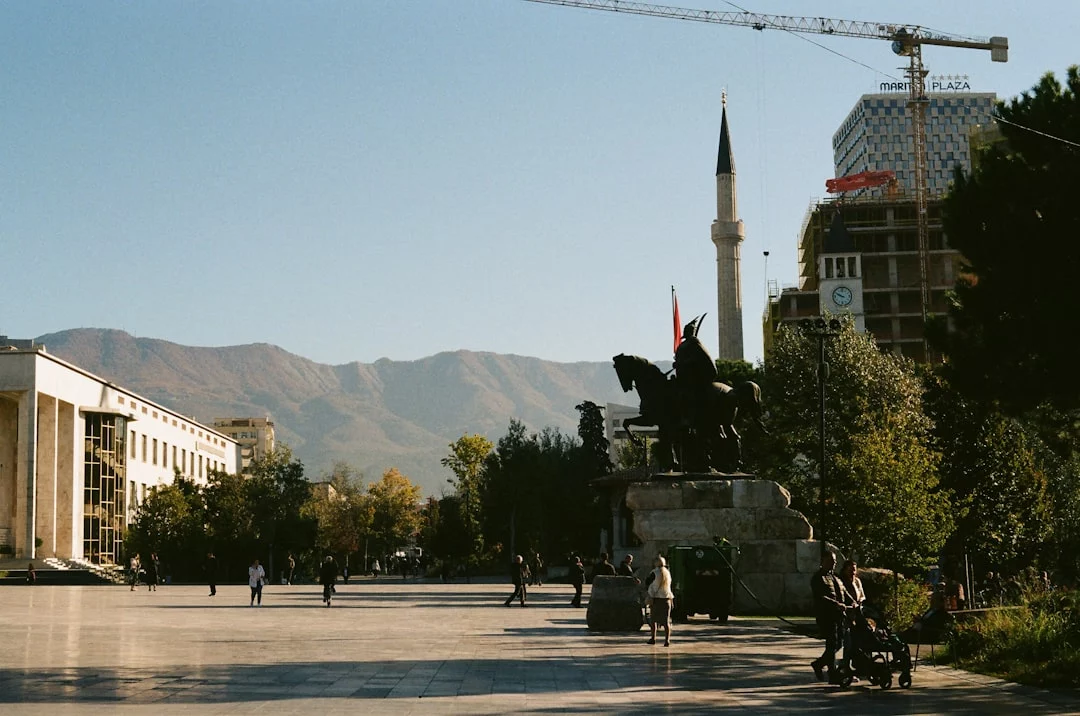
The Albania Trump-linked hotel protests have turned a dispute over a luxury development into a powerful test of public trust, environmental governance and political accountability. Albanians have reportedly demonstrated for more than 100 days against a planned hotel associated with Jared Kushner and Ivanka Trump, with tensions escalating into clashes between protesters and police. The confrontation matters far beyond one property: it exposes the difficult choices facing a fast-growing tourism economy whose coast is simultaneously a national asset, an ecological resource and a magnet for international capital.
The available report provides limited detail about the precise circumstances of the clashes, so claims about individual responsibility, injuries or police conduct require confirmation from official records and independent reporting. What is already clear, however, is that prolonged opposition cannot be understood as a momentary reaction. It reflects deeper concern about who controls development, how decisions are made and whether local communities receive a meaningful voice before landscapes are transformed.
Why the Albania Trump-Linked Hotel Protests Matter
Large hospitality projects are often promoted through an attractive economic narrative: construction creates jobs, affluent visitors spend money, infrastructure improves and a destination gains international visibility. Those benefits can be real. Yet they are neither automatic nor evenly distributed. A resort may also restrict access to land, intensify pressure on water and waste systems, inflate property prices or replace diverse local businesses with a highly concentrated tourism enclave.
These tensions are especially significant in Albania, where the visitor economy has expanded rapidly and coastal property has become increasingly valuable. The country possesses dramatic mountains, archaeological sites and extensive shores on the Adriatic Sea and Ionian Sea. That combination creates immense opportunity, but it also raises the cost of weak planning. Once a coastal habitat or historic landscape is heavily built over, restoring it can be technically difficult and financially prohibitive.
A luxury development is not merely a building. It is a long-term decision about land, water, access, employment and the identity of a place.
The duration of the demonstrations is therefore important. Sustained protest indicates that at least part of the public believes ordinary consultation or administrative review has been inadequate. Clashes with police deepen the controversy because they shift attention from planning policy to civil liberties, proportionality and the state’s responsibility to facilitate peaceful assembly.
The Jared Kushner Albania Project and Its Political Associations
The project’s connection to Jared Kushner and Ivanka Trump gives the dispute an international political dimension. Kushner is a former senior White House adviser, while Ivanka Trump is a businesswoman and former presidential adviser. Both are closely associated with Donald Trump, making an otherwise commercial proposal symbolically connected to American political power.
That association does not itself prove wrongdoing. Investors with political backgrounds are entitled to pursue lawful projects, and proposals should be judged using evidence, planning rules and consistent regulatory standards. Nevertheless, politically connected investment demands exceptional transparency because even the appearance of preferential access can damage confidence. Governments must be able to demonstrate that land rights, incentives, permits and environmental conditions were determined through procedures available to comparable investors.
What Transparent Review Should Reveal
- Beneficial ownership: The natural persons and corporate entities that ultimately control and profit from the development.
- Land status: Whether the site is public, private, leased, transferred or subject to unresolved claims.
- Government support: Any tax concessions, infrastructure commitments, guarantees or strategic-investor benefits.
- Planning compliance: The zoning rules, construction limits and cultural or environmental protections that apply.
- Public participation: How communities were informed, what objections were submitted and how authorities answered them.
Full publication protects both the public and legitimate investors. When contracts and assessments remain inaccessible, speculation fills the vacuum. Conversely, a documented process allows residents, journalists and courts to distinguish lawful investment from political favoritism.
Sazan Island, Vlorë and the Pressure on Albania’s Coast
International reporting about Kushner-linked investment plans has focused attention on the region around Vlorë and Sazan Island. Sazan occupies a strategically and visually striking position near the entrance to the Bay of Vlorë. Its military history, relative isolation and Mediterranean scenery make it commercially appealing, but those same qualities intensify questions about conservation, public access and the appropriate scale of construction.
A Sazan Island luxury resort or comparable coastal development could rehabilitate neglected structures and fund transport, utilities or environmental management. On an island, however, every operational requirement becomes more complicated. Fresh water may need to be transported or produced through desalination. Sewage requires reliable treatment. Construction materials and workers must travel by sea, while emergency services need resilient access. Energy demand and waste removal can create a footprint extending far beyond the hotel’s walls.
Environmental Assessment Must Examine the Whole System
A credible environmental impact assessment should not treat a resort as an isolated architectural object. It must evaluate construction, marine traffic, noise, lighting, wastewater, freshwater use, wildfire risk, erosion and habitat fragmentation. It should also assess cumulative impacts: the effect of this project when combined with roads, marinas, villas and future hotels across the same coastline.
Seasonality is another critical issue. A property designed for peak summer demand may strain water and transport systems during the hottest, driest period of the year, then operate at reduced capacity in winter. Employment claims should consequently distinguish permanent positions from temporary construction work and seasonal service jobs.
Why Are Albanians Protesting the Trump-Linked Project?
The most direct answer is that demonstrators oppose the proposed luxury hotel and the way the development is perceived to affect public interests. Yet movements lasting more than 100 days are rarely driven by a single concern. The Albania coastal development controversy appears to concentrate several anxieties that frequently accompany major resort schemes.
- Loss of public space: Residents may fear that beaches, paths or culturally significant landscapes will become functionally private even if legal access technically remains.
- Environmental damage: Construction and visitor activity can alter habitats, water quality and coastal character.
- Unequal economic benefits: Profits may flow to investors while communities bear congestion, higher prices and infrastructure pressure.
- Insufficient consultation: People are more likely to resist decisions they believe were made before public participation began.
- Political influence: The involvement of globally prominent figures can strengthen suspicions that ordinary rules will not be applied equally.
These concerns should not be assumed to represent every Albanian. Supporters may view foreign investment as a route to better employment, higher-quality tourism and stronger international recognition. The central policy question is not whether development should occur at all, but whether its scale, location and conditions serve a demonstrable public interest.
Police Clashes and the Rights of Protesters
Once police and demonstrators clash, factual precision becomes essential. Video fragments may show only part of an incident, while political actors can circulate competing accounts. Independent investigators and journalists should establish the sequence of events, the warnings given, the conduct of individuals, the tactics used by police and whether any arrests or injuries occurred.
Peaceful assembly is a fundamental democratic mechanism. The broader history of protest demonstrates that demonstrations allow citizens to challenge decisions when formal institutions appear distant or unresponsive. At the same time, participants remain subject to proportionate laws concerning violence and serious threats to public safety.
Authorities should differentiate clearly between peaceful protesters and anyone committing specific offenses. Collective punishment, unnecessary force or vague restrictions can escalate tension and undermine the legitimacy of the development process itself. Protest organizers likewise have a responsibility to discourage violence, identify safe routes and preserve credible evidence of events.
The Economic Promise—and Hidden Costs—of Luxury Tourism
Tourism in Albania has become increasingly important to the country’s international profile and regional economy. Luxury hospitality can generate more spending per visitor than mass tourism, potentially reducing pressure to maximize visitor numbers. High-end resorts can also create demand for local food, boat services, cultural experiences and skilled hospitality work.
But the label
Frequently Asked Questions
Does the project’s connection to Jared Kushner and Ivanka Trump prove that it received preferential treatment?
No. Political connections alone do not establish misconduct or preferential treatment. They do, however, justify heightened scrutiny. Authorities should disclose ownership structures, land arrangements, tax incentives, permits, environmental conditions and communications with investors, while showing that the same rules and review standards would apply to comparable developers.
Why can a luxury hotel create environmental problems even if it occupies only one coastal site?
Its effects may extend well beyond the building footprint. A large resort can increase water consumption, sewage, waste, traffic, energy demand and shoreline disturbance. It may also fragment habitats or encourage additional construction nearby. These cumulative impacts are why environmental reviews should consider the surrounding coastline and future development, not just the hotel parcel.
What would meaningful local consultation look like before construction is approved?
Meaningful consultation should begin before key decisions become irreversible. Residents need timely access to plans, environmental studies, land records and proposed public benefits. Hearings should be accessible, objections should receive documented responses, and communities should have realistic opportunities to challenge decisions through administrative or judicial review rather than being informed only after approval.
Could the hotel still benefit Albania’s economy despite the protests?
Yes, the development could create construction work, hospitality jobs, tax revenue and international visibility. The central question is how durable and widely shared those gains would be. Decision-makers should compare projected benefits with public subsidies, imported labor or supplies, seasonal employment, infrastructure costs, environmental damage and possible losses to local businesses or public coastal access.
How should claims about clashes between protesters and police be evaluated?
They should be assessed through multiple sources, including official incident records, medical documentation, verified video, witness testimony and independent journalism. Investigators should examine whether demonstrations remained peaceful, whether police warnings were clear, and whether any force used was lawful, necessary and proportionate. The article’s limited details do not support firm conclusions about individual responsibility.
What safeguards could reduce distrust if the project proceeds?
Authorities could publish permits, contracts, ownership information, environmental assessments and government incentives in a searchable public record. Independent monitoring should track construction, water use, waste, habitat effects and compliance with access rules. Enforceable penalties, community complaint channels and periodic audits would be more credible than voluntary promises made by either the developer or government.